


 Phan Van Hoang
- 11/08/2026
- 135
In the animal feed packaging line, bag-mouth sewing thread is a very small-cost component compared with the total product value, but it directly affects bag sealing, packaging speed, and the failure rate on the production line.
The two specifications commonly considered are PE 20/8 and PE 20/9.
If we only look at the number of component fibers, PE 20/9 has a larger structure than PE 20/8. However, this does not mean every animal feed manufacturer should switch to 20/9.
In practice:
- PE 20/8 is generally suitable for most common animal feed bags if the machine is properly adjusted and thread quality is consistent.
- PE 20/9 is more suitable when additional seam-strength reserve is needed, for heavy bags, thick bag mouths, or harsh transportation conditions.
The right decision should be based on the entire bag – sewing machine – needle – speed – transportation conditions, rather than simply comparing thread size.
Table of Contents [Hide]
1. What are PE 20/8 and PE 20/9?
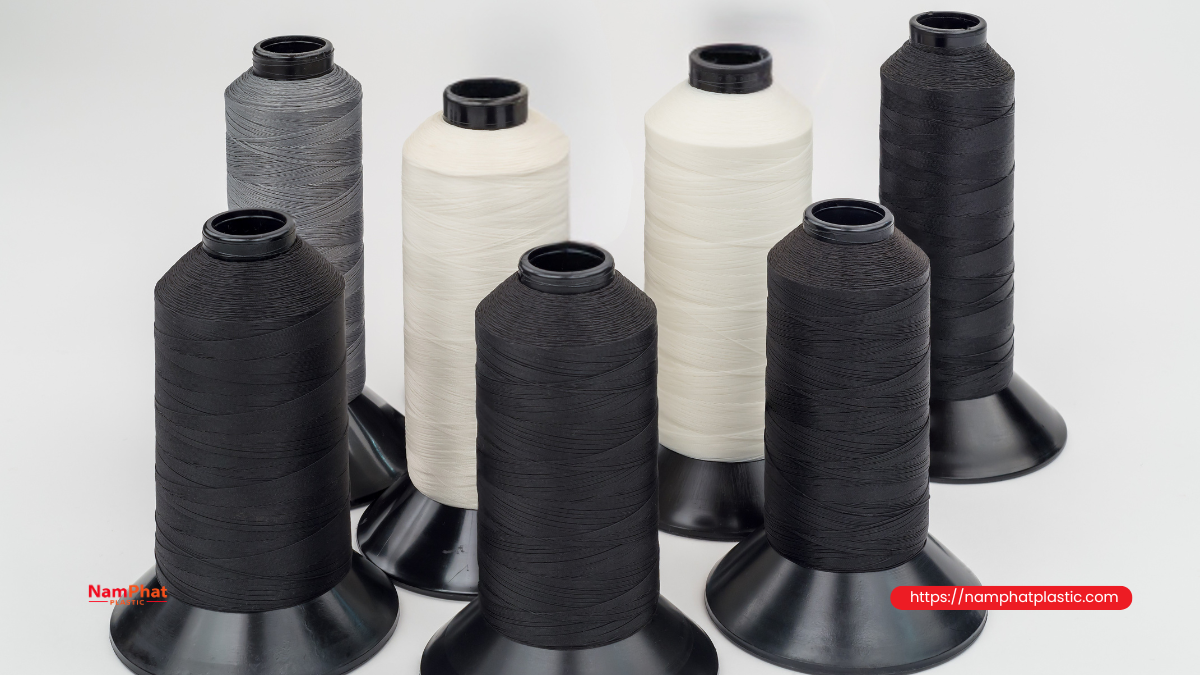
In common terminology in the bag sewing thread industry, PE 20/8 and PE 20/9 are generally understood as threads made from multiple PE spun single yarns of the same grade, which are then plied and twisted into a finished sewing thread.
Simply put:
- PE 20/8: consists of 8 single-yarn components that are plied and twisted.
- PE 20/9: consists of 9 single-yarn components that are plied and twisted.
If the same raw material, single-yarn quality, and production conditions are used, PE 20/9 is generally:
- larger;
- heavier per unit length;
- potentially stronger;
- larger in cross-section when passing through the needle and thread guides.
However, it should not be concluded that PE 20/9 is always stronger than PE 20/8 by exactly a 9/8 ratio.
Actual strength also depends on:
- single-yarn strength;
- twist level;
- consistency during plying;
- thread twist;
- finishing oil;
- lint level;
- splices;
- consistency between sections of the same spool.
Therefore, a consistently produced PE 20/8 spool can run better on a machine than a PE 20/9 spool with inconsistent quality.
2. Why do animal feed bags have relatively high requirements for sewing thread?
.png "Dây chuyền may miệng bao thức ăn chăn nuôi")
Animal feed bags generally have relatively high weights and go through many processes after packaging.
After sewing, a feed bag may be:
- transferred on a conveyor;
- stacked;
- placed on a pallet;
- pulled or pushed in the warehouse;
- transported by truck;
- unloaded at distributors;
- restacked several times before reaching the farm.
Therefore, the seam is not only subjected to load while the sewing machine is operating.
It also has to withstand:
- pulling force from the material inside the bag + impacts during handling + vibration during transportation + concentrated force at each stitch.
When the bag is filled tightly, the bag mouth also tends to be pulled open in both directions.
This is why manufacturers should not select thread based only on whether it "can be sewn."
The better question is:
- Which thread can run stably on the machine and create a seam with an appropriate safety margin under actual bag-use conditions?
3. Comparing PE 20/8 and PE 20/9 when sewing animal feed bags
| Criteria | PE 20/8 | PE 20/9 |
| Relative size | Smaller | Larger |
| Weight per unit length | Lower | Higher |
| Potential strength | Good | Higher if raw-material quality is the same |
| Machine flexibility | Good | Depends on needle size and thread path |
| Friction through the needle | Usually lower | Can be higher |
| Thread length per 1 kg | More | Less |
| Suitability for common bags | Very good | Good |
| Heavy bags / seams requiring greater reserve | Can be used | Greater advantage |
| Needle-size requirements | Easier to configure | Requires more careful compatibility checking |
| Thread cost per meter | Usually lower | Usually higher |
The key point is that 20/9 is not a mandatory upgrade from 20/8.
In many production lines, PE 20/8 already provides sufficient seam strength. In that case, using 20/9 does not necessarily provide a corresponding economic benefit.
4. When should you choose PE 20/8 for animal feed bags?
PE 20/8 is often a reasonable choice when the manufacturer needs to balance:
- strength;
- machine performance;
- consumption;
- packaging cost.
4.1. Bags with standard weights
For animal feed bags with standard loads and a well-designed bag structure, PE 20/8 can generally meet requirements well when the entire sewing system is properly configured.
Important conditions include:
- the bag mouth is not excessively thick;
- the correct needle is used;
- thread tension is properly adjusted;
- stitch spacing is appropriate;
- there are no sharp edges on the thread guides.
4.2. High-speed production lines
When the sewing machine operates continuously, the thread passes through multiple guide points at high speed.
A thread that is too large for the system may increase:
- friction;
- heat;
- dynamic tension;
- linting;
- the risk of thread breakage near the needle.
Because it is smaller, PE 20/8 may sometimes have an advantage in machines that have already been properly configured for this specification.
Do not replace PE 20/8 with 20/9 while keeping all machine settings unchanged and assume the machine will perform the same way.
4.3. Businesses looking to optimize cost per bag
PE 20/8 uses less material per unit length than PE 20/9 when other conditions are equivalent.
This means that the same kilogram of PE 20/8 generally provides more total thread length.
When a factory produces hundreds of thousands or millions of bags per year, a small difference in thread consumption per bag can become a significant cost.
Therefore:
- If PE 20/8 already exceeds the required seam strength, increasing to PE 20/9 may not provide economic efficiency.
5. When should PE 20/9 be considered?
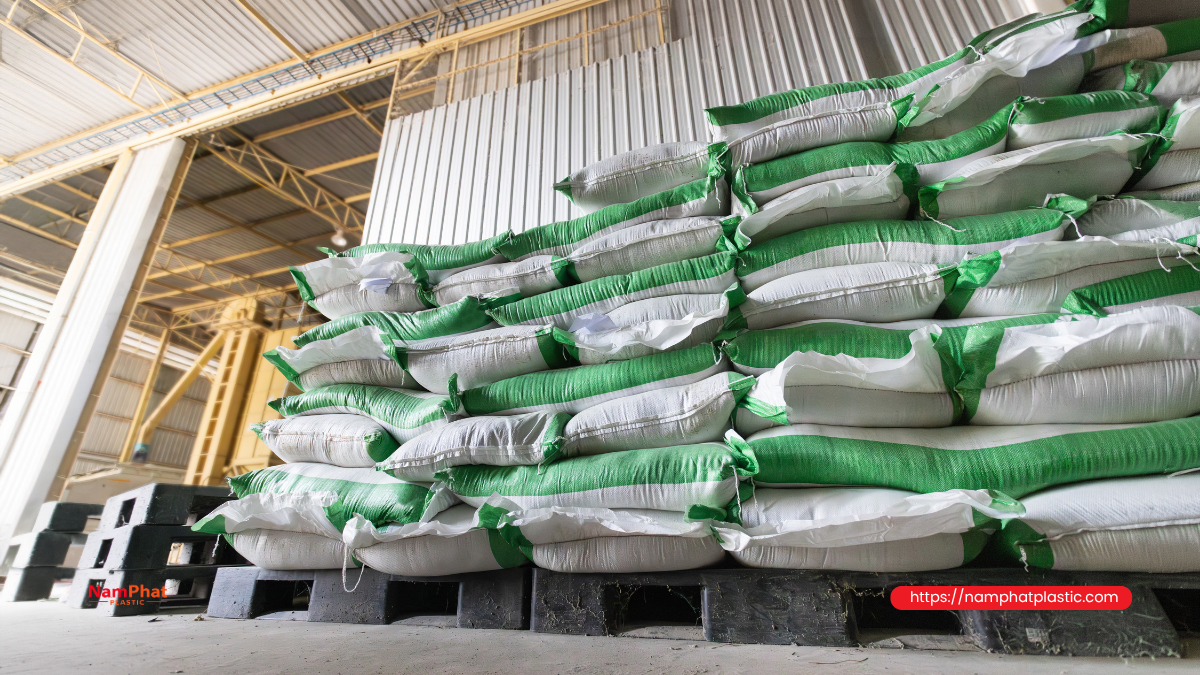
PE 20/9 should be considered when the manufacturer needs a greater safety margin for the seam.
Typical situations include:
5.1. Heavy bags
The greater the weight inside the bag, the greater the load on the bag during lifting, pulling, and handling.
Especially when workers frequently hold or pull directly on the bag-mouth area, the seam may experience forces higher than those in ideal conditions.
PE 20/9 can provide additional mechanical reserve when used correctly.
5.2. Bag mouths with multiple material layers
Some animal feed bags have complex structures:
Woven PP + coating + liner + folded bag mouth.
After folding, the needle may need to penetrate multiple layers.
In this case, the seam itself also has to operate under more demanding conditions.
If PE 20/8 is already close to the required limit, testing PE 20/9 is a reasonable option.
5.3. Bags frequently subjected to strong pulling during handling
A seam may pass a static test but still fail in real-world conditions if logistics handling is too aggressive.
Common situations include:
- throwing bags onto the floor;
- pulling bags by the mouth;
- bags falling from pallets;
- high stacking;
- transportation on poor roads.
If the business frequently experiences seam opening or thread breakage in these situations, increasing the thread size from 20/8 to 20/9 can be considered.
However, the cause should be checked first.
Not every case of a bag mouth opening is caused by weak thread.
6. Should 25 kg bags use PE 20/8 or 20/9?
For animal feed bags of around 25 kg, PE 20/8 is generally the first option worth testing if:
- bag quality is good;
- the bag mouth is not excessively thick;
- the seam is stable;
- transportation conditions are normal.
If practical testing shows that PE 20/8 already meets the required seam strength, there is no technical reason to automatically switch to 20/9 simply to make the seam feel "stronger."
The important thing is to determine the required strength level, not to choose the largest possible thread.
7. Should 40–50 kg feed bags use 20/8 or 20/9?
For bags with higher loads, such as the 40–50 kg range, PE 20/9 is worth testing alongside PE 20/8.
However, the following formula should not be applied:
- 25 kg bag = 20/8, 50 kg bag = 20/9.
Weight is only one variable.
Two 50 kg bags can differ greatly in:
- bag material;
- woven PP density;
- coating;
- mouth-folding method;
- distance from the seam to the edge;
- number of stitches;
- stacking and handling conditions.
Therefore, the final decision should still be based on testing the complete seam.
8. 20/9 is larger, but the seam is not necessarily stronger if the wrong needle is selected
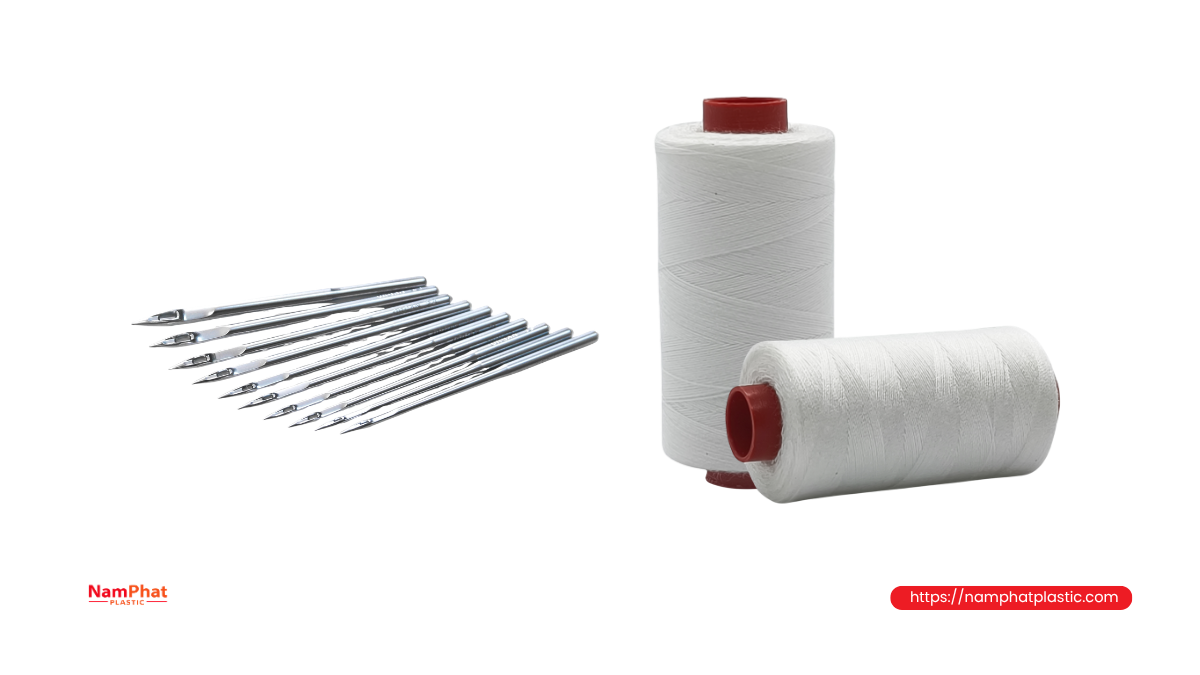
This is a fairly common mistake when upgrading from 20/8 to 20/9.
The business changes the thread but:
- does not change the needle or adjust the machine.
The result may be the opposite of what was expected.
A larger thread passing through a needle eye that is too small increases friction.
Common symptoms include:
- thread heating;
- thread fraying;
- linting;
- separation of yarn components;
- breakage near the needle;
- unstable seams when the machine speed increases.
Therefore, when switching to PE 20/9, check:
- Needle size.
- Needle-eye shape.
- Needle surface condition.
- Thread tension unit.
- Thread-guide holes.
- Thread direction-change angles.
- Machine speed.
A stronger thread cannot deliver its advantage if the thread path is damaging the yarn before the stitch is formed.
9. Another mistake: increasing thread size from 20/8 to 20/9 to fix seam opening
When a bag opens at the seam, many factories immediately assume:
The thread is too small.
But a seam is a system.
Seam opening can also result from:
- stitch density that is too low;
- seam positioned too close to the edge;
- frayed or weak bag edge;
- thread tension that is too high;
- incomplete stitch formation;
- skipped stitches;
- needle damage to the yarn;
- uneven feed;
- excessively weak bag structure.
For example:
If the seam is too close to the edge, when the bag is loaded, the woven PP material may tear before the thread reaches its load limit.
In this case:
- switching from PE 20/8 to PE 20/9 may do almost nothing to solve the problem.
The manufacturer must determine which part fails first:
- thread breaks → seam pulls out → or bag material tears?
These three failure modes have completely different causes.
10. Does PE 20/9 make the sewing machine run harder?
It can, but not always.
Because the effective diameter of the thread is larger, PE 20/9 can create greater friction at:
- thread guides;
- tension unit;
- needle eye;
- direction-change points.
If the machine has a good thread path and the needle size is appropriate, the difference may be insignificant.
On the other hand, on machines with:
- small thread guides;
- worn surfaces;
- burrs in the thread path;
- overly sharp thread angles;
20/9 may reveal the problem more clearly than 20/8.
This is another reason to test the thread on the customer's actual machine rather than evaluating the thread only by hand.
11. Which is more economical, PE 20/8 or PE 20/9?
Do not compare thread based only on price per kilogram.
The factory should calculate:
- cost of thread per compliant bag.
For example, a thread with a lower price/kg may:
- break frequently;
- require workers to reconnect it;
- cause machine downtime;
- generate defective bags;
- require re-sewing;
making the actual cost higher than a slightly more expensive thread that runs consistently.
Conversely, if PE 20/8:
- runs continuously;
- does not break abnormally;
- produces compliant seams;
- causes no complaints;
then switching to 20/9 simply because "the thread is larger" may increase consumption without providing equivalent value.
12. PE 20/8 and 20/9 should not be evaluated by appearance alone
A spool that looks larger or more tightly twisted does not necessarily mean it is higher quality.
When evaluating bag sewing thread for animal feed bags, pay attention to the following factors.
Tensile strength
The thread must withstand the forces generated during stitch formation and the load after the bag is filled.
Consistency
A spool with high average strength but many weak sections can still cause random breakage.
For automatic production lines, consistency is often just as important as maximum strength.
Lint level
Excessive lint increases friction at:
- tension unit;
- thread guides;
- needle.
The faster the machine runs, the more noticeable the effect.
Twist
Improper twist can make the thread:
- too stiff;
- prone to opening;
- unbalanced;
- form loops;
- run unstably.
Finishing oil
Proper finishing oil helps control friction when the thread moves at high speed.
Uneven oil application can cause the same spool to:
- run well at the beginning;
- heat up later;
- develop changing tension;
- experience unexplained thread breakage.
13. Check the core and how the thread unwinds from the spool
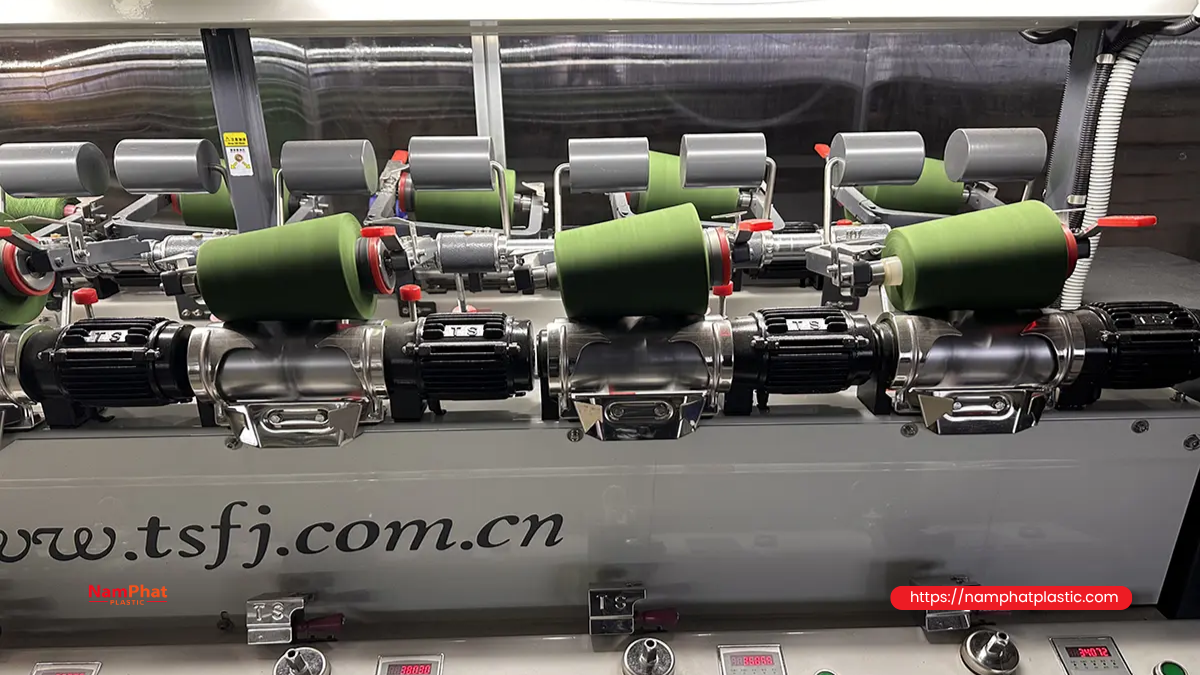
Machine performance does not depend only on the yarn itself.
A poorly wound spool can cause:
- uneven thread delivery;
- thread jerking;
- tangling;
- overlapping turns;
- changing tension as the spool diameter decreases.
For continuous bagging lines, this is particularly undesirable because even a few machine stops per shift can significantly affect productivity.
Therefore, when comparing PE 20/8 and PE 20/9, use spools that have:
- stable winding;
- the same spool format;
- the same equipment;
- the same test conditions.
Otherwise, the comparison results may be distorted.
14. How to accurately test PE 20/8 and PE 20/9 at an animal feed factory
The best method is not to ask:
Which one is stronger?
Instead, conduct an A/B test on the actual production line.
The process can be carried out as follows.
Step 1: Keep the bag type unchanged
Use the same:
- bag supplier;
- dimensions;
- structure;
- production batch if possible.
Step 2: Check the machine before testing
Eliminate factors that may interfere with the test:
- dull needle;
- bent needle;
- scratched thread guide;
- abnormal tension unit.
Step 3: Run PE 20/8
Monitor a sufficiently large number of bags and record:
- number of thread breaks;
- number of machine stops;
- thread linting;
- stitch quality;
- spool replacement time.
Step 4: Run PE 20/9
Perform the test under conditions as similar as possible to the PE 20/8 test.
If necessary, adjust the needle size and tension for 20/9.
Step 5: Inspect the sewn bags
Do not rely only on visual inspection.
Conduct:
- mouth-pulling tests;
- stacking;
- drop tests;
- handling tests;
- transportation simulation.
Step 6: Calculate the actual cost
Compare:
- thread cost + machine downtime + defective-bag rate + seam safety margin.
Only then will the manufacturer have sufficient data to make a decision.
15. Quick selection table: PE 20/8 or 20/9
| Operating condition | Recommended to test first |
| Common animal feed bags | PE 20/8 |
| Machine currently running stably with 20/8 | Continue with PE 20/8 |
| Want to reduce thread consumption while maintaining sufficient strength | PE 20/8 |
| Heavy bags | Compare PE 20/8 and PE 20/9 |
| Multi-layer, relatively thick bag mouth | Consider PE 20/9 |
| Harsh handling conditions | Consider PE 20/9 |
| PE 20/8 frequently breaks under post-sewing loads | Check the cause, then test PE 20/9 |
| Machine frequently breaks thread at the needle | Do not switch to 20/9 immediately; check the needle and thread path first |
| Bag tears beside the seam while the thread does not break | Check the bag and seam position, not just the thread size |
16. When is PE 20/8 a better choice than 20/9?
PE 20/8 can be a better choice when all three conditions are met:
- Stable machine operation – sufficient seam strength – reasonable cost.
This is essentially the optimal state that a factory should seek.
Using a larger thread than necessary does not necessarily provide an advantage.
In industrial production, the right choice is not:
Which product is the strongest?
It is:
Which product meets the technical requirements with the lowest total cost and highest stability?
17. When is PE 20/9 worth using?
PE 20/9 becomes meaningful when the additional strength actually addresses a specific requirement, such as:
- increasing the safety margin for high-load bags;
- reducing the risk of seam breakage during transportation;
- meeting specific customer requirements;
- handling relatively thick bag-mouth structures;
- improving post-sewing safety after the machine and seam structure have already been optimized.
If switching to 20/9 does not have an identified benefit, it is difficult for the manufacturer to determine whether the additional cost is actually necessary.
18. Don't just check the thread – check the entire sewing system
A strong seam is the result of the combination of:
- Thread + needle + machine + bag + stitch density + tension + handling conditions.
It can be understood simply:
The seam is only as strong as the weakest link in the entire system.
If the thread is very strong but the bag is weak, the bag will tear.
If the bag is strong but the needle damages the thread, the thread will break.
If both the bag and thread are good but the machine skips stitches, the seam can still open.
This principle is particularly important when handling complaints related to bag-mouth seams.
Conclusion: Should animal feed bags use PE 20/8 or PE 20/9?
There is no single specification suitable for every factory.
For most common animal feed bag applications, PE 20/8 is worth testing first because it can provide a good balance between seam strength, machine performance, and consumption.
PE 20/9 should be considered when a higher safety margin is needed, particularly for heavy bags, thick bag-mouth structures, or harsh transportation and handling conditions.
However, do not switch from 20/8 to 20/9 simply because the seam is experiencing problems.
First determine exactly:
- whether the thread is actually breaking;
- whether the bag is tearing;
- whether the machine is skipping stitches;
- whether the needle is appropriate;
- whether the tension is too high;
- whether the seam position is appropriate.
Ultimately, the most reliable selection method is to test PE 20/8 and PE 20/9 on the company's actual machine, bag type, and transportation conditions.
Frequently asked questions about sewing thread for animal feed bags
1. Is PE 20/9 stronger than PE 20/8?
If the same raw-material yarn, production quality, and suitable twisting process are used, PE 20/9 generally has higher load-bearing potential because it contains more yarn components. However, actual strength cannot be evaluated based only on the 20/8 or 20/9 designation.
2. Do 25 kg feed bags need PE 20/9?
Not necessarily. If PE 20/8 runs stably and the seam exceeds the company's test requirements, there is no technical reason to automatically switch to 20/9.
3. Should 50 kg animal feed bags use 20/9?
20/9 can be considered, but it should be tested alongside 20/8. Bag weight is not the only factor determining thread specification.
4. Does switching from PE 20/8 to 20/9 require changing the needle?
The needle size and needle eye should be checked again. If the current needle is already close to the limit for PE 20/8, using PE 20/9 may increase friction and cause thread breakage or fraying.
5. Why can PE 20/9 still break more often than PE 20/8?
Possible causes include a needle that is too small, excessive friction, excessive tension, burrs in the thread path, inconsistent thread quality, or unsuitable twist and finishing oil.
6. Which type of bag sewing thread runs well on the machine?
It cannot be determined by specification alone. A thread that runs well should have stable strength, consistency, twist, low lint, suitable finishing oil, and consistent spool winding.
Nam Phat Plastic – PE bag sewing thread for industrial packaging lines
Nam Phat Plastic supplies PE bag sewing thread for various industrial packaging applications, including:
- animal feed bags;
- rice bags;
- fertilizer bags;
- agricultural-product bags;
- raw-material bags;
- industrial woven PP bags.
For customers deciding between PE 20/8 and PE 20/9, the most suitable approach is to select the specification based on the bag type, load, sewing machine, and actual operating conditions rather than simply choosing the larger thread.
Businesses can conduct production-line trials before deciding on a long-term specification, allowing them to simultaneously control seam strength, thread consumption, and the stability of the bagging machine.
>>> See more:
- 0 Comment


