


 Phan Van Hoang
- 20/07/2026
- 495
Animal feed packaging must withstand multiple stages throughout the supply chain, including filling, bag closing, palletizing, warehousing, transportation, and handling. A single weak seam or an unsuitable bag structure can lead to product leakage, moisture absorption, reduced product quality, and damage to brand reputation.
For this reason, manufacturers should not consider packaging and sewing thread as two separate materials. An effective sewing thread and packaging solution for animal feed should be designed as an integrated system—from the bag construction and moisture barrier to the sewing thread and packaging equipment.
When all components work together, manufacturers can reduce thread breakage, minimize bag seam failures, maintain stable packaging speeds, and achieve better control over total packaging costs per product.
Table of Contents [Hide]
1. Why does animal feed packaging require specialized solutions?
Animal feed is available in various forms, including fine powder, pellets, grains, and blended formulations with different oil and moisture contents. Each product type creates unique packaging requirements.
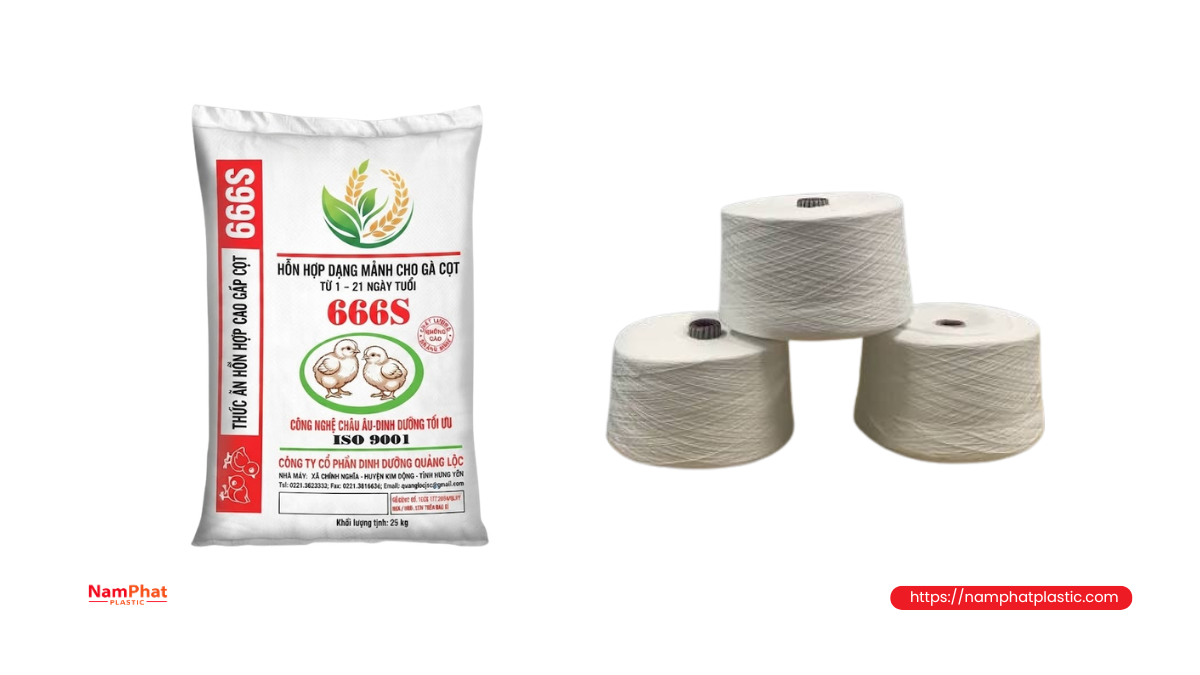
Powdered products can easily escape through small gaps in the sewing line. Pelleted feed may generate impact forces against the bag walls during transportation. Moisture-sensitive products require effective moisture barriers to prevent caking, odor changes, and quality deterioration.
Suitable packaging should accomplish four essential functions simultaneously:
- Protect the product throughout storage, transportation, and distribution.
- Minimize exposure to moisture, dust, and environmental contaminants.
- Withstand tensile forces, impact, and stacking pressure.
- Support continuous filling and bag-sewing operations on the packaging line.
The sewing seam serves as the final mechanical seal of the package. Even if the bag itself is of high quality, leakage may still occur if the sewing thread is unsuitable, the stitch tension is incorrect, or the bag edge is unstable.
2. Common packaging types for animal feed
2.1. Woven PP bags
Woven polypropylene (PP) bags are widely used because of their lightweight construction, high mechanical strength, and cost-effectiveness. Their woven fabric provides excellent tensile strength, making them suitable for a wide range of package sizes.
They are commonly selected for pelleted feed and products that do not require a high level of moisture protection. However, for fine powdered products, manufacturers should carefully evaluate the possibility of dust leakage through both the woven fabric and the stitched seam.
2.2. Coated woven PP bags
A coating layer creates a smoother and more sealed bag surface, improving dust resistance and moisture protection compared with standard woven PP bags. Coated bags also provide a better surface for printing product information, usage instructions, and branding.
They are particularly suitable for products requiring longer storage periods or transportation in humid environments.
2.3. Woven PP bags with PE liners
An internal PE liner provides an additional barrier against moisture while reducing the risk of leakage from powdered products. This structure is commonly used when manufacturers require improved sealing performance without sacrificing the mechanical strength of the woven PP outer bag.
For bags with PE liners, the closing process should be carefully designed. The PE liner can first be heat-sealed before sewing the outer PP bag. This approach enhances product protection while maintaining the mechanical strength required for handling and transportation.
2.4. BOPP laminated woven PP bags
BOPP laminated woven PP bags provide excellent print quality, vibrant colors, and outstanding brand presentation. They are well suited for animal feed products distributed through dealers, retail stores, or markets where product appearance plays an important role.
Besides visual appeal, manufacturers must also ensure adequate seam strength, strong film adhesion, and overall impact resistance throughout the package.
3. The role of bag sewing thread in the packaging system
Although sewing thread accounts for only a small portion of total packaging costs, it has a direct impact on packaging line performance. Inconsistent thread quality can lead to thread breakage, skipped stitches, thread tangling, or weak seams.
A suitable sewing thread for animal feed bags should provide the following characteristics:
- Consistent tensile strength across production batches.
- Uniform twist with minimal filament fraying.
- Smooth unwinding from cones or spools.
- Low lint generation during high-speed sewing.
- Compatibility with the sewing needles, thread tensioners, and sewing machines in use.
- Strong seams that are still easy to open when the bag reaches the customer.
Thread quality should not be judged solely by its thickness or appearance. Actual performance depends on filament construction, twist level, elongation, knot strength, package quality, and stability during machine operation.
4. Is PP multifilament sewing thread suitable for animal feed bags?
PP multifilament sewing thread is made from multiple fine polypropylene filaments twisted together into a single yarn. This structure provides an excellent balance of flexibility, strength, and durability, making it suitable for a wide range of industrial sewing applications.
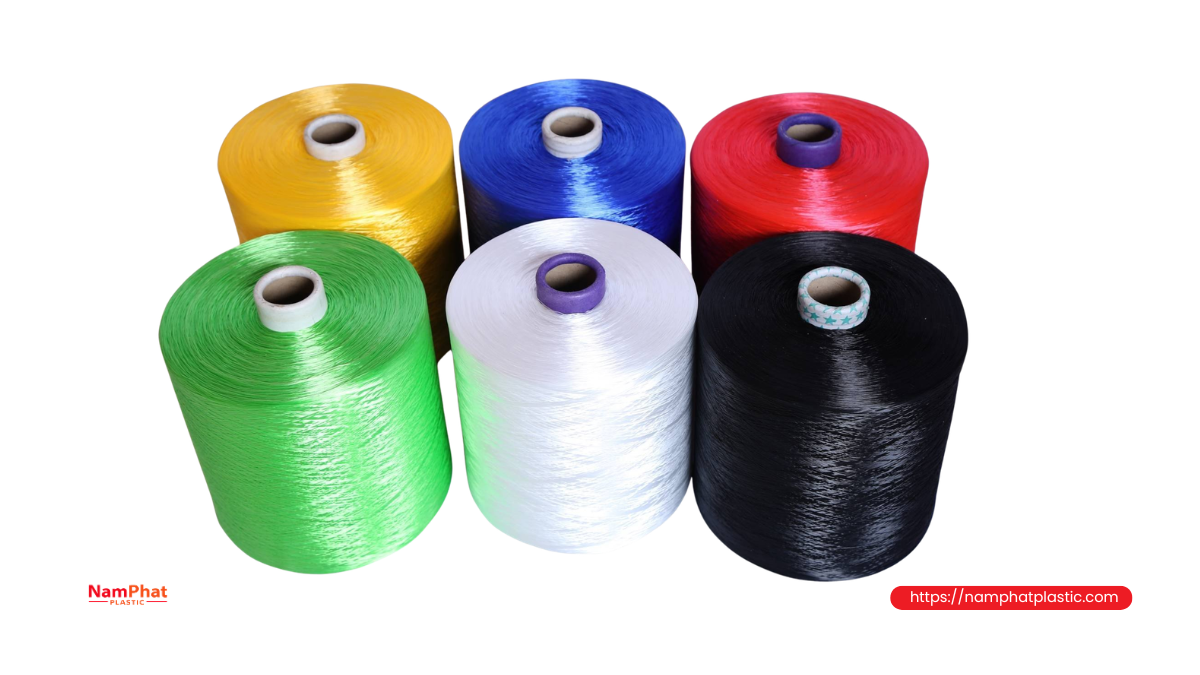
For animal feed packaging, PP multifilament sewing thread is commonly selected for the following reasons:
- Lightweight: Polypropylene has a low specific gravity, helping reduce material consumption in high-volume packaging operations.
- Low moisture absorption: This characteristic makes it suitable for manufacturing environments with dust, humidity, or fluctuating storage conditions.
- Flexible seams: The thread can adapt well to the movement of the bag opening when bags are compressed, pulled, or subjected to impact.
- Cost-effective: When the appropriate specification is selected, PP multifilament thread can meet most standard bag-closing requirements without significantly increasing packaging costs.
- Highly customizable: Manufacturers can tailor filament size, ply construction, twist level, color, and cone size to match the customer's equipment and production requirements.
However, there is no single thread specification suitable for every production line. The appropriate choice depends on bag weight, bag material, seam design, sewing machine speed, and actual transportation conditions.
5. Key specifications to consider when selecting PP bag sewing thread
Tensile strength
The thread must provide sufficient tensile strength to prevent seam failure when bags are lifted, dragged, or stacked. Thread that is too weak may break during transportation, while excessively stiff thread can sometimes increase the risk of tearing the bag edge.
The goal is to achieve the proper balance between thread strength and bag material strength.
Elongation
An appropriate level of elongation allows the seam to absorb impact forces when bags are dropped or handled roughly. If the thread has almost no stretch, stress may concentrate at a single point and tear the bag edge.
On the other hand, excessive elongation may create loose seams, particularly when packaging powdered products.
Twist consistency
Thread twist affects roundness, firmness, and smooth passage through the thread guides. Inconsistent twist can lead to filament fraying, thread tangling, or irregular stitches.
For continuous packaging lines, stability from the beginning to the end of each cone is just as important as the thread's rated tensile strength.
Cone specifications
Cone size, core dimensions, weight, and winding quality should all be compatible with the sewing machine's thread stand. Poor winding can create inconsistent thread tension, resulting in seams that alternate between being too tight and too loose.
Larger cones reduce the frequency of thread changes but must still provide stable thread delivery at the machine's operating speed.
Color
Sewing thread can be manufactured to match the bag color or reinforce brand identity. Some manufacturers also use different thread colors to distinguish product lines, production shifts, or packaging specifications.
However, color selection should never compromise thread strength or sewing performance.
>>> See also: Common PP bag sewing thread products
6. Choosing the right bag-closing method
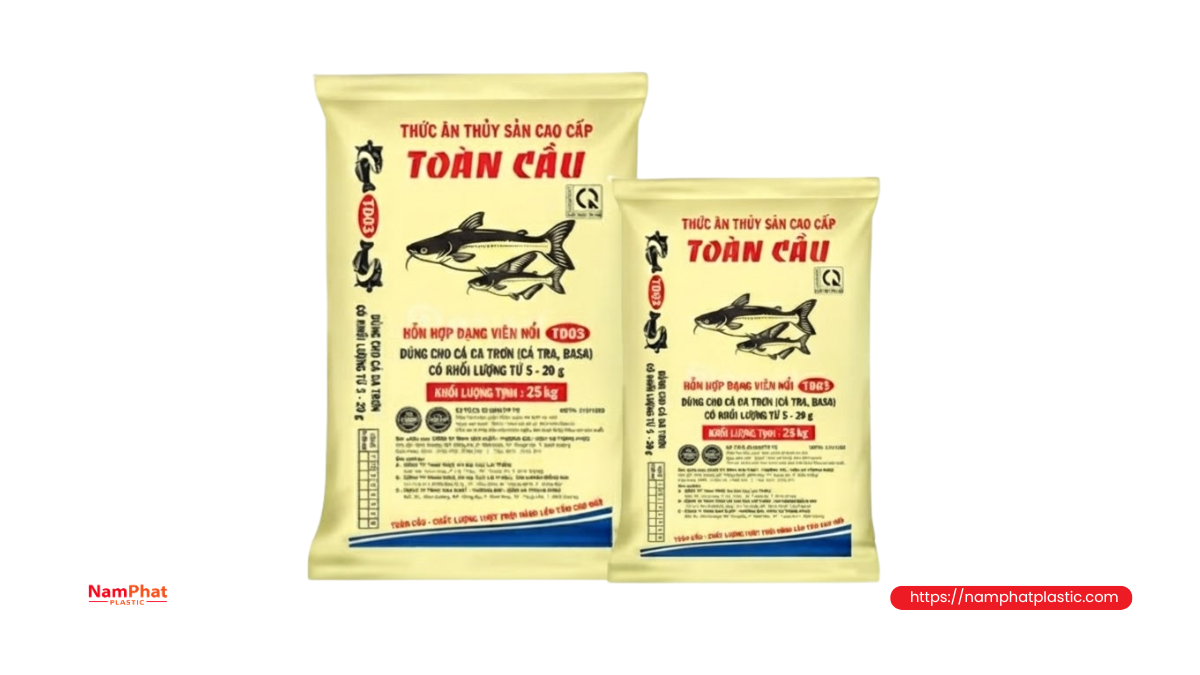
6.1. Single-thread stitching
Single-thread stitching is relatively simple and allows bags to be opened easily after use. It is suitable for certain standard products, moderate packaging speeds, and applications where maximum sealing performance is not required.
Seam quality depends largely on thread tension, stitch length, and the distance between the stitch line and the bag edge.
6.2. Double-thread stitching
Double-thread stitching generally produces a stronger and more stable seam, making it suitable for heavier bags or products with a higher risk of leakage. However, equipment requirements, operating procedures, and material costs should also be evaluated.
Manufacturers should not switch from single-thread to double-thread stitching simply to increase seam strength. It is important to determine whether seam failure is caused by the thread, bag material, bag edge, or machine settings.
6.3. Sewing with crepe paper tape
Crepe paper tape or reinforcing tape can be sewn into the bag opening to cover the stitch line, reduce dust leakage, and provide a cleaner finished appearance. This solution is particularly effective for fine powdered products.
The tape must have appropriate strength and dimensions. If it is too weak or fed inconsistently into the sewing machine, the seam may still become uneven or partially open.
6.4. Heat-sealing the inner liner and sewing the outer bag
For woven PP bags with an internal PE liner, the PE liner can first be heat-sealed before sewing the outer PP bag. This method combines the airtight protection of heat sealing with the mechanical strength of stitched seams.
It is well suited for moisture-sensitive products, long-term storage, or products transported through varying environmental conditions.
Recommended packaging solutions based on product characteristics
| Product characteristics | Recommended packaging structure | Recommended bag-closing method |
| Pelleted feed with minimal dust | Woven PP bag or coated woven PP bag | Single-thread or double-thread stitching depending on bag weight |
| Fine powdered feed | Coated woven PP bag, optionally with crepe paper tape | Tight stitching with controlled stitch length and thread tension |
| Moisture-sensitive products | Woven PP bag with PE liner | Heat-seal the PE liner, then sew the outer PP bag |
| Retail products requiring premium appearance | BOPP laminated woven PP bag | Color-matched sewing thread with clean, straight seams |
| Heavy-duty bags for long-distance transportation | High-strength woven PP bag | High-tensile sewing thread with seam testing before mass production |
The table above serves as a general guideline. The final packaging solution should always be validated using the actual bag material, product, and sewing equipment employed in the factory.
7. Developing an integrated sewing thread and packaging solution
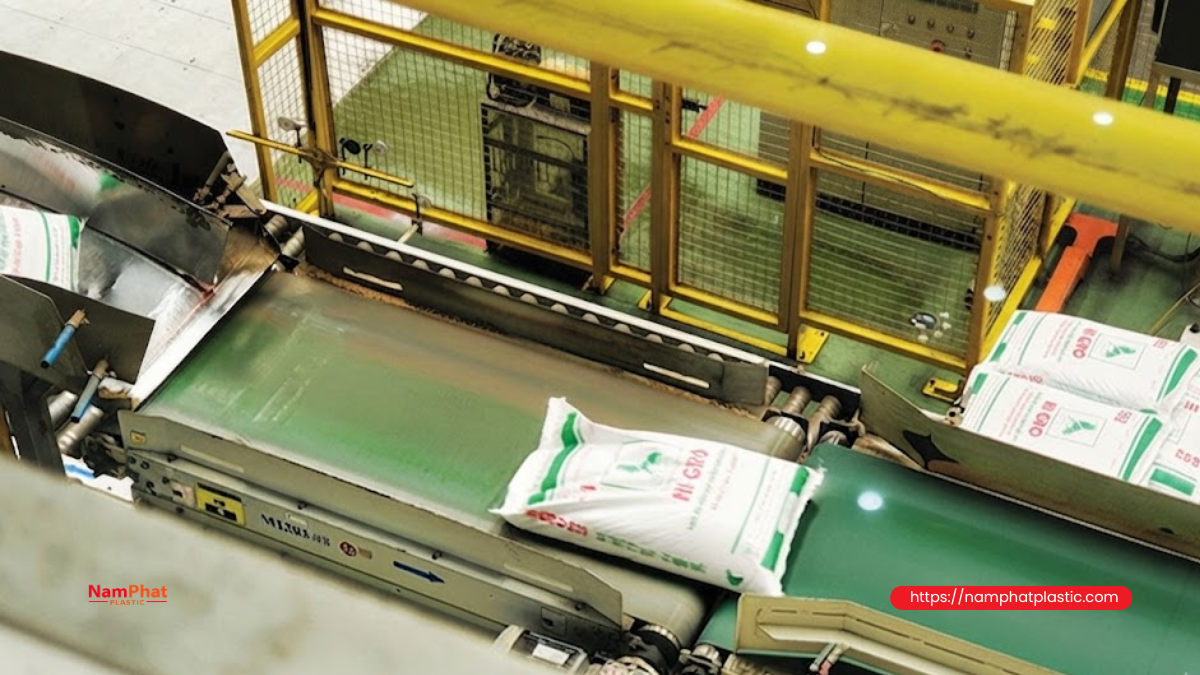
Step 1. Analyze the product to be packaged
Manufacturers should determine whether the product is a powder or pellet, along with particle size, moisture content, oil content, and dust generation characteristics. This information serves as the basis for selecting the appropriate level of package sealing.
Step 2. Evaluate storage and transportation conditions
Will the bags be stored indoors or outdoors? How long will they remain in storage? Will they be transported by truck, shipping container, or through multiple distribution centers?
The harsher the operating conditions, the greater the requirements for bag strength, moisture protection, and seam performance.
Step 3. Inspect the sewing machine and packaging line
Record the machine model, number of sewing threads, operating speed, needle type, thread tension settings, and cone dimensions currently in use. In many cases, thread breakage is caused not by poor thread quality but by worn needles, damaged thread guides, or excessive thread tension.
Step 4. Conduct production trials
Sample thread and packaging materials should be tested directly under actual production conditions. During the trial, manufacturers should monitor thread breakage frequency, skipped stitches, seam straightness, dust leakage, and seam strength after the bags are fully loaded.
Step 5. Perform transportation testing
Sample bags should be stacked, lifted, dropped, or subjected to simulated transportation conditions. Inspecting the bags immediately after sewing is not enough, as many defects only appear after prolonged vibration and handling.
Step 6. Standardize specifications
After selecting the optimal solution, manufacturers should establish specifications for each product, including bag type, thread specification, stitch pattern, needle type, thread tension, and inspection frequency.
Standardization reduces dependence on individual operator experience and improves process consistency.
8. Common bag sewing defects in animal feed packaging
Frequent thread breakage
Thread breakage may result from excessive thread tension, overheated or damaged needles, rough thread guides, or thread that is not suitable for the machine's operating speed. The entire sewing system should be inspected before concluding that the thread itself is at fault.
Skipped stitches or uneven seams
These problems may occur when the needle is bent, installed incorrectly, the bag edge is uneven, or the bag-feeding system is unstable. Poorly wound thread can also cause inconsistent tension during sewing.
The thread remains intact but the bag edge tears
This often indicates that the stitch line is positioned too close to the bag edge, the stitch density is too high, or the thread is too stiff for the bag material. When stress is concentrated around the needle holes, the woven fabric may tear along the seam.
Powder leakage around the bag opening
This issue is usually related to stitch spacing, improper folding of the bag opening, the condition of the inner liner, or the flatness of the filled product before sewing. For very fine powders, manufacturers may need to use reinforcing tape or an internal PE liner.
Difficulty opening the stitched seam
The seam should remain secure during transportation while still allowing the end user to open the bag easily. If the thread is tangled, improperly locked, or sewn multiple times, customers may have to cut the bag with a knife, increasing the risk of product spillage.
9. Evaluating packaging efficiency through total packaging costs
Selecting the lowest-cost materials does not always result in the lowest overall packaging cost. A low-cost sewing thread that frequently breaks can reduce production efficiency, increase machine downtime, and require additional rework.
When evaluating sewing thread and packaging solutions for animal feed, manufacturers should monitor key performance indicators such as:
- Number of thread breaks per production shift.
- Percentage of bags requiring resewing.
- Rate of seam failure or product leakage.
- Thread cone replacement frequency.
- Product loss during packaging and transportation.
- Packaging-related customer complaints.
- Total packaging cost per thousand bags.
Evaluating these metrics provides a much more accurate picture of material performance than simply comparing purchase prices.
10. Benefits of an integrated packaging solution
A properly designed packaging system helps manufacturers reduce production interruptions while maintaining consistent product quality. Strong seams minimize product loss during handling, and well-designed packaging protects the contents from moisture and dust.
In addition, clean, straight, and uniform seams improve product presentation at dealerships, retail stores, and farms. Although seemingly a small detail, seam quality can significantly influence customers' perception of the manufacturer's professionalism.
An integrated solution also enables manufacturers to standardize packaging materials across multiple factories, production lines, and bag specifications. Once proven specifications have been established, employee training and quality control become much more efficient.
11. Criteria for selecting a sewing thread and packaging supplier
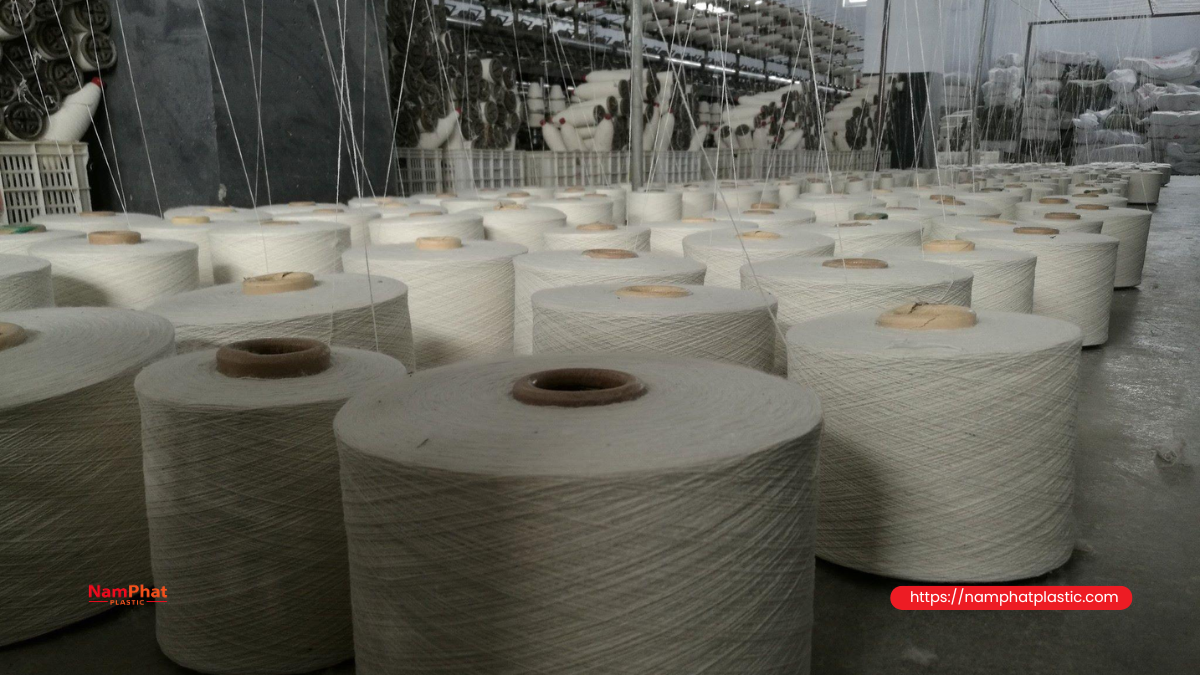
The right supplier should do more than simply deliver packaging materials. They should also assist manufacturers in identifying and solving packaging problems when they occur. An experienced supplier should be capable of recommending suitable thread specifications, providing trial samples, and customizing products to match actual production equipment.
Manufacturers should prioritize suppliers that can offer:
- Consistent product quality across production batches.
- Clearly documented technical specifications and quality control procedures.
- Sample products for testing before large-volume orders.
- Customization of color, twist level, and cone specifications.
- Reliable delivery schedules that match production plans.
- On-site support for troubleshooting packaging issues.
- Stable supply capacity during peak production periods.
Consistent material quality is particularly important for factories operating continuously. Even a minor variation in thread twist, cone dimensions, or tensile strength can affect machine settings that were previously optimized.
12. Co nclusion
An effective packaging solution for animal feed is not determined solely by the bag or the sewing thread. Final packaging performance depends on the compatibility of the packaging material, sewing thread, stitch design, production equipment, and actual operating conditions.
Woven PP bags provide mechanical strength, laminated films or PE liners improve moisture protection, and sewing thread secures the bag opening throughout transportation and handling. When these components are properly integrated, manufacturers can reduce product leakage, minimize machine downtime, protect product quality, and optimize overall packaging costs.
To select the right sewing thread and packaging solution for animal feed, manufacturers should begin by evaluating their products, inspecting their production lines, and conducting real production trials. Practical testing remains the most reliable basis for large-scale implementation.
Contact us for expert advice on PP bag sewing thread, PP multifilament thread, and customized bag-closing solutions for your animal feed packaging line.
Frequently asked questions
1. Can PP multifilament sewing thread be used on high-speed bag sewing machines?
Yes, provided that the thread specification, twist level, winding method, and tensile strength are designed to match the sewing machine. Manufacturers should conduct production trials to evaluate thread unwinding, breakage frequency, and seam consistency.
2. Should I choose single-thread or double-thread stitching?
The choice depends on bag weight, product type, packaging equipment, and sealing requirements. Double-thread stitching is not always necessary. For many applications, a properly adjusted single-thread seam provides sufficient strength for transportation.
3. Do powdered animal feed products require a PE liner?
A PE liner should be considered when the product is highly moisture-sensitive, consists of very fine particles, or requires extended storage. Where moisture protection is less critical, a coated woven PP bag combined with an appropriate sewing method may offer a more economical solution.
4. Why does the sewing thread break frequently even when using high-strength thread?
Thread strength is only one factor. Worn needles, damaged thread guides, excessive thread tension, heat generated during sewing, or improper cone installation can all cause thread breakage.
5. Should I always choose the thickest sewing thread available?
No. An excessively thick thread may not be compatible with the sewing needle, may increase friction, or create oversized needle holes in the bag. The thread specification should be balanced with the bag material, stitch design, and machine operating speed.
- 0 Comment


