


 Phan Van Hoang
- 10/08/2026
- 137
For fertilizer packaging lines, choosing sewing thread is often viewed quite simply: the heavier the bag, the thicker the thread should be.
In reality, this is not always the case.
A thread spool with high breaking strength but excessive diameter, a heavily fuzzy surface, unstable twist, or incompatibility with the needle can still cause the machine to continuously break thread, skip stitches, or produce poor-quality seams.
Conversely, a thread that is just large enough but has:
-
stable diameter;
-
uniform twist;
-
low fiber fuzz;
-
a suitable finish;
-
consistent unwinding from the spool;
-
few splices;
-
compatibility with the needle and thread tension system;
usually provides more stable machine performance.
Bag-mouth sewing machine manufacturers such as Newlong design machines to handle various materials, including kraft paper, PP/PE woven cloth, jute, and cotton. This shows that thread cannot be selected solely based on the product contained in the bag; the actual bag-mouth construction and sewing-machine configuration must also be considered.
For 20/6, 20/8, and 20/9 bag sewing threads, the practical principle can be understood as follows:
-
20/6: preferred when a smaller thread and lighter running are needed.
-
20/8: a balanced option between thread size and machine performance, often suitable as a starting point for testing.
-
20/9: used when greater thread cross-section and seam load capacity are required, but the needle, tension, and ability to penetrate the bag mouth must be checked again.
There is no specification that is absolutely suitable for every fertilizer factory.
Table of Contents [Hide]
1. Why does fertilizer bag sewing thread need to be selected carefully?
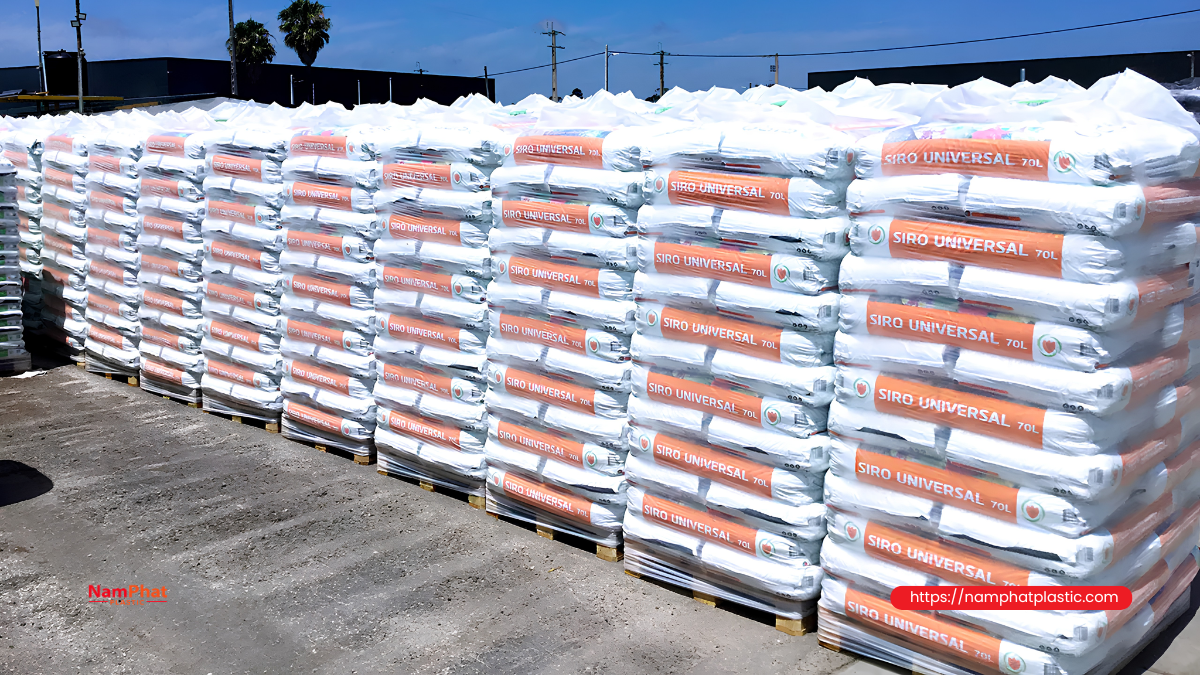
After a fertilizer bag is sewn, it does not simply remain stationary in a warehouse.
It may go through many stages:
-
bagging → conveyor → palletizing → handling → transportation → transshipment → distributor warehouse → delivery to the end user.
During these processes, the bag mouth is continuously subjected to vibration, pulling, impact, and deformation.
Therefore, the job of the sewing thread is not simply to “sew the bag mouth.”
The seam needs to meet three requirements at the same time:
First: Sufficient strength
The thread must not break too easily when the bag is pulled or vibrated during transportation.
Second: Stable machine performance
This factor is often overlooked.
A thread with very high breaking strength that breaks every few dozen bags can still result in lower actual productivity than a thread with moderate breaking strength that runs continuously.
Coats also notes that when selecting sewing thread, resistance to friction and heat generated during sewing should be considered, rather than looking only at fiber strength.
Third: It must not damage the bag material itself
When thread size is increased, the operator may need to increase the needle size.
A larger needle creates a larger penetration hole.
If the woven PP structure or film layer around the bag mouth is relatively thin, increasing the thread and needle too much may create more perforation in the seam area than necessary.
Therefore:
The largest thread is not necessarily the best thread for the seam.
A more appropriate goal is to select the smallest thread that still meets seam-strength requirements and runs stably on the machine.
2. Do 25 kg and 50 kg fertilizer bags necessarily require different threads?
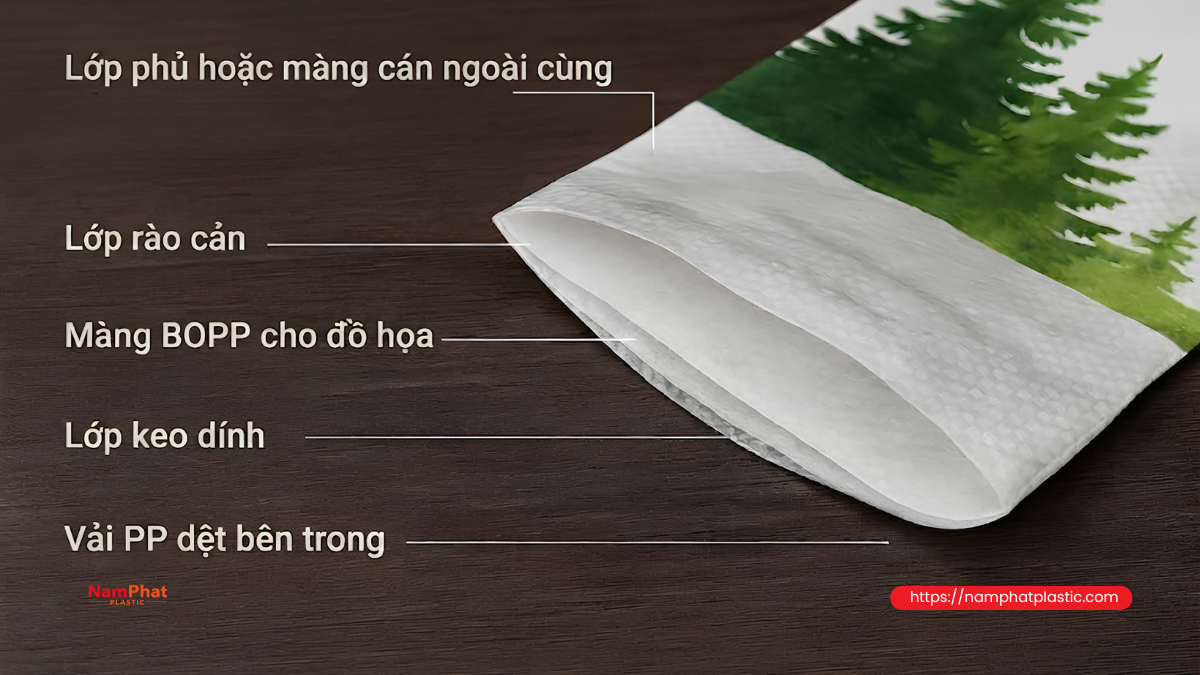
Bagged fertilizer weight should not be the only criterion.
For example, two 50 kg bags may be made as:
-
conventional woven PP bags;
-
coated woven PP bags;
-
BOPP bags;
-
bags with an inner PE liner;
-
bags with a single-fold mouth;
-
bags with a double-fold mouth;
-
bags using additional paper tape;
-
bag mouths with different thicknesses or structures.
Both bags contain 50 kg, but the actual thickness that the needle must penetrate can be completely different.
Therefore, when selecting bag sewing thread for fertilizer bags, at least the following should be checked:
| Factor | What to check |
| Packaging weight | 10 kg, 25 kg, 40 kg, 50 kg… |
| Bag material | Woven PP, coated PP, BOPP, kraft… |
| Inner liner | Yes or no |
| Number of bag-mouth layers | Single, double-folded, or multiple layers |
| Machine type | Handheld, stationary, or automatic |
| Needle type | Needle size and condition |
| Machine speed | Low, medium, or continuous operation |
| Stitch length | Short or long |
| Transportation method | Pallet, manual handling, container… |
This is the minimum information needed to begin selecting the thread.
3. Is 20/6 thread suitable for sewing fertilizer bags?
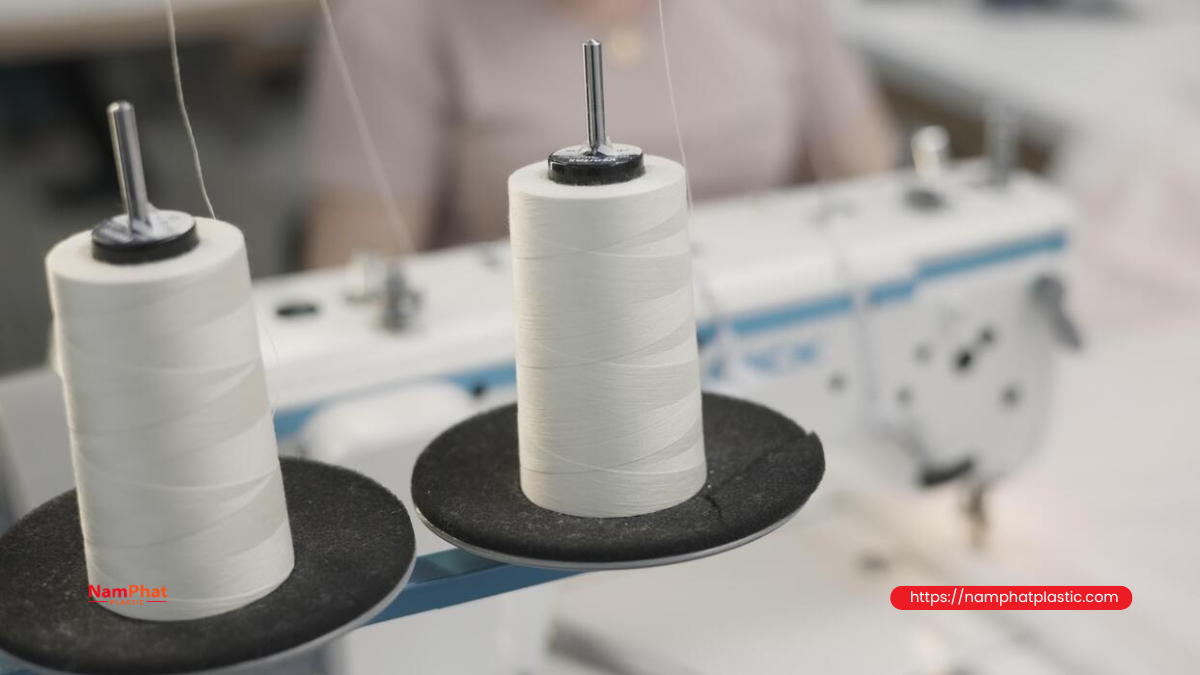
It can be suitable for certain configurations.
20/6 has a smaller cross-section than 20/8 and 20/9 when the other fiber and thread-structure factors are equivalent.
Common advantages of using a smaller thread include:
-
easier passage through the thread guides;
-
potentially lower friction;
-
easier running on some machines that are sensitive to larger thread;
-
no need to increase needle size too much;
-
a neater seam appearance.
20/6 can be considered for testing when:
-
the bag is relatively light;
-
the bag-mouth material is not too thick;
-
the seam is not subjected to very high loads;
-
a handheld machine has difficulty running larger thread;
-
the company wants to optimize thread consumption.
However, the decision should not be based solely on price per kg.
If the smaller thread requires more stitches, breaks frequently, or fails transportation requirements, the material savings no longer have much meaning.
4. 20/8 thread – a balanced choice for many bagging applications
If there is no test data yet, 20/8 is a specification worth using as an initial test point for many woven PP bags.
The reason is not that 20/8 is always the best, but that it sits between 20/6 and 20/9:
-
20/6 ← 20/8 → 20/9
This makes it easier to evaluate in both directions.
If 20/8 runs very smoothly but the seam strength is still insufficient:
→ test 20/9.
If 20/8 provides excessive strength but the machine still runs heavily, friction is high, or thread consumption needs to be reduced:
→ test 20/6.
This approach is more effective than selecting the largest specification from the beginning.
20/8 should be considered for initial testing when:
-
the woven PP bag has a medium structure;
-
25–50 kg fertilizer is packed but the bag mouth is not excessively thick;
-
a balance between machine performance and seam strength is needed;
-
the factory uses several types of bags;
-
a relatively versatile specification is required.
After testing, decide whether to keep 20/8 or switch to 20/6 or 20/9.
5. When should 20/9 thread be used for fertilizer bags?
20/9 has a larger component thread quantity than 20/8 when the same type of single input yarn is used.
This creates a larger finished thread.
20/9 is worth testing when:
-
the bag mouth is relatively thick;
-
the bag is folded into multiple layers;
-
the seam must withstand high loads;
-
the bags are frequently subjected to heavy handling;
-
high seam strength is required;
-
20/8 has been tested but the safety margin is not sufficient.
However, a common mistake is:
-
20/8 breaks → immediately switch to 20/9.
This may not address the actual cause.
If 20/8 breaks because of:
-
a needle with burrs;
-
an unsuitable needle eye;
-
a sharp thread guide;
-
excessive tension;
-
an incorrect thread-guide angle;
-
thread rubbing against the spool edge;
-
an excessively long thread path;
-
an excessively large splice in the spool;
then switching to 20/9 may only temporarily hide the problem.
6. Quick comparison of 20/6, 20/8, and 20/9 thread when sewing fertilizer bags
| Criterion | 20/6 | 20/8 | 20/9 |
| Relative size | Small | Medium | Large |
| Ability to pass through the needle | Easier | Medium | Requires more careful checking |
| Potential friction | Lower | Medium | Potentially higher |
| Thread length per same weight | More meters | Medium | Fewer meters |
| Potential strength | Lower | Fairly high | Higher |
| Light bags | Good | Good | May be excessive |
| Medium bags | Requires testing | Very worth testing | Requires testing |
| Thick/multi-layer bags | May be insufficient | May be suitable | Should be tested |
| Machines sensitive to large thread | Advantage | Medium | Requires checking |
Note: The table above only shows general trends when the raw material, twist, production quality, and thread structure are equivalent. The quality of a spool cannot be determined solely from the 20/6, 20/8, or 20/9 specification.
7. More important than 20/8 or 20/9: thread consistency
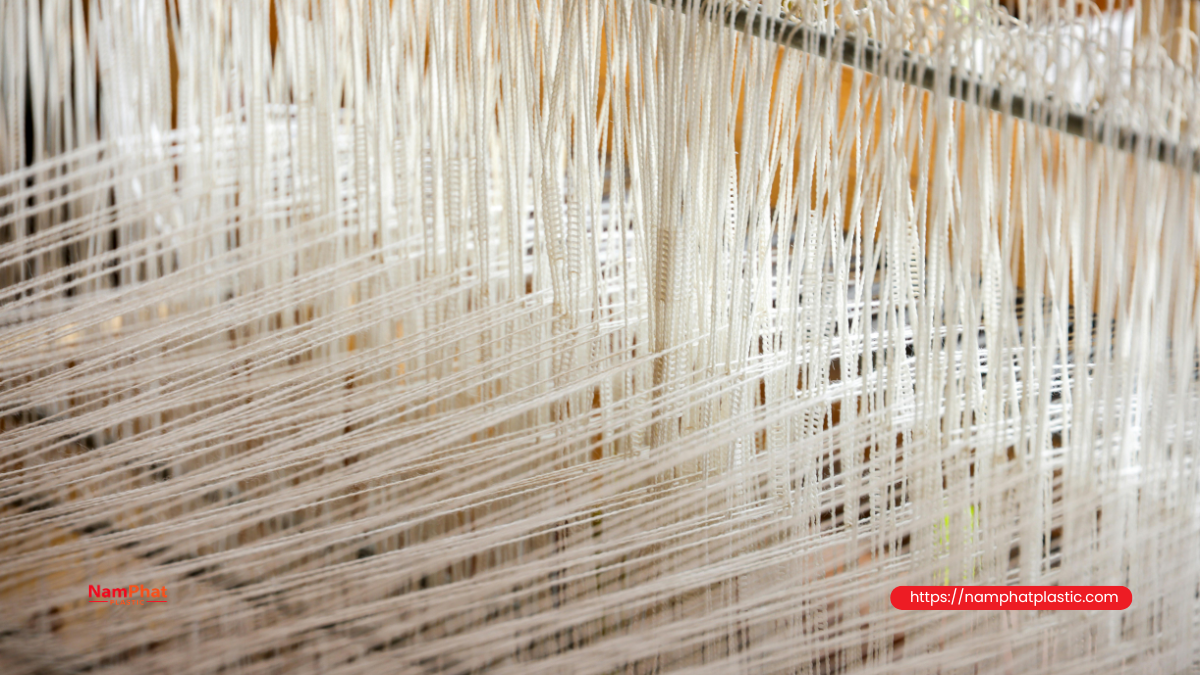
In actual production, a poor-quality thread spool does not necessarily fail continuously.
It may run:
-
500 meters normally → encounter a fuzzy section → continue running → encounter a thick spot → break → reconnect the thread → continue running.
This type of random defect makes factory control difficult.
Therefore, when purchasing fertilizer bag sewing thread in large quantities, attention should be paid to consistency from the beginning to the end of the spool.
Factors to check include:
Is the thread diameter consistent?
Variations in thread size can cause tension changes as the thread passes through the guides.
Is the twist consistent?
Excessively low twist can make the component fibers separate more easily.
Excessively high twist can make the thread stiff and increase the tendency to untwist or form loops.
Does the thread surface have excessive fuzz?
Fuzz increases friction at:
-
thread guides;
-
tension assemblies;
-
needle eye.
When the machine runs at high speed, this friction occurs continuously.
Is the finishing lubricant level consistent?
The thread surface needs to be properly controlled so that it passes through the guiding system and needle area smoothly.
In the industrial sewing-thread sector, major thread manufacturers also emphasize the role of thread construction, strength, abrasion resistance, and finish in machine sewability.
8. Low-fuzz thread is more important than many people think
At low speed, a slightly fuzzy section of thread may still pass through the needle.
But when the machine runs continuously, the fuzzy section has to pass through multiple points:
-
thread spool → guide eye → tension assembly → thread take-up lever → final guide eye → needle.
Each point creates friction.
If the thread surface is unstable, the process may gradually develop:
-
slight fuzzing → fiber separation → increased friction → heat → weakened fibers → breakage near the needle.
Therefore, when an operator reports, “The thread keeps breaking right near the needle,”
the immediate conclusion should not be that the thread is weak.
The following should also be checked:
-
needle eye;
-
needle groove;
-
burrs;
-
thread guides;
-
tension;
-
thread path;
-
needle straightness;
-
thread fuzzing before reaching the needle.
9. Handheld and stationary bag sewing machines may require different thread specifications
This is a particularly important factor for fertilizer factories.
9.1. Handheld bag sewing machines
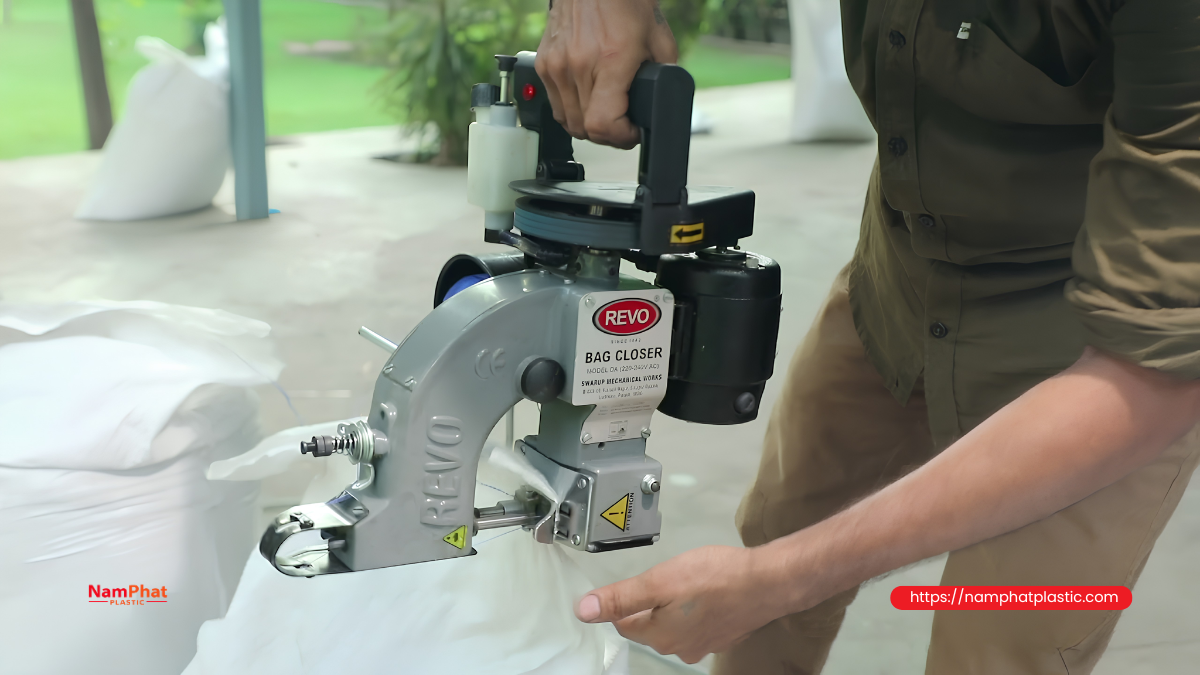
The operator holds the machine directly.
Machine angle, movement speed, and bag-mouth tension may vary between operators.
For this type of machine, attention should be paid to:
-
the spool must unwind smoothly;
-
spool size must be suitable;
-
thread must not catch on the edge;
-
loop twisting should be minimized;
-
excessively large thread should not be used if the machine and needle are unsuitable.
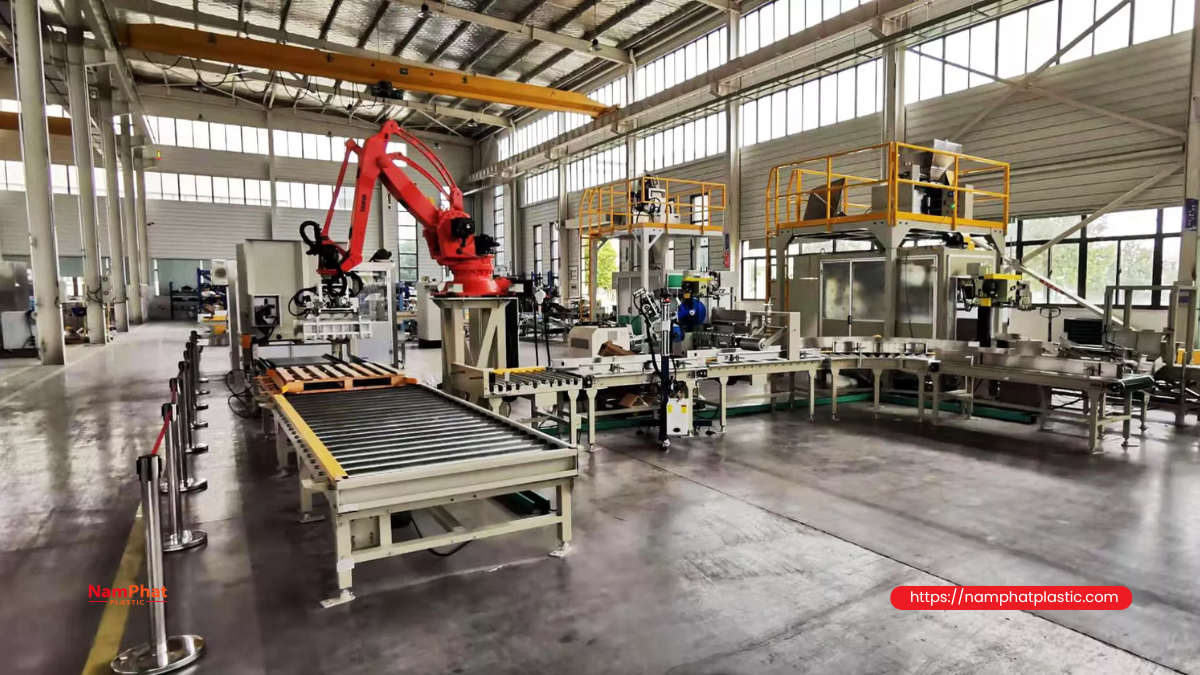
9.2. Stationary machines or automated lines
These machines generally prioritize continuous productivity.
Some industrial bag-closing heads operate at very high speeds; for example, Newlong states that some of its bag-closing heads can reach speeds of up to 2,700 rpm.
In this environment, small differences in thread become more important.
For example:
-
an abnormally thick section;
-
a splice;
-
a section with insufficient finish;
-
an unevenly twisted section;
can cause a machine that is running normally to stop.
Therefore, automated lines should prioritize consistency and machine sewability, not just breaking strength.
10. Do not choose the thread first and the needle afterward
Thread and needle work as a pair.
If the thread is too large for the needle eye:
-
friction increases;
-
the thread is compressed;
-
the thread surface may become fuzzy;
-
heat around the needle area increases;
-
thread breakage becomes more likely.
Conversely, if the needle is too large:
-
the hole punched in the bag is larger;
-
the woven PP area around the seam is damaged more;
-
the seam may look less attractive;
-
the risk of tearing around the needle holes may increase for some bag structures.
Therefore, when changing:
-
20/6 → 20/8 → 20/9
the following should be checked together:
-
thread → needle → tension → stitch length → thread guides.
Do not simply change the thread spool while keeping the entire machine unchanged.
11. What should be considered when fertilizer bags have an inner PE layer?
Many woven PP bags have an additional liner or inner material layer to improve product protection.
When sewing the bag mouth, the inner layer may:
-
wrinkle;
-
fold unevenly;
-
accumulate into multiple layers;
-
create different thicknesses at different positions.
This causes the load on the needle and thread to change along the seam.
Therefore, before concluding that the sewing thread is unstable, some defective bags should be opened and checked:
-
Are thread breaks concentrated where the inner liner has been folded multiple times?
If so, the cause may lie in the bag-mouth structure and bag-feeding operation rather than in the thread spool itself.
12. Do not evaluate fertilizer bag sewing thread by hand-pull strength alone
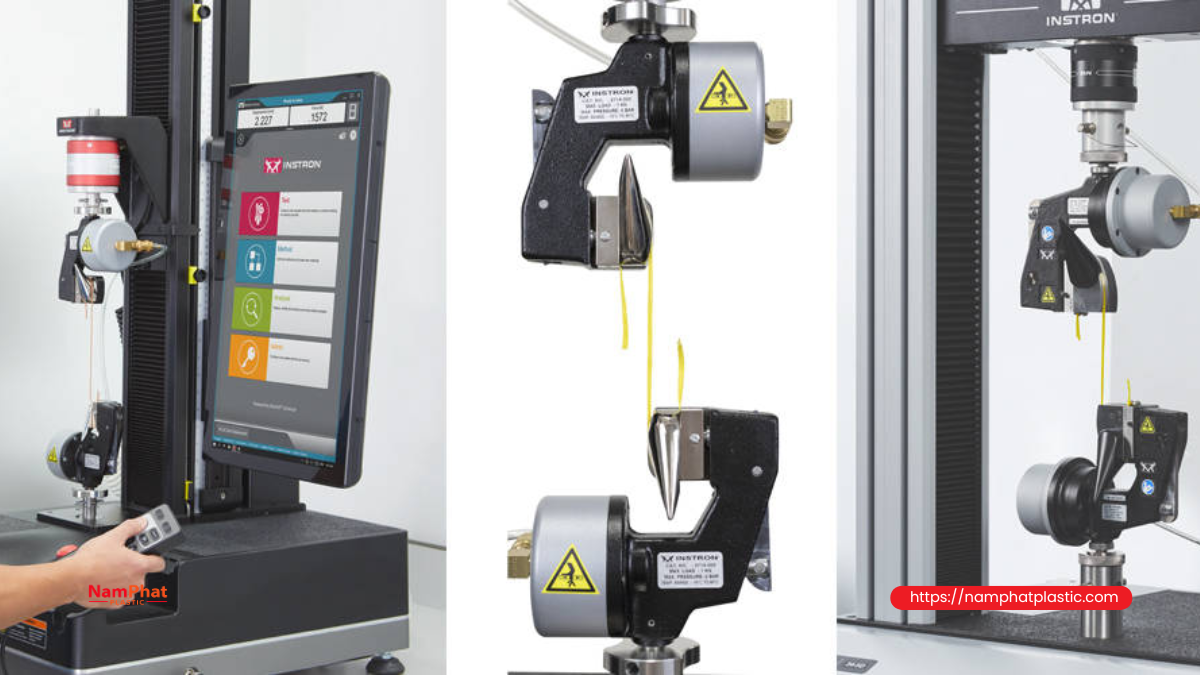
A very common test method is:
-
Take two types of thread → pull them by hand → consider the one that is harder to break to be better.
This method has very limited reference value.
Inside the sewing machine, the thread does not experience only one static pulling force.
It continuously:
-
accelerates;
-
decelerates;
-
changes direction;
-
experiences friction;
-
bends;
-
passes through the needle eye;
-
forms loops;
-
tightens into stitches.
Therefore, two threads with similar breaking strength can still have very different machine performance.
Coats' technical materials also distinguish between thread strength properties and good sewing performance, including abrasion resistance and the loads generated during sewing.
13. How to test 20/6, 20/8, and 20/9 at a fertilizer factory
The best approach is not to debate which type is better.
Run all three under the same production conditions.
Step 1: Record the initial conditions
Before testing, record:
-
bag type;
-
filling weight;
-
number of bag-mouth layers;
-
machine model;
-
needle type;
-
needle size;
-
stitch length;
-
machine speed;
-
current tension.
Without recording these factors, it is difficult to compare test results later.
Step 2: Check the machine first
Replace the needle if it has been used for a long time or is suspected to be damaged.
Visually and manually inspect the entire thread path.
Pay particular attention to:
-
sharp edges;
-
worn grooves;
-
burrs;
-
misaligned guide eyes;
-
dirty tension assemblies.
Do not use a machine that already has a problem to evaluate thread quality.
Step 3: Run each thread type
The sequence can be:
-
20/6 → 20/8 → 20/9
or start with 20/8 and move up or down depending on the results.
Each specification should be run for enough bags to allow random defects to appear if they exist.
Do not sew 2–3 bags and draw a conclusion.
Step 4: Record the number of machine stoppages
This is a very important indicator.
For example:
| Specification | Test bags | Thread breaks | Thread fuzzing | Skipped stitches | Machine stoppages |
| PE 20/6 | 100 | ||||
| PE 20/8 | 100 | ||||
| PE 20/9 | 100 |
After the test, it will become clear which specification actually suits the application.
14. Continue checking the seam after bagging
A thread that runs very well on the machine but produces an insufficiently strong seam is still not acceptable.
After sewing, check:
Pull the bag mouth
Observe how the seam behaves under load.
Bend and squeeze the seam area
Check whether the thread slips or becomes loose.
Check stitch spacing
Stitches that are too far apart may make the closure unstable.
Stitches that are too close together create too many holes along the bag mouth.
Check after transportation
This is the most valuable step.
A bag that looks very good immediately after sewing may only show problems after:
-
palletizing;
-
forklift handling;
-
truck vibration;
-
loading and unloading;
-
stacking multiple layers.
Therefore, the final sample should be evaluated under conditions as close as possible to actual transportation.
15. Is 20/9 thread definitely better than 20/8?
No.
If the raw material and structure are the same, 20/9 has a larger cross-section and potentially higher load-carrying capacity.
But production performance also depends on:
-
consistency;
-
twist;
-
fuzz;
-
finishing lubricant;
-
needle;
-
tension;
-
machine;
-
winding method.
There are cases where:
-
20/9 is stronger but the machine runs more heavily.
While:
-
20/8 is strong enough and runs more continuously.
In that case, 20/8 is the more economical choice.
16. Price per kg does not reflect the sewing cost per bag
Suppose:
-
thread A is cheaper;
-
but breaks frequently;
-
operators have to reconnect it;
-
each stoppage costs time;
-
some bags need to be resewn.
Meanwhile, thread B is slightly more expensive but allows the machine to run continuously.
If only:
-
cost per kg
is compared, A appears cheaper.
But when calculating:
-
thread cost + machine downtime + labor + rework bags + productivity losses
B may be cheaper.
Therefore, for a continuous production factory, it is better to focus on:
-
cost to completely close 1,000 bags
rather than simply asking:
-
“How much does one kilogram of thread cost?”
17. What characteristics should a good thread spool for a fertilizer factory have?
When evaluating a bag sewing thread supplier, the following checklist can be used:
Stable specification
One spool and the next should not differ excessively.
Low fuzz
Observe throughout the running process, not just at the beginning of the spool.
Uniform twist
There should be no abnormally loose sections.
Few thick spots
Thick spots may have difficulty passing through the needle eye.
Limited splices
Especially important for automatic machines.
Consistent spool unwinding
The spool should not collapse, tangle, or release thread jerkily.
Suitable core
The inner diameter, length, and core shape must fit the holder.
Stable thread surface
There should not be sections that are excessively dry or excessively slippery.
Sufficient seam strength
Evaluate using actual bag samples.
Stable performance across multiple spools
This is the most important test before purchasing in large quantities.
18. Common mistakes when choosing fertilizer bag sewing thread
Choosing the largest specification to “make it stronger”
This can unnecessarily increase needle size and friction.
Only considering breaking strength
Machine sewability is overlooked.
Seeing thread breakage and switching to larger thread
While the actual cause may be the needle.
Using one specification for every machine
Handheld and stationary machines may require different settings.
Not inspecting the thread spool
A poorly wound spool can cause tension fluctuations even when the thread itself meets requirements.
Not recording test parameters
When a problem occurs, it is impossible to know what was adjusted previously.
19. Quick guide to choosing fertilizer bag sewing thread
The following principle can be used as a starting point:
Light bag, thin bag-mouth structure
→ test 20/6
Conventional woven PP bag, medium thickness
→ start testing with 20/8
Thick bag, multiple layers, or higher seam-strength requirements
→ test 20/9
Then adjust based on actual machine-running results.
This should not be considered a mandatory standard table.
20. If 20/8 runs well, is it necessary to switch to 20/9?
Normally, no, not simply because you want “more safety.”
If 20/8:
-
does not break;
-
does not fuzz;
-
does not skip stitches;
-
produces an acceptable seam;
-
passes transportation testing;
then switching to a larger thread does not necessarily create additional value.
In industrial production, the better solution is generally:
-
sufficient strength + easy running + stability + reasonable cost
rather than:
-
the larger, the better.
21. When should you consider switching from 20/8 to 20/9?
It may be considered if the machine has been checked but the following still occur:
-
the thread line is operating too close to its strength limit;
-
seam strength is insufficient;
-
bags are frequently subjected to heavy handling;
-
the bag mouth has multiple layers;
-
customer requirements are higher;
-
transportation testing shows that 20/8 does not provide a sufficient safety margin.
When switching to 20/9, the needle and tension must be checked again.
22. When can you reduce from 20/9 to 20/8?
Conversely, if 20/9 is currently being used but:
-
strength is excessive;
-
the machine runs heavily;
-
thread friction is high;
-
a large needle is required;
-
thread consumption is high;
-
seam costs are not optimized;
20/8 can be tested.
Then repeat seam and transportation testing from the beginning.
If 20/8 still meets requirements, this may be a more economical solution.
23. How are spun polyester and multifilament thread different when bagging?
In addition to 20/6, 20/8, and 20/9 specifications, companies may encounter different thread constructions such as spun polyester or filament/multifilament.
These two concepts should not be treated as identical.
23.1. Spun thread
It is formed from many short fibers that are spun into yarn and then plied and twisted.
The surface has the characteristic structure of staple fibers.
23.2. Filament/multifilament thread
It is formed from continuous filaments.
Its surface structure, fuzz level, and mechanical characteristics differ from spun thread.
The industrial sewing-thread industry uses different thread constructions such as staple spun polyester, corespun polyester, and continuous filament depending on the application. Coats also classifies these structures separately because they have different strength and sewing-performance characteristics.
Therefore, it is not appropriate to simply compare:
-
20/9 with 900D
based only on perceived thread size.
They should be converted to Tex/Denier systems and, more importantly, tested on the same machine.
24. How should the process of selecting fertilizer bag sewing thread be carried out?
A practical process can be simplified into:
Step 1: Identify the bag type.
Step 2: Identify the actual number of layers at the sewing position.
Step 3: Identify the machine and needle.
Step 4: Use 20/8 as the central test sample if no data is available.
Step 5: Run a test.
-
If seam strength is insufficient: 20/8 → 20/9
-
If strength is excessive and optimization is needed: 20/8 → 20/6
Step 6: Check the seam.
Step 7: Check transportation performance.
Step 8: Run multiple spools to evaluate consistency between lots.
This selection method is much more evidence-based than simply pulling a sample of thread by hand.
Frequently asked questions about fertilizer bag sewing thread
1. Should a 50 kg fertilizer bag use 20/8 or 20/9 thread?
This cannot be determined based only on the 50 kg weight.
If the woven PP bag mouth has medium thickness, testing 20/8 can be a starting point. If the seam does not meet requirements or the bag-mouth structure is thick and multi-layered, continue testing 20/9.
2. Does 20/9 thread break less often than 20/8?
Not necessarily.
20/9 is larger, but thread breakage also depends on twist, surface condition, finishing lubricant, needle, tension, and thread path.
3. Why does the thread often break right near the needle?
Common causes to check include:
-
dull needle;
-
bent needle;
-
burrs around the needle eye;
-
thread too large for the needle;
-
excessive tension;
-
sharp thread guides;
-
thread fuzzing before reaching the needle.
Do not simply increase thread size.
4. Should woven PP fertilizer bags use the largest possible thread?
No.
Thread that is too large may require a larger needle and increase friction.
The goal is to select a specification with sufficient strength while maintaining stable machine performance.
5. Does the machine need to be readjusted when changing thread suppliers?
It should be checked.
Even when two products are both labeled 20/8, their twist, actual diameter, surface, finishing lubricant, and spool winding may differ.
Therefore, the optimal tension may not be the same.
Conclusion: Which fertilizer bag sewing thread is best?
There is no single answer that every fertilizer bag must use 20/6, 20/8, or 20/9.
A more appropriate selection approach is:
-
20/6 – test when a smaller thread, lighter running, and a relatively light bag structure are needed.
-
20/8 – a central option worth testing first for many woven PP bags.
-
20/9 – test when the bag mouth is thick, multi-layered, or higher seam strength is required.
However, thread specification is only one part of the equation.
Stable seam performance depends on:
-
thread quality + needle + tension + thread path + machine + bag-mouth structure + transportation conditions.
A good bag sewing thread is not necessarily the thread that is hardest to break by hand.
A good thread is one that:
-
has sufficient strength, low fuzz, consistent construction, few splices, stable unwinding, and can run continuously on the machine with a low stoppage rate.
This is also the more important criterion when selecting thread for an industrial fertilizer bagging line.
Fertilizer bag sewing thread selection consultation
When selecting bag sewing thread for a specific production line, the company should provide the manufacturer or supplier with:
-
current bag type;
-
packaging weight;
-
images of the bag mouth;
-
bag sewing machine model;
-
current thread type;
-
needle specification;
-
current defects, if any.
With this information, Nam Phat Plastic can help determine whether 20/6, 20/8, or 20/9 should be tested on the actual machine before deciding on large-volume use.
Proper testing helps avoid two common situations: selecting thread that is too small and produces insufficient seam strength, or selecting thread that is too large and increases friction and creates unnecessary difficulties for the bag sewing machine.
>>> See more:
- 0 Comment


