


 Phan Van Hoang
- 20/07/2026
- 479
In the fertilizer and chemical manufacturing industry, bagging is more than simply filling products into packaging. It is a critical control point that directly affects weighing accuracy, product preservation, operational safety, brand image, and the overall efficiency of the production plant.
Granular fertilizers, powdered chemicals, moisture-sensitive materials, and corrosive products each have different characteristics. Therefore, an effective bagging system should be designed according to the actual properties of the product rather than selecting equipment based solely on its rated capacity.
An effective fertilizer and chemical bagging solution should address five key requirements simultaneously: accurate weighing, stable production speed, dust control, product protection, and reduced dependence on manual labor.
Table of Contents [Hide]
1. Why do fertilizers and chemicals require specialized bagging solutions?
Unlike ordinary consumer products, fertilizers and chemicals can present various challenges during material feeding, weighing, and bag sealing.
1.1. Product characteristics vary significantly
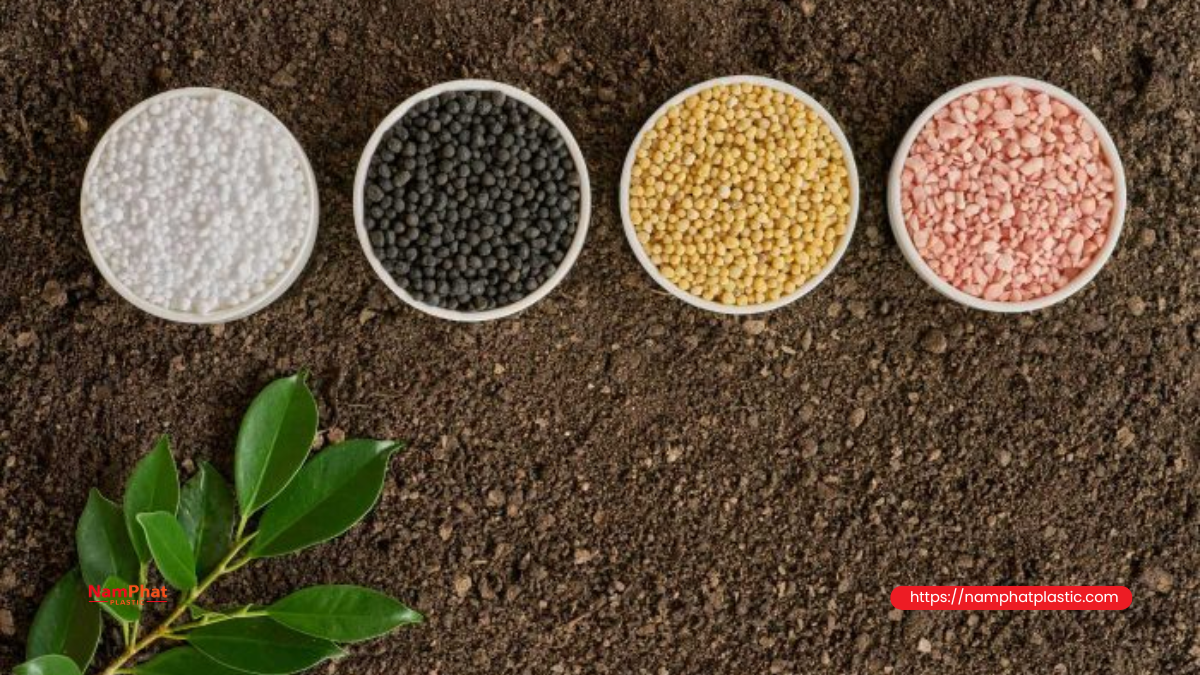
Even within the same product category, physical properties can vary considerably:
- Granular NPK fertilizers generally flow well but can break under excessive impact.
- Urea and certain fertilizers readily absorb moisture and tend to cake under improper storage conditions.
- Fine chemical powders may generate airborne dust and trap air inside the bag.
- Products with irregular particle sizes can cause weighing fluctuations.
- Some chemicals are corrosive and require compatible machine construction materials.
- Low bulk-density materials may require vibration, compaction, or deaeration before sealing.
Selecting an unsuitable feeding method may result in unstable weighing, swollen bags, dusty bag openings, poor sealing quality, or product leakage during transportation.
1.2. Even small weighing errors can lead to significant losses
When every bag is overfilled by only a small amount, the accumulated material loss over a month or a year can become a considerable expense. Conversely, underweight bags may lead to customer complaints, reinspection, or damage to the manufacturer's reputation.
Therefore, the objective of a bagging system is not simply to achieve the target weight, but to maintain weighing accuracy consistently within the allowable tolerance, even when hopper levels, moisture content, or bulk density change during production.
1.3. Bagging environments are prone to dust generation
Fertilizer and chemical dust can accumulate on machines, floors, sensors, electrical cabinets, and surrounding work areas. Dust buildup not only increases cleaning costs but also affects equipment durability, packaging quality, and workplace conditions.
For certain types of fine powders, manufacturers should also evaluate the risks of combustible dust, electrostatic discharge, and ventilation requirements. These assessments should be based on the product's Safety Data Sheet (SDS), material characteristics, and the regulations applicable at the operating site.
2. Factors to evaluate before designing a bagging line
There is no single bagging configuration suitable for every product. Before selecting equipment, manufacturers should thoroughly evaluate the following characteristics.
| Characteristics to evaluate | Potential bagging issues | Recommended solution |
| Particle size and shape | Blocked discharge, particle breakage, uneven material flow | Select suitable discharge openings, feeding systems, and operating speeds |
| Material flowability | Slow feeding or unstable weighing | Use screw feeders, belt feeders, vibrators, or agitators |
| Bulk density | Poor bag shape or weighing deviations | Adjust bag dimensions and weighing parameters |
| Moisture absorption | Caking, hopper blockage, reduced product quality | Control humidity and use moisture-resistant packaging |
| Dust generation | Workplace contamination and dusty bag openings | Enclose transfer points and install localized dust collection systems |
| Air retention | Swollen bags and unstable pallet stacking | Add vibration, deaeration, or air-release mechanisms |
| Corrosiveness | Reduced service life of contact components | Select materials compatible with the product |
| Toxicity or irritation | Increased exposure risk for operators | Improve system sealing and increase automation |
| Product temperature | Bag deformation and weakened seals | Stabilize product temperature before bagging |
In addition to product characteristics, manufacturers should also determine the required bag weight, hourly production capacity, pallet type, plant layout, installation height, power supply, compressed air availability, and compatibility with the existing production line.
3. Packaging options for fertilizers and chemicals
Packaging should be selected based on moisture resistance, mechanical strength, chemical compatibility, bag-closing method, and transportation conditions.
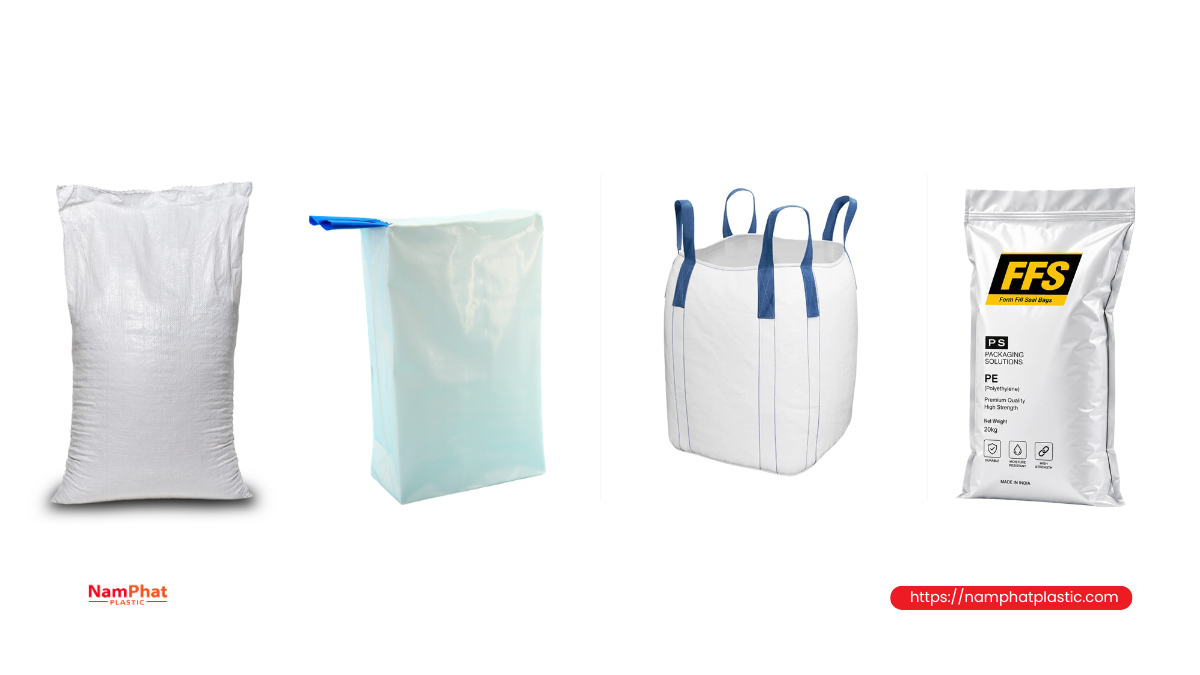
3.1. Open-mouth PP woven bags
Open-mouth PP woven bags are widely used for granular fertilizers, industrial raw materials, and many types of dry chemicals. They offer high tensile strength, excellent load-bearing capacity, and cost-effective performance.
Depending on storage requirements, PP woven bags can be:
- Laminated.
- BOPP laminated for high-quality printing.
- Equipped with an inner PE liner.
- Bottom stitched or block-bottom sealed.
- Closed by sewing, heat-sealing tape, or a combination of liner sealing and sewing.
For moisture-sensitive products, the inner liner plays a critical role in product protection. However, the liner design must be compatible with both the filling process and the bag-closing method. An excessively long or poorly secured liner may wrinkle, jam, or reduce sealing effectiveness.
3.2. Valve bags
Valve bags are suitable for many fine powders and products that require reduced dust emissions during filling. Material enters the bag through a valve located at one corner, providing a more enclosed filling point than open-mouth bags.
Depending on the product characteristics, the system may use screw feeding, impeller filling, or pneumatic conveying to fill the bag. Valve bags generally produce a uniform bag shape that is well suited for palletizing. However, proper control of air release and cleanliness around the valve area remains essential.
3.3. Form-fill-seal (FFS) bags
Form-fill-seal (FFS) is a packaging method in which bags are formed, filled, and sealed directly from a continuous roll of film on the production line. This solution is well suited for plants with high production volumes, standardized bag sizes, and a high level of automation.
An FFS system can help manufacturers:
- Eliminate manual bag feeding.
- Produce airtight seals suitable for moisture-sensitive products.
- Reduce labor requirements in the packaging area.
- Maintain consistent bag dimensions and appearance.
- Integrate easily with robotic palletizing systems.
In return, manufacturers must carefully control film quality, sealing temperature stability, and the compatibility between the packaging film and the product.
3.4. Jumbo FIBC bags
Jumbo FIBCs (Flexible Intermediate Bulk Containers) are commonly used for transporting large quantities of powders or granular materials between manufacturing plants, distribution centers, and industrial customers.
A jumbo bagging system may include:
- A bulk bag hanging frame.
- A bag spout clamping and sealing mechanism.
- A load cell weighing system.
- A vibration or product compaction device.
- A bag lifting mechanism.
- A dust collection and product recovery system.
- A conveyor or roller table for bag discharge.
For specialized chemicals, additional considerations include static electricity control, liner selection, moisture protection, and appropriate bag-closing methods.
4. Feeding and weighing technologies
The weighing technology used directly determines the productivity and accuracy of a bagging line. Different materials require different feeding principles.
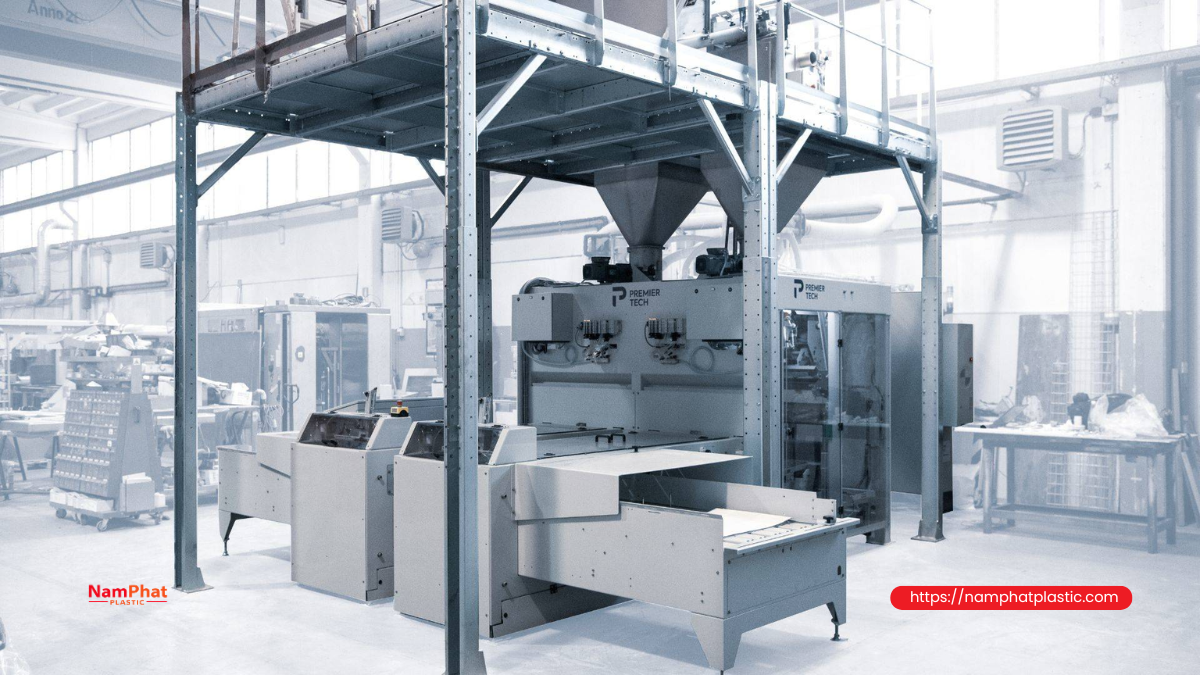
4.1. Gravity feeding
Gravity feeding is suitable for free-flowing granular materials. The product flows from the hopper into the weighing system by gravity without requiring complex mechanical feeding devices.
To improve weighing accuracy, the filling process is usually divided into two or more stages. The first stage fills rapidly to reach most of the target weight, while the second stage slows down to minimize overfilling.
This solution features a relatively simple structure, easy cleaning, and low energy consumption. However, its performance depends heavily on maintaining a stable material flow.
4.2. Belt feeding
Belt feeders are suitable for granular products, irregularly shaped particles, or materials that can be damaged by excessive mechanical force. Compared with some other feeding methods, belt feeding handles products more gently.
The belt speed is automatically controlled by the weighing program, allowing the system to switch from fast feeding to fine feeding. The conveyor should be designed to minimize material buildup and facilitate cleaning.
4.3. Screw feeding
Screw feeders are commonly used for powdered chemicals, poorly flowing powders, or products that require precise flow control. The screw rotation speed determines the amount of material delivered to the weighing system or directly into the bag.
The system may operate with two feeding speeds or use separate coarse and fine screws. For materials that tend to compact or bridge inside the hopper, an agitator or anti-bridging device may also be required.
4.4. Vibratory feeding
Vibratory feeders are suitable for small particles, crystalline materials, or products that require gentle handling. The vibration frequency and amplitude are adjusted to control the feeding rate.
This method has relatively few moving parts in direct contact with the product. However, practical testing is recommended to determine its suitability for each material.
4.5. Impeller or pneumatic filling
For fine powders, low-density materials, or products packaged in valve bags, the filling system may use an impeller or pneumatic conveying.
Its main advantages are high filling speed and the ability to handle fine powders efficiently. However, the system must carefully control internal bag pressure, the amount of conveying air, and dust emissions.
4.6. Net weighing and gross weighing
The two most common weighing methods are net weighing and gross weighing.
Net weighing
With a net weigher, the product is first weighed in a separate weighing hopper before being discharged into the bag. While one bag is being sealed and discharged, the next batch can already be weighed.
This method is well suited for high-capacity production and helps maintain a consistent operating cycle. However, it requires additional installation height and proper control of material that continues to fall after the discharge gate closes.
Gross weighing
With a gross weigher, the bag is suspended directly from the weighing system, and the product is filled into the bag while it is being weighed.
This design is generally more compact and reduces the number of product transfer steps. It is suitable for many medium-capacity production lines or applications that frequently change bag sizes.
The overall operating speed depends on the time required for bag clamping, product filling, and bag discharge.
5. Structure of a complete bagging line
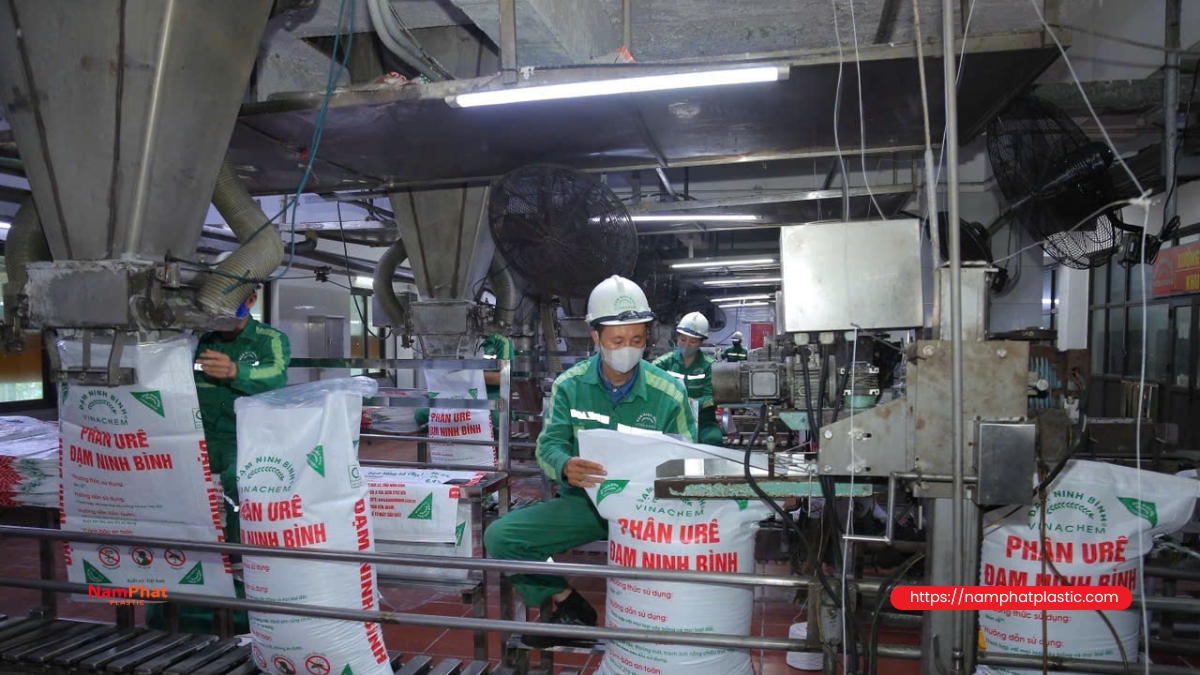
A typical automatic bagging line consists of multiple interconnected stages rather than just a single weighing machine.
Receiving and stabilizing the raw material.
Raw materials from silos, mixers, or production lines are fed into an intermediate hopper. The hopper must maintain an appropriate material level for the dosing unit to operate stably.
High and low-level sensors can be used to control the upstream feeding equipment, preventing the hopper from becoming overly full or running out of material.
Arch breaking and anti-adhesion.
Powdery materials or hygroscopic products can form arches inside the hopper. When this happens, the downward flow is interrupted even if material remains in the hopper.
Depending on the product type, solutions may include:
- Low-speed agitators.
- Hopper wall vibrators.
- Pneumatic actuation mechanisms.
- Appropriate hopper angles and surface designs.
- Anti-adhesion coatings.
Heavy vibration should not be applied by default, as improper vibration can cause the product to compact further.
Feeding and quantitative weighing.
The controller receives signals from the load cell and adjusts the feeding mechanism stage by stage. The weighing algorithm needs to account for the material remaining in mid-air after the feed gate closes.
For products with varying density, the system should allow storing multiple formulas and self-calibration within design limits.
Bag placing and clamping.
In semi-automatic lines, workers place the bag onto the discharge spout and activate the clamping mechanism. With automatic lines, a robot or bag placer retrieves bags from the magazine, opens the mouths, and places them onto the filling position.
The clamping mechanism must hold the bag securely without tearing the material. Contact points must be designed to suit paper bags, woven PP bags, lined bags, or film bags.
Product filling and dust control.
The filling spout should form a relatively tight seal with the bag mouth. Local dust collection systems should be positioned right at the generation points rather than merely extracting air from the entire area generally.
Suction flow must be sufficient to capture dust without being so strong that it pulls away valuable product. Recovered dust must also be handled based on its purity level and reusability.
Vibration, air purging, and bag shaping.
Powdery chemicals can retain a significant amount of air after filling. If sealed immediately, the bags may bloat, become difficult to stack, or easily deform.
Vibration tables, air purging mechanisms, or degassing systems can help stabilize the product inside the bag. Vibration intensity must be adjusted to prevent particle breakage or product segregation.
Bag sealing.
The sealing method depends on the bag type and storage requirements:
- Sewing thread for woven PP bags or multi-layer paper bags.
- Heat sealing for PE bags and plastic liners.
- Fold-over combined with sewing.
- Heat-sealing tape.
- Multi-layer hermetic sealing for moisture-sensitive products.
- Self-closing valves for certain valve bag types.
Bag mouths must be cleaned prior to sealing. Dust adhered to the sealing area can reduce strength and create micro-leaks that are difficult to detect visually.
Weight checking and rejecting defective bags.
After sealing, bags can pass through an independent checkweigher. Bags falling outside the limits are separated from the line for handling.
Using a checkweigher helps businesses monitor error trends, detect anomalies, and evaluate the efficiency of the bagging machine over time.
Code printing and data traceability.
Printers can add production dates, lot numbers, operating shifts, or traceability codes onto the bags. Weighing data is connected to the management system to support production control.
When complaints arise, batch-specific information helps businesses quickly identify the relevant time, formula, equipment, and production shift.
Palletizing and pallet protection.
Finished bags are flattened, oriented, and delivered to a palletizer or robot. The stacking pattern must ensure stability, even load distribution, and suitability for transportation vehicles.
Pallets can then be wrapped with stretch film, shrink film, or stretch hoods to limit moisture, dust, and shifting during storage.
6. Bagging solutions for each product group
6.1. Granular fertilizers
For NPK, urea, DAP, or similar granular products, solutions generally prioritize fast feeding capabilities without fracturing the granules.
Reference configurations include:
- Storage hoppers with level sensors.
- Gravity or belt feeders.
- Electronic net weighers.
- Open-mouth bag placers.
- Sewing devices or liner sealers.
- Bag flattening conveyors.
- Checkweighers.
- Palletizing robots.
For hygroscopic products, bags with moisture-barrier capabilities must be prioritized, and the time from filling to sealing should be shortened.
6.2. Fine powder chemicals
Fine powders require stricter dust and flow control. Screw feeders are typically a suitable choice, especially when products have poor flowability.
The system should feature:
- Sealed structures at transfer points.
- Local dust extraction at filling spouts.
- Anti-arching devices inside the hopper.
- Coarse and fine dosing screws.
- Vibration or air-purging devices.
- Bag mouth cleaning mechanisms.
- Liner sealing systems.
If chemicals are irritating or require restricted contact, direct manual operations by workers should be minimized.
6.3. Moisture-sensitive and caking products
With this product group, packaging and environmental conditions are just as important as the bagging machine. Businesses must consider:
- Humidity control in the packaging area.
- Limiting the time products are exposed to air.
- Using bags with suitable moisture-barrier layers.
- Hermetically sealing liners immediately after filling.
- Minimizing product accumulation points within equipment.
- Scheduled cleaning of hoppers and feed lines.
- If products cake before entering the machine, the weighing system will struggle to maintain efficiency. Therefore, solutions must begin at the internal storage and transport stages.
6.4. Corrosive chemicals
Not all stainless steels are suitable for every chemical. Construction materials must be selected based on product compatibility, humidity, temperature, and cleaning frequency.
Besides direct contact parts, attention must be paid to:
- Bolts and accessories.
- Gaskets.
- Sensor housings.
- Electrical cabinets.
- Dust collection systems.
- Surfaces located near vapor or dust generation points.
Proper initial design helps reduce component replacement costs and prevents failures caused by localized corrosion.
6.5. Jumbo bag packaging
Jumbo bagging lines are suitable for materials sold to industrial customers or for large-volume internal transport.
Systems must control three main issues: total mass accuracy, bag shaping capability, and lifting safety. Filled bags must maintain a stable shape, untwisted lifting loops, and a proper center of gravity.
7. Dust control and safety in the bagging area
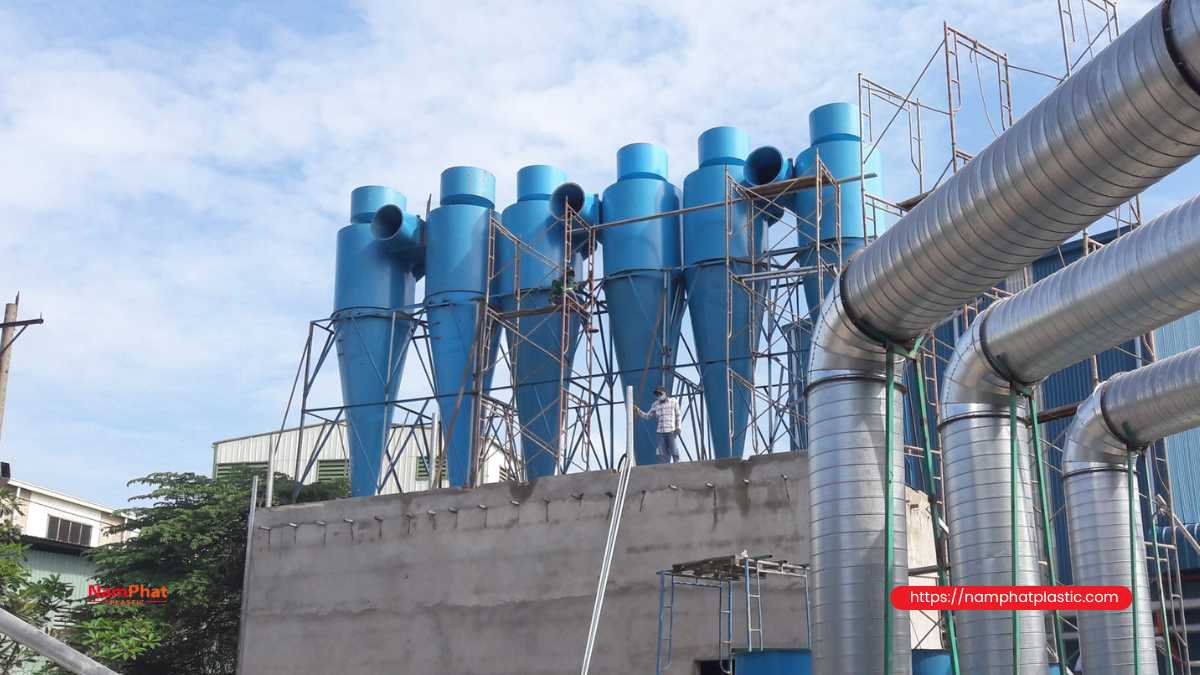
Good solutions must prioritize eliminating risks at the source rather than relying solely on face masks or end-of-shift cleaning.
Sealing dust generation points.
Transfer points from silos to hoppers, weighers to bags, and bags to conveyors can all generate dust. Each location must be shielded and connected to a suitable extraction system.
Extraction ducts should be arranged so they do not obstruct bag-changing, maintenance, or cleaning operations.
Static electricity control.
Powdery materials, plastic bags, and product movement can generate electrical charges. Metal components must be grounded according to safety designs. For products with special risks, expert assessments must be conducted before selecting electrical equipment and explosion-proof measures.
Segregating incompatible products.
Plants packaging multiple chemicals need procedures to prevent cross-contamination. Shared equipment, pipelines, or cleaning tools must be evaluated based on the compatibility of each product.
One should not rely solely on "blowing clean" if raw materials have strict purity requirements or react upon contact with one another.
Sanitation-friendly design.
Machine surfaces should minimize dead zones, narrow gaps, and powder accumulation spots. Inspection doors must allow access to areas requiring cleaning without disassembling too many parts.
Cleaning procedures should clearly define frequencies, methods, tools, and validation criteria prior to product changeovers.
8. Choosing the level of automation
Automation levels should be determined by output volume, variety of specifications, labor costs, and safety requirements.
Semi-automatic lines.
Workers manually place bags while the machine automatically weighs and fills products. Afterwards, bags are transferred to a sewing or sealing machine.
This solution suits:
- Moderate outputs.
- Diverse bag types.
- Frequent product changes.
- Controlled initial investment budgets.
- The limitation is that it still relies on the speed and skill of operators.
Automatic lines.
Machines automatically pick bags, open mouths, clamp bags, fill products, and transfer them to the sealing stage. Operators mainly monitor and replenish bags in the magazine.
Automatic solutions help stabilize productivity, reduce dust exposure, and limit operational errors.
Fully automated lines.
Lines can include bagging, inspecting, code printing, metal detection where appropriate, palletizing, and pallet wrapping. Operating data is centralized on a management system.
Investment costs are higher, but it suits large-scale plants operating multiple shifts with clear traceability requirements.
9. Key indicators to monitor after operation
To evaluate actual efficiency, businesses should not solely track bags per hour. A comprehensive set of indicators can include:
- Average productivity and shift-by-shift productivity.
- Average weight error rates.
- Percentages of bags exceeding upper or lower limits.
- Over-feeding product amounts.
- Rates of torn, open, or defective sewed bags.
- Equipment downtime.
- Product changeover times.
- Amounts of dust or product requiring collection.
- Headcount per line.
- Maintenance costs per unit of output.
- Overall equipment effectiveness (OEE).
- Rates of tilted or deformed pallets.
This data helps identify loss causes and supports continuous improvement.
10. Investment efficiency of the bagging line
Machine purchase price is only part of the investment equation. Businesses must calculate the total cost of ownership throughout the equipment's lifecycle.
Benefits may stem from:
- Reducing over-fed product quantities.
- Lowering headcount.
- Minimizing damaged bags and spilled products.
- Reducing cleaning downtime.
- Increasing shift capacity.
- Cutting complaint and re-inspection costs.
- Enhancing traceability.
- Improving working conditions.
Annual net efficiency can be estimated via the formula:
Net benefit = value of reduced product loss + saved labor costs + reduced damaged bag costs + increased productivity value − additional operational costs.
When comparing options, actual production data should be used instead of relying solely on maximum capacities published by suppliers.
11. Criteria for selecting a bagging solution supplier
A suitable supplier does not just sell machines; they must understand material behavior and whole-line integration capabilities.
Capability for testing with real products.
Trial samples help determine:
- Appropriate feeding methods.
- Filling speeds.
- Dust generation potential.
- Air retention levels in bags.
- Weight stability.
- Seam or seal quality.
- Post-filling bag shapes.
Test results form an important basis for finalizing configurations and acceptance criteria.
Providing clear acceptance criteria.
Contracts should specifically regulate:
- Test product types.
- Bag specifications and weights.
- Target productivity.
- Error limits.
- Continuous operation durations.
- Allowable defective bag rates.
- Raw material conditions.
- Supply and integration scopes.
Clearer criteria mean fewer arguments during acceptance.
Maintenance-friendly design.
Wear-and-tear components must be easily accessible and replaceable. Spare parts inventories should be identified before the line enters production.
Plants should also be handed electrical schematics, operating manuals, parameter lists, backup programs, and basic troubleshooting guides.
Expandability.
Initial lines may consist only of weighers and sewing machines, but designs should provision for adding bag placers, checkweighers, palletizing robots, or data collection systems.
Open designs help businesses upgrade according to output without replacing entire equipment.
12. Effective deployment process for bagging solutions
Step 1: Current status survey
Gather data on products, capacities, bag types, layouts, existing equipment, and ongoing issues.
Step 2: Product testing
Perform feeding, weighing, and bagging trials using real samples. Adverse conditions likely to appear in production, such as humidity or density variations, should also be tested.
Step 3: Configuration design
Select feeding methods, scale types, bag clamping mechanisms, dust extraction schemes, and automation levels.
Step 4: Operational flow simulation
Evaluate pathways for raw materials, empty bags, finished bags, pallets, operators, and forklifts. Logical traffic flows help minimize crossing paths and enhance safety.
Step 5: Pre-shipment inspection
Equipment must undergo trial runs against agreed criteria. Mechanical, electrical, programmatic, and interface errors should be resolved before shipping to the plant.
Step 6: Installation and acceptance
Following installation, systems run on real products under production conditions. Operating and maintenance personnel must receive direct training.
Step 7: Early-stage monitoring
Initially, businesses should monitor weighing errors, productivity stability, dust generation levels, and defective bag rates to fine-tune parameters.
13. Conclusion
An effective fertilizer and chemical bagging solution must be built around product characteristics, packaging types, and actual operating conditions. Focusing solely on machine capacity while ignoring flowability, hygroscopicity, dust generation levels, or corrosiveness can lead to weighing errors, blockages, open bags, and high maintenance costs.
Appropriate solutions require synchronized integration among storage systems, feeders, quantitative weighers, bag-placing mechanisms, mouth-sealing devices, dust collection, weight checking, and palletizing. When properly designed, lines not only boost productivity but also reduce losses, stabilize finished product quality, and improve factory working conditions.
Prior to investment decisions, businesses should test with actual products and packaging, establish specific acceptance criteria, and calculate total lifecycle ownership costs. This serves as the foundation for selecting safe, accurate, and long-term expandable bagging systems.
Frequently asked questions about fertilizer and chemical bagging
1. Can fertilizer bagging machines be used for powdered chemicals?
Not all fertilizer bagging machines suit powdered chemicals. Granular fertilizers typically use gravity or belt feeding, whereas fine powders may require screw conveyors, degassing mechanisms, and tighter dust collection systems. Real-product evaluations are necessary before sharing equipment.
2. Should woven PP bags or PE bags be used?
Woven PP bags offer good mechanical strength and suit many granular products. PE bags or PE-lined bags suit applications requiring high moisture resistance and hermetic sealing better. In many cases, businesses use woven PP bags combined with liners to leverage the advantages of both materials.
3. How can dust be reduced at bagging machines?
Filling points must be sealed, extraction hoods positioned near generation sources, feeding speeds adjusted, and bag mouths held securely. For fine powders, additional degassing, bag-mouth cleaning, and dust recovery systems should be considered.
4. Why do bag weights still fluctuate despite using electronic scales?
Causes may stem from unstable feed streams, shifting product densities, vibrations from surrounding equipment, delayed material falling after feed gates close, or mechanical impacts on load cells. The entire system must be evaluated rather than merely recalibrating scales.
5. What causes bags to bloat after filling?
This phenomenon typically occurs when powders retain substantial air during filling. Solutions can include reducing filling speeds toward final stages, bag vibration, air purging, using bags with appropriate degassing capabilities, or prolonging stabilization times prior to sealing.
6. When should one invest in palletizing robots?
Robots suit scenarios involving large outputs, relatively stable bag specifications, multi-shift plant operations, or when manual palletizing imposes heavy pressure on labor. Prior to investment, line speeds, pallet patterns, stacking configurations, and safety spaces around robots must be evaluated.
- 0 Comment


