


 Phan Van Hoang
- 28/07/2026
- 150
In the packaging industry, terms such as PE 20/6, PE 20/8, and PE 20/9 frequently appear on quotations, thread samples, and customers’ technical requirements. However, not every user fully understands what these numbers represent.
Some people believe that 20/9 means the thread has a diameter of 20 mm, while others understand 20/8 as a type of thread made from eight filament fibers. In reality, these interpretations are not accurate.
The designations 20/6, 20/8, and 20/9 are commonly used to describe the yarn count of the single yarn and the number of single yarns twisted together to form the finished sewing thread. Understanding the thread structure correctly helps businesses choose the right thread for the sewing machine, bag material, filling weight, and seam-strength requirements.
Table of Contents [Hide]
1. What is PE sewing thread?
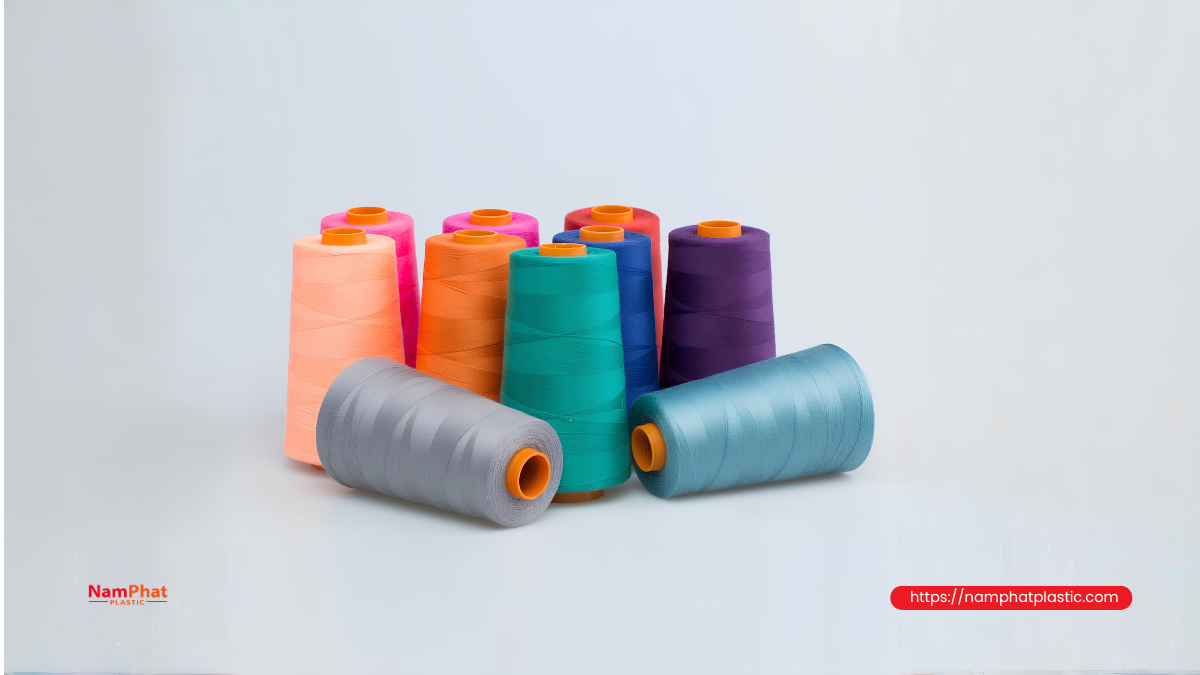
PE sewing thread is a type of thread made from polyester or polyester staple fiber, depending on the terminology and conventions used by different suppliers in the market.
In Vietnam's bag-sewing industry, "PE sewing thread" is commonly used to refer to thread made from spun polyester yarn, meaning short polyester fibers are spun into single yarns, which are then plied and twisted to form a larger finished sewing thread.
The common manufacturing process includes:
- Using PE single yarn with the appropriate yarn count.
- Plying multiple single yarns together.
- Twisting the yarns to form a stable structure.
- Applying oil or lubricant to support machine operation.
- Winding the thread onto cones, spools, or packages according to requirements.
Compared with an unplied single yarn, PE sewing thread has higher strength, a more compact structure, and is suitable for industrial bag-sewing machines operating at high speeds.
PE sewing thread is commonly used for sewing:
- Rice and agricultural-product bags.
- Animal-feed bags.
- Flour, sugar, and salt bags.
- Fertilizer and chemical bags.
- Stone-powder and construction-material bags.
- Woven PP bags with or without lamination.
- Multi-layer paper bags.
- Certain jumbo bags and specialized industrial bags.
2. What do the designations 20/6, 20/8, and 20/9 mean?
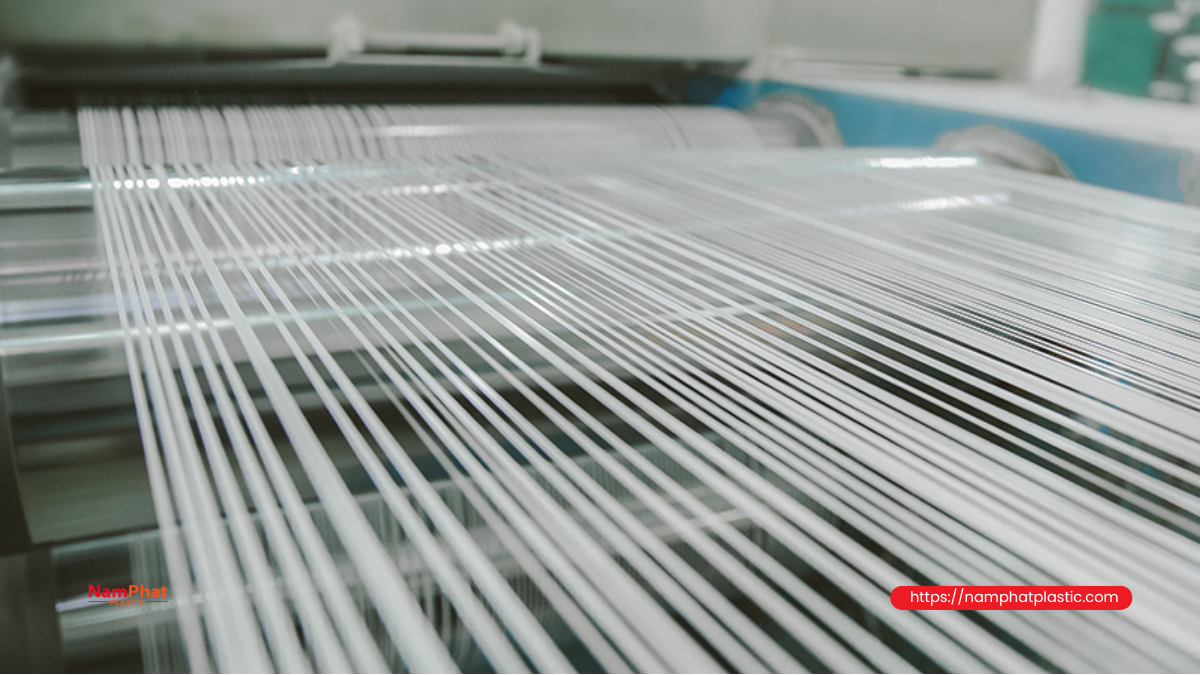
In designations such as 20/6, 20/8, and 20/9, the two parts of the designation have different meanings.
What does the number 20 represent?
The number 20 generally represents the yarn count of the original single yarn, such as PE 20/1 yarn.
This is the base yarn used in the plying process. As the yarn count changes, the fineness of the single yarn also changes. However, buyers should not rely only on the number 20 to determine the overall size or strength of the finished sewing thread.
Actual performance also depends on:
- Polyester raw material.
- Uniformity of the single yarn.
- Hairiness.
- Twist level.
- Twist direction.
- Elongation.
- Surface treatment method.
- Consistency between production batches.
What do the numbers 6, 8, and 9 represent?
The number after the slash generally indicates the number of single yarns plied together.
Accordingly:
- PE 20/6: made from 6 PE 20/1 single yarns.
- PE 20/8: made from 8 PE 20/1 single yarns.
- PE 20/9: made from 9 PE 20/1 single yarns.
The structure can be visualized as follows:
- 20/1 single yarn → multiple yarns plied together → twisted → finished PE sewing thread.
When the same type of single yarn and the same production standards are used, a greater number of plied yarns generally results in a larger finished thread with higher load-bearing capability.
However, this is not an absolute rule. A 20/8 spool produced from high-quality raw materials, with uniform twist and few defects, may run more consistently on a machine than a 20/9 spool with an inconsistent structure.
3. What is PE 20/6 sewing thread?
PE 20/6 sewing thread is made by plying six PE 20/1 yarns and then twisting them to form the finished sewing thread.
Compared with 20/8 and 20/9, 20/6 thread is generally smaller, has lower weight per unit length, and produces a neater seam.
Characteristics of PE 20/6 thread
- Relatively small diameter.
- Soft and easy to pass through the thread guides.
- Less likely to create an excessively thick seam.
- Lower thread consumption per bag in many applications.
- Suitable for certain lightweight bags or bags that do not require very high seam tensile strength.
- Requires appropriate needle and thread tension to minimize breakage and skipped stitches.
When is PE 20/6 suitable?
This type of thread may be selected when:
- The bag has a relatively low filling weight.
- The bag mouth is soft and not excessively thick.
- The sewing speed is within a suitable range.
- The business needs to optimize thread consumption.
- The seam is not subjected to significant impact loads during transportation.
Before using it for a large order, the business should conduct a trial using the actual bag type, sewing machine, and packaging conditions.
4. What is PE 20/8 sewing thread?
PE 20/8 sewing thread is made from eight PE 20/1 single yarns. It is widely used in industrial bag sewing because it provides a balance between size, strength, and machine performance.
Compared with 20/6, 20/8 thread has a larger structure and generally provides higher strength. Compared with 20/9, 20/8 may be softer and easier to adjust on some machines.
Characteristics of PE 20/8 thread
- Relatively compact structure.
- Suitable size for many types of woven PP bags.
- Produces clear and stable seams.
- Can be used on various handheld and stationary bag-sewing machines.
- Balances seam strength and thread consumption.
- Suitable for many commonly packaged products.
Common applications of PE 20/8 thread
PE 20/8 thread is commonly considered for:
- Rice bags.
- Animal-feed bags.
- Agricultural-product bags.
- Flour bags.
- Sugar bags.
- Laminated or unlaminated woven PP bags.
- Bags with medium to relatively high filling weights.
Some factories also use codes such as 20/8 C9 to further distinguish the structure, twist level, internal specifications, or production standards. The meaning of any additional designation should be confirmed directly with the manufacturer because coding systems may differ between suppliers.
5. What is PE 20/9 sewing thread?
PE 20/9 sewing thread is made from nine PE 20/1 single yarns, which are then plied and twisted into finished thread.
When the same single-yarn source and production conditions are used, 20/9 is generally larger than 20/8 and 20/6. This type of thread is selected when the seam needs to withstand higher loads or when the bag has a thick or rigid structure.
Characteristics of PE 20/9 thread
- Larger thread size.
- Generally higher load-bearing capability.
- Thick and clearly defined seam.
- Suitable for heavy bags or bag mouths with multiple material layers.
- Higher thread consumption by weight.
- May require adjustments to the needle, thread tension, and thread guides when switching from a smaller thread.
When is PE 20/9 suitable?
Businesses may consider 20/9 when:
- The bag contains heavy goods.
- The bag is exposed to vibration, pulling, or impact during transportation.
- The bag mouth is thick or folded into multiple layers.
- The current seam frequently opens.
- The customer requires larger thread or higher breaking force.
- The bags are stacked and stored for long periods.
However, using a larger thread does not always solve seam-opening problems. The cause may lie in the bag material, stitch density, needle, thread tension, needle temperature, or the way the bag mouth is folded.
6. Comparison of PE 20/6, 20/8, and 20/9 sewing threads
| Criteria | PE 20/6 | PE 20/8 | PE 20/9 |
| Number of plied single yarns | 6 yarns | 8 yarns | 9 yarns |
| Relative size | Small | Medium | Large |
| Seam thickness | Fine, neat | Balanced | Thick, prominent |
| Load-bearing capability | Suitable for light to medium loads | Suitable for many common bags | Suitable for higher-strength requirements |
| Thread consumption by weight | Generally lower | Medium | Generally higher |
| Machine adjustment requirements | Relatively easy | Common and versatile | May require needle and tension adjustments |
| Typical applications | Lightweight bags, thin bag mouths | Rice, agricultural products, animal feed | Heavy bags, thick bag mouths, high-strength applications |
The table above is for general guidance only. Actual performance should be evaluated using thread samples, technical specifications, and trial results on the production line.
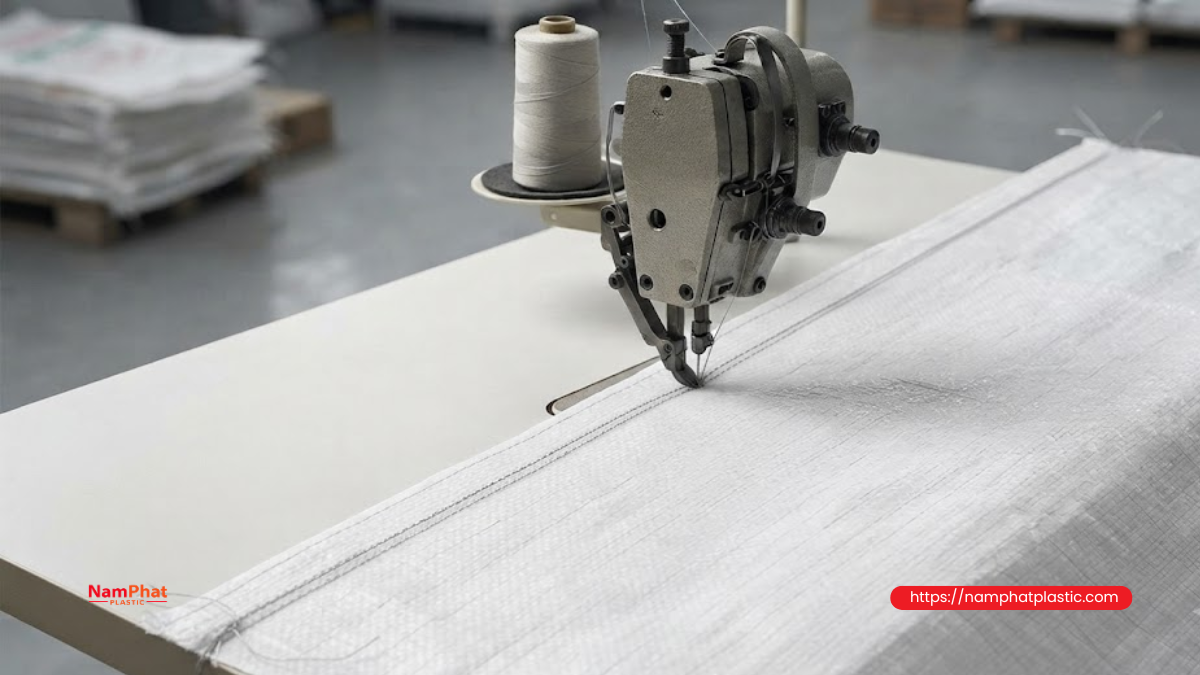
7. Is 20/9 thread always stronger than 20/8 thread?
In terms of structure, 20/9 has more single yarns than 20/8, so it is generally expected to have a larger size and higher tensile force. However, actual thread strength does not depend only on the number of plied yarns.
A good sewing thread needs a combination of several factors.
Raw material quality
Single yarn with low strength, many short fibers, or poor uniformity can reduce the quality of the finished thread even when the number of plied yarns is higher.
Yarn uniformity
Sections that are too thin can become weak points and break easily. Sections that are too thick may become caught around the needle or thread guides.
Twist level
Too little twist allows the single yarns to separate easily. Excessive twist can make the thread stiff, cause twisting or tangling, and affect stitch formation.
Elongation
The thread needs an appropriate level of elongation to absorb tensile forces during sewing and when the bag experiences impact. Excessively rigid thread may break suddenly, while thread with excessive elongation may make the seam loose.
Lubrication
An appropriate amount of lubricant reduces friction between the thread, needle, and thread-guiding components. Too little lubricant can cause the thread to heat up, fray, or break. Excessive lubricant can attract dust, cause thread slippage, or stain the bag.
Therefore, when comparing 20/8 and 20/9, businesses should rely on test specifications and machine-trial results rather than simply looking at the thread designation.
8. How to choose PE 20/6, 20/8, or 20/9 sewing thread
8.1. Based on the weight of goods inside the bag
The greater the bag's load, the higher the forces acting on the seam, especially during lifting, pulling, stacking, and transportation.
For lightweight goods, businesses can test 20/6 to optimize costs. For common bag applications, 20/8 often provides a balance. Heavy bags or bags exposed to significant impact may be considered for 20/9.
Do not rely only on the number of kilograms packed in the bag. The characteristics of the goods also affect the seam. Granular products with sharp edges, densely compacted goods, or products that tend to expand can place greater stress on the bag mouth.
8.2. Based on the material and thickness of the bag
Thin woven PP bags, laminated PP bags, multi-layer paper bags, and bags with PE liners have different sewing characteristics.
The thicker the bag mouth, the more the thread and needle need to meet the requirements. If the thread is too small, the seam may lack strength. If the thread is too large, the needle may create large holes, tear the material, or increase the load on the machine.
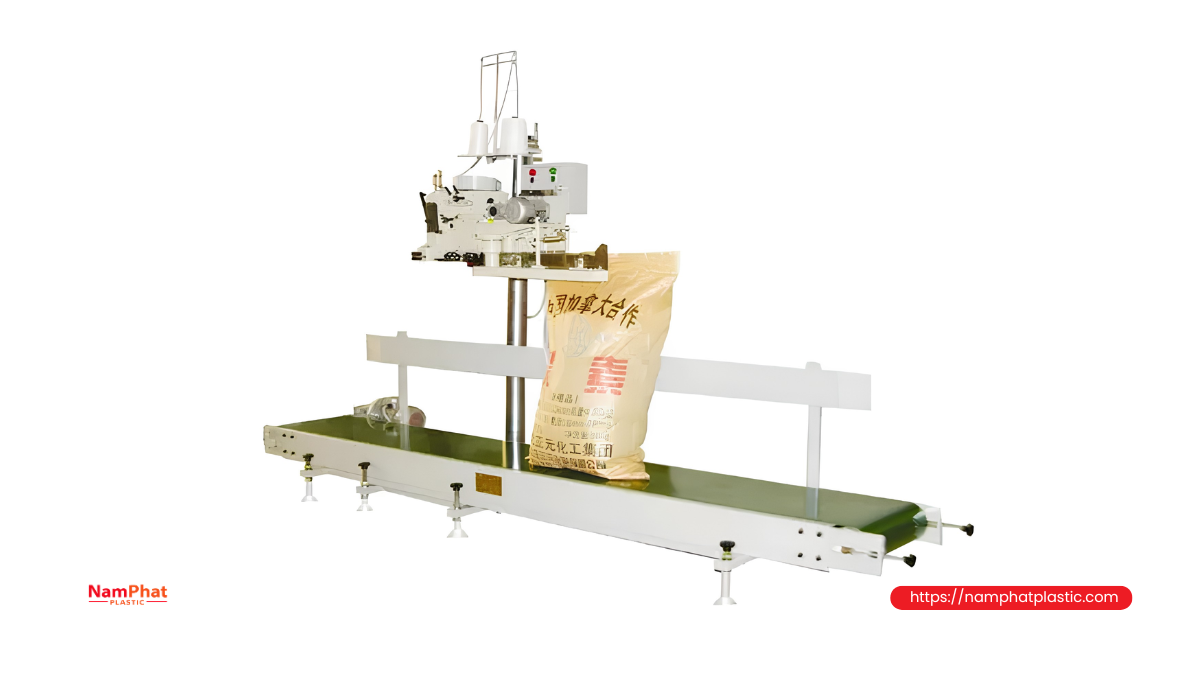
8.3. Based on the bag sewing machine
Each sewing machine has specific limitations regarding:
- Needle size.
- Thread-guide clearance.
- Thread tensioner.
- Sewing speed.
- Stitch type.
- Ability to handle larger thread.
When switching from 20/6 to 20/8 or 20/9, operators should not keep all the previous settings unchanged. The needle, tension, stitch length, and thread-loop formation should be checked again.
8.4. Based on stitch length
Stitches that are too short increase the number of times the needle penetrates the bag, increasing thread consumption and potentially creating a tear line in the material.
Stitches that are too long reduce the number of connection points, which can make the seam more likely to open or fail under load.
A larger thread such as 20/9 cannot completely compensate for an inappropriate stitch-length setting.
8.5. Based on customer requirements
Some customers specify 20/8 or 20/9 because the thread has already been tested on their production line. In this case, the supplier should also confirm:
- Raw material.
- Thread color.
- Spool weight.
- Core type.
- Twist direction.
- Length or weight per spool.
- Tensile-force requirements.
- Packaging conditions.
Two spools both labeled 20/8 but manufactured by different suppliers may not have the same machine-running performance.
9. Specifications to check when buying PE sewing thread for bags
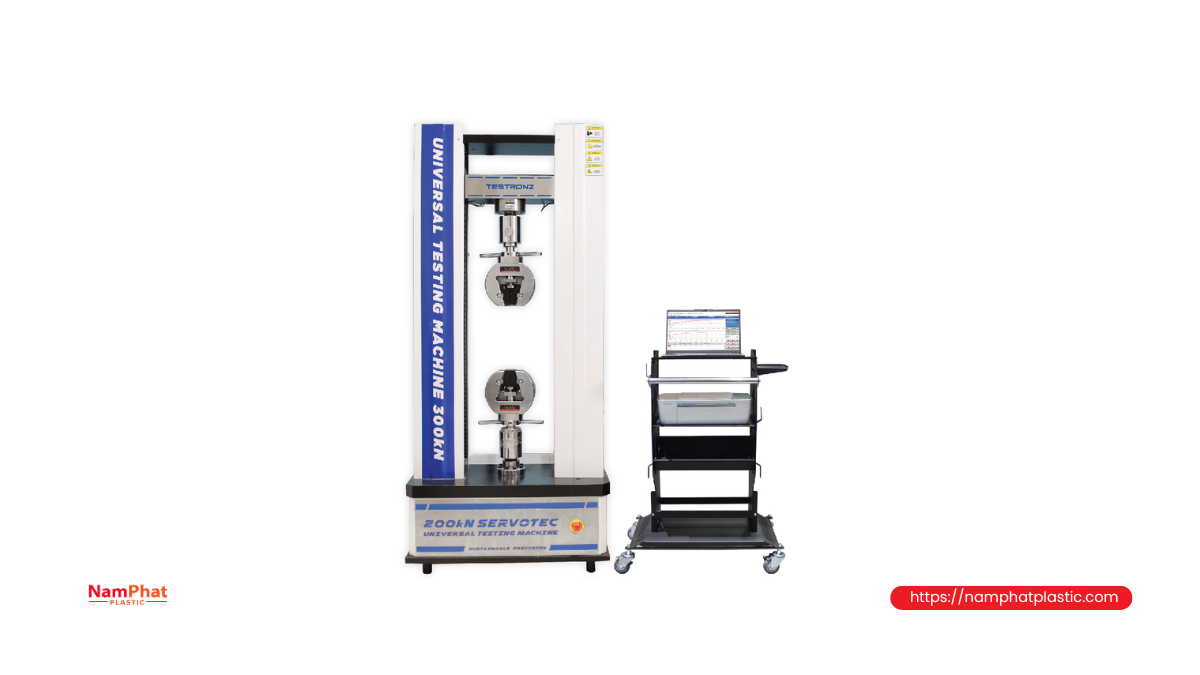
In addition to the 20/6, 20/8, or 20/9 designation, buyers should also evaluate the following criteria.
Breaking force
Breaking force indicates the load the thread can withstand before breaking. This specification should be tested using a consistent method so that different batches can be compared.
Elongation at break
Elongation affects the thread's ability to absorb applied forces. An appropriate level of elongation helps the seam withstand fluctuations during transportation.
Uniformity
Thread with a stable diameter passes through the needle and thread guides more smoothly. High unevenness can cause thread jams, breakage, or changes in tension during sewing.
Hairiness
A small amount of fiber hairiness is common in spun thread. However, excessive hairiness can generate dust, increase friction, and accumulate around the tensioning assembly.
Spool stability
The thread should be wound evenly, without being too loose or having collapsed edges. Unstable winding can cause uneven unwinding when the machine operates at high speed.
Frictional heat resistance
During continuous machine operation, the needle and thread can heat up due to friction. The thread should maintain a stable structure and minimize fraying, melting, or breakage around the needle area.
Batch-to-batch consistency
For factories using large quantities, consistency between batches is just as important as the specifications of an individual sample. Excessive variation between batches forces the production department to continually readjust the machine.
10. Common problems when using PE sewing thread for bags
10.1. Thread breaks frequently
Possible causes include:
- Thread tension is too high.
- The needle is worn or has a burr.
- The needle is unsuitable for the thread size.
- The thread guide has a sharp edge.
- The thread is tangled.
- The spool is wound unevenly.
- The machine speed is too high.
- Thread quality is inconsistent.
Do not immediately switch to a larger thread before checking the entire thread path.
10.2. Thread frays around the needle
This phenomenon is often associated with high friction, a hot needle, a needle that is too small, or a needle-eye surface that is no longer in good condition.
Check the needle condition, needle size, machine speed, thread lubrication, and tension.
10.3. The seam is loose
A loose seam may result from unsuitable tension, inaccurate loop formation, or excessive thread elongation.
The operator should make small adjustments step by step and inspect both the upper and lower sides of the seam.
10.4. The seam tears the bag mouth
This does not necessarily mean that the thread is weak. Possible causes include:
- Stitch length is too short.
- Needle is too large.
- Seam is positioned too close to the bag mouth.
- Bag has low tear strength.
- Thread tension is too high.
- Bag mouth is folded unevenly.
- Bag opens or fails when dropped.
The exact failure mode should be identified: whether the thread broke, the stitches slipped, the bag material tore, or the end-of-seam lock was not secure.
Each cause requires a different solution. Switching from 20/8 to 20/9 is effective only when the actual weak point is the thread's load-bearing capability.
11. Trial procedure for PE thread before placing a large order
Businesses should conduct a controlled trial instead of immediately changing the thread across the entire production line.
Step 1: Record the specifications of the current thread
Record the thread designation, spool weight, needle type, tension, stitch length, machine speed, and current thread-breakage rate.
Step 2: Run samples under the same conditions
The new and existing threads should be tested on the same type of bag, the same machine, with the same operator and at the same speed so that the results can be meaningfully compared.
Step 3: Monitor machine performance
Record:
- Number of thread breaks.
- Number of skipped stitches.
- Thread-fraying occurrences.
- Needle heating.
- Stability when unwinding thread from the spool.
- Spool-change time.
- Number of bags sewn.
Step 4: Inspect the seam
Evaluate uniformity, tightness, stitch spacing, end-of-seam locking, and the load-bearing capability of the seam.
Step 5: Test finished bags
After sewing, the bags should be tested under conditions close to actual use, such as:
- Lifting and pulling.
- Stacking.
- Vibration.
- Drop testing.
- Storage for an appropriate period.
- Trial transportation if necessary.
Step 6: Calculate actual usage cost
Do not compare only the price per kilogram of thread. Also consider:
- Number of bags sewn per spool.
- Thread-breakage rate.
- Machine downtime.
- Resewing rate.
- Defective-bag rate.
- Labor costs for troubleshooting.
A thread with a lower unit price but frequent machine stoppages can result in a higher total cost.
12. Is bigger sewing thread always better?
No.
Larger thread can increase load-bearing capability, but it can also cause several disadvantages:
- Higher thread consumption.
- Requirement for a larger needle.
- Larger needle holes in the bag.
- Greater load on the tensioning and stitch-forming assemblies.
- Stiffer seams.
- Difficulty running on some older machines.
- Unnecessary use for lightweight bags.
The appropriate choice is a thread that is strong enough for the intended application while maintaining stable machine performance and reasonable cost.
13. Do one kilogram of 20/6, 20/8, and 20/9 thread have the same length?
No.
When produced from the same type of base yarn, a larger thread structure has a higher mass per meter. Therefore, for the same one-kilogram weight:
- 20/6 thread generally has a greater total length.
- 20/8 thread has a shorter length than 20/6.
- 20/9 thread generally has a shorter length than 20/8.
Actual length also depends on twist level, moisture content, manufacturing tolerances, and yarn structure. Therefore, measurements from each manufacturer should be used rather than applying one universal figure to every type of thread.
Conclusion
PE 20/6, 20/8, and 20/9 are types of sewing thread differentiated primarily by the number of PE 20/1 single yarns that are plied and twisted together.
Specifically:
- PE 20/6 consists of six single yarns and is suitable for applications requiring a neat seam and reasonable thread consumption.
- PE 20/8 consists of eight single yarns and provides a balance between strength, size, and machine performance.
- PE 20/9 consists of nine single yarns and is generally considered for thick or heavy bags or seams requiring higher load-bearing capability.
However, the number after the slash is not the only factor determining quality. A suitable thread must provide an appropriate combination of tensile strength, elongation, uniformity, twist level, friction resistance, and machine-running stability.
Before placing a large order, businesses should request samples, conduct trials on the actual production line, and evaluate total usage costs. This is the most effective way to select the right bag-sewing thread, reduce thread breakage, minimize machine downtime, and ensure the strength of finished bags.
Frequently asked questions about PE 20/6, 20/8, and 20/9 sewing thread
1. Can PE 20/8 thread be used to sew rice bags?
Yes. PE 20/8 thread is commonly used for many types of rice bags. However, it should be tested according to the filling weight, bag material, mouth-folding structure, and specific sewing machine.
2. Can 20/9 thread be used on a handheld bag-sewing machine?
It can, but the machine's compatibility, needle size, thread guides, and tensioning assembly should be checked. Some machines may require adjustments when switching to a larger thread.
3. Is PE 20/6 thread weak?
It cannot be concluded that 20/6 thread is weak based solely on its designation. It is smaller than 20/8 and 20/9, but it can still perform well in suitable applications when manufactured to the required standards.
4. Can 20/8 thread be directly replaced with 20/9?
It can be tested, but it should not be immediately changed across the entire production line. The machine should be adjusted and checked for risks such as oversized needle holes, excessive seam tension, or increased thread consumption.
5. Why can two suppliers provide different quality even though both threads are 20/8?
The differences may come from the raw material, yarn uniformity, twist level, thread lubrication, plying method, spool winding, and quality-control standards.
6. Should thread be selected based on the designation or breaking force?
Both should be considered. The designation helps identify the basic structure, while breaking force, elongation, and actual machine-trial results provide a clearer indication of practical performance.
>>> See also:
- 0 Comment


