


 Phan Van Hoang
- 28/07/2026
- 146
Not necessarily.
Bottom-seam thread and bag-closing thread can use the same specification to simplify material inventory and thread supply. However, from a technical perspective, these two positions often operate under different conditions. Therefore, using the same type of thread is only reasonable when it simultaneously meets the requirements for seam strength, machine performance, tightness, appearance, and cost.
In many cases, the bottom seam requires greater stability and load-bearing capability. In contrast, the bag-closing seam needs to suit packaging speed, thread-cutting performance, ease of seam removal, and stability on the bag-sewing machine.
Therefore, the important question is not “Is it mandatory to use the same type of thread?” but:
Can the same thread specification meet the requirements of both the bag bottom and bag mouth under actual production conditions?
To answer accurately, the company needs to consider the bag structure, filling weight, sewing machine type, stitch type, line speed, and how the finished bags are handled and transported.
Table of Contents [Hide]
1. Why do bottom seams and bag-closing seams have different requirements?
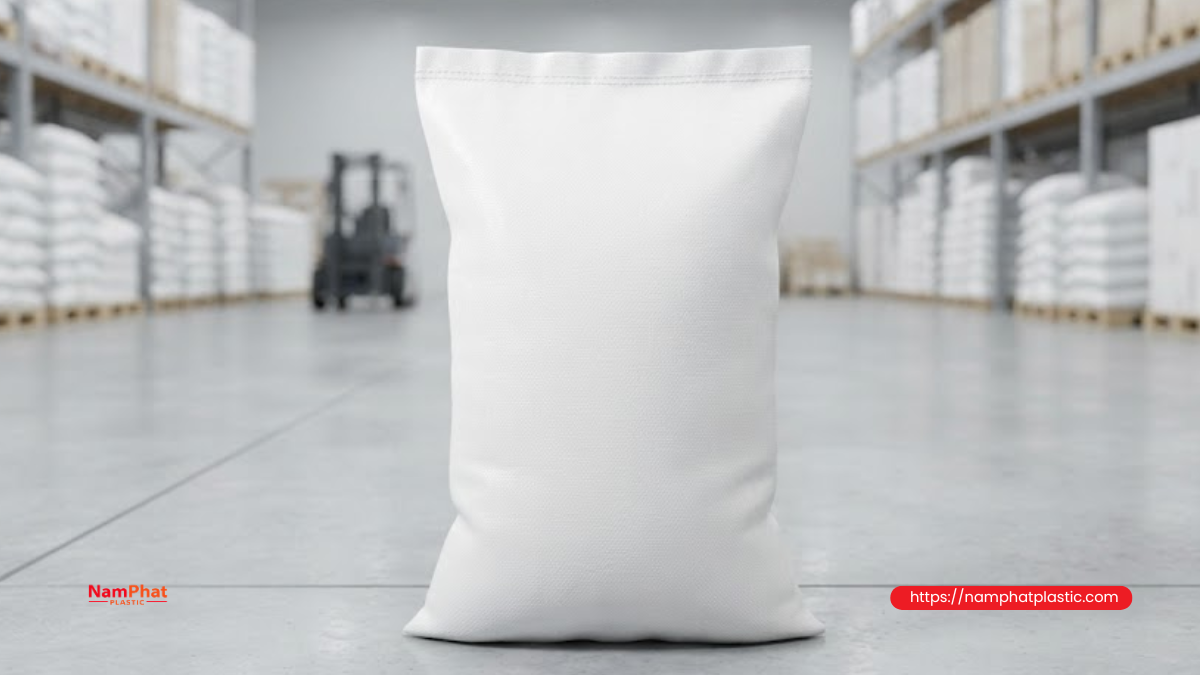
Although both are seams on the same bag, the bottom and bag mouth do not experience forces in the same way.
The bottom seam bears loads over an extended period
After the bag is filled, the entire weight of the contents tends to concentrate around the bottom area. When the bag is lifted, dragged, stacked, or dropped onto the floor, the bottom seam may simultaneously experience:
- Lateral tensile forces that pull the two bag edges apart.
- Peeling forces at points where stress is concentrated.
- Jerking forces generated when the bag is lifted or dropped.
- Friction against pallets, warehouse floors, or conveyors.
- Long-term pressure when bags are stacked in multiple layers.
- Impact from sharp edges of the product inside.
If the bottom seam breaks, the consequences are often serious because almost all of the contents may spill out.
The bag-closing seam experiences dynamic loads during packaging
The bag mouth is usually sewn after the material has been filled. This seam must form consistently while the bag is moving on a conveyor or being held manually by an operator.
Requirements for bag-closing thread generally focus on:
- Stable operation at high speed.
- Minimal thread breakage during machine startup and stopping.
- Easy loop formation with minimal skipped stitches.
- Clean thread cutting after sewing.
- Preventing the chain-stitch end from easily coming loose.
- Allowing the seam to be removed according to customer requirements.
- Minimizing wrinkling, shrinkage, or tearing at the bag mouth.
Thus, bottom-seam thread is generally evaluated more heavily for load-bearing capability, while bag-closing thread is evaluated for both strength and line-running performance.
2. What should “same specification” be understood to mean?
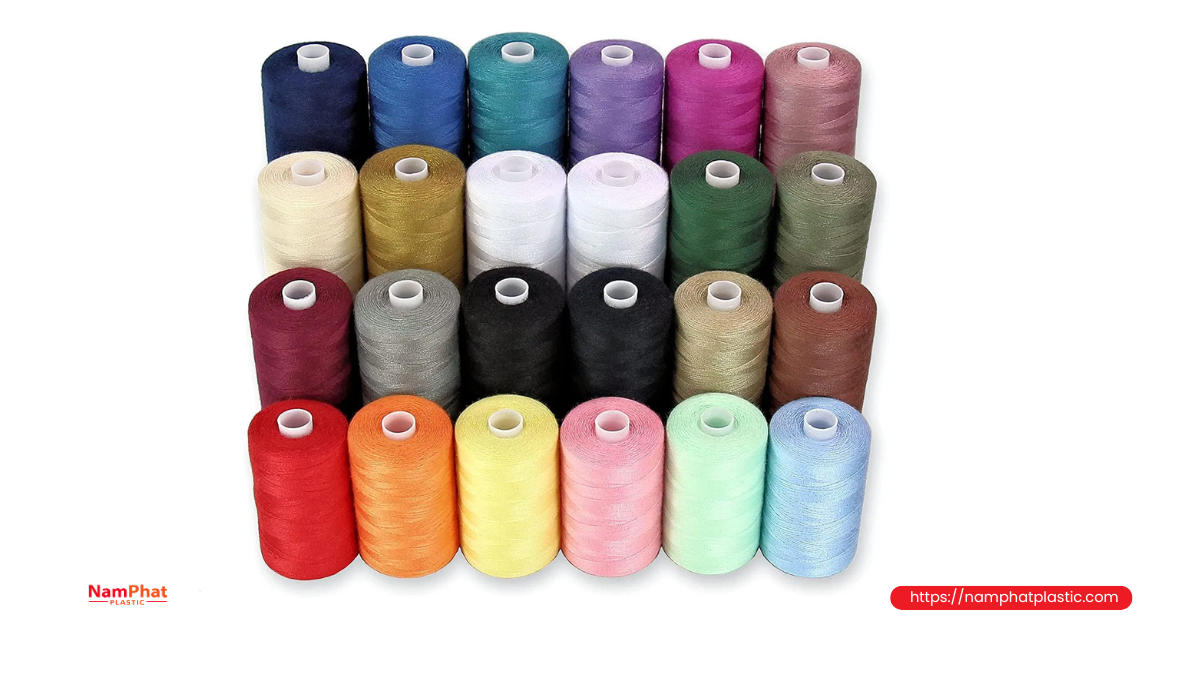
In practice, many people only compare labels such as 20/6, 20/8, 20/9, or denier. This comparison is not sufficient.
Two spools with the same specification can still perform differently on the machine and under load because of differences in raw materials, number of twists, uniformity, surface treatment, and winding quality.
When evaluating whether two threads have the same specification, at least the following factors should be checked:
| Factor | Meaning for the seam |
| Raw material type | Affects strength, elongation, heat resistance, and stability |
| Thread count or thread size | Determines the relative diameter and amount of material in the thread |
| Number of plies | Affects roundness, strength, and abrasion resistance |
| Twist | Affects bundling, stiffness, and loop formation |
| Twist direction | Must be compatible with the machine structure and movement |
| Tensile strength | Directly related to resistance to breakage |
| Elongation | Helps absorb jerking forces, but excessive elongation can loosen the seam |
| Uniformity | Reduces thick/thin sections and tension fluctuations |
| Surface treatment | Affects friction, needle heat, and thread unwinding |
| Winding method | Affects thread unwinding at high speed |
Therefore, two products should not be considered completely identical based only on the specification printed on the packaging.
3. What characteristics should bottom-seam thread have?
3.1. Tensile strength must have an appropriate safety margin
The bottom seam should not be designed to withstand only the static weight of the contents. The bag must also withstand forces generated during transportation, impact, stacking, and handling.
Thread with low tensile strength may not break immediately after sewing but can gradually weaken at points of contact with the needle, bag edge, or reinforcing tape.
The required strength should be evaluated on the complete seam, not only based on the breaking force of an individual piece of thread.
3.2. The thread needs good abrasion resistance
When the seam comes into contact with warehouse floors, pallets, or conveyors, the thread may be rubbed continuously. Thread with a fuzzy surface, excessive hairiness, or poor bundling can wear partially before breaking completely.
For heavy bags or bags subjected to harsh transportation conditions, abrasion resistance can be just as important as initial tensile strength.
3.3. Elongation must be balanced
Thread with too little elongation may break when the bag is subjected to jerking forces. Conversely, thread with excessive elongation can deform the seam, create gaps, or allow the two bag edges to shift.
A suitable thread should be able to absorb dynamic loads while maintaining the shape of the seam.
3.4. Twist must be stable
Thread with insufficient twist can separate into individual fibers when passing through the needle eye. Thread with excessive twist can become stiff, develop reverse twisting, curl, or make stable loop formation difficult.
For industrial high-speed bottom sewing, consistent twist between production lots is particularly important.
3.5. It must be compatible with the bag-bottom structure
The bag bottom may be sewn directly, folded and sewn, or sewn together with paper tape, fabric tape, or reinforcing material. Each structure creates different levels of friction and needle penetration force.
A thread that runs well on thin woven PP bags may not necessarily be suitable for multilayer bags or bags with a thick coating.
4. What characteristics should bag-closing thread have?
4.1. Thread unwinding must be stable
On an automatic packaging line, the thread is pulled out at high speed and continuously changes according to the bag-feeding cycle. An unevenly wound spool can cause fluctuating tension, resulting in:
- Stitches that are sometimes tight and sometimes loose.
- Thread breakage at the tensioning mechanism.
- Skipped stitches or stitch slippage.
- The bag being pulled out of alignment with the conveyor.
- An unstable chain-stitch end.
Therefore, bag-closing thread must not only be strong but also evenly wound and able to unwind smoothly.
4.2. The thread surface must be suitable for machine speed
When the thread passes through the tensioner, looper, and needle eye, friction generates heat. The faster the machine runs, the more heat accumulates around the needle and thread-guiding surfaces.
If the thread has excessive fibers or an unstable coefficient of friction, it may become hot, soften, become scratched, or break around the needle area.
4.3. The thread must form loops properly
Loop formation depends on the thread's softness, twist, elasticity, and surface structure. Thread that is too stiff or excessively twisted may prevent the looper from catching the loop, causing skipped stitches.
This is why thread with a high breaking force does not necessarily run well on a bag-closing machine.
4.4. It must meet seam-removal requirements
Some customers want the bag-mouth seam to be removable quickly by pulling the correct thread end. Others prioritize preventing the seam from coming loose or opening during transportation.
These two requirements can lead to different choices in:
- Stitch type.
- Number of thread rows.
- Thread tension.
- Thread size.
- Length of the remaining chain.
- How the seam end is locked or finished.
4.5. Appearance must be controlled
The bag-mouth seam is in an easily visible position. Thread that is too large can make the seam look coarse, wrinkle the bag edge, or tear the printed film layer. Thread that is too small can make the seam look weak and insufficiently secure.
For printed BOPP bags or retail bags, customers often inspect seam appearance more carefully than on conventional industrial bags.
5. When can the same thread specification be used for both the bottom and bag mouth?
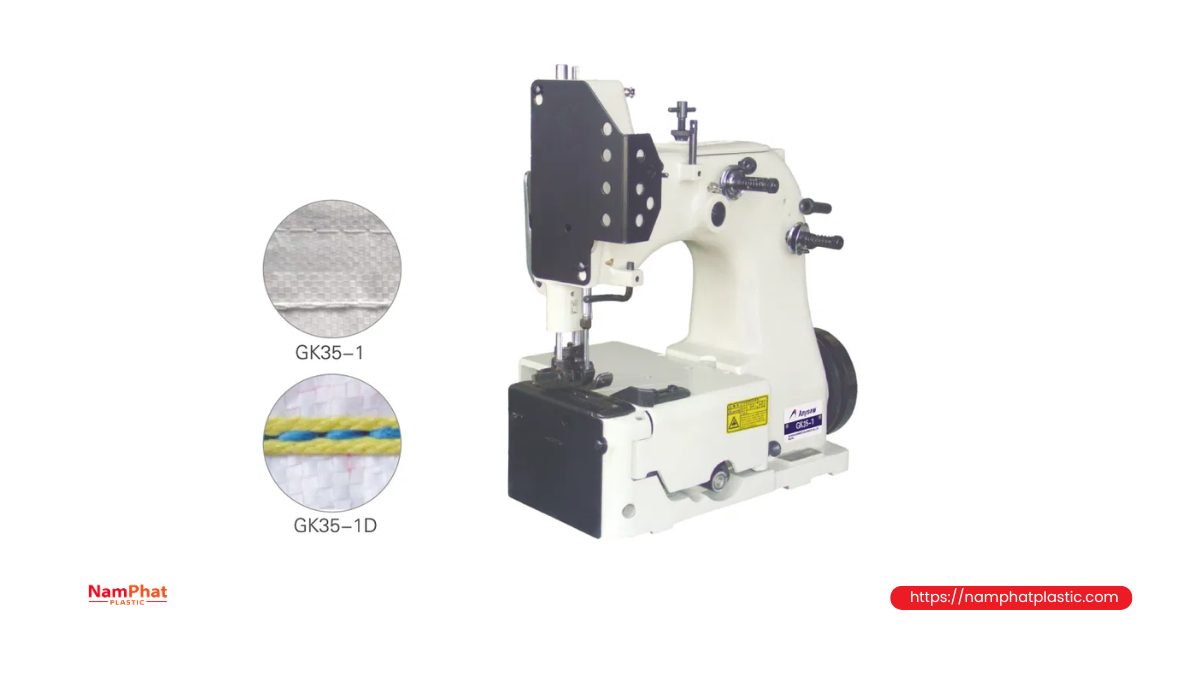
A company can use the same type of thread when the following conditions are met:
The bag has a medium load and a relatively simple structure
For common woven PP bags with moderate loads and no products containing sharp edges, one standard thread specification may meet the requirements of both positions.
The bottom-sewing machine and bag-closing machine are compatible with the same thread size
The needle size, thread tensioner, looper, thread path, and operating speed of both machines need to be checked. If one machine requires significantly smaller thread, using the same thread may make adjustment difficult.
The same thread forms stable stitches on both machines
A shared thread specification should only be considered successful when the seams on both machines do not show defects such as:
- Abnormal thread breakage.
- Skipped stitches.
- Thread tangling.
- Loose seams.
- Wrinkled bag edges.
- Excessively large needle holes.
- Thread fuzzing or melting.
- Chain-stitch ends that easily come loose.
The finished seam passes internal testing
The company should inspect finished bags after sewing rather than only observing the machine while it is running.
Testing should simulate actual conditions of use, such as filling the correct weight, lifting the bag, dropping it, stacking it, and conducting transportation trials.
Using one thread simplifies operations
When one type of thread meets the requirements, using it for both positions can provide several benefits:
- Reduce the number of material codes.
- Reduce the risk of issuing the wrong thread.
- Simplify inventory management.
- Make worker training easier.
- Reduce the number of machine-setting changes.
- Increase purchasing volume for one specification.
- Make quality control between lots easier.
However, management benefits should not be prioritized over seam safety.
6. When should two different thread specifications be used?
6.1. Bags with heavy loads
Bags containing heavy raw materials, products with high bulk density, or goods frequently dropped during handling may require larger and stronger bottom thread.
In this case, the bag-closing thread can still be smaller if this allows smoother machine operation and lower thread consumption.
6.2. Bags with multilayer bottom structures
A bag bottom with reinforcing tape, paper layers, film layers, or multiple folds creates greater resistance when the needle passes through. Bottom thread may therefore require better abrasion and heat resistance.
6.3. Bag mouths sewn with handheld machines
Handheld bag-sewing machines have their own limitations regarding needle size, loop formation, and thread-pulling force. A large thread that runs well on a fixed bottom-sewing machine may overload a handheld machine or make stitch formation difficult.
6.4. High-speed bag-closing lines
At high speeds, thread unwinding and spool consistency become decisive factors. A more specialized thread may be needed for the bag mouth even when the bottom thread has high strength.
6.5. Customers require easy bag-mouth opening
The bag-mouth seam may need a thread structure and stitch type that make removal convenient. Meanwhile, the bottom seam must remain secure and must not open by itself.
Using two different specifications or thread structures can better satisfy these two opposing objectives.
6.6. Bags with coatings or easily damaged BOPP film
Thread that is too large combined with excessive tension can wrinkle or tear the bag edge or create large needle holes. When sewing BOPP bag mouths, it may sometimes be necessary to reduce thread size or adjust the thread structure to protect the film layer.
Meanwhile, the bottom may still require larger thread because it bears a greater load.
7. Does the bottom seam always require thicker thread than the bag mouth?
Not always.
“Thicker thread” does not automatically mean “stronger seam.” Seam strength also depends on:
- Stitch type.
- Number of stitch rows.
- Stitch density.
- Distance from the seam to the bag edge.
- Bag material strength.
- Needle size.
- Thread tension.
- Reinforcing tape quality.
- Thread uniformity.
- Degree of damage caused by the needle.
If the thread is too large for the needle and bag material, the seam can create large needle holes and weaken the edge area. In this case, increasing thread size without adjusting other factors can make the bag more prone to tearing.
For some designs, the bag bottom is reinforced with paper tape or sewn with two rows, so the thread size does not need to be increased excessively. Meanwhile, the bag mouth may experience high tensile forces during filling and may require an equivalent specification.
The correct principle is to select a suitable sewing system rather than choosing the thread spool based on intuition alone.
8. Can 20/6, 20/8, or 20/9 thread be used for both the bottom and bag mouth?
Specifications such as 20/6, 20/8, and 20/9 are commonly used to describe the ply structure of certain bag-sewing threads. However, the way specifications are stated may vary between manufacturers. Therefore, companies should also compare weight per unit length, breaking force, and the actual number of plies.
In principle:
- 20/6 thread may be suitable for light bags, machines requiring relatively small thread, or applications where minimizing thread consumption is a priority.
- 20/8 thread is often considered for medium-duty bags, where a balance between strength and machine performance is required.
- 20/9 thread may be used when a larger thread, greater strength, or bags with heavier loads are required.
These are only initial guidelines, not fixed rules.
Two threads both labeled 20/9 can still differ significantly in strength, twist, and uniformity. Conversely, a stable-quality 20/8 thread may produce a better seam than a 20/9 thread with many thin sections, excessive fuzzing, or inconsistent twist.
When changing from 20/6 to 20/9, the following should be checked:
- Whether the needle is large enough for the thread to pass freely.
- Whether the needle groove adequately accommodates most of the thread diameter.
- Whether the tensioner clamps the thread too tightly.
- Whether the looper catches the thread consistently.
- Whether the needle hole weakens the bag edge.
- Whether the machine becomes hotter or experiences increased load.
- How much thread consumption per bag changes.
Do not simply change the thread spool while keeping all machine settings unchanged.
9. Comparison of bottom-seam thread and bag-closing thread requirements
| Criteria | Bottom-seam thread | Bag-closing thread |
| Main objective | Secure the bottom and withstand long-term loads | Close the bag mouth and run stably |
| Common load type | Static load, jerking force, peeling force, and friction | Dynamic load during sewing and transportation |
| Strength priority | Usually very high | High, but must be balanced with loop formation |
| Thread-removal requirement | Usually not required | May need to be easy to remove |
| Machine speed | Depends on the bag production line | Often directly related to packaging speed |
| Appearance | May receive less attention | Usually more visible |
| Main risks | Bottom opening, thread wear, edge tearing | Thread breakage, skipped stitches, chain slippage, mouth wrinkling |
| Can it be shared? | Yes, in some cases | Yes, if it passes testing |
10. How to choose the appropriate thread specification for each position
Step 1: Identify the bag type
Specify:
- Uncoated woven PP bag.
- Coated PP bag.
- BOPP bag.
- Paper-laminated PP bag.
- Bag with PE liner.
- Mesh bag.
- Multilayer bag.
- Bag with bottom reinforcing tape.
Even at the same filling weight, different bag materials create different sewing conditions.
Step 2: Determine the weight and characteristics of the product
Do not consider only the number of kilograms. Consider whether the product is:
- Fine powder.
- Round granules.
- Granules with sharp edges.
- Moisture-sensitive material.
- A product that tends to become compacted.
- A dusty product.
- A product that remains hot after processing.
Bags containing products with sharp edges generally create greater localized pressure on the bottom and seam edge than bags containing soft powder.
Step 3: Determine the machine and stitch type
Distinguish between:
- Single-needle or double-needle machines.
- Single-thread or two-thread chain stitches.
- Fixed or handheld machines.
- Standalone machines or machines synchronized with a conveyor.
- Whether reinforcing tape is used.
- Actual sewing speed.
- Whether the thread-cutting system is mechanical or automatic.
Each configuration has different requirements for thread size, softness, and twist direction.
Step 4: Check the needle and thread-guiding system
The thread specification must be compatible with:
- Needle size.
- Needle-eye size.
- Needle groove.
- Thread tension discs.
- Looper.
- Thread guides.
- Thread cutter.
Thread that is too large may be compressed in the needle eye. Thread that is too small may not adequately fill the seam and can be difficult to control in terms of tension.
Step 5: Test each option
At least three groups should be tested:
- The current specification.
- One size smaller.
- One size larger.
Each option should be run long enough for the machine to reach a stable operating temperature. Do not draw conclusions from only the first few stitches.
Step 6: Test finished bags
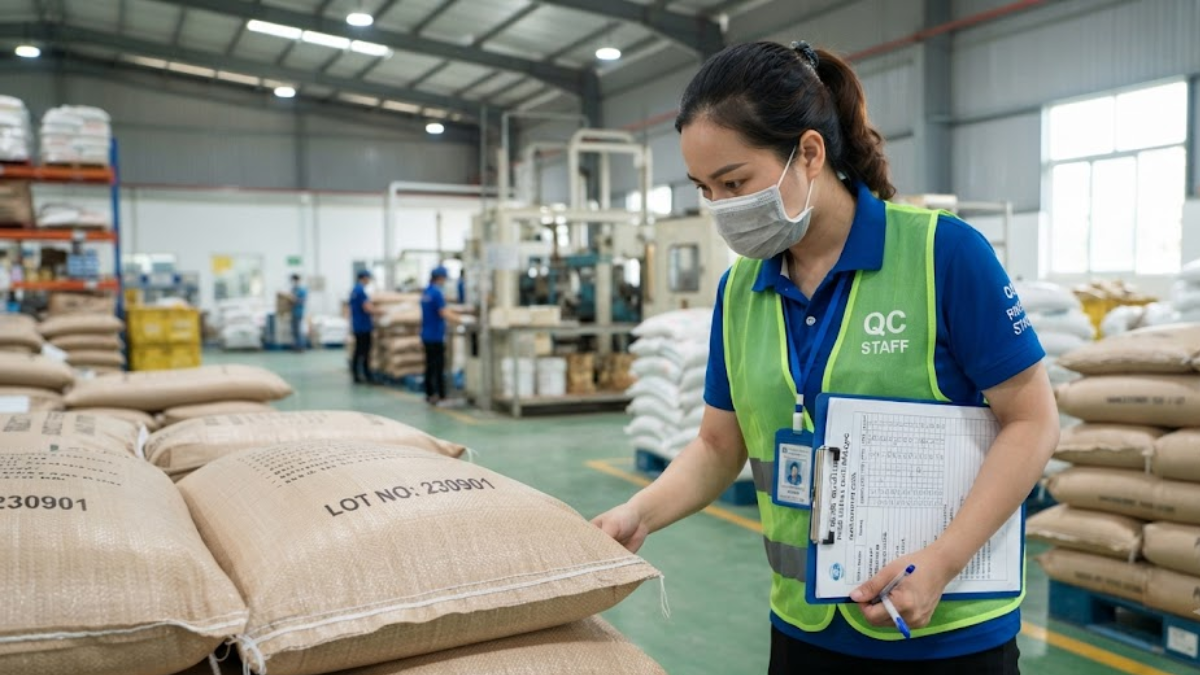
Test bags must be filled to the actual operating weight. Then check:
- Seam tightness.
- Ability to lift and drag the bag.
- Drop resistance.
- Condition after stacking.
- Wear at the bottom.
- Ability of the bag mouth to open.
- Ease of thread removal.
- Appearance after transportation.
Step 7: Calculate total cost instead of only thread price
A cheaper thread specification does not necessarily result in lower costs if it causes:
- Frequent machine stoppages.
- More bags requiring resewing.
- More leakage.
- More customer complaints.
- Reduced conveyor speed.
- More machine adjustment time.
- Increased bag scrap.
The correct cost should be calculated based on the number of bags meeting specifications, not only the price per kilogram of thread.
11. Procedure for testing one type of thread for both the bottom and bag mouth
The company can apply the following testing procedure:
Stage 1: Inspect the thread spool
Check appearance and unwinding performance:
- Is the spool deformed?
- Is the winding density uniform?
- Are there overlapping sections or layers slipping?
- Does the thread surface have excessive fuzz?
- Are there knots or abnormal splices?
- Is spool weight consistent?
Stage 2: Run on the bottom-sewing machine
Monitor:
- Number of thread breaks.
- Fiber fuzzing around the needle.
- Stitch stability.
- Tension on both sides of the seam.
- Bag-edge tearing.
- Needle temperature after continuous operation.
Stage 3: Run on the bag-closing machine
Also check:
- Ability to start the seam.
- Ability to finish and cut the thread.
- Stability of the chain-stitch section.
- Thread entanglement.
- Degree of bag-mouth wrinkling.
- Synchronization with the conveyor.
Stage 4: Load testing
Select bag samples from the beginning, middle, and end of the production shift. Do not select only the best-looking bags.
Conduct tests under the customer's actual usage conditions. Then inspect the failure location:
- Thread breakage.
- Bag-edge tearing.
- Stitch slippage.
- Reinforcing tape tearing.
- Chain-stitch end coming loose.
- Seam elongation.
The failure location indicates whether the thread, needle, stitch density, or seam structure should be changed.
Stage 5: Monitor consumption
Record the number of bags sewn per kilogram of thread or per spool. Bottom and mouth consumption should be recorded separately to avoid inaccurate evaluation.
A larger specification may increase thread consumption per bag. However, if it reduces thread breakage and increases the percentage of acceptable finished bags, the total cost may still be lower.
12. Common mistakes when selecting thread for the bottom and bag mouth
Relying only on the specification name
The name 20/6 or 20/9 does not fully reflect quality. Strength, twist, uniformity, and machine performance should also be checked.
Assuming that thicker thread is always better
Thread that is too thick can increase friction, increase needle heat, make loop formation difficult, and tear the bag material.
Using one thread only to reduce inventory
Reducing material codes is a benefit worth considering, but it should not be exchanged for a higher thread-breakage rate or the risk of seam failure.
Not changing the needle when changing thread specification
When thread size changes significantly, the needle should be checked again. An unsuitable needle can cause thread fuzzing, needle heating, skipped stitches, or excessively large needle holes.
Testing only on the machine without testing finished bags
A seam that looks good can still fail when the bag is dropped or stacked.
Failing to distinguish thread defects from machine defects
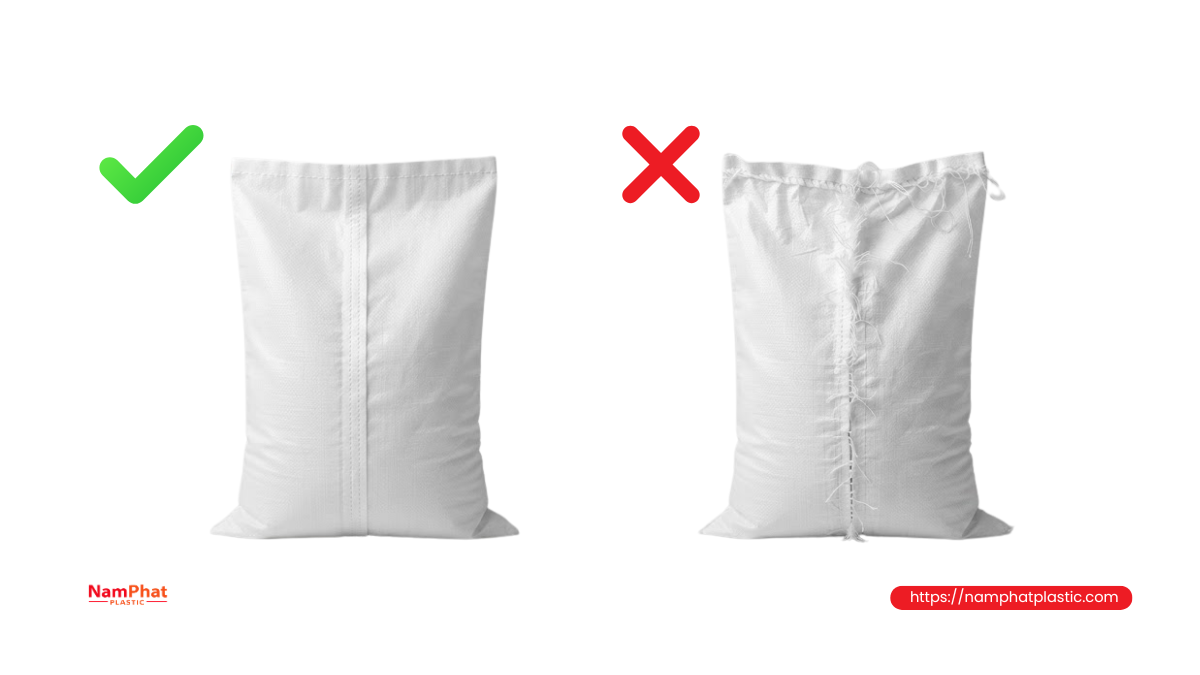
Thread breakage is not always caused by thread quality. The cause may be:
- Bent or dull needle.
- Burrs around the needle eye.
- Scratched thread path.
- Excessive tension.
- Incorrect machine and conveyor synchronization.
- Excessively high stitch density.
- Uneven bag edges.
- Worn thread cutter.
Equipment faults should be ruled out before concluding that the thread specification needs to be changed.
13. Some practical selection scenarios
Case 1: 25 kg woven PP bags, manually packaged
If the bag structure is simple and both the bottom-sewing machine and bag-closing machine run stably with the same thread, the company can use one thread specification to reduce the number of material codes.
The condition is that the bag must pass transportation testing and the bag-mouth seam must not come loose.
Case 2: 50 kg bags, frequently handled roughly
The bottom seam should have a higher safety margin. A larger or stronger bottom thread may be used together with reinforcing tape and an appropriate stitch density.
The bag-closing thread can be smaller if it still ensures tightness and transportation resistance.
Case 3: Printed BOPP bags
The bag mouth needs to minimize wrinkling, film cracking, and large needle holes. The thread specification at the mouth may need to be smaller or softer.
The bottom can still use a larger specification if it is designed to withstand high loads.
Case 4: High-speed automatic packaging line
Bag-mouth thread must be carefully selected for uniformity, winding method, and surface properties. Even if bottom thread has good strength, the same spool may not unwind consistently at high speed.
In this situation, using two specialized thread lines may help reduce machine downtime.
Case 5: Customer requires the bag mouth to be opened by pulling one thread end
The mouth seam needs to be designed to open in the correct direction without coming loose during transportation. The thread, stitch type, and remaining chain length must be tested together.
This requirement should not be applied to the bottom seam because the bottom must maintain a secure connection throughout its service life.
14. Which criteria should be prioritized when using one specification?
When a company wants to standardize one thread specification for both the bottom and bag mouth, the following priorities should be considered:
- Finished-bag safety: The bottom must not open and the mouth must not open during transportation.
- Machine performance: No thread breakage, skipped stitches, or line stoppages.
- Compatibility: Suitable for the needle, looper, tensioner, and cutter.
- Lot-to-lot stability: The specification should not vary significantly between shipments.
- Appearance: The seam should be balanced without excessive wrinkling or film tearing.
- Consumption: Thread consumption per bag should remain within a reasonable range.
- Material management: Reduce the number of item codes and prevent incorrect thread issuing.
Inventory benefits should not be placed above product safety.
15. Quick evaluation checklist at the factory
Before deciding to use the same thread, answer the following questions:
| Inspection question | Pass / Fail |
| Does the thread run stably on both the bottom-sewing and bag-closing machines? | ☐ Pass ☐ Fail |
| Do both machines have needles suitable for the thread specification? | ☐ Pass ☐ Fail |
| Does the thread avoid abnormal fuzzing or heating around the needle? | ☐ Pass ☐ Fail |
| Does the bottom seam pass load testing? | ☐ Pass ☐ Fail |
| Does the bag-mouth seam remain secure during transportation? | ☐ Pass ☐ Fail |
| Are the bag edges free from excessive tearing or wrinkling? | ☐ Pass ☐ Fail |
| Does the thread spool unwind evenly at actual production speed? | ☐ Pass ☐ Fail |
| Is the number of machine stoppages within the permitted limit? | ☐ Pass ☐ Fail |
| Is thread consumption per bag reasonable? | ☐ Pass ☐ Fail |
| Is quality consistent between thread lots? | ☐ Pass ☐ Fail |
The same thread should only be used when all critical items pass. If one of the two positions continuously develops defects, separate specifications should be used instead of trying to compensate by excessively adjusting the machine.
Conclusion
Bottom-seam thread and bag-closing thread are not required to have the same specification. Whether they should be the same or different must be based on load conditions, bag structure, machine type, stitch type, production speed, and the customer's usage requirements.
Using one type of thread is a suitable option when it simplifies material inventory while still producing stable seams at both positions. Conversely, for heavy-duty bags, multilayer bags, BOPP bags, or high-speed packaging lines, using two specialized specifications may provide better performance.
The most important principle is not to evaluate thread based only on its specification name or nominal size. The company needs to assess the entire system, including bag material, needle, thread, stitch, tension, and transportation conditions.
A suitable spool is not simply one with high breaking force. It must also help the machine run stably and produce a safe bag at the lowest overall cost.
Frequently Asked Questions
1. Can bag-closing thread be used for sewing the bottom?
Yes, provided that the bottom seam meets load-bearing requirements and the thread is compatible with the bottom-sewing machine. The decision should not be based only on whether the machine can form stitches with the thread.
2. Can bottom-seam thread be used on a handheld bag-sewing machine?
It can in some cases. However, if the thread is too large, too stiff, or wound on an unsuitable spool, the handheld machine may have difficulty forming loops, experience increased load, and frequently break the thread.
3. Does using two different types of thread make management more complicated?
Yes. The company must manage additional material codes, storage locations, and thread-issuing instructions. However, this complexity may be reasonable if it helps reduce seam defects and improve safety.
4. Why does a new spool with the same specification keep breaking?
The cause may be differences in twist, uniformity, raw materials, moisture, surface treatment, or winding method. The needle, thread path, and tension should also be checked before drawing a conclusion.
5. Should the bottom thread be one size larger than the bag-mouth thread?
This can be considered, but it is not a mandatory rule. The decision should be based on load, bag structure, stitch type, and test results.
6. Does changing to thicker thread require changing the needle?
The needle size should generally be checked again. The thread should pass freely through the needle eye without being excessively loose. The needle groove should also be large enough to protect the thread while penetrating the material.
7. How can I determine whether bag failure is caused by the thread or the bag material?
Observe the failure location. If the thread breaks while the bag edge remains intact, check thread strength and tension. If the thread remains intact but the bag edge tears, the problem may lie with the bag material, seam-to-edge distance, needle, or stitch density.
>>> See also:
- 0 Comment


