


 Phan Van Hoang
- 30/07/2026
- 151
Random skipped stitches are one of the most difficult problems to troubleshoot on bag sewing machines and industrial sewing machines. The machine may run normally for a long stretch, then suddenly skip one or several stitches before continuing to form the seam as if nothing had happened.
Unlike continuous skipped stitches, random skipping does not usually occur at a fixed interval. This makes it difficult for operators to identify the cause, especially when the machine shows no problem during low-speed inspection but continues to produce missing stitches during actual production.
This problem can originate from the needle, sewing thread, thread path, thread tension, looper, feed dog, presser foot, machine vibration, or changes in the material. To troubleshoot it effectively, the technician should follow a systematic inspection sequence instead of immediately adjusting the looper timing.
Table of Contents [Hide]
1. What are random skipped stitches on a sewing machine?
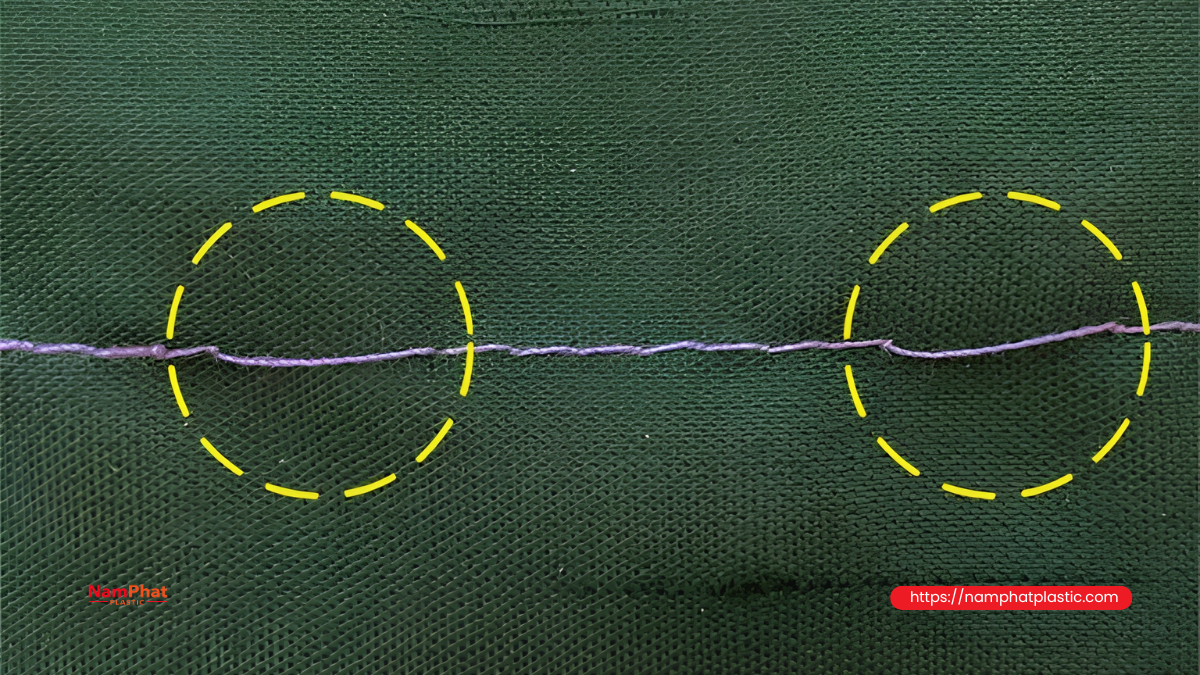
A skipped stitch occurs when the needle penetrates the material but the thread fails to form a complete stitch at one or more positions. On the seam, the problem may appear as:
-
A section of thread pulled straight without forming a locked stitch.
-
The distance between two stitches suddenly becomes unusually long.
-
The upper side looks relatively normal while the lower side is missing a thread loop.
-
The seam opens at several irregular positions.
-
The machine forms a normal thread chain but skips stitches when it begins sewing into the bag.
-
The machine sews well at low speed but skips stitches when the speed is increased.
In principle, after the needle moves downward and begins to rise, the needle thread must form a loop behind the needle. The looper must enter this loop at the correct position to form the stitch. If the loop is too small, shifts out of position, forms inconsistently, or the looper passes through the wrong position, the machine will skip the stitch.
Groz-Beckert describes skipped stitches as occurring when a thread loop is formed but is not caught by the hook or looper. Factors commonly involved include machine settings, needle shape, bent needles, needle stability, thread tension, and sewing speed.
2. Why are random skipped stitches difficult to troubleshoot?
A fixed mechanical problem usually produces a relatively repetitive symptom. For example, if the looper timing is significantly incorrect, the machine may skip stitches continuously or at a recognizable interval.
Random skipping, however, often occurs when several factors are simultaneously close to their operating limits. For example:
-
The needle is slightly bent but not visibly so.
-
Thread tension is slightly too high.
-
The thread unwinds from the spool inconsistently.
-
The bag shifts slightly at certain moments.
-
The machine vibrates more strongly at high speed.
-
The looper is worn but still catches most thread loops.
-
Accumulated thread dust causes uneven tension.
Each factor alone may not be sufficient to cause a skipped stitch. However, when two or three factors occur at the same time, the thread loop may become unstable and cause irregular skipped stitches.
Therefore, simply increasing or decreasing one setting significantly may only change the symptom without eliminating the actual cause.
3. How to distinguish random skipped stitches from regular skipped stitches
Before disassembling the machine, determine which type of problem is occurring.
Random skipped stitches
Common characteristics:
-
The skipped-stitch position changes from one sewing cycle to another.
-
The machine may sew many bags without an error before the problem suddenly returns.
-
The problem becomes more frequent at higher speed.
-
The problem changes when the thread spool is replaced.
-
Skipping occurs more frequently when sewing through folded edges or uneven material.
-
No obvious abnormality appears when turning the machine slowly by hand.
This group of problems is often related to unstable thread-loop formation, the thread path, needle vibration or deflection, material movement, and mechanical vibration.
Regular skipped stitches
Common characteristics:
-
A stitch is skipped after a certain number of stitches.
-
The problem occurs at the same stage of each rotation.
-
The machine skips stitches continuously even at low speed.
-
Replacing the needle and rethreading the machine produces little or no improvement.
-
The needle shows signs of contacting the looper, needle plate, or needle guard.
This group requires priority inspection of needle-looper timing, shaft play, cams, bushings, the needle bar, and other drive components.
4. 10 causes of random skipped stitches
4.1. The needle is slightly bent, dull, or installed incorrectly
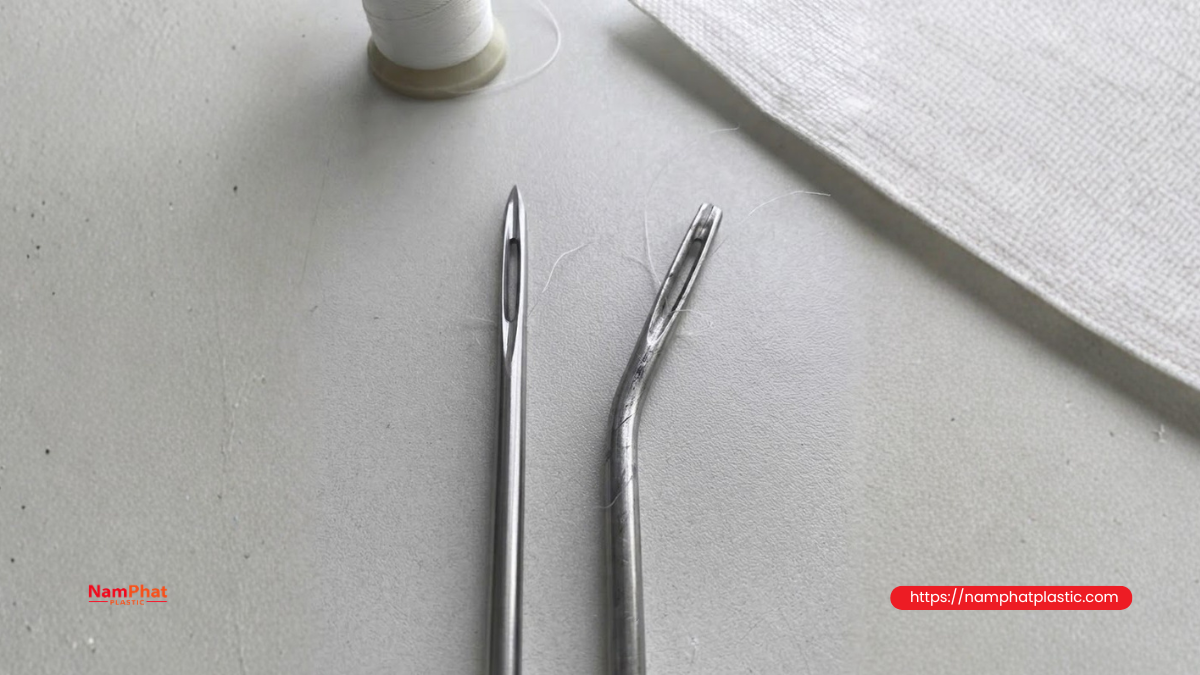
The needle should be checked first because it is a common cause, easy to troubleshoot, and inexpensive to replace.
A needle does not have to be visibly bent to cause skipped stitches. A small deviation in the needle shaft can change the position of the thread loop when the machine runs at high speed. The looper may then catch most stitches but occasionally miss the loop.
Common situations include:
-
The needle has been used for too long.
-
The needle tip has become dull after sewing hard materials.
-
The needle previously struck the needle plate or looper.
-
The needle was not pushed fully into the needle holder.
-
The needle-clamping screw is not tight enough.
-
The needle scarf, long groove, or installation direction is incorrect.
-
The wrong needle system is being used for the machine.
-
The needle diameter is unsuitable for the thread and material.
A needle that is too small may deflect when penetrating a thick bag, causing the looper to miss the thread loop. Technical documents from needle manufacturers also indicate that needle deflection when penetrating thick material can increase the risk of skipped stitches.
Solution:
Replace the needle with a new needle of the correct system, size, and installation direction. Do not simply inspect the old needle visually and conclude that it is still usable. The cost of replacing a needle is much lower than the time required to disassemble and readjust the looper mechanism.
After replacement, turn the handwheel several revolutions by hand to check whether the needle contacts the needle plate, presser foot, or looper.
4.2. The thread does not unwind evenly from the spool
A machine may be correctly adjusted but still skip stitches if the thread-pulling force changes continuously.
Some thread spools may have problems such as:
-
The thread drops toward the bottom of the spool and gets caught.
-
The thread is cross-wound incorrectly or has uneven winding.
-
The spool vibrates, tilts, or rotates abnormally.
-
The thread catches on the edge of the paper tube.
-
There are knots or sections with inconsistent thickness.
-
The spool diameter is too large for the holder.
-
The spool is positioned too close to the thread guide.
-
Hairy thread produces dust that accumulates around the guide eye.
When the thread catches for even a very short time, tension increases suddenly. The thread loop behind the needle becomes smaller, and the looper may fail to catch it. Once the obstruction is released, the machine returns to normal, making the problem appear completely random.
How to check:
Pull the thread manually from the spool through the entire thread path. The pulling force should remain relatively even, without sudden resistance, alternating heavy and light tension, or catching at a particular point.
You can also replace the spool with one that is known to run reliably. If the problem decreases significantly without changing the machine settings, inspect the spool, spool placement, and winding quality.
4.3. The thread is incorrectly threaded or a guide eye is skipped
The thread path does more than simply guide the thread. It also controls thread movement, stabilizes tension, and helps the thread loop form at the correct time.
A machine may still form stitches even when the thread is incorrectly routed through one guide. However, the seam becomes unstable and more likely to skip stitches when:
-
The machine speed increases.
-
Sewing starts on the material.
-
The bag thickness changes.
-
The machine vibrates.
-
The spool is nearly empty.
Common problems include:
-
Skipping an upper thread guide.
-
Threading the tension assembly in the wrong direction.
-
The thread not sitting between the tension discs.
-
The thread being routed incorrectly around the take-up spring.
-
Threading the wrong side of the needle.
-
The thread rubbing against the machine housing or protective cover.
-
The thread being trapped under a screw or sharp edge.
Union Special's instructions for bag-closing machines also require checking thread tension, free thread movement through the guides, thread delivery from the spool, and correct threading according to the machine diagram when skipped stitches occur.
Solution:
Remove the entire thread and rethread the machine from the beginning according to the threading diagram for the exact machine model. Do not simply inspect the path superficially and assume it is correct.
4.4. Thread tension is too high or fluctuates
Many operators believe that increasing thread tension will make the seam stronger. However, excessive tension can make the thread loop behind the needle too small.
When the loop is small, even a slight deviation of the looper can cause it to pass without catching the thread. The problem often becomes worse at high speed or when the thread has high twist or stiffness.
Conversely, tension that is too low is also undesirable. The thread may vibrate, form an excessively large loop, tangle, or fail to retract at the correct time.
Signs of a tension problem include:
-
The seam is tight in some areas and loose in others.
-
The thread jerks strongly around the guide.
-
The thread spool vibrates abnormally.
-
The problem almost disappears when the machine speed is reduced.
-
The thread becomes hot or hairy quickly.
-
Skipped stitches usually appear after the machine has been running under tension for some time.
Adjustment:
Mark the original tension setting before making adjustments. Then make small changes, test the machine, and record the result. Do not turn the tension knob several rotations at once because this removes the original setting and makes it difficult to determine which direction improved the problem.
4.5. The looper is worn, loose, or misaligned
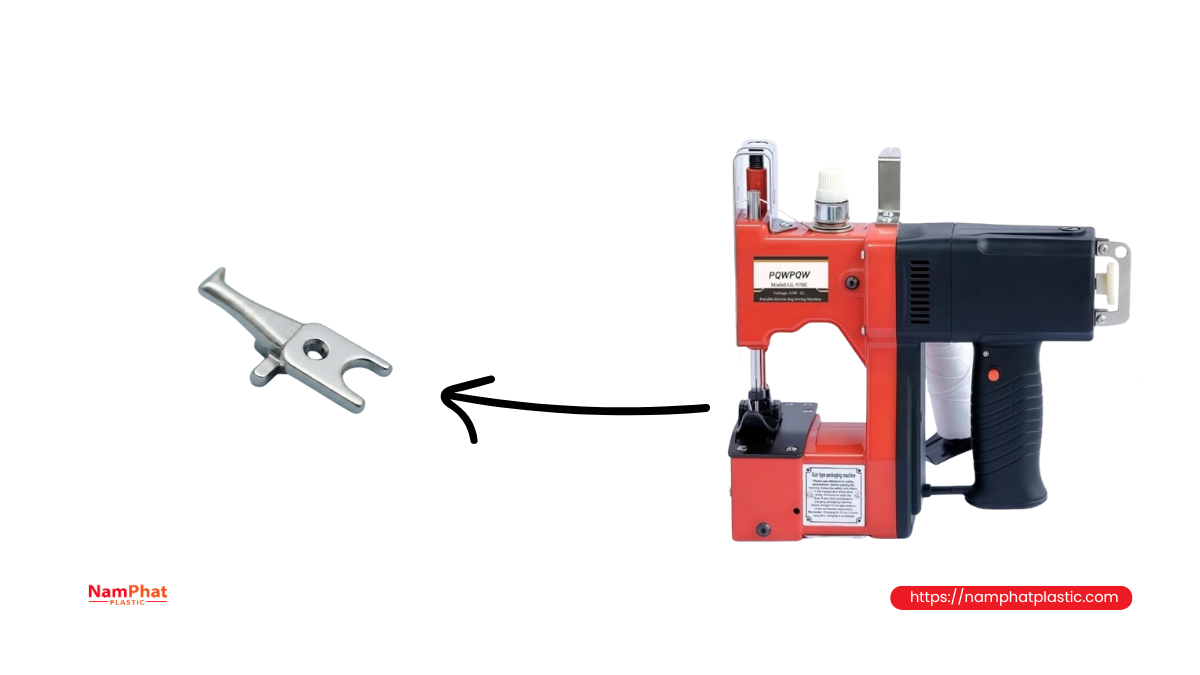
The looper must pass through the thread loop at exactly the right position within a very short period. If the looper tip is worn or the mechanism has excessive play, the machine may catch the thread at low speed but skip stitches during production.
Check the following:
-
Whether the looper tip is worn.
-
Whether the looper has scratches or burrs.
-
Whether the looper retaining screw is loose.
-
Whether the looper shaft has lateral or axial play.
-
Whether the looper travels too far past the needle.
-
Whether the looper contacts the needle during part of the cycle.
-
Whether the timing of the looper's approach to the needle is correct.
For bag-closing machines, Union Special lists a loose, worn, or incorrectly adjusted looper as one of the conditions to inspect when skipped stitches occur.
Important note:
Do not use one universal clearance specification for every machine. The needle-looper clearance and needle-bar position depend on the machine model, needle system, and stitch type. Adjustment should follow the machine's technical documentation or be performed by an experienced technician.
4.6. The needle is deflected while penetrating the material
A machine may sew well through a single layer but skip stitches when sewing through:
-
A folded bag edge with multiple layers.
-
A seam overlap or doubled section.
-
Coated woven PP bags.
-
Multi-layer paper bags.
-
Material with uneven stiffness.
-
A seam positioned very close to a folded edge.
When the needle penetrates a thicker section, resistance increases and the needle shaft is pushed sideways. The thread loop is then no longer in the position where the looper is adjusted to pass through it.
Signs include:
-
Skipped stitches are concentrated at folded edges.
-
The machine does not skip stitches when running without material.
-
Slowing down at the thick section reduces the problem.
-
The needle tends to bend in the same direction after some operating time.
-
The needle plate or presser foot shows needle-contact marks.
Solution:
-
Check the needle size.
-
Use a needle with sufficient stability for the material.
-
Reduce speed when passing through thick sections.
-
Check whether the presser foot holds the material firmly enough.
-
Check the needle guard.
-
Prevent operators from suddenly pulling or rotating the bag.
4.7. The feed dog, presser foot, or needle plate has a problem
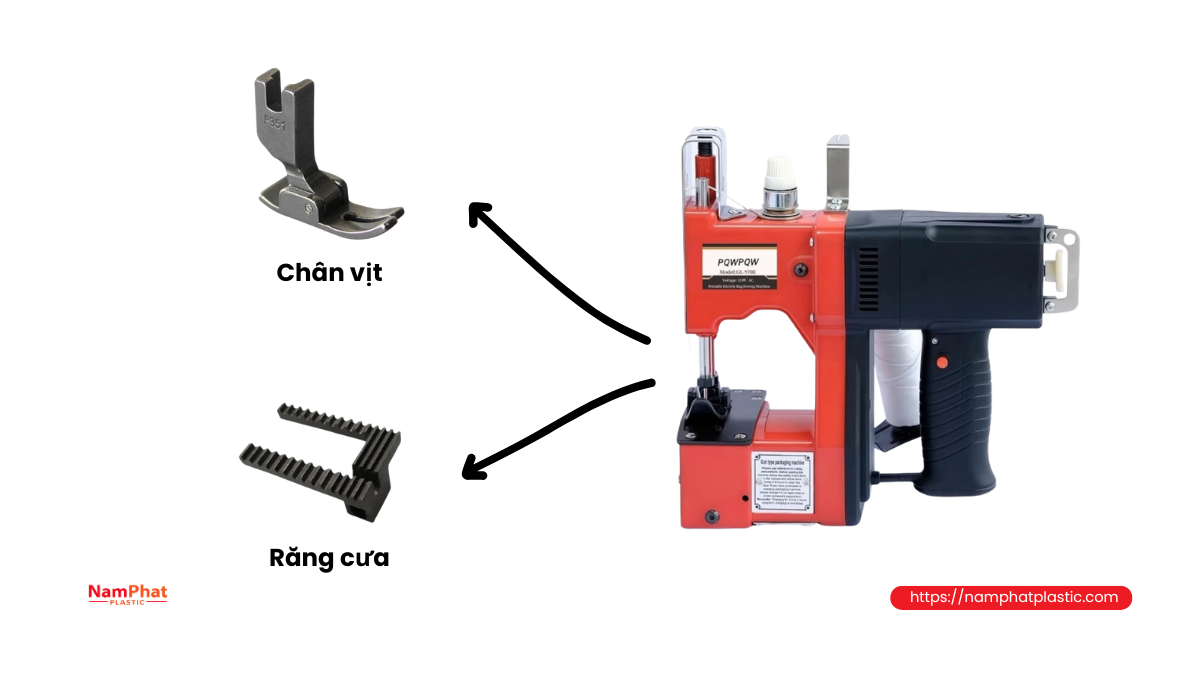
The stitch-forming process requires the material to remain relatively stable. If the bag rises with the needle or shifts sideways when the needle begins to rise, the thread loop can become distorted.
Common causes include:
-
The feed dog is worn or contaminated with dust.
-
The feed dog is too low.
-
The presser-foot pressure is too light.
-
The presser-foot pressure is too high, making material feeding difficult.
-
The needle-plate opening is worn.
-
The needle hole is too large for the needle.
-
The operator pulls the bag faster than the feed mechanism.
-
The conveyor speed is not synchronized with the machine.
Union Special recommends checking the condition of the feed teeth, the teeth on the needle plate, presser-foot pressure, bag feeding speed, and material changes when troubleshooting seam problems on bag-closing machines.
How to check:
Lightly hold the material with one hand while running the machine. Do not pull the bag forward. Observe whether the bag vibrates, rises with the needle, or shifts sideways.
4.8. Thread dust, dirty oil, or burrs along the thread path
Bag sewing machines often operate in environments with large amounts of dust from woven PP bags, paper, product powder, and thread fibers. Accumulated dust can cause tension to fluctuate or interfere with looper movement.
Areas that should be cleaned include:
-
The two tension discs.
-
Thread guide eyes.
-
The needle groove and eye.
-
The looper area.
-
Feed dogs.
-
The needle-plate opening.
-
The presser foot.
-
The thread-chain cutter.
-
Areas where thread has wrapped around shafts.
In addition to dust, a small scratch on a guide eye, needle plate, or looper can temporarily hold the thread. This is a typical cause of fluctuating tension and intermittent errors.
Union Special maintenance instructions recommend cleaning the feed teeth, looper, and sewing opening on the needle plate after each shift or at the end of the working day.
4.9. High speed, needle heating, and machine vibration
As the machine speed increases, the entire thread-loop formation process occurs faster. Small deviations that the machine can tolerate at low speed may become causes of skipped stitches at high production speed.
High-speed skipped stitches may be associated with:
-
Needle vibration or deflection.
-
Thread not moving through the tension assembly quickly enough.
-
Excessive spool vibration.
-
Looper or shaft play.
-
The machine being installed on an unstable table or stand.
-
Pulley, belt, or bearing vibration.
-
Needle heating increasing friction between the thread and material.
-
The operator feeding the bag unevenly.
A simple test is to reduce the machine speed by approximately 20–30% and sew continuously on the same material. If the problem decreases significantly, do not immediately conclude that the motor speed is too high. This result indicates that the stitch-forming system lacks stability and requires inspection of the needle, thread tension, mechanical play, and vibration.
4.10. The thread quality or size is unsuitable
Sewing thread does not replace proper machine adjustment, but its characteristics clearly affect the ability to form a stable loop.
Factors to consider include:
-
Uneven thread diameter.
-
Excessive hairiness.
-
Inconsistent twist.
-
Thread that is too stiff or has flattened sections.
-
Knots or splices.
-
High surface friction.
-
Thread that is too large for the needle eye.
-
Thread that is too small or too soft for the machine configuration.
-
Uneven winding.
For PE bag sewing thread in 20/6, 20/8, or 20/9 constructions, selection should not be based only on tensile strength. Uniformity, hairiness, twist, unwinding behavior, and compatibility with the needle should also be evaluated.
If the thread fits too tightly through the needle eye, friction increases and thread movement is restricted. If the thread is too small or too soft, the thread loop may become unstable on certain machines. Therefore, the needle, thread, and material should be treated as one system rather than three independent factors.
5. Machine troubleshooting table based on symptoms
| Symptom | Causes to check first | Initial solution |
| Occasional single skipped stitch | Slightly bent needle, uneven thread delivery, dust in tension assembly | Replace needle, rethread, clean machine |
| Skips stitches only at high speed | Small thread loop, machine vibration, looper play | Reduce speed, check thread tension and mechanical condition |
| Skips stitches at folded edges | Needle deflection caused by thick material | Check needle size, presser foot, and sewing speed |
| Skips after changing the spool | Poor winding or unsuitable thread | Test the previous spool and inspect thread delivery |
| Skips at the beginning of the seam | Unstable thread chain, short thread tail, incorrect bag feeding | Form the thread chain before sewing and check bag feeding |
| Skips at the end of the seam | Thread tension, thread path, or chain-forming mechanism | Check tension assembly, thread guides, and looper |
| Runs well when cold but starts skipping after prolonged operation | Needle heating, accumulated dust, thermal expansion, or insufficient lubrication | Stop machine, clean, and check lubrication |
| Skips and breaks thread at the same time | Incorrect needle, thread catching, burrs, or excessive tension | Inspect the complete thread path and needle eye |
| Skips with unusual impact noise | Needle contacting looper, needle plate, or presser foot | Stop machine and check alignment |
| Still skips after replacing the needle | Worn looper, incorrect timing, needle-bar or shaft play | Proceed to detailed mechanical inspection |
6. 15-minute procedure for troubleshooting random skipped stitches
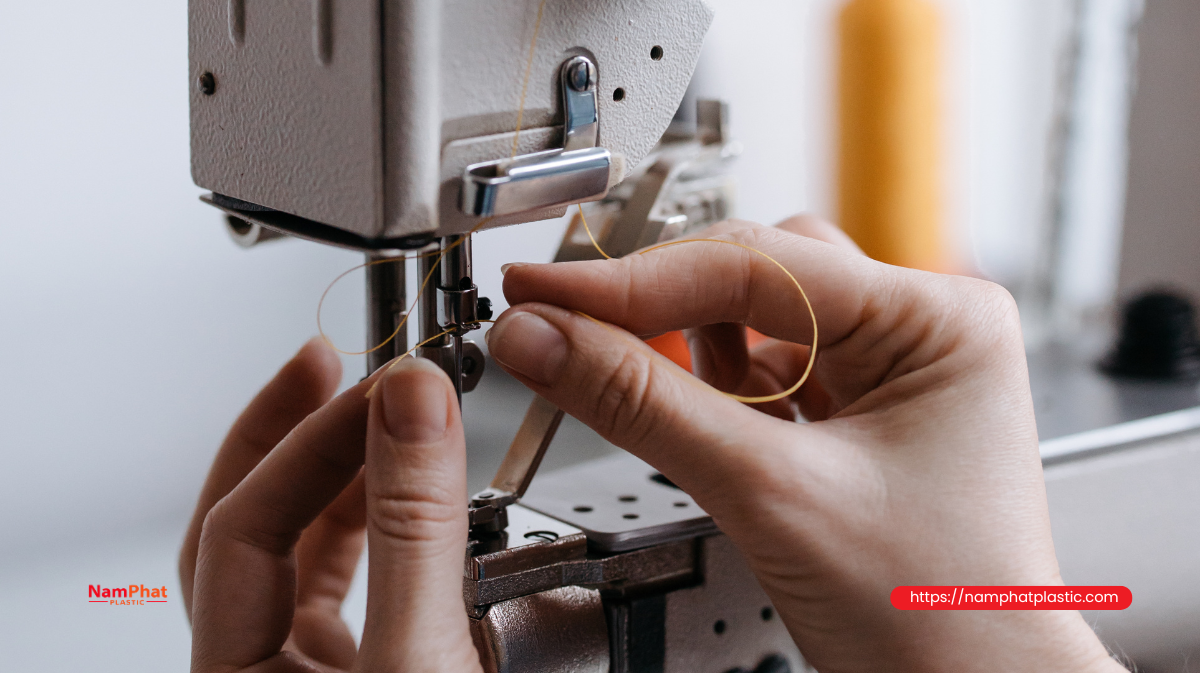
To avoid spending excessive time adjusting the machine, follow the sequence below.
Step 1: Disconnect the power and record the conditions under which the problem occurs
Record:
-
Machine model.
-
Material type.
-
Number of bag layers.
-
Thread type.
-
Needle code or size.
-
Machine speed.
-
Whether the problem occurs at the beginning, middle, or end of the seam.
-
Whether the problem appears when the machine is cold or after prolonged operation.
This information prevents adjustments based only on intuition.
Step 2: Replace the needle
Use the correct needle system and installation direction. Push the needle fully into the specified position and tighten the needle-clamping screw securely.
This should be done before adjusting thread tension.
Step 3: Remove and rethread the entire thread path
Clean the thread guides and tension discs before rethreading. Make sure the thread is correctly seated in the tension assembly and routed correctly through the needle.
Step 4: Check thread delivery from the spool
Pull a long section of thread manually. The spool should release thread evenly without jerking, catching, or allowing the thread to fall toward the bottom of the spool.
Step 5: Clean the stitch-forming area
Clean the looper, feed dog, needle plate, and presser foot. Check whether thread scraps are wrapped around the shaft.
Step 6: Test at low speed
Sew on the actual material being produced. Do not test with a different piece of fabric because its thickness and stiffness may differ from the actual bag.
Step 7: Increase speed gradually
Increase the speed step by step and observe when the problem appears. If the machine only skips stitches above a certain speed, prioritize checking needle stability, tension, vibration, and mechanical play.
Step 8: Check the looper and stitch-forming timing
Only perform this step after the simpler checks have not resolved the problem. Turn the machine by hand and observe:
-
Whether the needle forms the thread loop consistently.
-
Whether the looper enters the center of the loop.
-
Whether the needle is being deflected by any component.
-
Whether the looper is too far from or too close to the needle.
-
Whether the looper retaining screw and related components are loose.
7. Common mistakes when fixing skipped stitches
Adjusting the looper immediately after seeing the problem
This is one of the most common mistakes. If the actual cause is a bent needle or thread catching, adjusting the looper can disturb settings that were previously correct and create additional problems.
Increasing thread tension too much
The seam may appear tighter, but the thread loop behind the needle becomes smaller. The machine may skip fewer stitches under one condition but more under another.
Testing the machine only by hand or at low speed
Random skipped stitches often appear at production speed. After repair, the machine must also be tested at its actual operating speed.
Reusing the needle that was just removed
A slightly bent needle can be very difficult to detect visually. During troubleshooting, use a new needle to eliminate the needle as a possible cause instead of removing and reinstalling the old one.
Changing several settings at once
If the needle, looper timing, thread tension, and thread are all changed simultaneously, the technician will not know which factor actually improved the problem. This makes recurrence more likely because the root cause was never identified.
Testing only a very short section
Random skipped stitches may not appear during the first few meters. A sufficient number of samples should be sewn to evaluate stability.
8. Test-run standards after repair
A factory can establish internal inspection standards such as:
-
Test the machine at low speed on at least two samples.
-
Continue testing at production speed using the actual material.
-
Inspect both the upper and lower sides of the seam.
-
Test both single-layer areas and areas with multiple folded layers.
-
Inspect the beginning, middle, and end of the seam and thread chain.
-
Repeat the test on multiple bags rather than only one sample.
-
Record the needle, thread, tension, and speed settings after the machine meets the requirements.
Do not conclude that the problem has been completely resolved simply because the machine runs for a few seconds without skipping.
9. How to prevent random skipped stitches from recurring
Standardize needles for each product
Each bag group should have clear specifications for:
-
Needle system.
-
Needle size.
-
Needle type.
-
Needle replacement interval.
-
Needle installation direction.
Operators should not be allowed to select needles solely based on personal experience.
Inspect thread before loading it onto the machine
Each thread lot should be checked for:
-
Uniformity.
-
Hairiness.
-
Splices.
-
Unwinding stability.
-
Performance on the actual machine.
Clean at the end of every shift
Thread dust should be removed from the tension assembly, thread guides, feed dogs, needle plate, and looper area. This simple task can have a significant effect on seam stability.
Check vibration periodically
Monitor:
-
Machine table or stand.
-
Pulley.
-
Belt.
-
Bearings.
-
Main shaft.
-
Needle bar.
-
Looper mechanism.
Machine vibration can cause skipped stitches as well as loosen screws, accelerate component wear, and cause seam quality to change over time.
Record machine settings that have proven stable
After the machine runs reliably, record:
-
Needle type.
-
Thread type.
-
Tension setting or knob position.
-
Stitch length.
-
Speed.
-
Material type.
-
Most recent maintenance date.
When a problem occurs, operators can compare the current condition with a known stable setting instead of adjusting the machine entirely by trial and error.
10. When should you call a sewing machine technician?
Stop making adjustments yourself and contact a technician when any of the following occurs:
-
The needle contacts the looper or needle plate.
-
The looper has obvious play.
-
The machine produces abnormal impact noises.
-
The needle bar moves sideways.
-
The machine continues to skip stitches after replacing the needle and rethreading.
-
The looper position changes from one rotation to another.
-
The machine timing shifted after a needle-breakage incident.
-
Cam, shaft, or drive components are loose.
-
The cam or needle-bar position needs to be changed.
Before disassembling or adjusting the mechanism, completely disconnect the power supply. Work involving electrical components or drive mechanisms should be performed by qualified personnel.
Frequently asked questions about random skipped stitches
1. Can replacing the thread eliminate skipped stitches?
It can if the cause is uneven spool winding, excessive hairiness, unsuitable thread size, or unstable unwinding tension. However, changing the thread cannot correct a bent needle, worn looper, or incorrect timing.
2. Why does the machine sew well when turned by hand but skip stitches at high speed?
When the machine is turned by hand, the needle and thread move slowly, giving the thread loop more time to form. At high speed, vibration, dynamic tension, and needle deflection increase. This is often a sign that the stitch-forming system is operating close to its stability limit.
3. Are skipped stitches always caused by the looper?
No. The looper is the component that directly fails to catch the thread loop, but the reason the loop is missed may be the needle, thread, tension assembly, presser foot, material, or operating method.
4. Does using a larger needle always reduce skipped stitches?
Not in every case. A larger needle is generally stiffer, but it also creates a larger needle hole and may damage the material or be unsuitable for the machine configuration. The needle should be selected according to the thread, material, and machine manufacturer's recommendations.
5. Can PE 20/6, 20/8, and 20/9 bag sewing thread use the same needle size?
It should not be assumed that they can. These thread constructions have different diameters and structures. The needle eye must be large enough for stable thread passage but not excessively large for the material. Test the combination on the actual machine and bag type before standardizing it.
6. Should the machine speed be reduced as a permanent solution?
Reducing speed can help maintain production temporarily, but it is not always the root solution. If the machine previously ran reliably at high speed but now only works without skipping at lower speed, inspect the needle, vibration, wear, and thread path.
Conclusion
Random skipped stitches usually do not originate from a single mechanical failure. They are often the result of instability during thread-loop formation. A slightly bent needle, uneven thread delivery, fluctuating tension, material movement, a worn looper, or machine vibration can all cause the looper to occasionally miss the thread.
An effective troubleshooting sequence should begin with simple factors: replace the needle, rethread the machine, check the thread spool, clean the machine, and test at several speed levels. Only after these factors have been eliminated should deeper checks be performed on needle-looper clearance, needle-bar position, timing, and mechanical play.
Using the correct combination of a stable bag sewing thread and properly maintained equipment can help reduce skipped stitches, minimize thread breakage, maintain seam strength, and reduce machine downtime during production.
>>> See more:
- 0 Comment


