


 Phan Van Hoang
- 29/07/2026
- 168
When choosing industrial bag sewing thread, many businesses focus on tensile strength, twist, color, or thread specifications but do not pay enough attention to the weight of each thread spool.
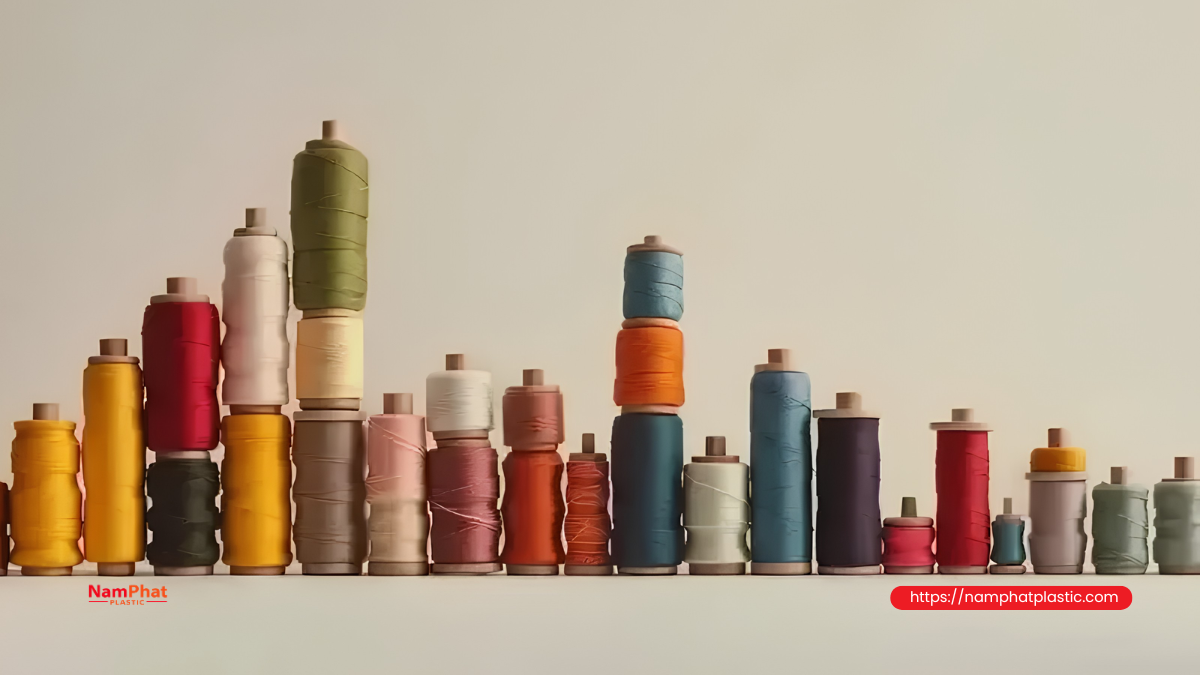
In practice, the same type of bag sewing thread can be wound into spools ranging from approximately 0.2 kg to 3 kg. Each spool size is suitable for a different operating method. Small spools provide greater flexibility when changing colors and handling short orders, while larger spools reduce the number of machine stops on continuous production lines.
Therefore, a 3 kg spool is not always better than a 1 kg spool. The right choice should be based on thread consumption, the structure of the thread holder, sewing machine speed, number of product codes, and inventory management capability.
Table of Contents [Hide]
1. Why does thread spool weight affect the bag sewing process?
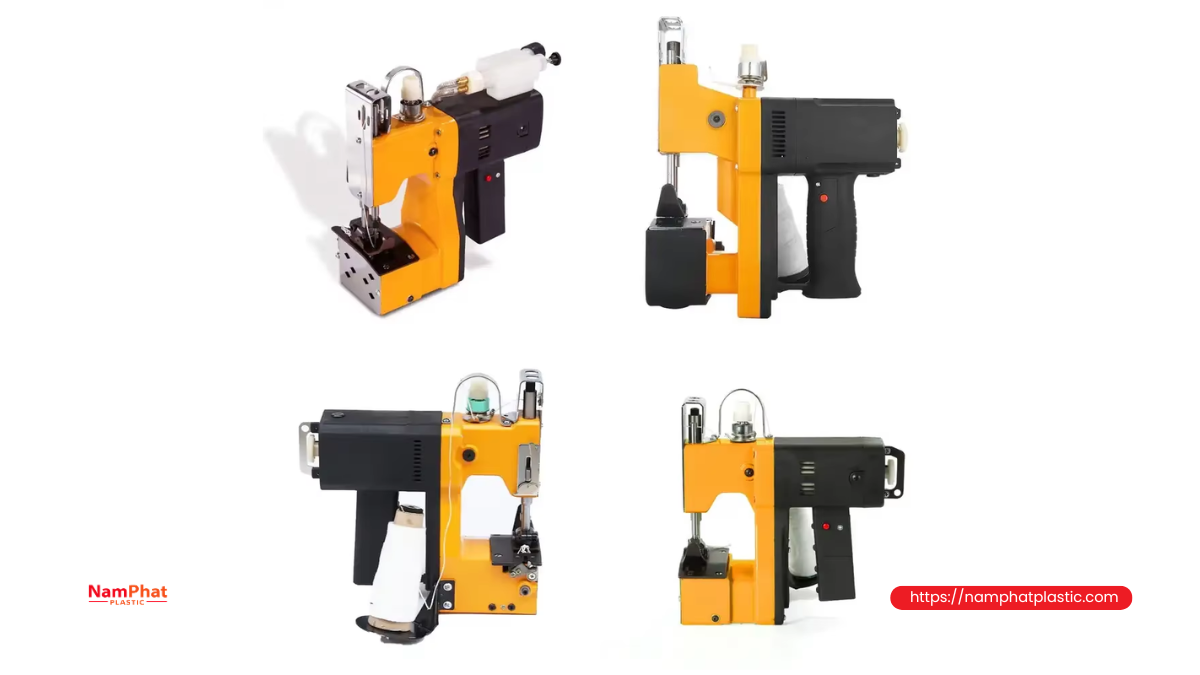
Thread spool weight does not directly determine seam strength, but it has a significant effect on machine operating efficiency.
A suitable thread spool can help businesses:
-
Reduce the number of machine stops for thread changes.
-
Minimize the need for mid-shift thread splicing.
-
Reduce operator handling time.
-
Make thread management easier by color and order.
-
Reduce leftover thread after completing an order.
-
Maintain a more stable thread feed.
-
Optimize storage space and packaging costs.
Conversely, a spool that is too small will need to be replaced frequently. A spool that is too large but incompatible with the thread holder or tension-adjustment system may cause spool vibration, uneven thread feeding, increased pulling force, and thread breakage.
Therefore, when selecting 0.2–3 kg bag sewing thread spools, businesses need to balance flexibility and continuous operation.
Quick comparison of bag sewing thread spool sizes
| Spool weight | Most suitable for | Main advantage | Point to note |
| 0.2 kg | Sample sewing, very small orders, color trials | Flexible, little leftover | Frequent spool changes |
| 0.5 kg | Small sewing facilities, many product codes | Easy to use and manage | Not optimal for continuous production |
| 1 kg | Medium-scale workshops, stable orders | Balance between operating time and flexibility | Check thread-holder dimensions |
| 2 kg | Medium-to-large production plants | Fewer spool changes | Requires a stable thread-feeding path |
| 3 kg | Continuous bag sewing lines, high output | Long operating time, less downtime | Not suitable for every machine |
This is a general reference table. Actual operating time also depends on bag size, seam type, stitch density, thread specification, and operating speed.
2. When should you use a 0.2 kg bag sewing thread spool?
A 0.2 kg spool belongs to the small-spool category and is suitable when flexibility is more important than continuous operating time.
2.1. Sample sewing and trial inspection
Before mass production, businesses often need to conduct sewing trials to check:
-
Whether the thread color matches the bag.
-
Whether the seam meets appearance requirements.
-
Whether the thread is compatible with the needle and sewing machine.
-
What thread tension setting is required.
-
Whether skipped stitches, thread breakage, or hairiness occur.
Using a 0.2 kg spool reduces the amount of thread that needs to be purchased during the trial stage, especially when the final specification or color has not yet been confirmed.
2.2. Very short orders
For small-volume orders, using a large spool can leave a significant amount of thread after production is completed. If the thread color is specific to one customer, the remaining thread may have to be stored for a long time.
A 0.2 kg spool allows businesses to purchase closer to actual demand and reduce slow-moving inventory.
2.3. Products with multiple thread colors
A workshop that frequently switches between white, red, blue, yellow, or custom identification colors can use small spools for colors with low usage frequency.
2.4. Machine training and maintenance
Small spools are also convenient for:
-
Training new operators.
-
Checking the machine after maintenance.
-
Adjusting the thread tension system.
-
Conducting trial runs after replacing the needle, thread guide, or other components.
2.5. Limitations of 0.2 kg spools
Small spools are not suitable for machines that operate continuously for many hours because operators must replace the spool frequently. Frequent stops can reduce productivity and increase the risk of incorrect thread splicing.
3. When should you use a 0.5 kg bag sewing thread spool?
A 0.5 kg spool is suitable for small production facilities or businesses with many product codes but relatively small quantities for each code.
This is a practical choice when:
-
The sewing machine operates only a few hours per day.
-
Bag production volume is unstable.
-
The business frequently changes thread colors.
-
Each order uses a different specification.
-
The business does not want to keep too much thread in inventory.
-
The machine's thread holder has limited dimensions.
Compared with a 0.2 kg spool, a 0.5 kg spool provides longer operating time while remaining light enough for convenient replacement, storage, and transportation.
What types of businesses are suitable for 0.5 kg spools?
Some typical users include:
-
Seasonal agricultural-product packaging facilities.
-
Small bag sewing workshops.
-
Businesses repairing or reworking bags.
-
Small-scale animal-feed packaging facilities.
-
Businesses that frequently change product types.
-
Workshops using portable bag sewing machines with limited spool-holder capacity.
However, the spool diameter and thread release method should be checked before use. Two 0.5 kg spools may have the same weight but different widths or heights, and one may not fit the machine's installation space.
4. When should you use a 1 kg bag sewing thread spool?
A 1 kg spool is a balanced choice for many bag manufacturers and production plants. It is large enough to reduce the frequency of spool changes without being excessively heavy for many industrial thread holders.
4.1. Suitable for medium-scale production
A 1 kg spool is suitable when the sewing machine operates regularly every day but does not run continuously at very high output.
Businesses can consider this spool size when:
-
The same thread is used for multiple products.
-
The machine operates in shifts.
-
Production volume is relatively stable.
-
Operators need to change product codes during the day.
-
Space for thread spools is limited.
-
The business wants to control thread consumption by production shift.
4.2. Balancing inventory and productivity
A 1 kg spool does not usually create excessive leftover thread when an order is completed. At the same time, it provides a noticeably longer operating time than 0.2 kg and 0.5 kg spools.
This is often a suitable option for businesses moving from small-scale production to more organized production but not yet needing 2–3 kg spools.
4.3. Convenient for consumption control
A 1 kg spool is also convenient as a tracking unit. Businesses can record:
-
How much of a spool is used per shift.
-
How many spools are consumed per order.
-
How many kilograms of thread are required for a particular bag.
-
The percentage of leftover and defective thread.
-
Consumption differences between machines or operators.
Managing thread by 1 kg spools is relatively straightforward and can support more accurate bag sewing thread consumption standards.
5. When should you use a 2 kg bag sewing thread spool?
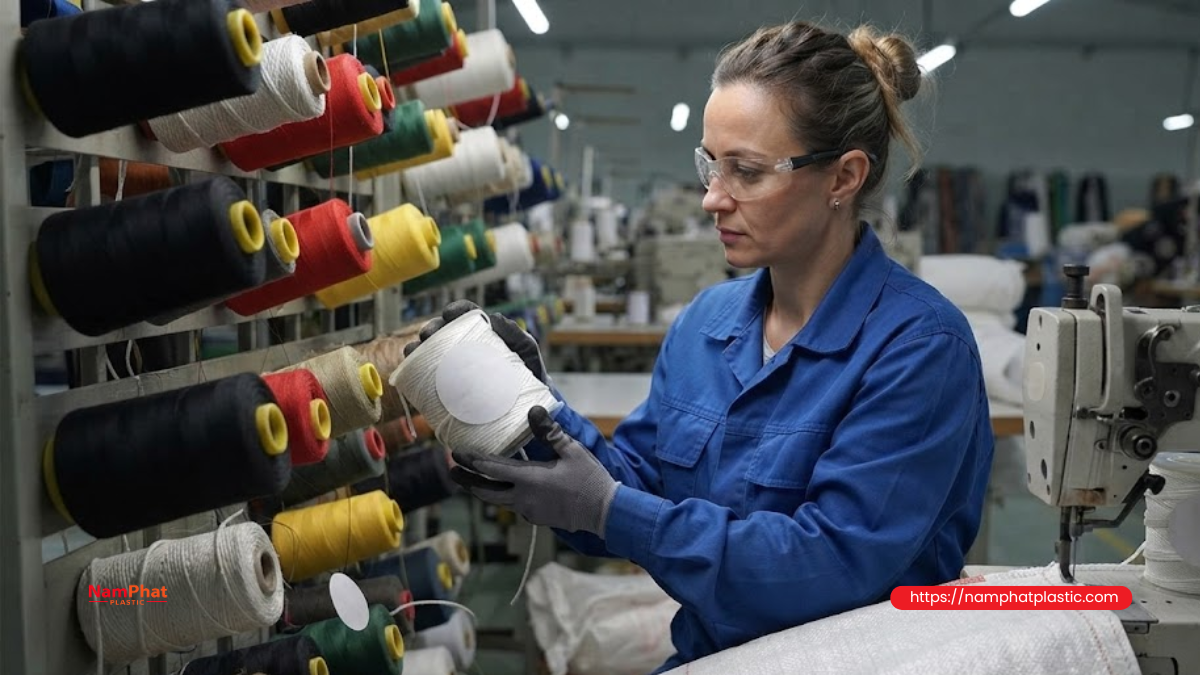
A 2 kg spool is suitable for plants with relatively high output where the same thread is used continuously for long periods.
5.1. Reducing downtime for spool changes
When moving from a 1 kg spool to a 2 kg spool, the theoretical operating time between spool changes can nearly double if all sewing conditions remain unchanged.
This can help:
-
Reduce machine stops during a shift.
-
Minimize mid-process thread splicing.
-
Reduce operator handling.
-
Maintain the rhythm of the packaging line.
-
Reduce machine waiting time caused by running out of thread.
A 2 kg spool is particularly useful where changing the thread can affect the operation of the entire production line before or after the sewing machine.
5.2. Suitable for long production orders
If a business produces the same type of bag in large quantities and uses the same color and thread specification for several days, a 2 kg spool can be more efficient than a smaller spool.
For example, businesses specializing in packaging:
-
Rice.
-
Fertilizer.
-
Animal feed.
-
Flour.
-
Plastic resin.
-
Minerals.
-
Agricultural products.
-
Granular chemicals.
can consider 2 kg spools when the sewing machine operates frequently and there are few product changes.
5.3. Conditions for stable use of 2 kg spools
Before switching to 2 kg spools, check:
-
Whether the shaft or holder can support the spool weight.
-
Whether the spool rotates or releases thread in the correct direction.
-
Whether the spool diameter rubs against the machine frame.
-
Whether the thread tension system operates consistently.
-
Whether the thread path is sufficiently smooth and straight.
-
Whether the spool vibrates at high machine speed.
If the holder is weak or the spool is off-center, a large spool can create oscillation, causing the pulling force on the thread to vary during sewing.
6. When should you use a 3 kg bag sewing thread spool?
A 3 kg spool is primarily intended for high-output production lines that use one type of thread for long periods and need to minimize spool changes.
6.1. Continuous bagging lines
In an industrial production plant, a bag sewing machine may be part of a line consisting of:
-
Weighing and dosing equipment.
-
Bag feeding equipment.
-
Conveyor.
-
Bag-mouth folding machine.
-
Sewing machine.
-
Thread-cutting equipment.
-
Printing or product inspection equipment.
When the sewing machine stops because it runs out of thread, other processes may have to slow down or stop as well. In this situation, a 3 kg spool extends continuous operating time and reduces operator intervention.
6.2. Orders with stable thread consumption
A 3 kg spool is most suitable when the business:
-
Uses one dominant thread color.
-
Rarely changes thread specifications.
-
Has high daily output.
-
Operates two or three shifts.
-
Has a dedicated thread-feeding holder.
-
Has established clear consumption standards.
-
Has suitable thread storage conditions.
6.3. When should you not use a 3 kg spool?
It should not be assumed that a larger spool is always more efficient. A 3 kg spool may not be suitable when:
-
The sewing machine has a small thread holder.
-
The spool rotates on a shaft that is not sufficiently rigid.
-
The tension system is designed for lighter spools.
-
The business frequently changes colors.
-
Orders are short and fragmented.
-
Thread is used infrequently.
-
The production environment has high dust or heat.
-
Operators have difficulty lifting, installing, and adjusting the spool.
Larger spools also represent higher inventory value. If a color or specification is no longer used, the remaining amount on each spool will also be greater.
7. How to select spool weight based on thread consumption
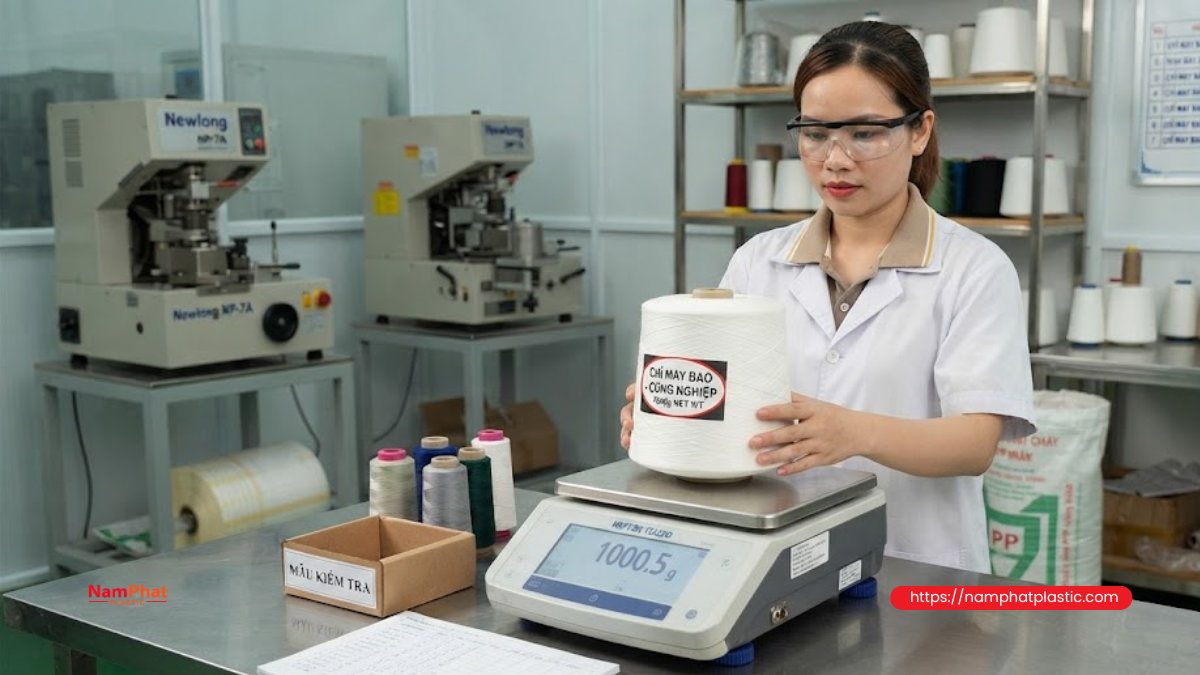
One of the most accurate methods is to measure the actual amount of thread consumed by the machine per hour or per shift.
Reference formula:
Spool operating time = Actual thread weight on the spool ÷ Thread consumption per hour
For example, if a machine consumes an average of 0.2 kg of thread per hour:
-
A 0.5 kg spool can be used for approximately 2.5 hours.
-
A 1 kg spool can be used for approximately 5 hours.
-
A 2 kg spool can be used for approximately 10 hours.
-
A 3 kg spool can be used for approximately 15 hours.
These figures are for illustration only. Actual consumption varies according to:
-
Bag-mouth width.
-
Seam type.
-
Stitch density.
-
Stitch length.
-
Number of thread lines.
-
Thread thickness.
-
Machine speed.
-
Amount of thread used at the beginning and end of each bag.
-
Thread breakage or sewing-defect rate.
Businesses should weigh the spool before and after a trial shift to determine actual consumption accurately.
8. Spool selection benchmarks based on consumption per shift
The following table can be used as a starting point:
| Thread consumption per shift | Spool weight to consider |
| Below 0.3 kg | 0.2–0.5 kg |
| Approximately 0.3–0.8 kg | 0.5–1 kg |
| Approximately 0.8–1.5 kg | 1–2 kg |
| Above 1.5 kg | 2–3 kg |
This is not a mandatory standard. The objective is to choose a spool that lasts for a reasonable period, avoiding the need to change it in the middle of a production batch while also avoiding excessive leftover thread after the order is completed.
9. Are larger spools really more economical than smaller ones?
When comparing prices, many businesses look only at the price per kilogram. However, actual operating costs also include:
-
Machine downtime for spool changes.
-
Labor required to replace and splice thread.
-
Thread remaining on the spool core.
-
Thread that becomes dirty or damaged.
-
Storage costs.
-
Value of leftover thread after each order.
-
Packaging and transportation costs.
-
Losses caused by production-line downtime.
Larger spools often reduce spool-change and packaging costs per kilogram of thread. However, if production involves many small product codes, larger spools can increase inventory and leftover thread.
Therefore, the most economical option is not necessarily the spool with the lowest price per kilogram. The appropriate choice is the spool with the lowest total cost of use.
10. Technical factors to check before using 2–3 kg spools
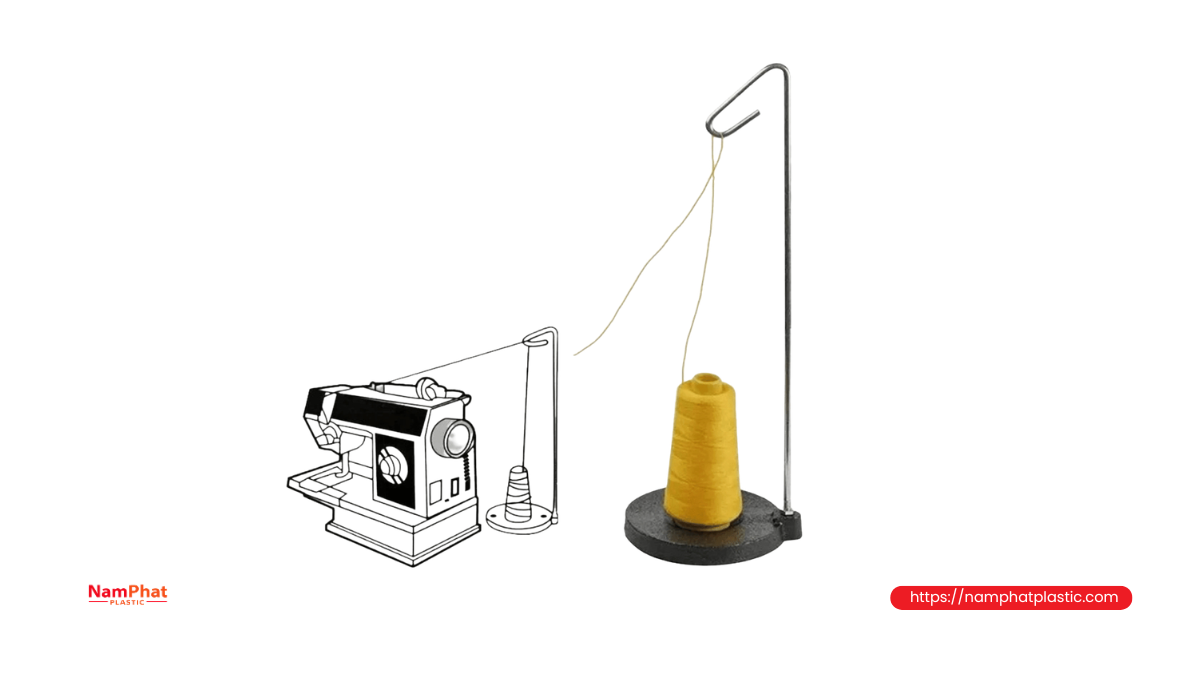
Thread holder dimensions
The holder must be sufficiently wide and rigid. The spool must not hit the machine frame, cover, or surrounding components during operation.
Thread release method
Two common thread-feeding methods are:
-
Thread unwinds from the top of the spool.
-
The spool rotates around a shaft as the thread is pulled.
Each method requires a different spool shape and holder. A large spool should not be used with a shaft-rotation system if the shaft is too weak or the bearings are unsuitable.
Tension stability
As the spool diameter changes, the thread release force may also change. The thread tension system must be adjusted so that the seam is neither too tight nor too loose.
Winding quality
The larger the spool, the more important consistent winding becomes. Some winding defects can cause:
-
Thread slipping toward the bottom of the spool.
-
Uneven overlapping layers.
-
Thread becoming trapped between layers.
-
Deformed spools.
-
Variable thread release force.
-
Thread breakage at high machine speed.
Do not check weight alone while ignoring the spool's rigidity, shape, and winding uniformity.
Thread path
From the spool to the needle, the thread must pass smoothly through the guides. Scratched, rusty, or sharp-edged thread guides can cause hairiness and thread breakage, especially when the machine operates at high speed.
11. Choosing spool size according to production scale
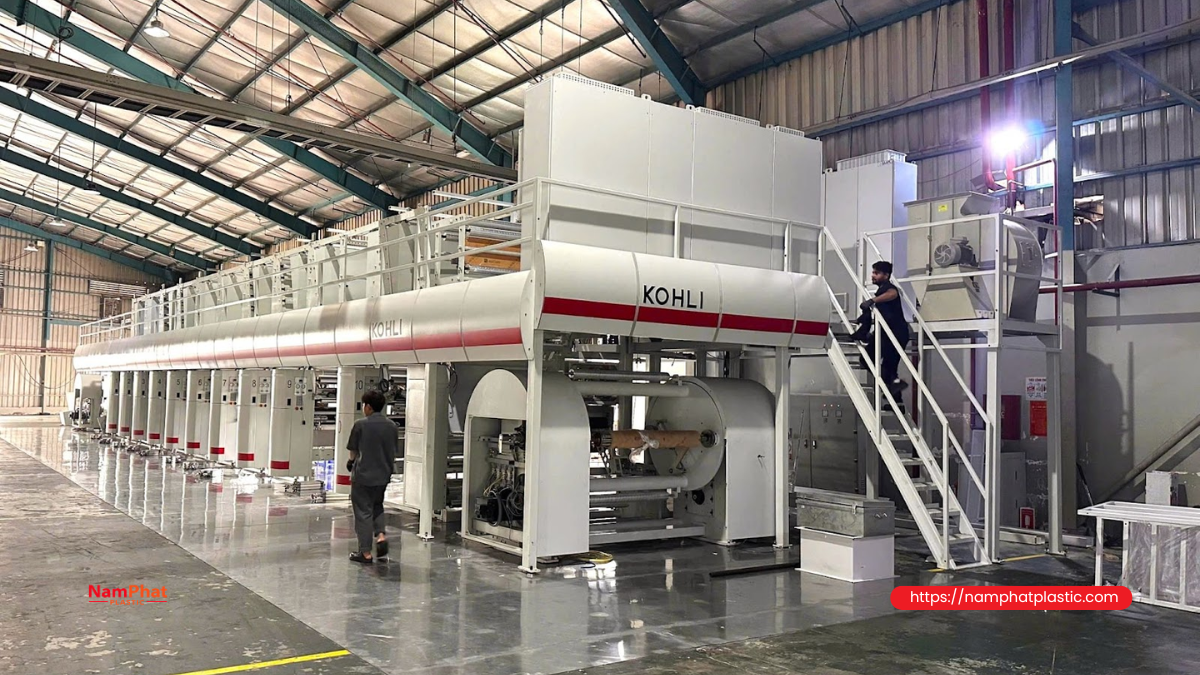
Small production facilities
Prioritize 0.2–0.5 kg spools when:
-
Production volume is irregular.
-
Multiple types of bags are sewn.
-
Each thread color is used in small quantities.
-
Machines do not operate continuously.
-
Inventory investment needs to be minimized.
Medium-scale workshops
A 1 kg spool is often a balanced choice. The business can still use 0.5 kg spools for less frequently used colors and 2 kg spools for main production colors.
Continuous-production plants
2–3 kg spools can be used at stable production stations. However, smaller spools should still be kept for:
-
Trial orders.
-
Special colors.
-
Backup machines.
-
Rework operations.
-
Short production batches.
In practice, a factory does not necessarily need to use only one spool weight. Combining different spool sizes according to product groups can be more effective.
12. Choosing spool size according to color-change frequency
Color-change frequency is an important factor that is often overlooked.
-
A color used every day: prioritize 1–3 kg spools.
-
A color used several times a week: consider 0.5–1 kg spools.
-
A color used only for a specific order: prioritize 0.2–0.5 kg spools.
-
A color still in the testing stage: use a small spool.
-
A standard color used continuously: a larger spool can be used.
This classification helps reduce long-term thread inventory and avoids opening a large spool just to sew a short production batch.
13. Distinguishing net weight from weight including the core
When requesting a quotation or placing an order, businesses should clearly confirm:
-
Actual thread weight.
-
Whether the weight includes the core.
-
Permitted weight tolerance per spool.
-
Core type.
-
Outer spool diameter.
-
Spool height.
-
Number of spools per bag or carton.
For example, a spool described as “1 kg” may mean 1 kg of actual thread or 1 kg including the core, depending on the supplier's specification.
This difference directly affects the amount of thread received and the actual price per kilogram.
14. Should you rewind thread from a large spool onto a small spool?
Some businesses purchase large spools and then rewind the thread onto smaller spools for use. This can be done if suitable winding equipment is available, but the following factors must be controlled:
-
Winding tension.
-
Winding speed.
-
Spool firmness.
-
Thread twist direction.
-
Spool surface shape.
-
Flattening or hairiness.
Rewinding with unsuitable equipment can stretch the thread, reduce uniformity, or create a spool that is too soft. When placed on the sewing machine, the thread may become trapped, tangled, or experience unstable tension.
If specialized winding equipment is not available, it is better to order the required spool weight directly from the manufacturer.
15. Common mistakes when selecting bag sewing thread spools
Choosing only based on price per kilogram
A low thread price does not necessarily mean lower overall cost if the machine has to stop frequently or excessive leftover thread is generated.
Using a large spool with a small thread holder
This can cause vibration, spool tilting, friction, and unstable thread feeding.
Not measuring actual consumption
Choosing spool size based on assumptions makes it difficult to determine which size is suitable for a production shift.
Not classifying by color and order
Using the same spool weight for all thread colors can increase inventory for colors with low usage.
Not checking winding quality
Two spools with the same weight can perform differently on the machine because of their winding method.
Placing large spools in dusty areas
Large spools that remain open for long periods can accumulate dust, oil, or moisture. Dirty thread can affect smoothness and seam appearance.
16. Procedure for testing a new thread spool before placing a large order
Before switching from small spools to 2–3 kg spools, businesses should conduct a trial using the following steps:
-
Check spool dimensions and whether it can be installed on the holder.
-
Check the thread release direction.
-
Clean the entire thread path.
-
Adjust tension at low speed.
-
Sew several test bags.
-
Gradually increase to actual production speed.
-
Observe spool vibration and tension fluctuations.
-
Monitor thread breakage, skipped stitches, and hairiness.
-
Record the operating time of one spool.
-
Compare productivity and costs with the current spool type.
Testing should ideally be carried out for at least one production shift rather than just sewing a few bags. Some problems only appear as the spool diameter decreases or when the machine operates continuously for several hours.
17. How to specify bag sewing thread spool specifications clearly
When requesting a quotation, businesses should provide:
-
Thread material: PE, PP, or polyester.
-
Thread specification: 20/6, 20/8, 20/9, or another specification.
-
Color.
-
Net weight per spool.
-
Core type.
-
Maximum spool dimensions.
-
Type of sewing machine being used.
-
Expected consumption.
-
Number of spools or total quantity required.
-
Packaging requirements.
-
Requirements for twist, hairiness, and strength.
The more complete the information, the easier it is for the supplier to recommend a spool suitable for the machine and production requirements.
Conclusion
Choosing a 0.2–3 kg bag sewing thread spool should be based on actual operating requirements rather than price alone or the assumption that a larger spool is always better.
A general selection principle is:
-
A 0.2 kg spool is suitable for samples, trials, and very small orders.
-
A 0.5 kg spool is suitable for small facilities and production involving many product codes.
-
A 1 kg spool provides a balance between flexibility and operating time.
-
A 2 kg spool is suitable for medium-to-large production volumes.
-
A 3 kg spool is suitable for continuous production lines with few specification changes.
Before placing a large order, businesses should check spool-machine compatibility, measure actual thread consumption, and conduct a trial for at least one production shift.
When requesting bag sewing thread advice from Nam Phat Plastic, customers should provide the machine type, thread specification, production volume, color, and desired spool weight. Providing complete specifications from the beginning helps identify a suitable spool, reduce machine downtime, and control production costs more effectively.
Frequently asked questions about 0.2–3 kg bag sewing thread spools
1. Can a 3 kg thread spool be used on every bag sewing machine?
No. The holder dimensions, thread release method, load capacity, and thread tension system need to be checked. Some smaller machines are only suitable for lighter spools.
2. Does a 0.2 kg spool produce lower seam quality?
No, provided that the thread has the same material, specification, twist, and manufacturing quality. Spool weight mainly affects operating time and spool-change frequency.
3. Does a larger spool reduce thread breakage?
Not necessarily. Thread breakage also depends on thread quality, hairiness, needle condition, tension, thread path, and machine speed. A poorly wound large spool can even cause greater variation in pulling force.
4. Should you choose a 1 kg or 2 kg spool?
A 1 kg spool is suitable when flexibility is needed or orders are changed frequently. A 2 kg spool is more suitable when the machine runs steadily, thread consumption is high, and the holder can accommodate the spool dimensions.
5. How can you determine how long one spool will last?
Measure the amount of thread consumed over a defined period, then divide the net spool weight by hourly consumption. A safety margin should be included because consumption can vary between products.
6. Should an entire factory use the same spool weight?
Not necessarily. A business can use 2–3 kg spools for main colors and specifications while using 0.2–1 kg spools for short orders, special colors, or backup machines.
>>> See also:
- 0 Comment


