


 Phan Van Hoang
- 07/08/2026
- 235
During bag sewing, thread breakage, unstable tension, or seams that look good at times and poor at others are often attributed to the needle, hook, or thread quality. However, one easily overlooked cause is the hardness of the thread spool.
If the thread is wound too tightly or too loosely, thread release will no longer be stable. As a result, the pulling force on the thread changes continuously, affecting the thread tension unit, needle, and stitch-forming mechanism. The machine may then experience problems such as thread breakage, skipped stitches, uneven seams, or running well at low speed but developing problems when the speed increases.
Importantly, an overly hard spool and an overly soft spool do not cause exactly the same types of problems. For effective troubleshooting, the actual spool condition should be identified before adjusting thread tension, replacing the needle, or replacing other machine components.
Table of Contents [Hide]
1. Why does thread spool hardness affect seam quality?
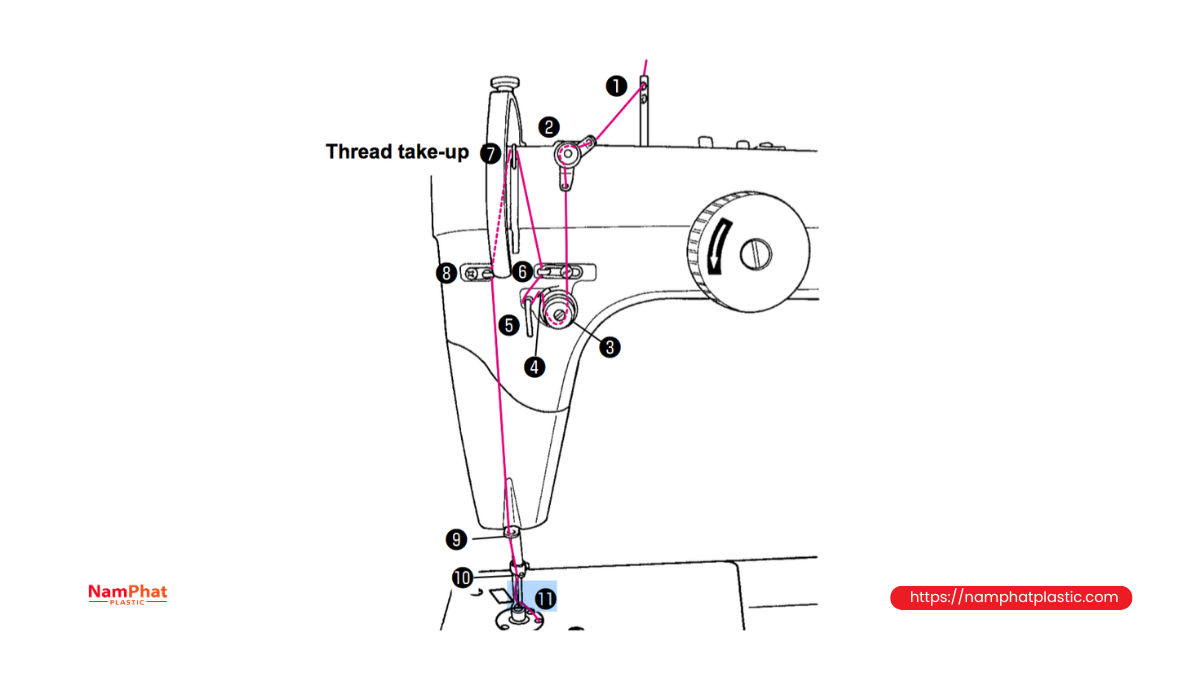
A thread spool is not simply a place to store thread; it is the starting point of the entire thread-feeding system. During sewing, the thread is continuously pulled from the spool through thread guides, the tension unit, the needle, and the stitch-forming mechanism. If the spool does not release the thread consistently, tension throughout the thread path will also fluctuate.
A properly wound spool allows the thread to unwind evenly, limits variations in pulling force, and keeps the seam stable. Conversely, if the spool is wound too tightly or too loosely, thread feeding will no longer be uniform. The machine may develop problems such as thread breakage, skipped stitches, uneven seams, or continuously changing tension.
An important point is that these problems often appear only during machine startup, acceleration, or continuous high-speed operation. Therefore, operators may easily assume the problem is related to the needle, tension unit, or thread quality, while the actual cause comes from the spool.
Understanding the effect of spool hardness helps improve troubleshooting accuracy, avoid unnecessary machine adjustments, and shorten downtime.
2. What is an overly hard thread spool?
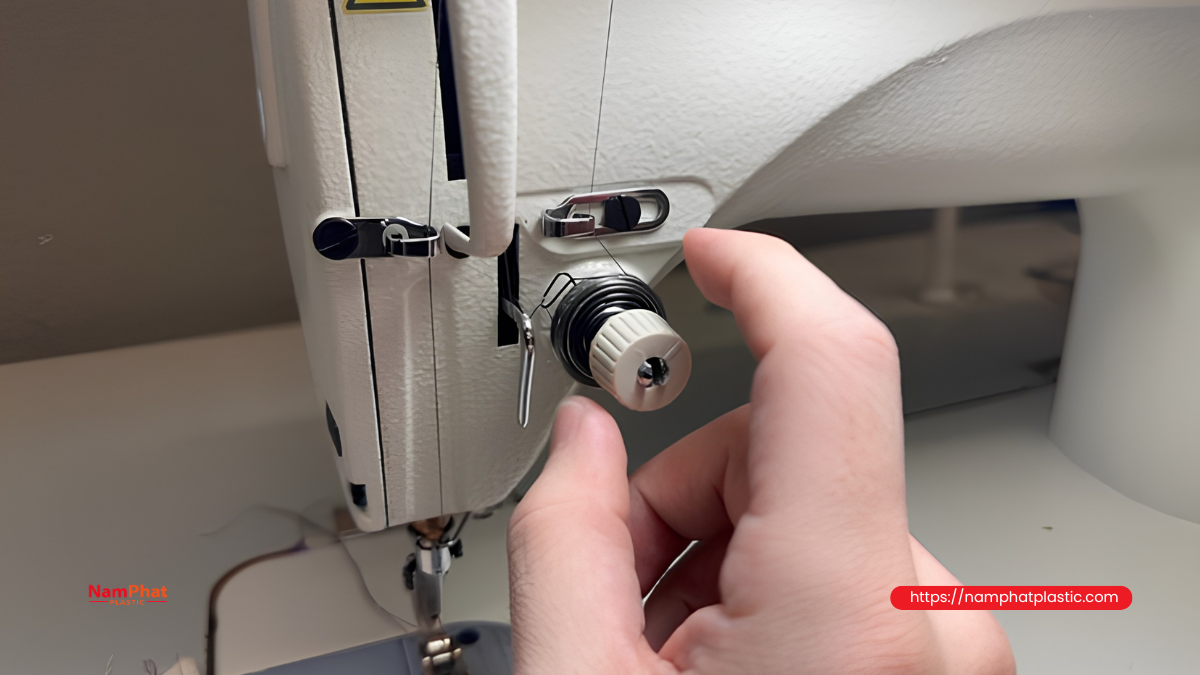
An overly hard thread spool is one in which the thread layers have been wound with excessive compression, making the thread difficult to unwind while the machine is operating. When lightly squeezed by hand, the spool feels very firm, has little elasticity, and the thread layers are tightly compressed against each other.
When the machine pulls the thread, the winding layers must overcome greater friction than normal. If the pulling force rises suddenly, the tension system may not compensate quickly enough, causing problems such as thread breakage, overly tight stitches, or faster needle heating.
Excessive spool hardness may result from excessive winding tension during production, overfilling the spool, improper storage, or compression during transportation.
Common signs of an overly hard spool include:
-
The spool barely compresses when lightly squeezed.
-
Pulling the thread by hand feels unusually difficult.
-
Thread comes off the spool in jerking movements.
-
The machine tends to break thread during startup or acceleration.
-
The seam tends to become too tight.
-
The needle heats up quickly during continuous sewing.
If these symptoms continue even after replacing the needle and adjusting thread tension, the spool hardness should be checked before replacing other machine components.
3. What is an overly soft thread spool?
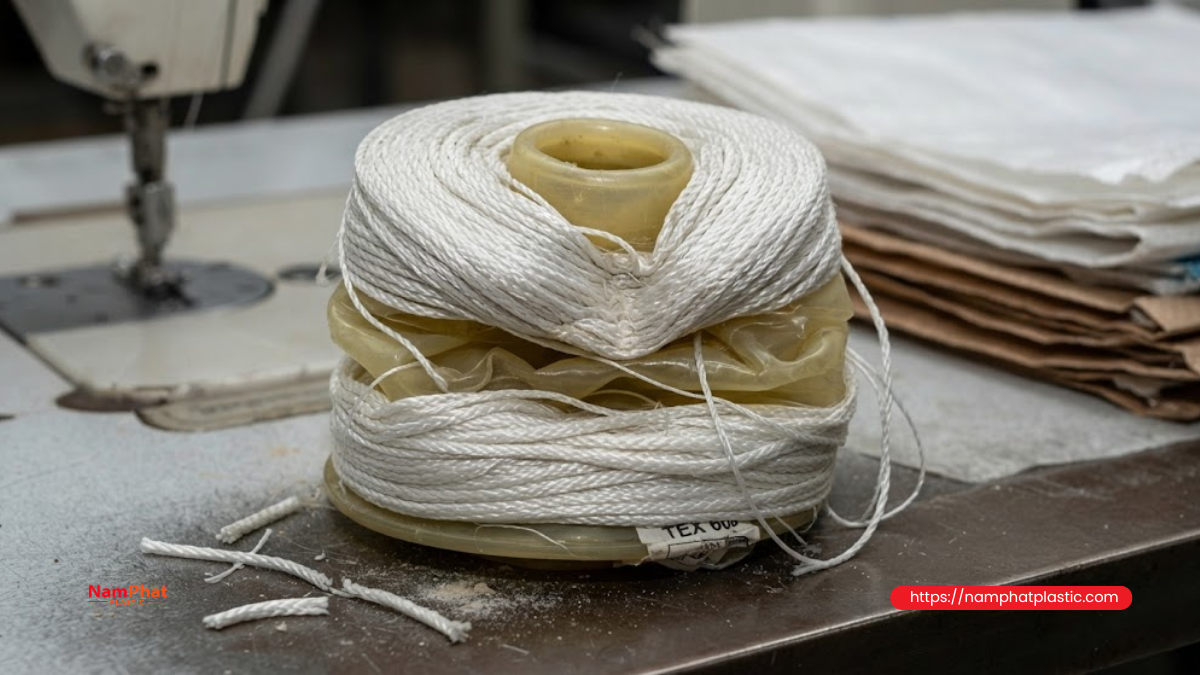
An overly soft thread spool is one in which the thread layers have not been compressed sufficiently, causing the spool to deform easily during use. When lightly squeezed by hand, the spool feels soft, and the winding layers may shift or sink.
Unlike an overly hard spool, which increases the thread pulling force, an overly soft spool causes unstable thread release. During machine operation, the thread layers may shift, overlap, or sink inward, causing the feeding force to change continuously. As a result, the seam may alternate between being too tight and too loose, creating difficult-to-predict problems.
Common causes include insufficient winding tension, unsuitable winding speed, impacts during transportation, or improper storage that causes the original spool shape to deteriorate.
Signs of an overly soft spool include:
-
The spool sinks easily when lightly squeezed.
-
The thread layers are uneven or shifted.
-
The thread becomes loose easily when pulled by hand.
-
The spool deforms after a period of use.
-
The machine develops irregular skipped stitches or thread breakage.
-
The seam alternates between tight and loose even though thread tension has not been changed.
If the spool loses its shape or the winding layers continuously shift during operation, the spool quality should be checked before adjusting other machine parameters. This is a common cause of unstable thread tension that is often overlooked during troubleshooting.
4. Problems caused by an overly hard thread spool
An overly hard thread spool not only increases the thread pulling force but also makes thread feeding unstable. When the machine must continuously overcome high friction between the thread layers, the entire system—from the thread holder and tension unit to the needle and hook—works under greater load than normal. Depending on machine speed and winding tightness, problems may appear immediately at startup or after a period of operation.
4.1. Thread is difficult to unwind from the spool
This is the easiest symptom to recognize. When the machine pulls the thread, the winding layers do not separate smoothly because of friction between the layers. The thread tends to leave the spool in jerking movements instead of moving continuously.
This causes continuous tension fluctuations and makes it difficult for the tension unit to maintain stable tension.
4.2. Thread breaks during startup or acceleration
When the machine starts, the spool is initially stationary. If the spool is wound too tightly, the machine must generate more pulling force to take the first turns of thread.
The sudden increase in pulling force can break the thread at the first few stitches or when the operator increases sewing speed. This is also why some machines run normally at low speed but frequently break thread when production speed is increased.
4.3. Abnormal thread tension fluctuations
Because the thread is not released evenly, tension along the thread path also changes continuously. At one moment the thread may be pulled very tightly, while immediately afterward more thread may be released than normal.
Continuous tension fluctuations make the seam unstable, cause uneven stitches, and significantly reduce seam quality.
4.4. The seam becomes too tight
The high pulling force from the spool causes the stitches to tighten more than necessary. The seam may become stiff, lose flexibility, and cause the bag mouth to shrink slightly after sewing.
If tension is increased further to compensate, the problem will usually become worse.
4.5. Needle and thread-guiding components wear faster
When the thread is subjected to high pulling force for a long period, friction at the needle eye, thread guides, and tension discs also increases. This not only causes the needle to heat more quickly but also accelerates wear on components that directly contact the thread.
If the problem is not detected early, worn surfaces or burrs can continue causing thread breakage even after switching to another spool.
4.6. The machine produces jerking sounds while pulling the thread
On some machines, the operator may hear slight jerking sounds or feel that the spool is rotating unevenly during sewing. This indicates that the thread is being held back and then released in bursts because of excessive friction between the winding layers.
If this phenomenon occurs only with certain spools, the spool quality should be checked before adjusting machine parameters.
Overall, problems caused by an overly hard spool are generally associated with excessive pulling force. Therefore, reducing thread tension may only improve the symptom temporarily; it does not solve the root cause of unstable thread release. For a complete solution, the spool quality, winding tension, and storage conditions should be checked before returning the spool to production.
5. Problems caused by an overly soft thread spool
If an overly hard spool increases pulling force, an overly soft spool causes unstable thread feeding. Because the winding layers are not compressed sufficiently, they can shift during machine operation, causing continuous tension fluctuations and creating difficult-to-diagnose problems.
In general, problems caused by an overly soft spool may not appear immediately. They often become more noticeable after the machine has been running for some time or after part of the spool has been consumed.
5.1. The spool shifts or the layers collapse
This is one of the most common problems with loosely wound thread spools. When the machine continuously pulls the thread, the winding layers may sink or move away from their original positions. If one layer collapses, the layers above it may fill the gap, causing the thread to become trapped or caught between winding layers.
This causes unstable thread feeding and sudden tension changes.
5.2. Thread tangles or gets caught between winding layers
When the winding layers cannot maintain a stable shape, the thread may slip into lower layers or cross over several other turns. The machine may still pull the thread, but abnormal jerking occurs when the thread becomes trapped and is suddenly released.
If operation continues, tangling may occur more frequently, especially at high speed.
5.3. Thread tension changes continuously
Because the thread is released unevenly from the spool, the tension system must continuously compensate during sewing. At one moment there may be almost no resistance, while immediately afterward the thread may be held tightly between the winding layers.
This variation causes unstable seams, with stitches alternating between tight and loose even though the machine settings remain unchanged.
5.4. Skipped stitches or uneven stitch formation
When the thread feed fluctuates excessively, the stitch-forming mechanism may not receive the required amount of thread during each cycle. The result can be skipped stitches, uneven stitch formation, or abnormal changes in stitch length.
This problem is often mistaken for incorrect machine timing or a worn needle.
5.5. Random thread breakage
Unlike an overly hard spool, which often causes breakage during startup or acceleration, an overly soft spool can cause thread breakage at almost any point along the seam. The reason is that thread feeding changes continuously as the winding layers shift inside the spool.
Because the problem occurs irregularly, operators often assume that the cause is poor thread quality or a defective tension unit.
5.6. Unstable seam quality
Another sign is that seam quality cannot remain consistent from one bag to another. One bag may have a clean seam, while the next may have loose stitches, skipped stitches, or thread breakage even though the machine has not been adjusted.
If switching to another spool eliminates the problem, the cause is likely related to the spool winding rather than the machine itself.
Overall, problems caused by an overly soft spool result from the spool failing to maintain its shape during operation. Therefore, changing thread tension usually provides only a temporary solution. For a complete fix, the winding quality, layer stability, and any deformed spools should be checked before production.
6. Visual signs for identification
In many cases, operators can identify an abnormal thread spool without disassembling the machine or using specialized measuring equipment. Early detection helps shorten troubleshooting time and prevents unnecessary machine adjustments.
Signs of an overly hard thread spool
A tightly wound spool usually feels very firm and changes little during use. Common signs include:
-
The spool barely compresses when lightly squeezed.
-
The thread layers are tightly compressed with little visible space.
-
Pulling the thread by hand feels difficult or jerky.
-
The spool rotates unevenly when the machine accelerates.
-
Thread comes off the spool in bursts rather than continuously.
-
The spool diameter decreases slowly but the pulling force remains high.
-
The machine frequently breaks thread during startup or acceleration.
-
The seam tends to become tighter than normal.
If several of these signs occur together, the spool winding should be checked before adjusting thread tension or replacing the needle.
Signs of an overly soft thread spool
Unlike an overly hard spool, an overly soft spool often deforms easily when handled or after a period of operation.
Common signs include:
-
The spool sinks easily when lightly squeezed.
-
The spool surface is uneven, with bulges or depressions.
-
The winding layers shift or overlap.
-
Gaps appear between winding layers.
-
The spool becomes distorted after transportation or use.
-
The thread becomes loose or gets caught between winding turns.
-
The machine skips stitches or breaks thread irregularly.
-
The seam alternates between tight and loose even though machine settings remain unchanged.
These signs are often more obvious after part of the spool has been used. At that point, the inner layers are no longer supported as effectively and are more likely to sink or shift than when the spool is full.
Do not evaluate the spool only by hand feel
Although visual inspection and hand checking are the quickest ways to identify spool problems, a conclusion should not be based on only one sign. Some spools may look firm but still release thread unevenly, while others may have some elasticity and operate completely normally.
Therefore, after identifying an abnormal spool, it is advisable to test it on the machine, observe its unwinding behavior, and compare it with a known-good spool. This is a simple but highly effective method for factory troubleshooting.
7. Problems easily confused with thread spool hardness
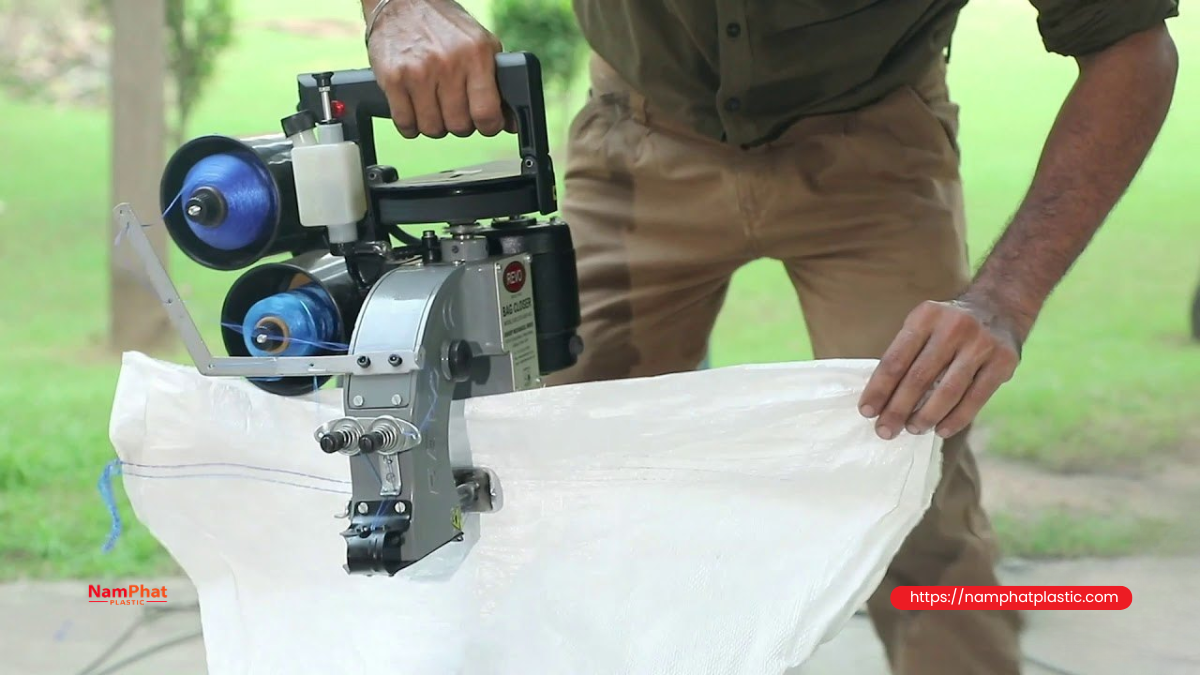
Many problems caused by an overly hard or soft thread spool look very similar to problems involving the needle, tension unit, or stitch-forming mechanism. Without a systematic inspection process, operators may replace several components while the machine remains unstable.
The following are some of the most commonly confused situations.
Confused with thread tension problems
When the seam becomes too tight, the thread breaks, or tension changes continuously, many operators adjust the tension discs first. However, if the spool itself releases thread unevenly, increasing or decreasing tension may only improve the symptom partially.
If tension must be adjusted repeatedly but the seam remains unstable, the spool's thread-release behavior should be checked before further machine adjustment.
Confused with needle problems
A bent or worn needle or a needle eye with burrs can also cause thread breakage and skipped stitches. However, if replacing the needle only reduces the problem temporarily before it returns, the needle may not be the root cause.
A simple test is to replace the spool while keeping the same needle and machine settings. If the problem disappears, the new spool is likely the factor that made the difference.
Confused with hook or timing problems
When the machine skips stitches or forms uneven stitches, technicians often suspect the timing between the needle and hook. This is an important inspection point, but it is not always the main cause.
If the problem occurs only with certain spools while other spools operate normally, spool quality should be checked before changing machine timing.
Confused with cutting-knife problems
Thread breaking at the end of a bag may lead operators to suspect a dull knife or an incorrectly operating thread clamp. However, if the spool releases thread unevenly, tension may suddenly increase immediately before the cutting mechanism operates, creating a break that resembles a knife problem.
To distinguish the causes, the automatic cutter can temporarily be bypassed and the thread cut manually with scissors. If the problem continues, the cutter is less likely to be the cause.
Confused with thread quality problems
Not every thread breakage problem is caused by poor thread quality. A thread lot that meets tensile-strength requirements can still cause problems if the spool is wound too tightly or too loosely.
Therefore, thread quality evaluation should consider both thread characteristics and winding quality. Two spools made from the same thread can perform very differently if their winding conditions are different.
Do not conclude after only one test
When thread breakage or unstable seams occur, the cause should not be determined from a single inspection. The most effective method is to interchange the spool, machine, and needle one variable at a time and compare the results under the same operating conditions.
Eliminating factors systematically helps identify the actual cause, prevents unnecessary adjustments, and minimizes disruption to production.
8. Quick troubleshooting table for the factory
When an overly hard or soft spool is suspected, technicians should not immediately adjust tension or replace several components at once. Instead, observe the symptom, perform a few simple tests, and use the table below to identify the priority cause to investigate.
| Observed symptom | Priority cause to check | Quick test | Recommended action |
| Thread is difficult to pull from the spool | Spool wound too tightly | Pull thread by hand and compare with another spool | Replace spool or check winding tension |
| Thread leaves the spool in jerking movements | Winding layers are compressed too tightly | Run the machine unloaded and observe the spool | Inspect spool quality |
| Thread breaks during startup or acceleration | Spool too hard; unstable thread release | Reduce machine speed for comparison | Check spool feeding behavior |
| Seam becomes too tight | Excessive pulling force from spool | Switch to a reference spool | Check spool hardness |
| Spool becomes distorted or sinks during use | Spool too soft | Observe spool shape after sewing | Remove deformed spool |
| Thread gets caught between winding layers | Winding layers have shifted | Rotate the spool by hand and inspect the surface | Replace or rewind the spool if possible |
| Seam alternates between tight and loose | Unstable thread release | Sew continuously on the same sample | Check spool winding |
| Machine skips stitches randomly | Spool too soft or thread slack | Switch to another spool while keeping the same machine | Check spool before adjusting timing |
| Runs well at low speed but fails at higher speed | Unstable thread feeding | Increase speed gradually and monitor | Check spool hardness and unwinding |
| Only certain new spools cause problems | Inconsistent winding quality | Switch to another spool of the same type | Check the spool production lot |
The table is intended as an initial troubleshooting guide. In practice, one symptom may have multiple causes. After identifying the most likely cause, the needle, tension unit, thread path, and stitch-forming mechanism should also be checked to eliminate other possible factors.
9. 10-minute inspection procedure
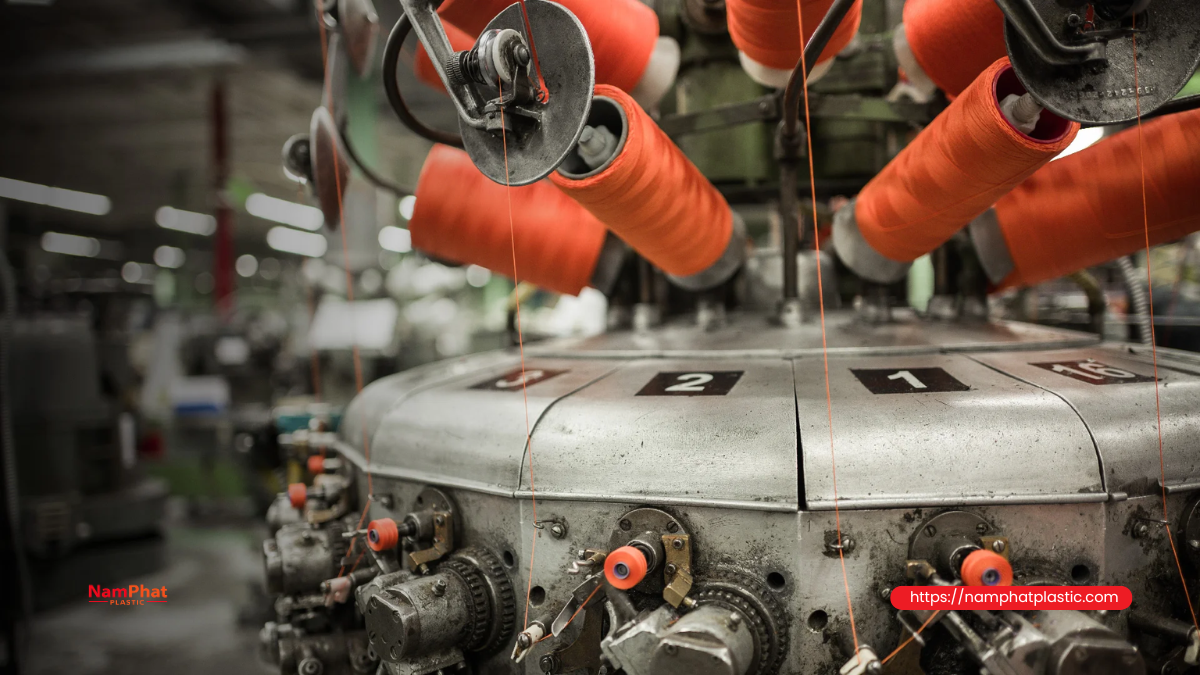
When machine problems suspected to be related to the thread spool occur, several components should not be replaced at the same time because this makes the actual cause difficult to identify. The following procedure helps technicians quickly inspect the machine at the factory and narrow down the source of the problem.
Step 1: Inspect the spool shape
Check whether the spool is distorted, sunken, shifted, or wound too tightly. This simple step can identify many abnormalities immediately.
Step 2: Pull the thread by hand
Pull the thread from the spool at a steady speed. If the pulling force alternates between heavy and light or the thread comes off in jerks, the spool may have a problem.
Step 3: Check the thread path
Make sure the thread follows the correct path and is not caught at a guide eye, tension disc, or holder. Eliminating these points of resistance helps evaluate the spool more accurately.
Step 4: Switch to a reference spool
Use a spool that has been confirmed to operate normally while keeping the same needle, tension, and machine settings. If the problem disappears, the original spool is likely the cause.
Step 5: Run the machine at low speed
Sew a test bag at low speed to observe thread feeding. If the machine runs normally, gradually increase the speed.
Step 6: Gradually increase machine speed
If the problem appears only as speed increases, check the spool's ability to release thread and the stability of thread feeding rather than simply adjusting the tension unit.
Step 7: Observe spool rotation
Check whether the spool rotates smoothly and whether there is jerking, vibration, or movement of the winding layers during operation.
Step 8: Record the inspection results
Record the machine code, thread lot, observed symptoms, and results after changing the spool. This information will make future troubleshooting faster and more accurate.
Following these steps usually takes about 10 minutes but can identify most spool-related problems while reducing unnecessary needle replacement, tension adjustment, or timing changes.
10. Should thread tension be adjusted to compensate for the spool?
When a seam develops thread breakage, skipped stitches, or unstable tension, many operators immediately adjust the tension discs. This is common because it is quick and may temporarily improve machine stability.
However, if the actual cause is an overly hard or soft spool, adjusting thread tension only treats the symptom and does not eliminate the root cause.
For example, with an overly hard spool, the machine needs greater force to pull the thread from the spool. Reducing thread tension may reduce breakage, but thread feeding will still fluctuate according to the winding layers. When the machine accelerates or reaches the middle portion of the spool, the problem can easily return.
Conversely, if the spool is too soft, increasing tension cannot prevent the winding layers from shifting or collapsing during operation. Higher tension may even pull the thread harder, causing the spool to deform faster and creating additional problems.
Possible consequences of adjusting tension to compensate for a poor-quality spool include:
-
The seam becomes excessively tight.
-
Thread breaks more easily when machine speed increases.
-
The needle and thread guides wear faster.
-
Stitch balance is lost.
-
The bag mouth shrinks or wrinkles.
-
Tension must be adjusted repeatedly between spools.
Therefore, before changing machine settings, determine whether the spool is feeding thread consistently. Only after the spool has been ruled out should tension, the needle, or other mechanisms be adjusted.
11. How to store thread spools to minimize problems

Even a good-quality thread spool can change in hardness if it is stored or transported improperly. This can reduce thread-feeding stability and directly affect seam quality.
To minimize problems, pay attention to the following:
Do not stack thread spools too high
Stacking too many spools on top of one another for a long period can subject lower spools to excessive compression and alter their original structure. Soft-wound spools are particularly prone to deformation or sinking.
Store in a dry, well-ventilated area
Humidity and high temperatures can affect both thread characteristics and spool stability. The storage area should be clean, protected from direct sunlight, and kept away from sudden temperature changes.
Avoid impacts during transportation
A spool that is dropped or subjected to strong impacts may have its winding layers displaced. Even if there is no obvious external damage, the spool may still cause tangling or unstable tension during production.
Do not use deformed spools
If a spool is visibly distorted, dented, has loose winding layers, or has lost its original shape, it should be carefully inspected before being installed on the machine. Continued use may increase downtime and reduce productivity.
Use first-in, first-out inventory rotation
Using spools in the order they enter the warehouse helps prevent excessively long storage periods. This also reduces the risk of changes in spool hardness or deformation during storage.
Following these basic practices can significantly reduce spool-related problems and help maintain more stable seam quality throughout production.
12. Items requiring periodic inspection
In addition to selecting good-quality thread spools, factories should establish periodic inspection procedures to detect abnormal conditions early. Regular inspection not only reduces machine downtime but can also extend the service life of needles, tension units, and related components.
12.1. Every production shift
Before starting each shift, operators should spend a few minutes checking the spool condition and thread-feeding performance.
Inspection items include:
-
Inspecting spool shape.
-
Checking whether thread leaves the spool smoothly.
-
Pulling the thread by hand to feel the pulling force.
-
Checking whether the thread path is caught or twisted.
-
Observing the seams of the first few bags.
If a spool shows abnormal signs, replace it with a reference spool instead of immediately adjusting thread tension.
12.2. Daily
At the end of each production day, inspect the entire thread-feeding system to detect changes that could affect seam quality.
Inspection items include:
-
Cleaning the thread holder and thread path.
-
Checking thread guides for wear or burrs.
-
Checking whether the tension discs operate smoothly.
-
Inspecting spools in use for deformation or collapsed layers.
-
Recording the number of thread breaks on each machine.
Daily records help identify machines that frequently experience problems and allow maintenance to be planned appropriately.
12.3. Weekly
A more detailed inspection should be performed each week to evaluate spool quality and the stability of the sewing system.
Recommended inspection items include:
-
Randomly inspecting multiple spools from the same lot.
-
Comparing pulling force between spools.
-
Evaluating the uniformity of winding layers.
-
Inspecting spool holders.
-
Checking needles, tension units, and thread guides.
-
Evaluating the defect rate by machine and thread lot.
Periodic maintenance not only helps detect nonconforming spools early but also reduces unnecessary component replacement, helping maintain seam quality and stable production output.
13. Record problems by thread lot
If the only record is that a machine “often breaks thread” or “has unstable seams,” identifying the cause will be difficult. By recording a few basic details for each thread lot, however, factories can quickly identify patterns.
Recommended records include:
-
Thread lot number.
-
Manufacturer or supplier.
-
Date placed into production.
-
Sewing machine code.
-
Operator.
-
Type of bag being sewn.
-
Machine speed.
-
Observed problem.
-
Corrective action.
-
Result after adjustment.
After a period of monitoring, the data may reveal important patterns, such as:
-
Only one particular thread lot frequently causes problems.
-
Some machines are more sensitive to overly hard spools.
-
A particular operator frequently experiences problems because of incorrect spool-changing procedures.
-
Problems appear only after the spool reaches its middle section.
-
Thread breakage increases at high speed.
These records help factories accurately evaluate spool quality and provide useful information to suppliers if the problem originates from the winding process.
Although building this type of record is simple, it can provide long-term value, especially for factories operating many bag sewing machines or multiple thread lots at the same time.
Frequently Asked Questions
1. Does an overly hard thread spool mean better quality?
No. A spool wound too tightly can increase the pulling force required to extract the thread, causing unstable tension and problems such as thread breakage, overly tight seams, or rapid needle heating. A good-quality spool should have sufficient winding firmness to maintain its shape while still allowing smooth and consistent thread release during sewing.
2. Is an overly soft thread spool caused by poor thread quality?
Not necessarily. An overly soft spool may result from unsuitable winding tension, improper storage, or deformation during transportation. The thread itself may still meet quality requirements, but thread feeding becomes unstable because the spool structure has changed.
3. How can spool hardness be checked quickly?
Several methods can be combined: lightly squeeze the spool to evaluate elasticity, pull the thread by hand to feel the pulling force, and observe how the spool releases thread during machine operation. If possible, compare it with a spool that has already been confirmed to operate reliably on the same type of machine.
4. Should thread tension be adjusted whenever a new spool is installed?
Not immediately. First run the machine with the existing settings and evaluate the new spool's thread-feeding behavior. Only after confirming that the spool is stable should tension be adjusted gradually if the seam still does not meet requirements.
5. Why can the same spool run well on one machine but cause problems on another?
Each machine may have different needle conditions, tension-unit conditions, thread-guide wear, and levels of mechanical wear. A spool may operate normally on a well-maintained machine but expose weaknesses in another machine, especially when its thread-feeding system or stitch-forming mechanism has begun to deteriorate.
6. When should a thread spool be rejected?
A spool should be removed from production if it is significantly distorted, has collapsed winding layers, frequently catches the thread between turns, or repeatedly causes problems after machine-related causes have been checked and eliminated. Continuing to use such spools can reduce productivity and may accelerate wear on sewing-machine components.
Conclusion
Thread spool hardness is an important factor that is often overlooked when investigating sewing problems. An overly hard spool can increase pulling force, make thread release difficult, and cause thread breakage, overly tight seams, or rapid needle heating. In contrast, an overly soft spool allows the winding layers to shift, causing tension fluctuations and unstable seam quality.
Instead of focusing only on tension adjustment or needle replacement, operators should check the spool's thread-release behavior, inspect its shape, and compare it with a reference spool. This simple approach helps identify the actual cause, reduces unnecessary component replacement, and shortens troubleshooting time.
In addition, selecting spools that meet the required specifications, storing them properly, and recording problems by thread lot can help factories control production quality more effectively. When stable thread spools are combined with regular machine maintenance and correct operating procedures, seams become more consistent, machine downtime is reduced, and overall production productivity improves.
>>> See also:
- 0 Comment


