


 Phan Van Hoang
- 07/08/2026
- 254
During the operation of bag sewing machines, many operators have observed that the thread does not travel straight from the spool into the thread-guiding system, but instead forms large loops that continuously rotate around the spool. This phenomenon is known as ballooning and occurs in most thread supply systems when the machine operates at high speed.
Under normal conditions, ballooning is a natural physical phenomenon and does not interfere with sewing. However, if the balloon becomes too large, oscillates strongly, or continuously changes size, thread tension can become unstable. This may lead to various problems such as thread breakage, skipped stitches, uneven seams, or reduced service life of thread-guiding components.
Many people assume that ballooning only occurs when thread quality is poor. In reality, the size and stability of the balloon also depend on machine speed, spool-holder arrangement, thread path, initial tension, and the characteristics of each type of thread. Therefore, effective control requires evaluating the entire thread supply system rather than focusing only on the spool itself.
In this article, we will examine how ballooning forms, the factors that make it more severe, and effective methods for controlling it in production.
Table of Contents [Hide]
1. What is ballooning during thread unwinding?
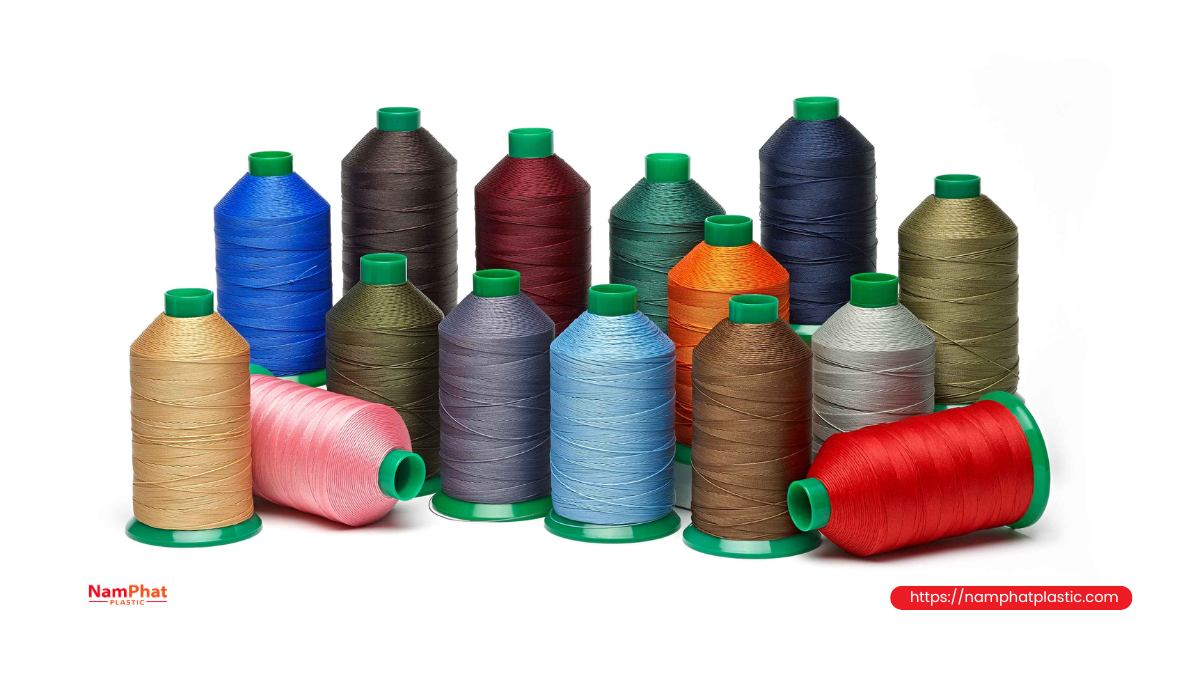
Ballooning is a phenomenon in which the thread forms an arc or multiple loops around the spool when it is pulled out at high speed. The rotating loop forms as a result of centrifugal force combined with the pulling force from the thread-guiding system.
Under normal conditions, the balloon has a relatively stable size and does not affect the sewing process. The thread is supplied evenly to the machine, thread tension changes only slightly, and the seam is formed continuously.
In contrast, if the balloon becomes excessively large or continuously changes shape, thread tension will fluctuate with each rotation. The machine may then experience problems such as thread breakage, skipped stitches, or uneven seams.
It is important to understand that ballooning itself is not a fault. It is a natural physical phenomenon. It only becomes a production problem when the balloon exceeds the control capability of the thread supply system.
2. Why does ballooning occur?
Ballooning occurs when thread is pulled from the spool at high speed. During this process, the thread is subjected to pulling force, centrifugal force, and friction along the thread path. When these factors are balanced, the balloon remains stable and does not interfere with sewing.
Conversely, when any of these conditions changes, the size and trajectory of the balloon also change. This causes thread tension to fluctuate and can lead to various production problems.
2.1. Machine speed is too high
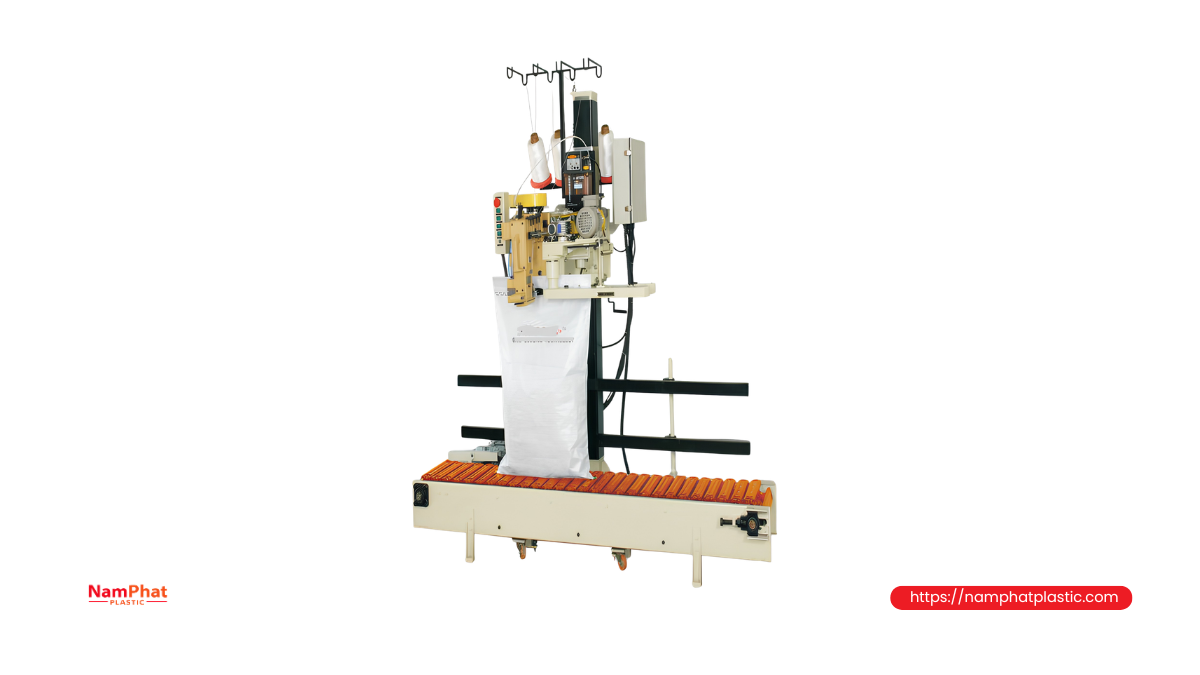
The higher the sewing speed, the higher the thread unwinding speed. As a result, centrifugal force acting on the thread increases, causing the balloon to expand.
If the speed exceeds the control capability of the thread supply system, the balloon may oscillate strongly or hit surrounding components. Each impact causes thread tension to change within a very short period, affecting seam stability.
This is why many machines operate well at medium speed but begin to experience thread breakage or skipped stitches when running at maximum speed.
2.2. Improper thread path and spool position
The distance between the thread spool and the first thread guide directly affects balloon size.
If the distance is too long, the balloon has more space to develop and is more likely to oscillate. Conversely, if the thread path changes direction too sharply or is poorly arranged, the thread will experience additional friction before entering the tension system.
In addition, an incorrectly positioned spool holder can cause the balloon to shift to one side and increase the risk of contact with the machine body.
2.3. Spool characteristics and initial thread tension
Not all thread spools produce the same balloon. Spool diameter, thread stiffness, winding pattern, and the uniformity of the wound layers all affect the unwinding process.
Initial thread tension also needs to be properly adjusted. If tension is too low, the balloon tends to expand and oscillate more strongly. If tension is too high, the balloon may become smaller, but friction along the thread path will increase, causing faster thread wear and increasing the risk of breakage.
3. How does ballooning affect the sewing process?
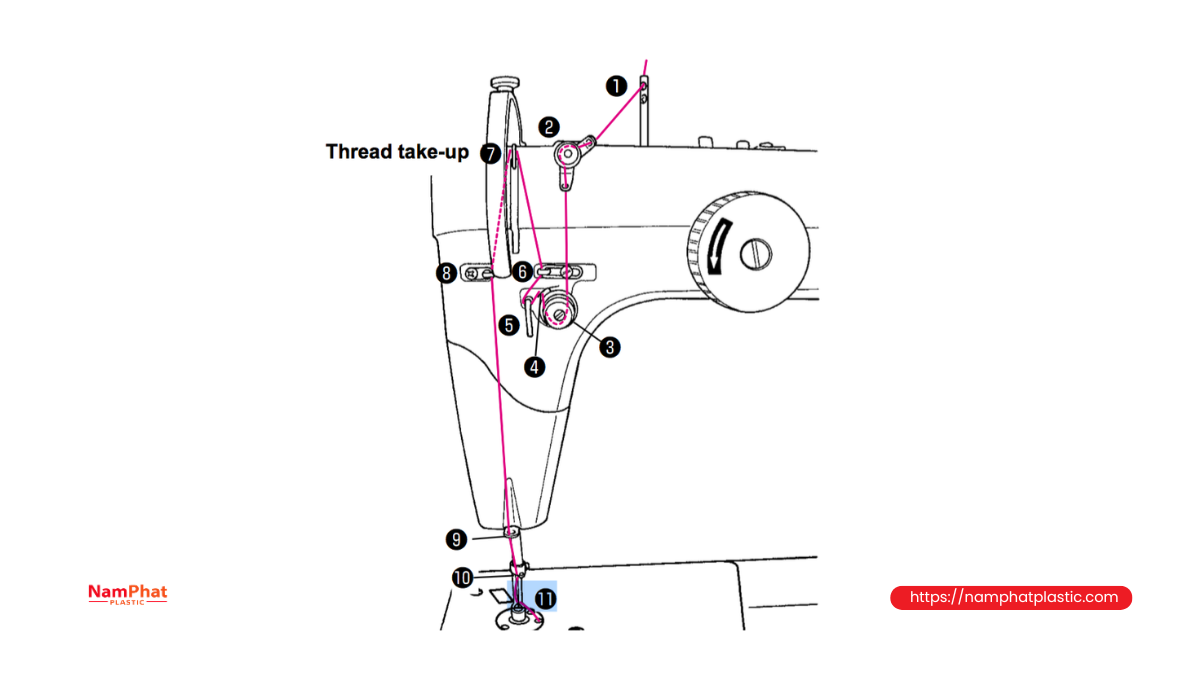
Ballooning is a normal phenomenon when thread is pulled from a spool. However, if the balloon becomes too large or moves unstably, thread tension will continuously change. This can directly affect seam quality and machine stability.
In many cases, operators only notice thread breakage or skipped stitches without realizing that the problem may originate from the thread supply process.
3.1. Thread tension becomes unstable
When the balloon continuously changes size, the length of thread between the spool and the guide eye also changes. This causes the pulling force on the thread to increase and decrease instead of remaining stable.
If this fluctuation occurs continuously, the tension device may not be able to compensate quickly enough. The machine may continue operating, but the seam will no longer be as uniform as before.
This is also why many technicians repeatedly adjust thread tension without being able to completely resolve the problem.
3.2. Increased risk of thread breakage and skipped stitches
When the balloon oscillates strongly or hits the spool holder, the thread is subjected to additional short-duration forces during movement. Combined with a worn needle, a guide eye with burrs, or excessive tension, the risk of thread breakage can increase significantly.
In addition to thread breakage, unstable thread delivery to the needle can cause the loop behind the needle to form irregularly. The hook may fail to catch the thread loop correctly, resulting in skipped stitches or interrupted seams.
These problems tend to occur more frequently when the machine operates at high speed or when a large-diameter thread spool is used.
3.3. Reduced service life of the thread-guiding system
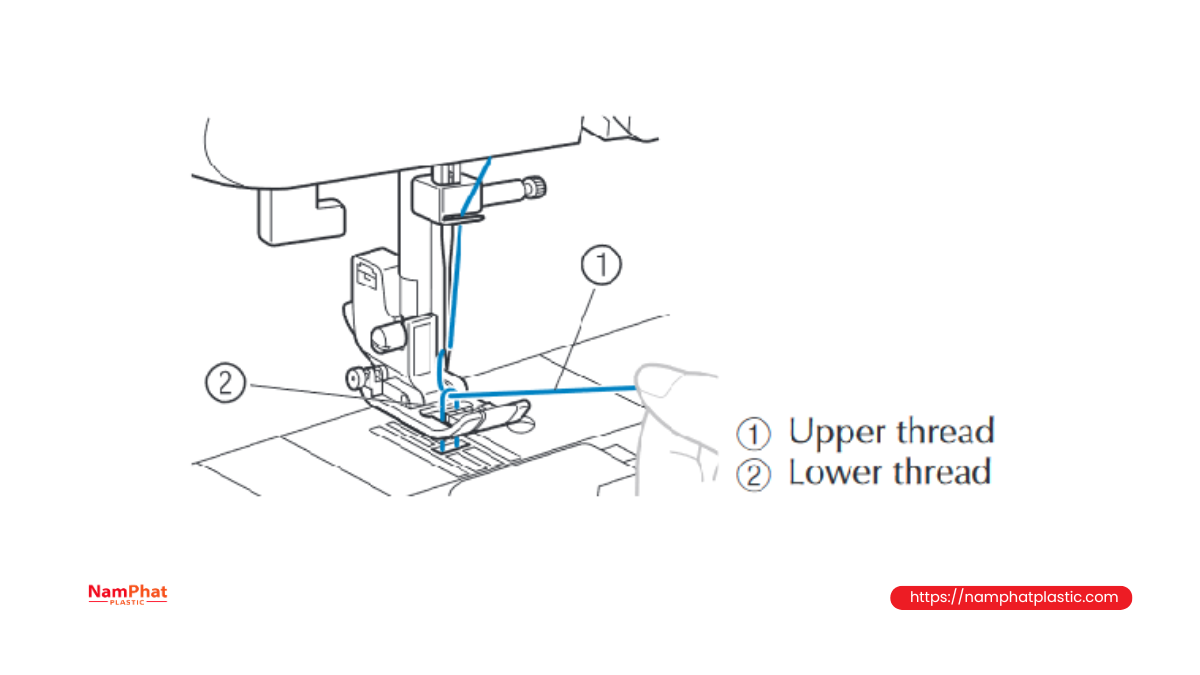
Strong balloon oscillation causes the thread to continuously change its direction of movement and increases friction against components along the thread path.
Over time, thread guide eyes, tension discs, and other components in contact with the thread will wear faster than normal. Thread lint also accumulates more quickly, increasing friction and making ballooning increasingly difficult to control.
Without regular cleaning and maintenance, these components can become sources of other problems such as thread fuzzing, breakage, or unstable tension.
4. How to identify abnormal ballooning
Not every balloon needs adjustment. In many cases, a balloon may be present while the machine remains stable and seam quality fully meets requirements.
The important point is to identify when ballooning has moved beyond its normal state so that appropriate corrective action can be taken.
4.1. Observe the shape of the balloon
A stable balloon generally has a relatively consistent size and follows a repeating trajectory around the thread spool. During sewing, its shape changes very little and it does not contact surrounding components.
In contrast, abnormal ballooning may show the following signs:
-
Balloon loops are too large.
-
Size changes continuously.
-
The balloon vibrates strongly when the machine accelerates.
-
The balloon touches the spool holder or machine body.
-
Multiple balloon loops appear at the same time.
If these conditions occur frequently, the thread supply system should be inspected rather than simply adjusting thread tension.
4.2. Monitor seam quality
Seam quality is one of the clearest indicators of ballooning conditions.
If the balloon oscillates strongly, the seam may show problems such as:
-
Uneven stitch formation.
-
Chain stitches that are alternately tight and loose.
-
Occasional skipped stitches.
-
Irregular thread breakage.
-
Abnormal thread fuzzing or wear.
If these problems only occur at high speed but disappear when the speed is reduced, the cause is likely related to ballooning or the thread supply process.
4.3. Compare different machines or thread spools
When several machines use the same type of thread but only one machine develops an unusually large balloon, priority should be given to checking that machine's configuration.
Conversely, if the phenomenon occurs only with one particular spool, the winding pattern, spool uniformity, and deformation during storage should be inspected.
Changing one factor at a time—such as the thread spool, spool-holder position, or machine speed—helps identify the cause more quickly than adjusting multiple parameters simultaneously.
5. Quick diagnostic table for ballooning at the factory
Combining direct observation of ballooning with seam quality helps technicians narrow down the cause more quickly. Instead of adjusting several parameters at the same time, inspect each factor according to its likely impact to minimize machine downtime.
| Observed condition | Priority cause to check | Quick check | Corrective action |
| Balloon is too large | High machine speed, excessive distance from spool to first guide | Reduce speed and observe again | Adjust machine speed or spool position |
| Balloon oscillates strongly | Improper thread path, initial tension too low | Check thread path and tension system | Correct the thread path and adjust tension |
| Balloon hits the spool holder | Spool holder positioned incorrectly | Observe balloon trajectory during operation | Move the spool holder or first thread guide |
| Seam alternates between tight and loose | Tension fluctuation caused by unstable ballooning | Compare low-speed and high-speed operation | Inspect the thread supply system |
| Thread breaks during acceleration | Balloon too large or increased friction along the thread path | Reduce speed for testing | Check guide eyes, needle, and thread path |
| Thread tangles during unwinding | Uneven winding or deformed spool | Test with a reference spool | Remove the defective spool |
6. 10-minute ballooning inspection procedure
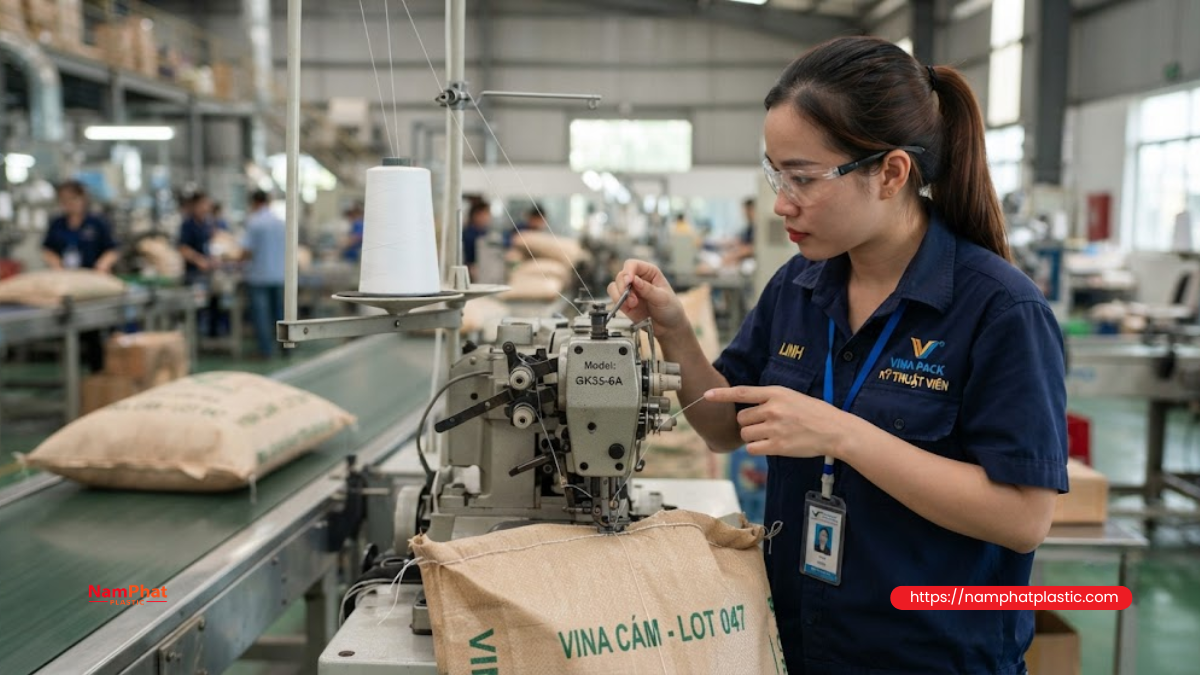
Not every case of large ballooning requires immediate adjustment. Before changing thread tension or replacing the spool, perform the following checks in sequence to identify the actual cause.
Step 1. Observe the balloon while the machine is running
Start the machine at the normal operating speed and directly observe the balloon loop.
If the balloon remains stable in size, moves smoothly, and does not contact surrounding components, it is generally not the cause of the problem.
Conversely, if the balloon continuously changes shape or oscillates strongly when the machine accelerates, continue checking the other factors.
Step 2. Check the spool position and thread path
Observe the distance between the thread spool and the first thread guide.
At the same time, inspect the entire thread path to ensure that:
-
The thread is not twisted.
-
It does not rub against metal edges.
-
It does not change direction too sharply.
-
The guide eyes remain smooth and free of burrs.
In many cases, simply repositioning the first thread guide can make the balloon more stable.
Step 3. Check thread tension and machine speed
Reduce machine speed by approximately 20–30% and observe the balloon again.
If the phenomenon decreases significantly, the cause is likely related to machine speed or thread tension.
Do not immediately tighten the tension excessively. Make small adjustments step by step and observe the changes in both ballooning and seam quality after each adjustment.
Step 4. Test with another thread spool
If the machine system has been inspected but the balloon still oscillates abnormally, replace it with a spool that has been confirmed to operate stably on another machine.
Using a reference spool helps quickly determine whether the cause comes from the machine or from the spool itself.
Do not change the spool, needle, and tension simultaneously because it will be difficult to determine which factor caused the difference.
Step 5. Re-evaluate after adjustment
After each adjustment, run the machine continuously for several minutes at the actual production speed.
In addition to observing the balloon, check:
-
Seam stability.
-
Thread breakage or skipped stitches.
-
Vibration in the thread supply system.
-
Abnormal contact sounds around the spool area.
Only when both ballooning and seam quality are stable should the machine be returned to production.
7. Precautions to minimize ballooning
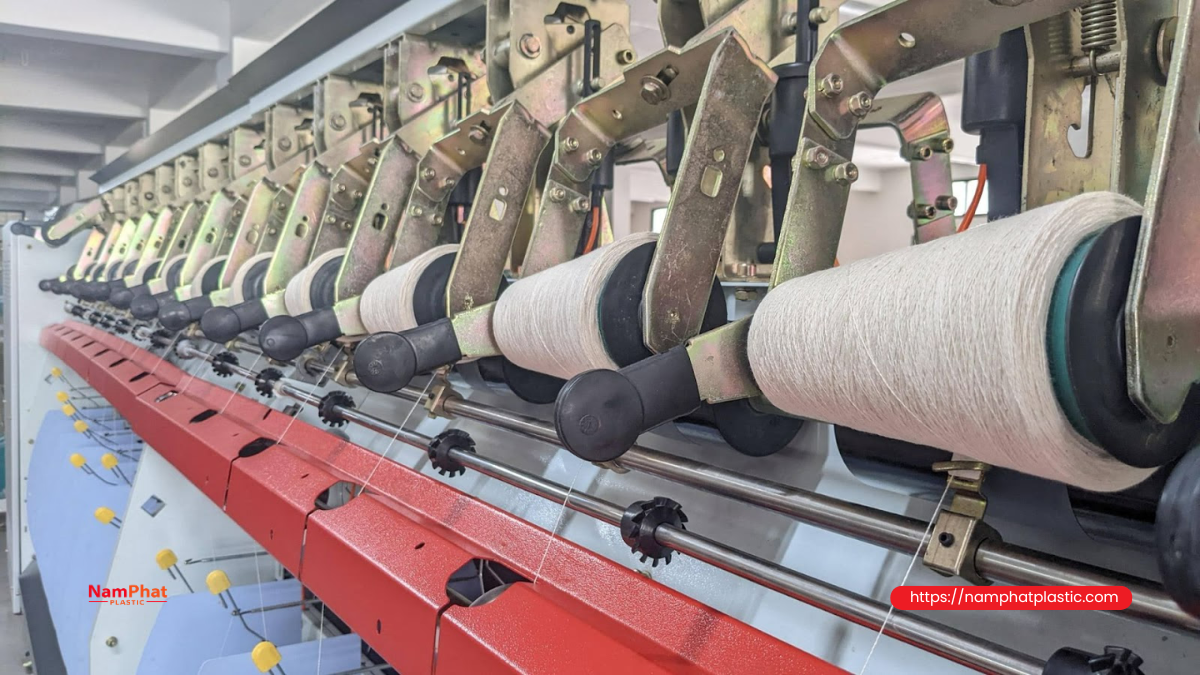
Ballooning cannot be completely eliminated when the machine operates at high speed. The operator's objective is to keep the balloon stable so that it does not affect thread tension or seam quality.
To achieve this, the entire thread supply system must be controlled rather than adjusting only one individual parameter.
7.1. Do not increase thread tension just to reduce ballooning
When operators see an excessively large balloon, they often tend to tighten the tension device. This may make the balloon smaller, but it does not address the root cause.
If tension is increased excessively, the thread will experience greater friction along the thread path and at the needle eye. This can accelerate thread wear, increase needle temperature, and raise the risk of thread breakage when the machine operates at high speed.
Thread tension should only be adjusted within the range required to produce a stable seam. It should not be used as a solution for suppressing ballooning.
7.2. Arrange the thread supply system properly
The spool position and first thread guide directly affect balloon size.
When installing the machine, ensure that the thread spool has enough space for unwinding but is not positioned excessively far from the thread-guiding system. The thread path should also be as straight as possible, with sharp changes in direction minimized.
If multiple machines of the same type are used in the factory, standardize the spool-holder and thread-guide arrangement to reduce differences between machines.
7.3. Inspect the thread spool before production
Not all ballooning problems originate from the machine. A spool with uneven winding, deformation, or improper storage can also cause abnormal balloon oscillation.
Before installing a spool on the machine, check:
-
Whether the spool is dented or the core is cracked.
-
Whether the thread layers are wound evenly.
-
Whether the thread is tangled or loose on the spool surface.
-
Whether the spool has been exposed to moisture or dust during storage.
Removing nonconforming spools before production can significantly reduce sewing problems.
Frequently Asked Questions
1. Is ballooning a sign of poor thread quality?
No. Ballooning is a natural physical phenomenon that occurs when thread is pulled from a spool at high speed. It only becomes a problem when the balloon oscillates excessively or becomes unstable enough to affect the sewing process.
2. Does a larger balloon always mean a higher risk of thread breakage?
Not necessarily. A large balloon becomes a problem only when it causes continuous thread-tension changes or contacts machine components. Many machines can operate stably even with a relatively large balloon.
3. Should machine speed be reduced to minimize ballooning?
Reducing speed can help stabilize the balloon and is an effective way to investigate the cause. However, this is only a temporary measure. If ballooning remains abnormal at production speed, the thread path, spool position, and thread supply system should be inspected.
4. When should the thread spool be replaced?
Replace the spool when it is deformed, unevenly wound, frequently causes tangling, or continues to produce unstable ballooning after other machine-related causes have been eliminated.
Conclusion
Ballooning is a common phenomenon that occurs when thread is pulled from a spool at high speed and should not automatically be considered a machine or thread defect. Under normal conditions, stable ballooning does not interfere with sewing.
Problems arise only when the size or movement of the balloon exceeds the control capability of the thread supply system. In that situation, thread tension may fluctuate continuously, increasing the risk of thread breakage, skipped stitches, and poor seam quality.
Effective control requires evaluating machine speed, spool position, thread path, tension, and spool quality together. Following a proper inspection procedure and performing regular maintenance will help keep the thread supply system stable, reduce machine downtime, and maintain consistent seam quality throughout production.
>>> See also:
- 0 Comment


