


 Phan Van Hoang
- 07/08/2026
- 247
During the process of threading a bag sewing machine, many people focus only on routing the thread correctly through the thread guides and tension assembly, while paying little attention to the direction in which the thread is unwound from the spool. In practice, even with the same type of thread, pulling the thread from the top of the spool or from the side can create significant differences in thread tension, feed stability, and seam quality.
Each method has its own operating principle and is suitable for different spool types, machine configurations, and sewing speeds. If the wrong method is selected, the machine may experience problems such as thread twisting, fluctuating tension, thread breakage, or unstable seams even when the thread itself meets the required quality standards.
Understanding the difference between these two unwinding methods helps operators select the correct thread delivery method, reduce troubleshooting time, and improve the efficiency of the bag sewing production line.
Table of Contents [Hide]
1. Why can the same thread spool require different unwinding methods?
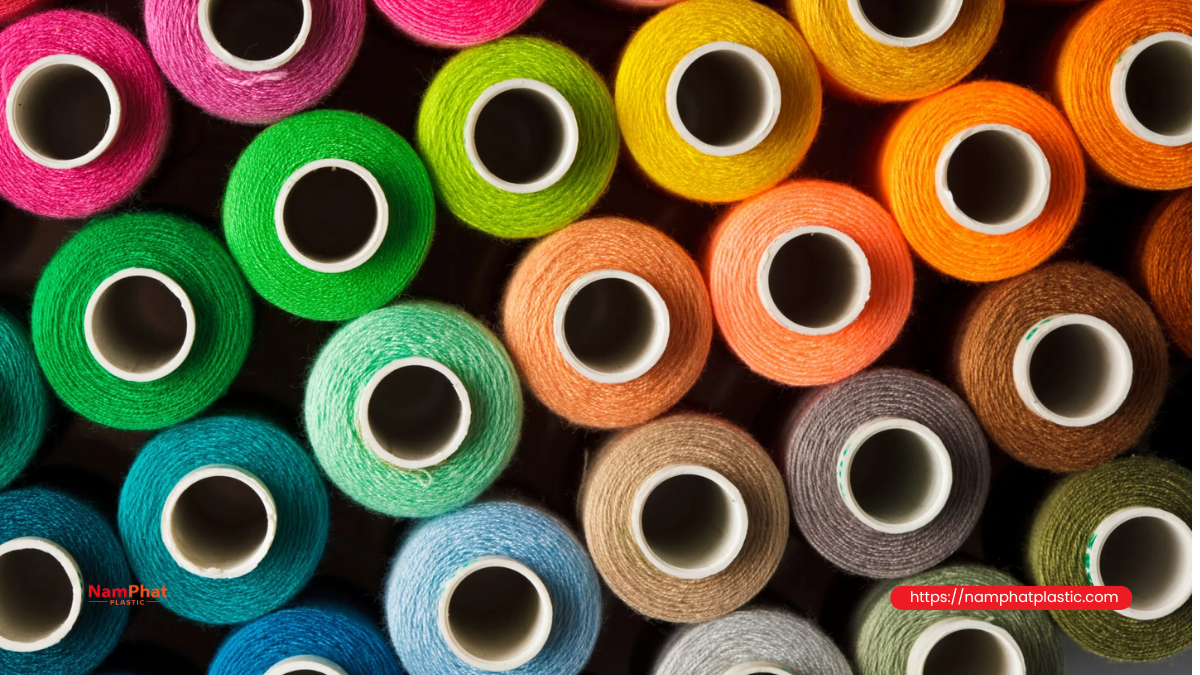
Many people assume that as long as the machine can pull thread from the spool, it does not matter whether the thread is taken from the top or the side. However, the unwinding direction directly affects how the thread moves from the spool into the thread guide system and tension assembly.
This difference changes several factors during sewing:
-
The force required to pull thread from the spool.
-
Thread tension stability.
-
The likelihood of thread twisting.
-
Spool vibration during machine operation.
-
High-speed sewing performance.
For this reason, sewing-machine manufacturers and thread manufacturers often recommend an unwinding direction that matches each spool type and spool-holder configuration.
An important point is that installing the spool in the wrong unwinding direction does not always cause the machine to stop immediately. In many cases, the machine may sew normally at low speed, while problems such as thread breakage, skipped stitches, or uneven seams only appear when the speed increases or the machine operates continuously.
Therefore, when evaluating seam quality, operators should not only inspect the needle, tension assembly, or stitch-forming mechanism. The unwinding direction should also be considered from the beginning, especially when a new spool is installed or the thread type is changed.
2. How do the two thread unwinding methods work?
Although both methods are intended to deliver thread from the spool to the sewing machine, over-end unwinding and side unwinding operate according to completely different principles. This difference directly affects spool movement, thread-pulling force, and stability throughout the sewing process.
2.1. Over-end unwinding
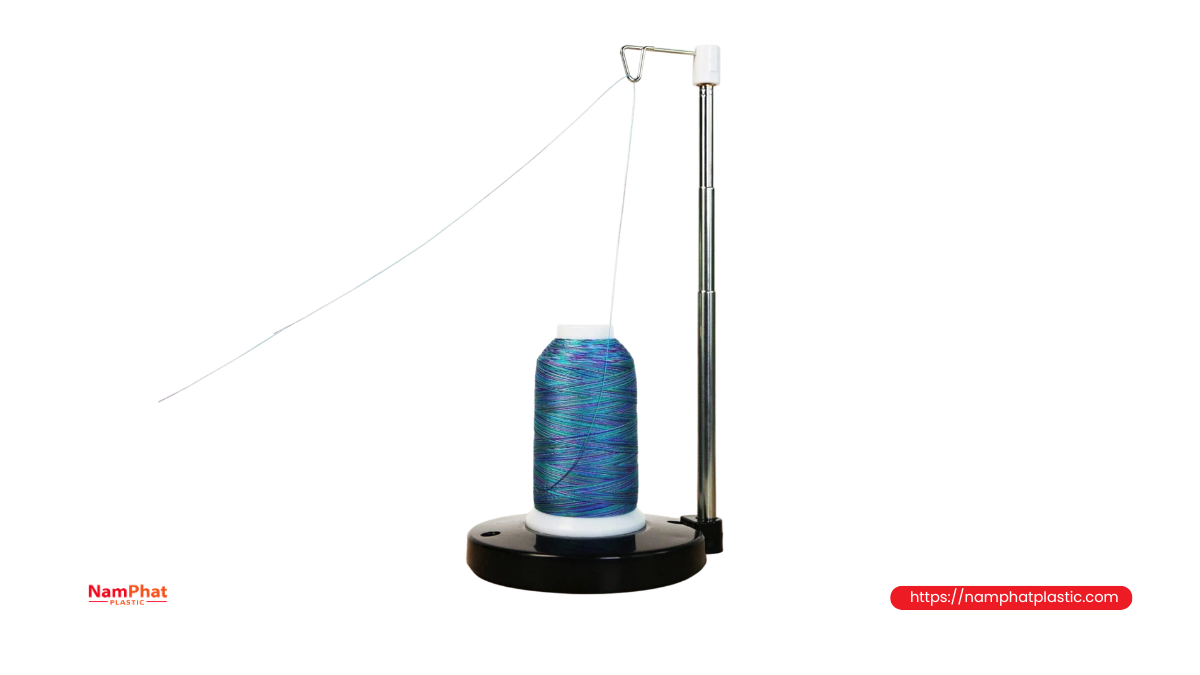
With this method, the thread is taken from the top of the spool. When the machine pulls the thread, the spool remains almost stationary, while the thread is progressively released from the winding layers at the top.
This reduces the inertia of the spool because the entire spool does not have to move every time the machine draws thread.
Characteristics include:
-
The spool remains almost stationary during sewing.
-
It is less affected by spool weight.
-
The spool is less likely to continue spinning after the machine stops.
-
It is suitable for many cone-shaped thread spools.
-
It is commonly used on machines with vertically positioned spool holders.
However, because the thread continuously leaves the winding layers, twisting may occur if the thread path is not arranged correctly or the spool has been wound improperly.
2.2. Side unwinding
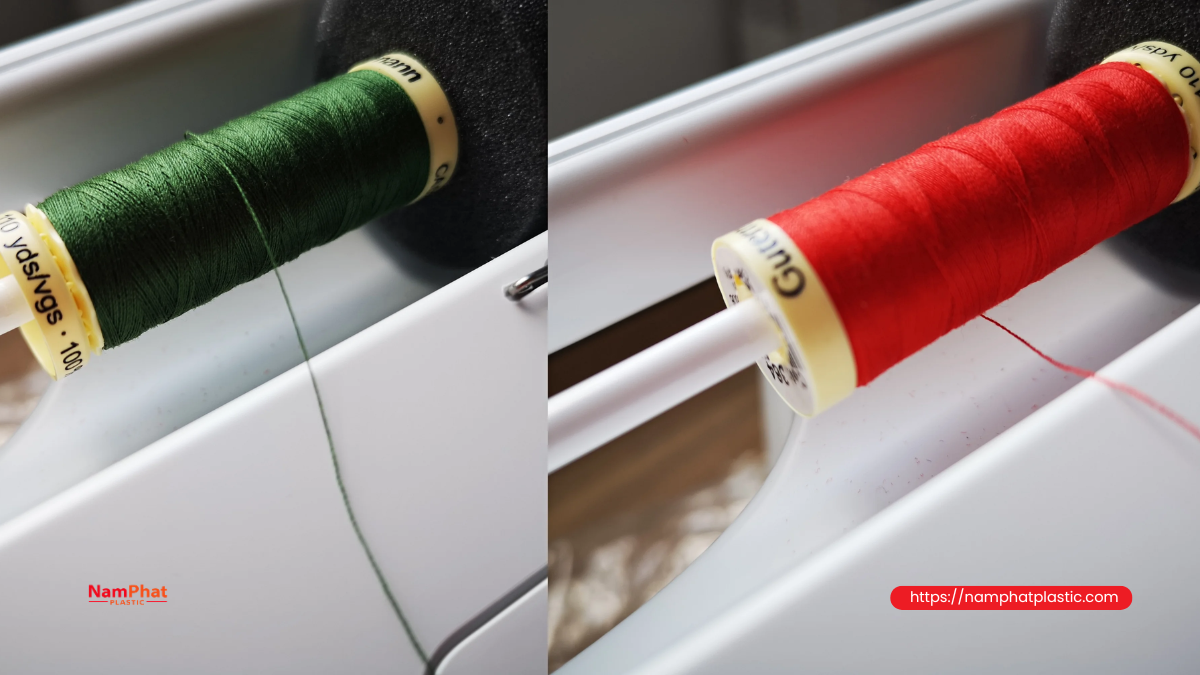
Unlike the previous method, this method takes thread from the outer edge of the spool. Whenever the machine pulls thread, the entire spool rotates around its axis to release the thread.
In other words, instead of the thread simply slipping away from the spool, the spool itself moves to deliver thread to the machine.
Characteristics include:
-
The spool rotates continuously during machine operation.
-
Thread delivery force depends on how freely the spool rotates.
-
It can produce less additional thread twist in many applications.
-
It is suitable for cylindrical spools or spools designed to rotate on an axle.
-
It is commonly used when the spool holder allows the spool to rotate freely with low friction.
However, because the spool must continuously accelerate and decelerate with machine speed, tension can fluctuate if the bearing or spool holder does not rotate smoothly, particularly when the machine starts or stops abruptly.
2.3. The key difference
The biggest difference between the two methods is not simply where the thread is pulled from, but how the spool participates in thread delivery.
-
Over-end unwinding: the thread moves while the spool remains almost stationary.
-
Side unwinding: the spool must rotate to release the thread.
This operating principle creates differences in thread tension, stability, high-speed performance, and the types of problems that may occur. Therefore, the unwinding direction should not be selected based simply on operator habit. It should match the spool type, machine configuration, and operating conditions of the production line.
3. Comparing the two unwinding methods by important criteria
Neither unwinding method is suitable for every application. Choosing between over-end and side unwinding depends on factors such as spool construction, machine speed, spool-holder arrangement, and seam-stability requirements.
3.1. Thread delivery performance
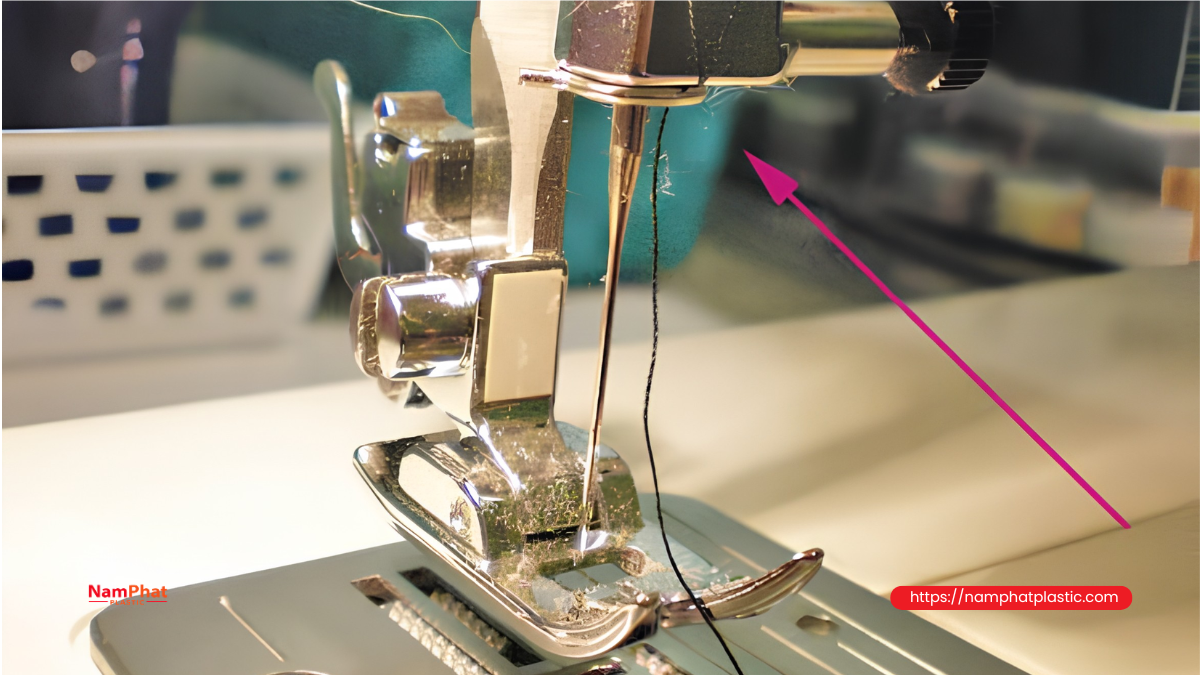
With over-end unwinding, thread is released from the upper winding layers while the spool remains stationary. This generally provides relatively light and stable thread delivery.
However, if the upper layers are wound too tightly or stick together, the thread may be pulled in short jerks. The machine then has to compensate for the changing force to maintain consistent stitching.
With side unwinding, thread delivery depends heavily on spool rotation. When the spool rotates smoothly, thread can be delivered continuously. If the spool is too heavy, the holder has excessive friction, or the axle is partially seized, pulling force may vary during rotation.
3.2. Thread tension stability
This directly affects seam quality.
With over-end unwinding:
-
The spool has little rotational inertia.
-
There is less tendency for the spool to continue spinning after the machine stops.
-
Thread delivery force is generally lighter.
-
It can provide stable thread delivery.
With side unwinding:
-
The spool must accelerate and decelerate continuously.
-
Spool weight has a greater effect on pulling force.
-
Excess thread release may occur when the machine stops.
-
The spool holder must rotate smoothly.
On high-speed bag sewing machines, even relatively small changes in thread tension can lead to thread breakage or uneven stitches.
3.3. Potential for thread twisting
One important difference is the effect on thread twist.
When thread is pulled from the top of a spool, each winding layer is released through a movement around the spool axis. Depending on the winding structure and spool orientation, additional twist may be introduced.
Typical signs include:
-
Small loops forming in the thread.
-
The thread twisting before reaching the needle.
-
Unstable thread tension during sewing.
With side unwinding, some spool designs allow the thread to leave in a more stable direction because the spool rotates with the unwinding movement. However, uneven rotation or spool vibration can still create fluctuating pulling force.
Therefore, it cannot be concluded that over-end unwinding always causes twisting or that side unwinding is always better. The result depends on the winding construction and characteristics of the thread.
3.4. High-speed sewing performance
The differences become more noticeable as machine speed increases.
With over-end unwinding:
-
Spool weight has less influence.
-
The spool does not need to accelerate.
-
The delivery system can operate with relatively little moving mass.
However, at very high speeds, the upper thread layers may release rapidly and create loops or tangles if the thread is not properly controlled.
With side unwinding:
-
Large amounts of thread can be delivered quickly.
-
It is suitable for spools designed to rotate.
-
It can work effectively when the holder and axle are properly maintained.
If the spool is too heavy or does not rotate smoothly, rotational inertia can cause thread jerking during acceleration and deceleration.
3.5. Effect when the spool is nearly empty
As the thread quantity decreases, delivery characteristics also change.
With over-end unwinding:
-
The spool height decreases.
-
The thread pulling angle may change.
-
The release force may differ from that of a full spool.
With side unwinding:
-
The effective spool diameter decreases.
-
The spool must rotate faster to deliver the same length of thread.
-
Spool inertia decreases.
-
Thread release behavior may change as the spool becomes nearly empty.
Therefore, if a spool runs normally at the beginning but starts causing problems near the end, the unwinding method should also be checked.
4. What problems are commonly associated with each method?
Both methods can operate effectively when correctly installed, but each can produce characteristic problems if the spool, holder, or thread path is unsuitable.
4.1. Common problems with over-end unwinding
Thread twisting after prolonged operation
When thread is continuously pulled from the top of the spool, each winding layer can introduce a small rotational movement. With highly twisted thread or poorly wound spools, this effect may accumulate.
Typical signs include:
-
The thread forming loops before entering the tension assembly.
-
The thread becoming twisted when pulled by hand.
-
The seam becoming less stable after extended operation.
-
The thread tangling near the needle.
The cause may involve not only the unwinding method but also the winding direction, initial thread twist, and thread-path configuration.
Thread jerking when leaving the spool
If the upper layers are tightly compressed or stick together, the initial pulling force becomes higher. Once the machine finally separates the layer, the thread may suddenly release.
This creates a cycle:
-
The thread is held back.
-
Pulling force increases.
-
The thread suddenly releases.
-
Tension drops rapidly.
This may result in:
-
Thread breakage during acceleration.
-
Uneven stitches.
-
Seams that alternate between tight and loose.
Thread flying off the top of the spool
At high speed, particularly with lightweight spools or loose outer winding layers, the upper loops may release faster than the system can control.
Typical signs include:
-
Large loops forming around the spool.
-
Thread wrapping around the holder.
-
The spool shifting position.
-
Sudden loss of thread feed.
The upper thread guide and spool-retaining mechanism should be checked in this situation.
4.2. Common problems with side unwinding
Uneven spool rotation
Because the entire spool must rotate, any problem with the axle or holder directly affects thread tension.
Possible causes include:
-
Dry or poorly lubricated axle bearings.
-
Excessive friction in the holder.
-
Off-center spool.
-
Deformed spool core.
-
Excessively heavy spool.
Each rotation may then produce a different pulling force, resulting in unstable seams.
The spool continues rotating after the machine stops
This is a characteristic problem of side unwinding.
While the machine is running, the spool stores rotational inertia. If the machine stops suddenly, the spool may continue rotating briefly.
Consequences include:
-
Excess thread being released.
-
Slack forming in the thread path.
-
Thread tangling when the machine restarts.
-
Unstable first stitches after stopping.
The effect becomes more noticeable with large or heavy spools and high-speed machines.
Thread tension becomes high when sewing starts
When the spool is stationary, an initial force is required to overcome its inertia. If the holder has excessive friction, the machine must pull harder during the first rotations.
This may cause:
-
Thread breakage at the beginning of the seam.
-
Thread pulling out of the needle eye.
-
Excessively tight initial stitches.
Reducing thread tension is not always the correct solution. The spool holder should also be checked for free rotation.
4.3. No problem occurs exclusively with one method
The problems above are not caused exclusively by the unwinding method. Poor winding quality, an unsuitable thread path, incorrect needle selection, or machine problems can create similar symptoms.
Therefore, when changing the unwinding direction, monitor:
-
Thread tension stability.
-
Thread release behavior.
-
The appearance of the thread after breakage.
-
Seam quality.
-
Changes at higher sewing speeds.
Only a complete evaluation can determine whether the current unwinding method is suitable.
5. How to choose the right unwinding method for a bag sewing machine
Choosing over-end or side unwinding should not be based only on operator habit. The spool, machine configuration, and production speed should all be considered.
Cone-shaped industrial thread spools are commonly designed for over-end unwinding because the spool can remain stationary while the thread is delivered. This reduces the effect of spool inertia and can provide stable thread delivery.
Cylindrical spools or spools with a horizontal core may be more suitable for side unwinding. When the spool rotates freely on its holder, the thread can be released in a controlled manner.
However, spool shape is only the starting point. Also check:
-
Thread winding pattern.
-
Thread stiffness.
-
Thread twist.
-
Spool-holder rotation.
-
Machine operating speed.
For high-speed bag sewing, differences between unwinding methods become more significant. An unstable spool can cause continuous tension variation, leading to thread breakage, inconsistent seams, or repeated tension adjustments.
The most reliable method is to conduct a controlled trial: keep the same thread, needle, machine, and sewing speed, and change only the unwinding direction. The method that provides more stable thread delivery and fewer sewing problems is more suitable for that machine configuration.
6. Signs that the unwinding direction is causing problems
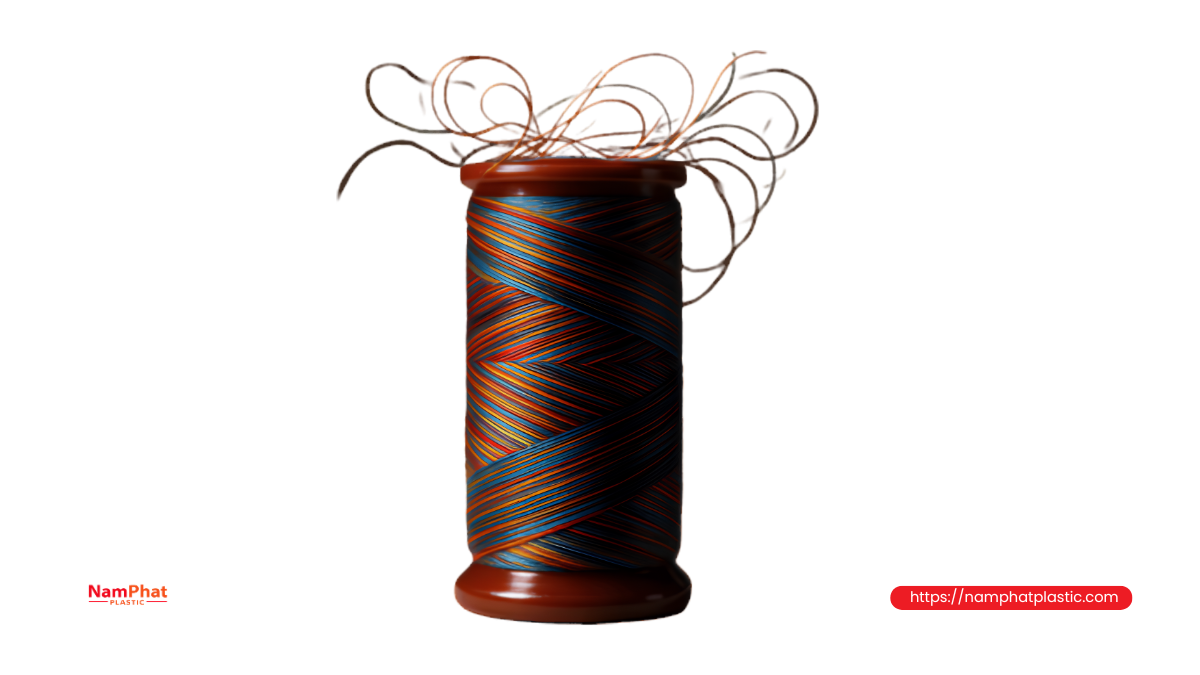
An unsuitable unwinding direction does not always cause immediate machine failure. It often appears through small changes during operation.
One common sign is unstable thread tension. Operators may notice that the seam alternates between being too tight and too loose even though machine settings remain unchanged.
Other signs include:
-
Thread breakage after installing a new spool.
-
Thread twisting or looping before reaching the needle.
-
Spool vibration or uneven rotation.
-
The machine runs well initially but develops problems after prolonged operation.
-
Frequent tension adjustments.
-
Inconsistent seams between bags.
However, these symptoms can also be caused by the needle, hook, tension assembly, or thread quality. Therefore, the unwinding direction should not immediately be considered the only cause.
A simple test is to keep all machine settings unchanged and switch to the other unwinding method. If the problem is significantly reduced, the spool position and thread-delivery method should be reviewed.
7. How to check when an unwinding-direction problem is suspected
When determining whether the unwinding direction contributes to a problem, test one variable at a time.
First record:
-
Thread spool type.
-
Spool position.
-
When the problem occurs.
-
Location of thread breakage.
-
Number of failures during a defined operating period.
Then change only the unwinding direction while keeping the needle, tension, machine speed, and bag material unchanged.
Observe:
-
Whether thread delivery becomes smoother.
-
Whether the spool vibrates or moves abnormally.
-
Whether seam quality improves.
-
Whether thread breakage decreases.
If changing the unwinding direction improves stability, the spool position and thread path can then be optimized further.
If the problem remains unchanged, other causes should be investigated, such as the needle, hook, cutting mechanism, tension assembly, or thread quality.
Testing should be carried out under conditions close to actual production. A method that performs well for several minutes may not necessarily remain stable during continuous operation for several hours.
8. How the unwinding direction affects seam quality
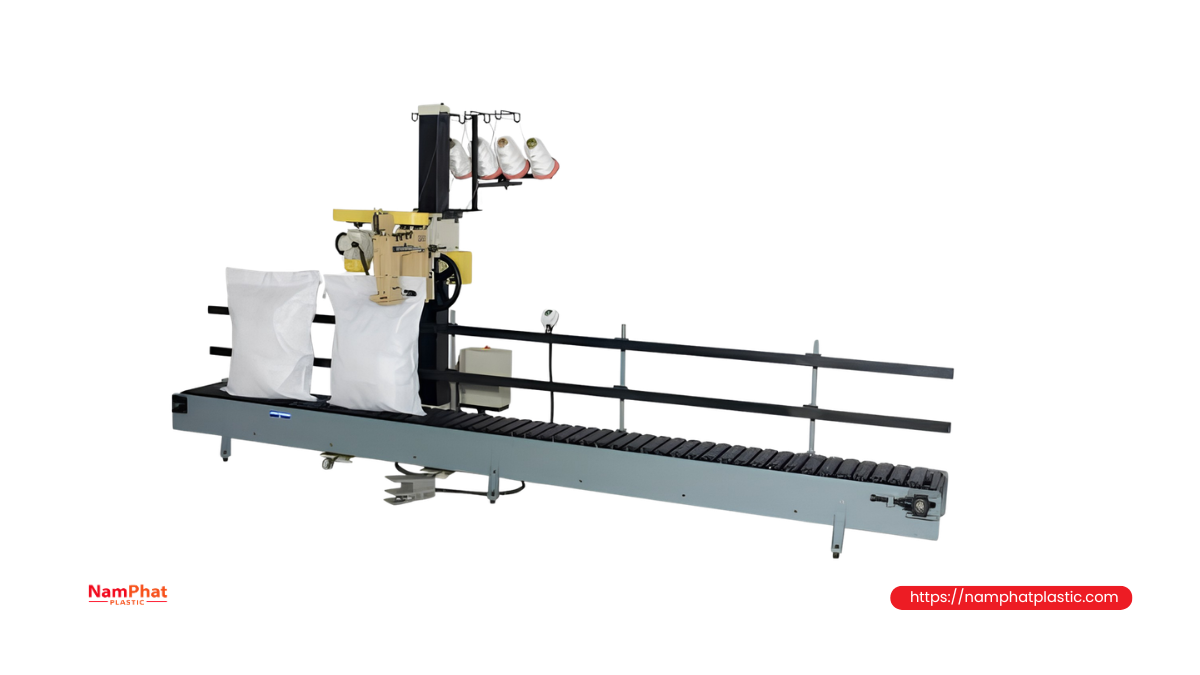
The unwinding direction affects not only thread delivery but also seam consistency. When thread is delivered smoothly, the tension assembly can maintain a relatively stable pulling force and stitches can form consistently.
If the thread is pulled unevenly, twisted, or subjected to continuous tension fluctuations, problems may include:
-
Stitches that alternate between tight and loose.
-
Unstable chain formation at the beginning or end of the bag.
-
Wrinkled or puckered seams.
-
Thread breakage at high-load points.
-
Reduced seam strength.
This is particularly important for industrial bag sewing machines because they often operate at high speed and consume large amounts of thread. Even short-term tension fluctuations can affect hundreds of seams during one production shift.
With over-end unwinding, a major advantage is that the spool does not continuously rotate, so thread delivery is less affected by spool weight. However, thread ballooning or twisting must be controlled when the winding structure is unsuitable.
With side unwinding, thread delivery can be stable when the spool rotates smoothly and the holder is properly maintained. If the spool rotates unevenly or has excessive inertia, pulling force can fluctuate, particularly during acceleration and stopping.
In practice, seam quality depends on the entire thread-delivery system:
-
Thread spool.
-
Spool holder.
-
Thread path.
-
Tension assembly.
-
Needle and hook.
-
Machine speed.
-
Operator technique.
Therefore, the goal when changing the unwinding direction is not to find one method that is always better, but to find the method that best matches the machine and thread being used.
A good thread-delivery system should ensure:
-
Smooth thread release.
-
No sudden pulling force.
-
Minimal additional thread twist.
-
No excessive spool vibration or displacement.
-
Consistent seam quality throughout the production shift.
9. Notes for installing and using thread spools on bag sewing machines
To reduce problems related to unwinding direction, the thread spool should be installed correctly from the beginning. In many cases, thread breakage is not caused by the thread itself but by incorrect spool positioning or an unsuitable thread path.
When installing a spool, check:
-
The spool is positioned according to the machine design.
-
The holder secures the spool without excessive friction.
-
The thread passes through each guide in the correct sequence.
-
There are no sharp metal edges contacting the thread.
-
The spool does not tilt or vibrate during operation.
For over-end unwinding, prevent the upper thread layers from releasing too quickly or becoming caught on the holder. If large loops form before the tension assembly, check the spool position and upper thread guide.
For side unwinding, ensure that the spool can rotate freely but does not continue spinning excessively after the machine stops. Dry bearings, an off-center spool, or excessive resistance can all change thread tension.
Operators should also avoid changing the unwinding direction between shifts without recording the change. Constantly changing the installation method makes troubleshooting much more difficult.
A simple management procedure should include:
-
Define the unwinding direction for each spool type.
-
Mark the correct spool position on each machine.
-
Train operators to inspect the spool before operation.
-
Record problems occurring after spool replacement.
-
Periodically evaluate the performance of each unwinding method.
Standardizing the unwinding direction can improve machine stability, reduce downtime, and make thread-quality evaluation more accurate.
10. Distinguishing unwinding-direction problems from thread-spool problems
When a bag sewing machine experiences thread breakage, twisting, or unstable tension, the thread itself should not immediately be blamed. In many cases, the problem is related to how the spool feeds thread into the machine.
Typical signs of an unwinding-direction problem include:
-
Several different spools show similar problems on the same machine.
-
Thread jerks when the machine accelerates or stops.
-
Changing the unwinding direction improves machine stability.
-
The spool vibrates or feeds thread unevenly.
In contrast, if the problem comes from the spool itself, the problem often follows the same spool even after the installation method is changed.
Check for:
-
Thick or thin sections in the thread.
-
Excessive splices or knots.
-
Variation in thread twist.
-
Repeated breakage at different points of the same spool.
To identify the cause, change one factor at a time: change the unwinding direction, test another spool, or run the thread on another machine. This helps distinguish problems caused by thread delivery, spool quality, or machine condition.
In practice, seam stability is the result of the entire system, including the spool, unwinding direction, thread path, and sewing-machine components. One factor should not be judged in isolation.
11. Should you change the unwinding direction to solve thread breakage?
Changing the unwinding direction can be a useful troubleshooting step when a bag sewing machine frequently breaks thread, but it should not be considered the only solution.
If the problem is caused by unstable thread delivery, switching from over-end to side unwinding or vice versa may reduce tension fluctuations. However, if the problem is caused by the needle, hook, tension assembly, or thread quality, changing the unwinding direction will not provide a lasting solution.
Before changing the unwinding direction, determine:
-
When the breakage occurs: at startup, during sewing, or when stopping.
-
Whether the thread breaks, slips, or twists.
-
Whether the spool vibrates or feeds unevenly.
-
Whether the problem occurs with one spool or multiple spools.
During testing, change only the unwinding direction and keep all other conditions unchanged. If the needle, tension, or thread type are changed at the same time, the result will be difficult to evaluate accurately.
A suitable unwinding direction should provide long-term stability:
-
Smooth thread delivery.
-
Minimal tension variation.
-
Consistent seam quality.
-
Fewer machine stops caused by thread problems.
Therefore, changing the unwinding direction should be treated as one troubleshooting step rather than a substitute for inspecting the entire sewing system.
Frequently Asked Questions About Thread Unwinding on Bag Sewing Machines
1. Is over-end unwinding better than side unwinding?
Neither method is always better. Over-end unwinding is commonly suitable for cone-shaped thread spools requiring light and stable delivery. Side unwinding is suitable for spools designed to rotate during thread release.
The appropriate method is the one that provides smooth thread delivery, stable tension, and consistent seam quality.
2. Can changing the unwinding direction eliminate thread breakage?
It can help in some cases, especially when the problem is related to the way the spool releases thread or fluctuating delivery force.
However, if the cause is the needle, hook, tension assembly, or thread quality, changing the unwinding direction will not fully solve the problem.
3. Why does the same thread work well on one machine but break on another?
Machines can differ in spool-holder design, thread path, tension assembly, needle system, and operating speed. An unwinding method suitable for one machine may not be suitable for another.
The entire thread-delivery system should therefore be evaluated.
4. Should the thread tension be readjusted after changing the unwinding direction?
Not immediately. First run the machine and observe whether the new unwinding direction changes the actual thread delivery force.
If tension changes, adjust the tension gradually rather than making a large adjustment at once.
5. How can you tell whether a spool is unwinding in the wrong direction?
Common signs include:
-
Jerky thread delivery.
-
Abnormal spool vibration or rotation.
-
Thread loops or twisting before reaching the needle.
-
Changing tension without changing the machine setting.
-
Unstable seams after replacing the spool.
When these symptoms occur, check the spool position and unwinding direction before changing other machine parameters.
Conclusion
Over-end unwinding and side unwinding are two different thread-delivery methods, each with its own advantages and limitations.
Over-end unwinding keeps the spool relatively stationary, reducing the effect of rotational inertia and commonly fitting cone-shaped spools. Side unwinding allows the spool to rotate while delivering thread and is suitable for spool designs intended for this method.
However, seam quality does not depend solely on the unwinding direction. It is also affected by spool construction, spool holder, thread path, tension assembly, and machine condition.
When a bag sewing machine experiences thread breakage, twisting, or unstable tension, the entire thread-delivery system should be checked rather than changing only one factor. Selecting the correct unwinding method can improve machine stability, reduce downtime, and increase efficiency in bag sewing production.
>>> See also:
- 0 Comment


