


 Phan Van Hoang
- 31/07/2026
- 177
Table of Contents [Hide]
1. What are C6, C8, and C9?
If you frequently purchase industrial bag sewing thread, you have probably heard sellers or users refer to:
- C6 thread
- C8 thread
- C9 thread
Meanwhile, packaging labels or technical specification sheets may state:
- PE 20/6
- PE 20/8
- PE 20/9
This can make people who are new to the industry wonder:
- Is C6 the same as PE 20/6? Is C8 the same as PE 20/8? Is C9 the same as PE 20/9?
The answer is:
Yes. In most of the bag sewing thread market in Vietnam, C6, C8, and C9 are commonly used as shorthand names for PE 20/6, PE 20/8, and PE 20/9. However, these are not international standards; they are simply commonly used names in trading and production.
2. Why are they called C6, C8, and C9?
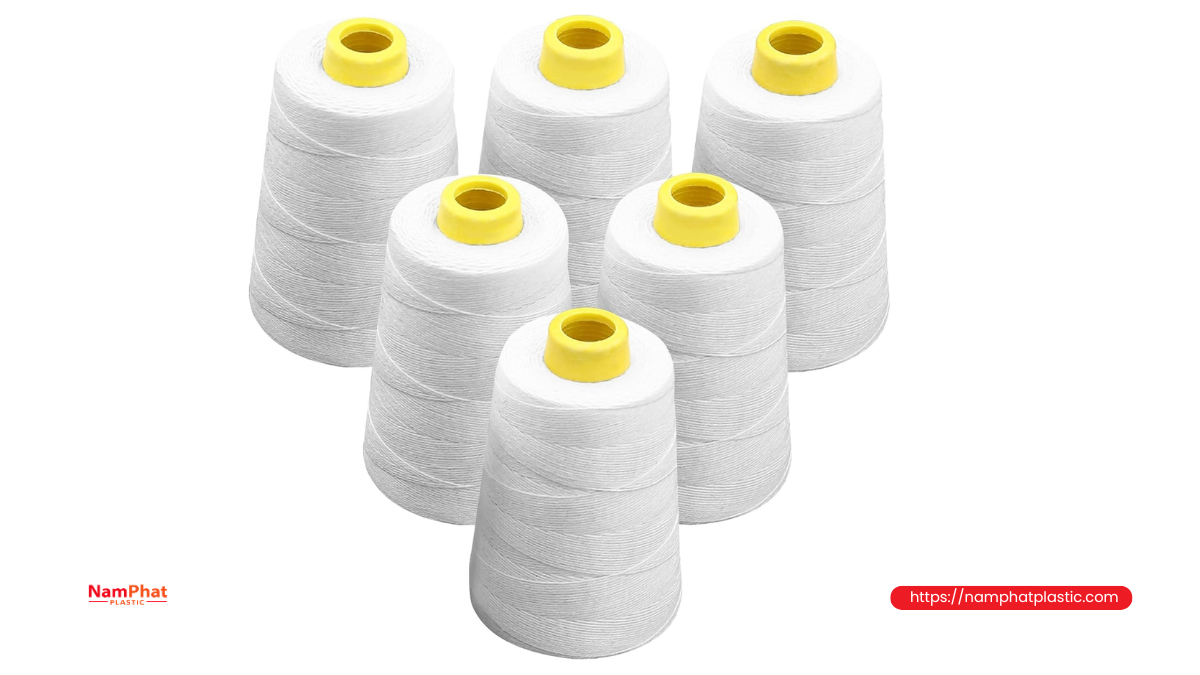
Instead of saying the full specifications:
- PE 20/6
- PE 20/8
- PE 20/9
Many factories simply use the last part of the specification.
For example:
- PE 20/6 → C6
- PE 20/8 → C8
- PE 20/9 → C9
This abbreviation helps to:
- Speed up communication between purchasing and production departments.
- Make warehouse issue notes easier to record.
- Make ordering by phone or Zalo more convenient.
- Reduce confusion when several specifications are produced at the same time.
Therefore, when a customer asks, “Send me 500 kg of C8,” the manufacturer will generally understand this as PE 20/8 thread.
3. How are C6, C8, and C9 different?
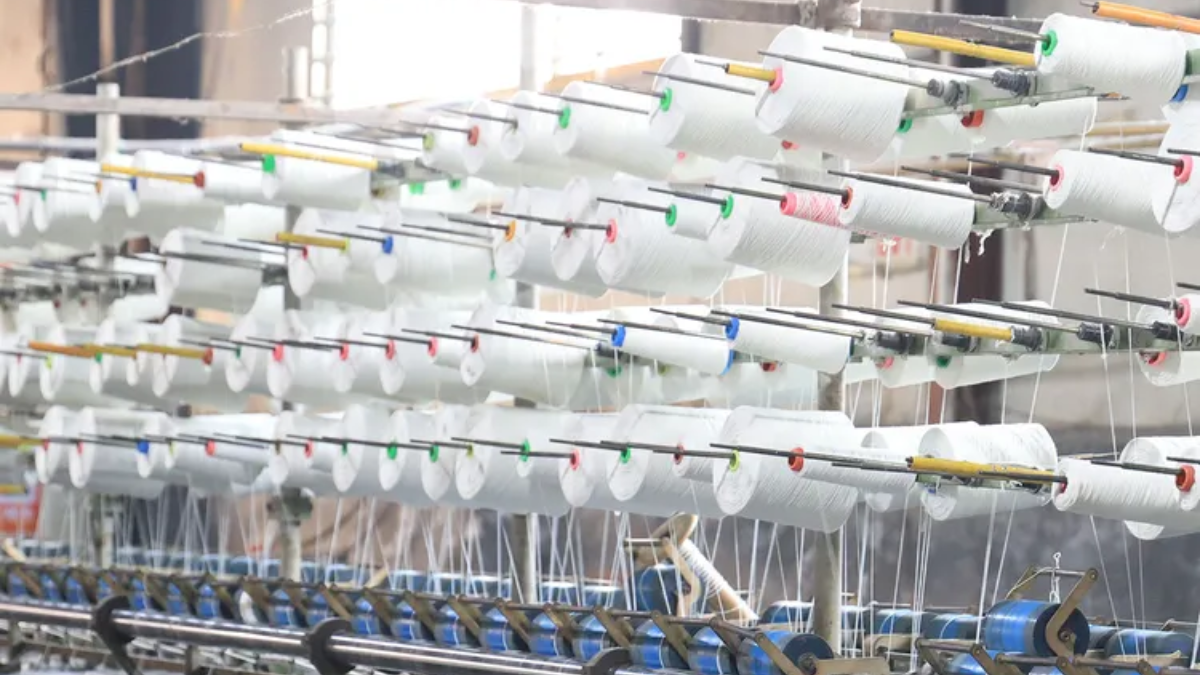
The main difference lies in the number of single yarns that are plied and twisted together.
| Market name | Technical specification | Construction | Thickness | Strength |
| C6 | PE 20/6 | 6 × 20/1 yarns | Smaller | Medium |
| C8 | PE 20/8 | 8 × 20/1 yarns | Larger | High |
| C9 | PE 20/9 | 9 × 20/1 yarns | Thickest | Highest |
In this notation:
- 20 is the count of the single yarn.
- 6, 8, or 9 indicates the number of single yarns plied and twisted together to form the finished thread.
This directly affects:
- Thread diameter.
- Load-bearing capacity.
- Resistance to breakage.
- Stability during machine operation.
4. Do all manufacturers use the same naming?
No.
This is an important point that is often misunderstood.
Some businesses specify:
- PE 20/8
While another business may specify:
- C8
Some suppliers may even write:
- 20/8 C8
Others may simply write:
- Thread 8 ply
Therefore, when purchasing thread, buyers should clearly confirm:
- Full specification.
- Material.
- Yarn construction.
- Breaking force.
- Spool weight.
Do not rely solely on the C6, C8, or C9 designation.
Internationally, sewing thread sizes are generally identified using systems such as Tex, Ticket Number, Denier, or Cotton Count, while C6, C8, and C9 are not an international classification system.
5. Applications of each type
5.1. C6 (PE 20/6)
It is commonly used for:
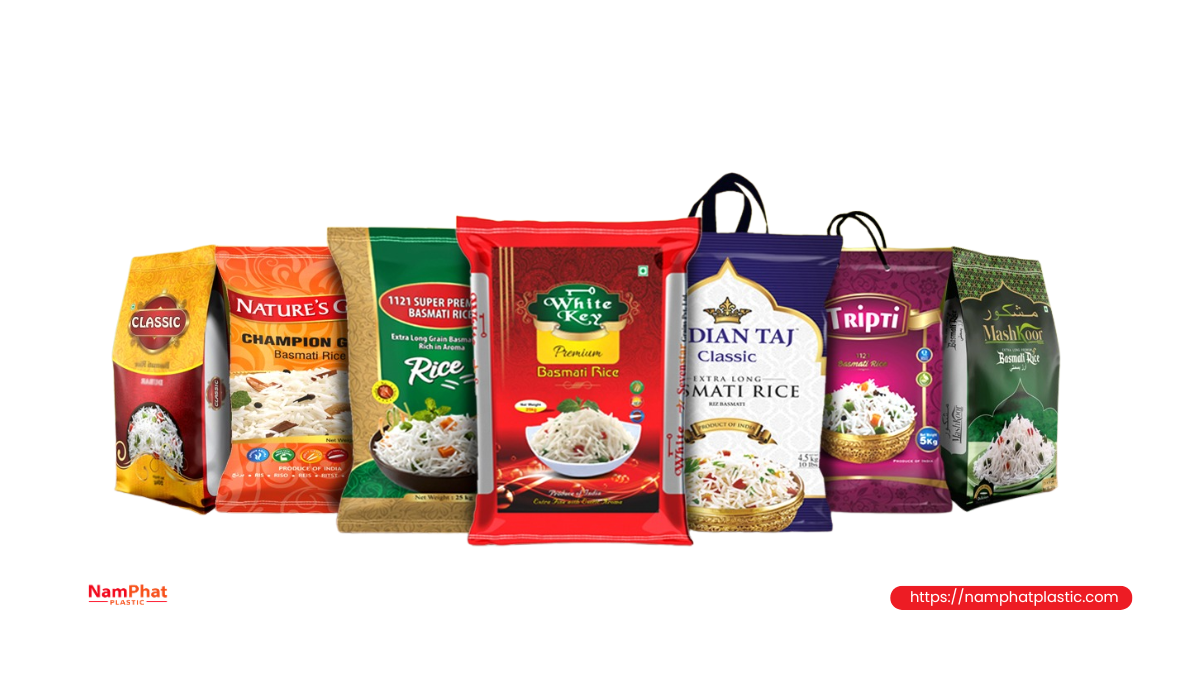
- Small rice bags
- Food bags
- Flour bags
- Sugar bags
- Bags weighing approximately 5–15 kg
Advantages:
- Cost-effective.
- Produces a neat seam.
- Uses less thread.
5.2. C8 (PE 20/8)
This is one of the most commonly used specifications today.
Applications include:
- Rice bags.
- Animal feed bags.
- Fertilizer bags.
- Agricultural product bags.
- Livestock feed bags.
Advantages:
- Provides a balance between strength and cost.
- Runs stably on handheld bag sewing machines and industrial sewing machines.
- Suitable for most automated packaging lines.
5.3. C9 (PE 20/9)
It is used when higher strength is required.
Suitable for:
- Fertilizer bags.
- Chemical bags.
- Cement bags.
- Mineral bags.
- Heavy-duty sacks.
- Export packaging.
Advantages:
- Higher breaking force.
- Greater resistance to breakage.
- Better resistance to impact.
- Suitable for bags with high load requirements.
6. Is C9 always better than C8?
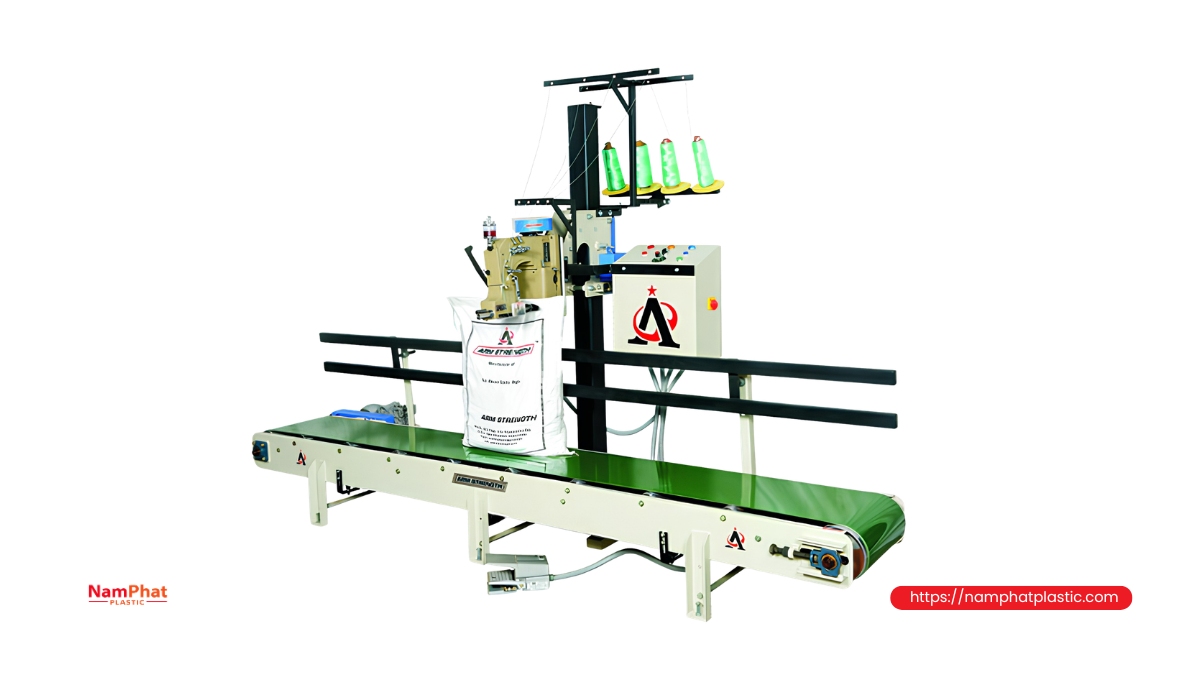
Not necessarily.
Many people assume:
- “The larger the size, the better.”
In practice, this is not always the case.
The choice also depends on:
- Bag weight.
- Sewing machine type.
- Sewing speed.
- Needle size.
- Production cost.
For example:
If you are sewing 5 kg rice bags, using C9 may not provide much additional benefit while increasing the cost.
On the other hand, if you are sewing 50 kg fertilizer bags, C6 may not meet the required load-bearing performance.
Therefore, selecting the appropriate specification helps optimize both quality and cost.
7. How can you correctly identify C6, C8, and C9?
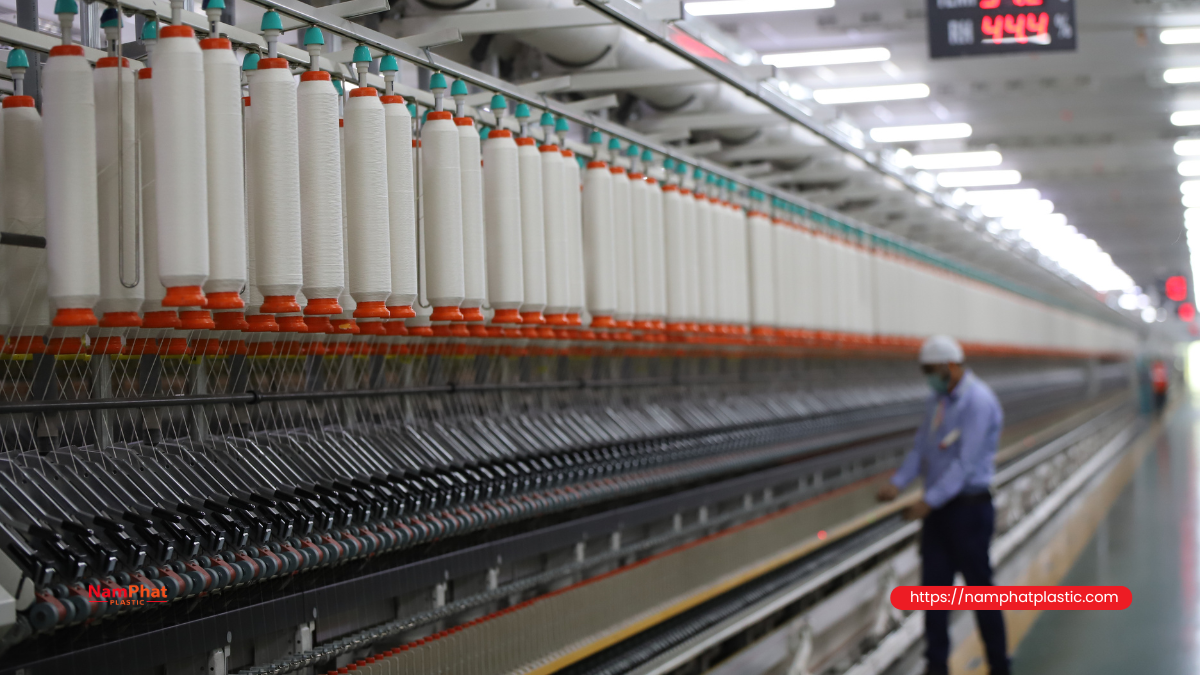
In addition to the name shown on the label, you should also check:
- Thread diameter.
- Spool weight.
- Breaking force.
- Yarn uniformity.
- Twist.
- Hairiness.
- Color.
- Quality certificates, if available.
These are the factors that determine stable machine performance and seam quality.
8. Common misunderstandings
Is C8 the same as PE thread?
Not necessarily.
“C8” only indicates a commonly used size designation.
The material may be spun polyester, spun PE, or another material depending on the manufacturer.
Does C9 always have twice the strength of C6?
No.
Strength does not increase linearly because it also depends on:
- Yarn quality.
- Twisting technology.
- Twist level.
- Finishing process.
- Raw material quality.
Can you determine thread quality simply by looking at C8?
No.
Two spools labeled C8 can differ significantly in:
- Breaking force.
- Tenacity.
- Uniformity.
- Hairiness.
- Continuous running performance.
Therefore, when selecting a supplier, it is advisable to request a technical specification sheet and a Certificate of Analysis (COA) when necessary.
Conclusion
C6, C8, and C9 are commonly used shorthand names in Vietnam for PE 20/6, PE 20/8, and PE 20/9 bag sewing thread specifications. These names make trading and communication more convenient, but they are not international classification standards.
When selecting bag sewing thread, businesses should not focus only on the C6, C8, or C9 designation. Other technical parameters, such as breaking force, strength, yarn uniformity, and machine performance, should also be evaluated. These factors determine seam quality, production efficiency, and product durability.
Frequently asked questions (FAQ)
1. Is C6 the same as PE 20/6?
In most transactions in Vietnam, C6 is a shorthand name for PE 20/6.
2. Are C8 and PE 20/8 the same?
Yes. These are generally two names for the same bag sewing thread specification.
3. Is C9 the strongest type of thread?
C9 generally has higher strength than C6 and C8, but actual performance also depends on raw material quality and the manufacturing process.
4. Are C6, C8, and C9 international standards?
No. These are common industry names used in Vietnam. Internationally, systems such as Tex or Ticket Number are commonly used to classify sewing thread.
5. Should I choose C6, C8, or C9?
It depends on the bag load, sewing machine, and seam strength requirements. Selecting the appropriate specification helps optimize cost and production efficiency.
>>> See also:
- 0 Comment


