


 Phan Van Hoang
- 06/08/2026
- 214
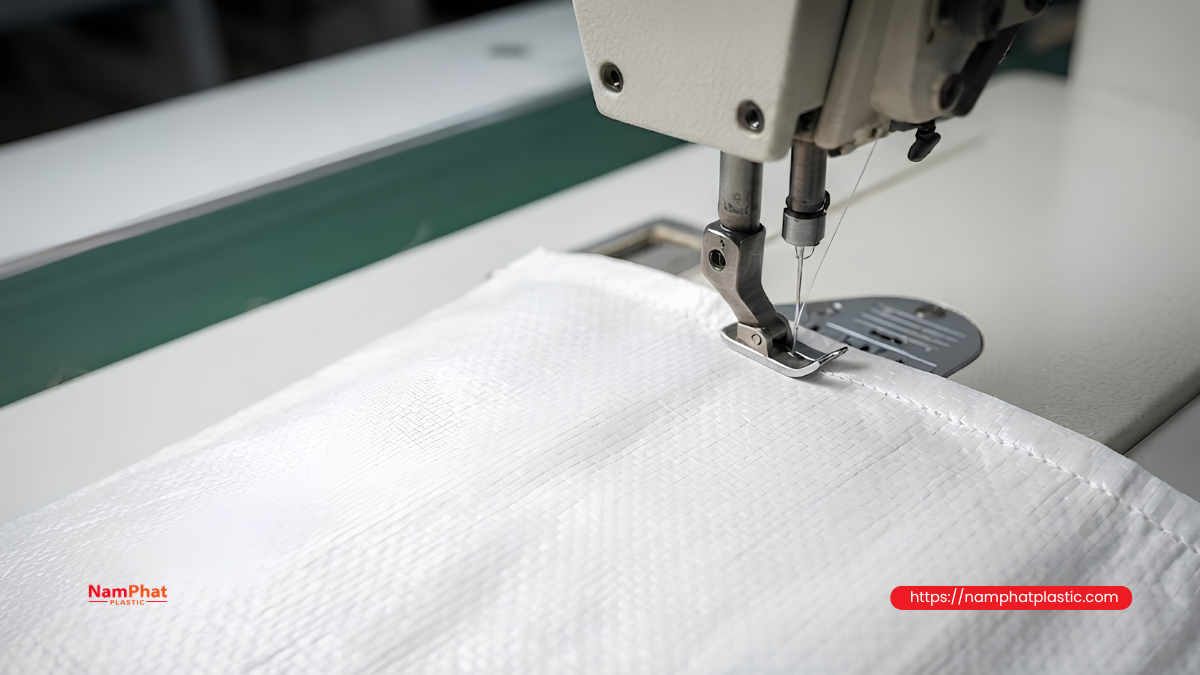
During the sewing of industrial bag mouths, many people tend to focus on checking the needle, thread, and thread tension unit when a seam defect occurs. However, the two components that directly contact the material—the feed dog and presser foot—also have a major influence on stitch uniformity, bag-mouth flatness, material holding, and the actual strength of the seam.
The feed dog moves the bag through the sewing area, while the presser foot presses and stabilizes the material layers. These two components must work together with the correct pressure, height, timing, and contact position. Even a single worn, misaligned, or incorrectly adjusted component can cause a series of problems such as irregular stitch length, wrinkled seams, bag wandering, thread breakage, skipped stitches, or tearing at the bag mouth.
The following article provides an in-depth analysis of how the feed dog and presser foot affect bag-seam quality, along with practical methods for identifying and troubleshooting common problems in production.
Table of Contents [Hide]
1. What are the feed dog and presser foot on an industrial bag sewing machine?
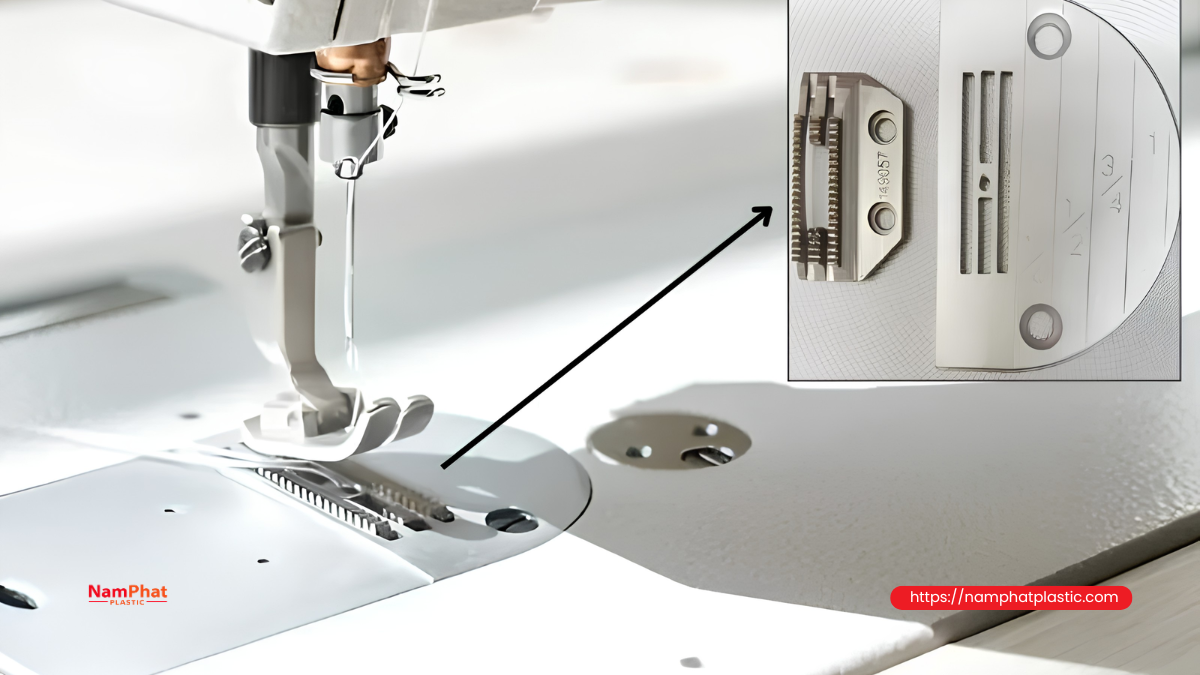
1.1. What is a feed dog?
The feed dog, also known as the material-feeding mechanism, is located below the needle plate. During machine operation, the feed dog rises above the needle plate, contacts the underside of the bag, and moves the material forward step by step according to the stitch length.
A basic feed-dog movement cycle usually consists of:
-
Rising above the needle plate.
-
Moving in the feeding direction.
-
Lowering below the needle plate.
-
Returning to its initial position.
This movement repeats continuously and must remain synchronized with the needle, hook, or thread-loop-forming mechanism.
1.2. What is a presser foot?
The presser foot is located above the bag mouth. Its function is to press the material against the needle plate and provide holding force so that the feed dog can move the bag consistently.
The presser foot does more than simply prevent the bag from rising with the needle. It also helps to:
-
Keep multiple bag-mouth layers from shifting.
-
Control the flatness of the sewing area.
-
Maintain relatively consistent stitch length.
-
Reduce vibration, slipping, and sudden changes in direction.
-
Help the needle penetrate the material at the correct position.
The feed dog and presser foot must work as a pair. The feed dog pulls the bag from below, while the presser foot provides holding force from above. If either side pulls or presses excessively, seam stability is affected.
2. How does the feed dog affect bag-seam quality?
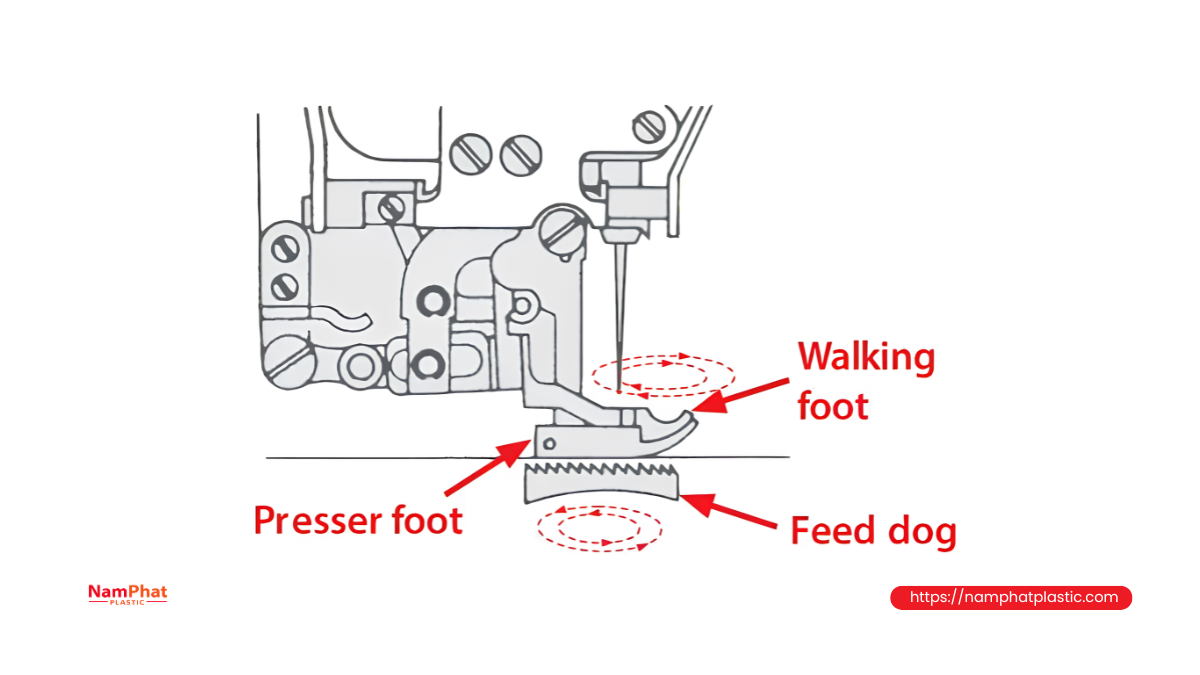
2.1. Effect on stitch length and stitch uniformity
Stitch length depends on the feeding stroke of the feed dog. When the feed dog operates consistently, each feeding cycle moves the bag by nearly the same distance, producing uniform stitch density.
If the feed dog is worn or contaminated with plastic dust, its grip on the bag surface decreases. The bag may slip during certain cycles, resulting in:
-
Alternating long and short stitches.
-
Uneven stitch density.
-
Sections with stitches packed too closely together.
-
Sections where stitches are stretched abnormally.
-
A curved or unstable seam appearance.
This is often more noticeable when sewing woven PP bags with smooth surfaces, coated bags, or materials with surface dust.
2.2. Effect on the running direction of the bag mouth
The feed dog should be centered relative to the needle hole and the presser-foot centerline. If the feed dog is misaligned, unevenly worn, or higher on one side than the other, the feeding force applied to each side of the bag mouth will differ.
As a result, the bag may:
-
Drift to the left or right.
-
Produce a seam that is not parallel to the bag edge.
-
Cause the folded edge to open during sewing.
-
Cause the two bag-mouth layers to shift apart.
-
Require the operator to continuously correct the direction by hand.
If the operator must constantly restrain or pull the bag to keep the seam straight, the feeding system should be inspected before concluding that the problem is entirely caused by operator technique.
2.3. Effect on surface condition and bag strength
The feed dog needs enough tooth engagement to grip the material but must not be excessively sharp or burred. When the tooth tips are too sharp, presser-foot pressure can force the teeth deeply into the bag.
For woven PP bags, excessively sharp feed-dog teeth can:
-
Scratch the woven surface.
-
Cut or weaken PP tapes.
-
Create parallel scratches below the seam.
-
Cause the bag mouth to tear under tension or impact.
-
Cause delamination in coated bags.
For thin PE bags or PE liners, excessively sharp teeth can create small holes, pressure marks, or tears originating from the contact area.
Conversely, if the feed dog is too dull, the bag cannot be fed reliably. Operators often compensate by increasing presser-foot pressure to prevent slipping, but this can over-compress the material and create additional defects.
2.4. Effect on wrinkling and layer buildup
When sewing multiple layers of material, the feed dog mainly contacts and moves the bottom layer. If the presser foot holds the upper layer too tightly, the bottom layer continues moving while the upper layer is restrained.
This difference can cause:
-
The bottom layer to stretch.
-
The upper layer to bunch and wrinkle.
-
The bag edge to shift after sewing.
-
Excess material to accumulate at the end of the seam.
-
The folded bag mouth to lose its intended dimensions.
This condition is common when sewing multi-layer paper bags, PP bags with PE liners, or bag mouths folded into two or three layers.
2.5. Effect on needle and thread loading
Unstable feeding can create cyclic pulling forces. These forces are transferred to the needle, thread, and loop-forming mechanism, causing sudden variations in thread tension.
Possible consequences include:
-
Localized thread tension increases.
-
Unstable thread-loop formation.
-
Skipped stitches.
-
Fraying or breakage near the needle.
-
Needle deflection when penetrating thick material.
Therefore, when thread breaks occur randomly while the thread tension unit shows no obvious abnormality, it is worth checking whether the feed dog is pulling the bag in a jerky manner.
3. How does the presser foot affect bag-seam quality?
3.1. Excessive presser-foot pressure
Presser-foot pressure must be sufficient to hold the bag, but it should not compress the material excessively. Excessive pressure increases friction between the presser foot and bag surface, making it harder for the feed dog to move the material.
Common symptoms include:
-
The bag moves heavily and slowly.
-
Stitch length is shorter than the set value.
-
The seam becomes crowded or wrinkled.
-
Pressure marks appear on the bag surface.
-
The upper and lower layers slide relative to each other.
-
The machine vibrates or produces jerking sounds.
-
The needle heats up quickly due to excessive material compression.
-
Thread is more likely to fray or break at high speed.
For coated woven PP bags, excessive pressure can leave glossy marks, pressure lines, or damage the coating. For paper bags, excessive pressure can cause the paper to crease or tear around the sewing area.
3.2. Insufficient presser-foot pressure
If the presser foot does not apply enough pressure, the bag is not held firmly against the needle plate. When the needle rises, friction between the needle and material can lift the bag with it.
This can cause:
-
Skipped stitches.
-
Uneven stitch length.
-
Bag vibration or bouncing under the presser foot.
-
Easy shifting between material layers.
-
A curved seam even though the feed dog is functioning.
-
Unstable thread-loop formation.
-
Greater risk of needle contact with the needle-hole edge or hook.
Insufficient presser-foot pressure is particularly problematic when sewing thick bags, multi-layer bags, or bag mouths with stiff folds.
3.3. Scratched or burred presser-foot underside
The underside of the presser foot should be smooth and free of sharp edges. Over time, the needle may strike the presser foot, or hard debris may scratch its contact surface.
Even a small scratch can:
-
Scratch the bag surface.
-
Catch woven PP tapes.
-
Hold the bag back intermittently.
-
Increase feeding resistance.
-
Rub against the thread and cause fraying.
-
Shift the material layers.
In some cases, a machine may run well with thick bags but repeatedly damage thin bags. A burr on the presser foot may be the cause because it becomes much more aggressive when contacting soft or easily snagged material.
3.4. Tilted or unevenly worn presser foot
When the presser foot is lowered, its contact surface should press relatively evenly against the material. If it is tilted, pressure becomes concentrated on one side.
This can cause:
-
The bag to drift to one side.
-
One side of the bag mouth to develop deeper pressure marks.
-
One side of the feed dog to lose effective contact.
-
The seam to move away from the center.
-
The folded edge to rotate or open.
-
The needle to penetrate the material at an unstable angle.
A preliminary check can be performed by lowering the presser foot onto a thin sheet of paper and then pulling the paper from each side. If one side is held significantly more tightly, check the presser-foot alignment and presser-foot shaft.
3.5. Presser-foot shape unsuitable for the bag type
Not every presser foot is suitable for every material. A presser foot with a large contact area provides good holding force but also creates greater feeding resistance. A narrow presser foot changes direction more easily but may concentrate pressure over a smaller area.
When selecting a presser foot, consider:
-
Bag-mouth thickness.
-
Number of material layers.
-
Surface slipperiness.
-
Whether the material is coated.
-
Fold stiffness.
-
Machine speed.
-
Seam position relative to the bag edge.
For bags with thick folds or significant thickness changes, the presser foot must be able to pass over the thick section without causing a sudden stop in material feeding.
4. Relationship between the feed dog and presser foot
The feed dog and presser foot should not be adjusted independently. Feeding quality depends on the balance between two forces:
-
The feed dog provides the feeding force.
-
The presser foot provides pressing and holding force.
-
The material surface creates friction against both components.
If presser-foot pressure is too high relative to the feed dog's feeding capability, the bag is restrained and stitch length becomes shorter. If the feed dog rises too high while presser-foot pressure is excessive, the material may become tightly clamped and damaged between the two surfaces.
Conversely, if presser-foot pressure is too low while the feed dog pulls strongly, the bottom layer may move faster than the upper layer, causing the bag-mouth layers to shift.
The objective is not to maximize either feeding force or pressing force. The goal is to find a level that allows:
-
Continuous material movement.
-
Stable alignment between layers.
-
No surface damage.
-
Consistent stitch length.
-
No abnormal vibration or jerking.
5. How does feed-dog height affect sewing?
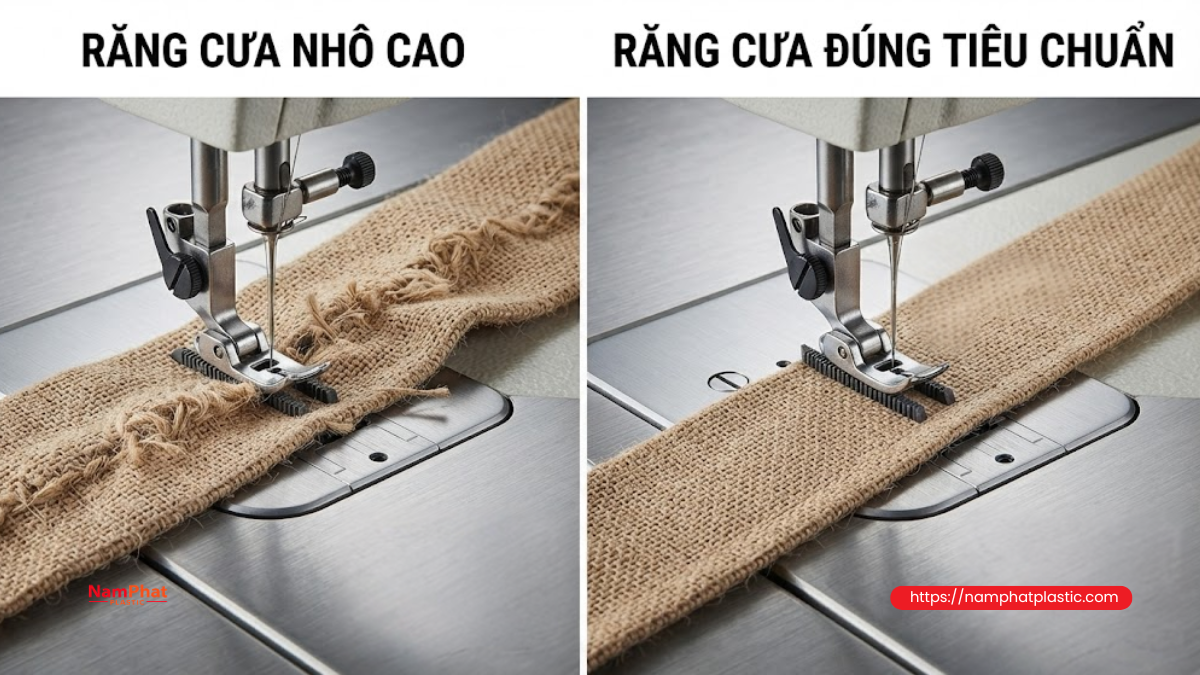
Feed-dog height is the amount by which the feed dog rises above the needle plate at its highest position.
Feed dog too high
When the feed dog rises too high:
-
The tooth tips penetrate too deeply into the material.
-
The bag is lifted excessively.
-
The presser foot moves more aggressively.
-
Stitch length may change when passing over thick sections.
-
Tooth marks appear on the bag surface.
-
Woven PP bags are more likely to be scratched or have their tapes damaged.
-
The machine may produce excessive impact noise.
A higher feed dog does not necessarily provide better feeding. In many cases, it simply increases surface damage and vibration.
Feed dog too low
When the feed dog does not rise sufficiently:
-
Grip on the bag decreases.
-
The bag slips more easily under the presser foot.
-
Stitch length becomes inconsistent.
-
The operator must push or pull the bag by hand.
-
The seam is more likely to curve.
-
Feeding through thick folded sections becomes more difficult.
The appropriate height depends on the machine design, feed-dog geometry, and material. Therefore, the machine manufacturer's specification should be used as the primary reference, followed by adjustment using actual production samples.
6. How important is feed-dog and needle synchronization?
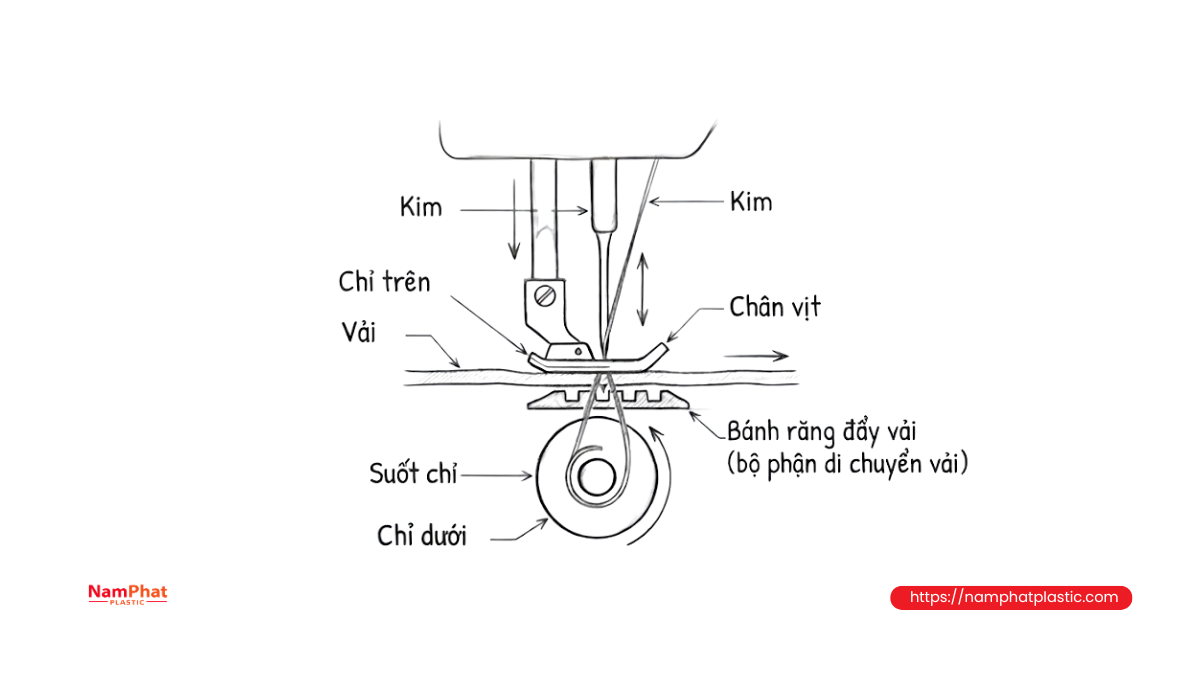
The feed dog must move the material during the correct stage of the sewing cycle. In general, feeding should occur when the needle has withdrawn from the material or has reached a position where the material can move safely.
If the feed dog starts moving while the needle is still deeply inserted into the bag, lateral force is applied to the needle. Possible consequences include:
-
Bent needle.
-
Needle striking the needle plate.
-
Elongated needle holes in the bag.
-
Increased thread friction inside the needle eye.
-
Misaligned stitches.
-
Needle breakage at high speed.
-
Loss of hook synchronization and skipped stitches.
A typical sign is a needle that repeatedly bends in the same direction or needle holes in the material that become oval rather than relatively round.
7. Seam defects related to the feed dog and presser foot
Stitch length alternates between long and short
Possible causes include:
-
Worn feed dog.
-
Feed dog contaminated with dust, oil, or plastic particles.
-
Presser-foot pressure too low, allowing the bag to slip.
-
Presser-foot pressure too high, restraining the bag.
-
Uneven feed-dog height.
-
Play in the feeding mechanism.
-
Excessively smooth bag surface.
Seam is wrinkled or wavy
Check:
-
Whether presser-foot pressure is excessive.
-
Whether the upper and lower layers are being fed at different speeds.
-
Whether the feed dog is too sharp or too high.
-
Whether stitch density is excessive.
-
Whether thread tension combined with presser-foot pressure is causing seam contraction.
-
Whether the bag mouth was folded evenly before sewing.
Bag is scratched or torn below the seam
Common causes include:
-
Feed-dog teeth are too sharp.
-
Feed dog has burrs.
-
Feed dog is too high.
-
Presser-foot pressure is excessive.
-
Bag is trapped between the feed dog and needle-plate edge.
-
Presser-foot underside is scratched.
-
Bag is pulled abruptly because the feeding mechanism is out of synchronization.
Bag drifts even though the operator keeps it straight
Check:
-
Whether the feed dog is centered.
-
Whether both sides of the feed dog are worn evenly.
-
Whether the presser foot is tilted.
-
Whether the needle plate is misaligned.
-
Whether one side of the presser foot has burrs or greater resistance.
-
Whether the bag-mouth guide is pushing the material to one side.
Machine skips stitches when passing over a folded section
Possible causes include:
-
Presser foot cannot hold the material securely at the thick section.
-
Presser-foot pressure is too low.
-
Presser foot rises suddenly.
-
Feed dog does not have enough feeding force to pass the thick section.
-
Material rises with the needle.
-
Feed dog moves while the needle has not yet exited the bag.
8. How to inspect the feed dog and presser foot in the workshop
Step 1: Clean the feeding area
Turn off the machine and clean:
-
Feed-dog slots.
-
Needle plate.
-
Presser-foot underside.
-
Area around the needle hole.
-
Fiber dust, plastic particles, and oil deposits.
Do not evaluate feed-dog grip while the tooth slots are blocked by debris.
Step 2: Inspect the feed dog visually and by feel
Check whether:
-
Tooth tips are worn evenly.
-
Any teeth are broken or chipped.
-
There are abnormal sharp edges or burrs.
-
Both sides have similar height.
-
The feed dog is rubbing against the needle plate.
A piece of fabric or PP tape can be lightly pulled across the feed-dog surface. If the material catches strongly at one point, that location may have a burr.
Step 3: Inspect the presser-foot underside
Remove the presser foot if necessary and inspect it under good lighting. Look for:
-
Needle strike marks.
-
Wear grooves.
-
Sharp edges.
-
Rough surfaces.
-
Uneven wear on both sides.
-
Bent or twisted geometry.
A presser foot with a deep needle mark should not be used because the edge of the indentation can scratch the material or fray the thread.
Step 4: Check presser-foot pressure
Reduce the pressure to a moderate level, then gradually increase it until the bag feeds consistently. Do not start from the maximum pressure setting.
The correct level is reached when:
-
The bag does not freely slip under the presser foot.
-
The bag still moves smoothly and continuously.
-
The layers remain aligned.
-
No deep pressure marks appear on the surface.
-
The machine does not produce rhythmic jerking sounds.
Step 5: Test at low speed
Use the actual bag material being produced. Do not rely only on a test using fabric or paper that differs from the production material.
Observe:
-
Bag movement.
-
Presser-foot vibration.
-
Stitch-length consistency.
-
Seam straightness.
-
Feed-dog marks on the underside.
-
Presser-foot pressure marks on the top surface.
Once operation is stable at low speed, gradually increase to production speed.
9. Adjustment methods for different bag types
Uncoated woven PP bags
These bags generally require adequate feeding grip, but the feed dog must not be excessively sharp because it can damage the PP tapes.
Priorities include:
-
Clean and evenly worn feed dog.
-
Moderate presser-foot pressure.
-
Avoiding excessively dense stitching.
-
Checking tooth marks on the underside after sewing.
-
Avoiding manual pulling of the bag during operation.
Coated woven PP bags
Coated surfaces are usually more slippery and more susceptible to visible pressure marks.
Pay attention to:
-
Do not increase presser-foot pressure excessively to prevent slipping.
-
Check feed-dog tooth sharpness.
-
Ensure the presser-foot underside is smooth.
-
Minimize vibration and jerking in the feeding mechanism.
-
Test coating condition and seam strength after sewing.
Multi-layer kraft paper bags
Paper bags are relatively stiff but can develop creases or tears where excessive pressure is applied.
Control:
-
Presser-foot alignment.
-
Ability to pass over thick folds.
-
Moderate feed-dog height.
-
Avoiding presser-foot edges cutting into the paper.
-
Avoiding excessively dense stitching that weakens the paper along the line of needle holes.
Bags with PE liners
The outer PP or paper layer and inner PE layer have different friction characteristics. This is a common reason for layer slippage.
Control should include:
-
Reducing presser-foot pressure if the upper layer bunches.
-
Keeping the bag mouth flat before feeding it into the machine.
-
Checking whether the feed dog is pulling the lower layer too aggressively.
-
Using an appropriate material guide.
-
Evaluating layer displacement at the end of the seam.
10. When should the feed dog or presser foot be replaced?
Consider replacing the feed dog when:
-
The teeth are visibly worn.
-
Multiple tooth tips are broken.
-
The two sides are unevenly worn.
-
The bag frequently slips even with appropriate presser-foot pressure.
-
Burrs cannot be removed while preserving the correct tooth shape.
-
The feed dog is bent or rubbing against the needle plate.
Replace the presser foot when:
-
The underside has deep needle marks.
-
The presser foot is bent, tilted, or cracked.
-
The surface is unevenly worn.
-
There are sharp edges that cannot be safely corrected.
-
The presser foot is no longer suitable for the bag type being produced.
-
The presser-foot holding mechanism has excessive play.
Light scratches can sometimes be polished or smoothed. However, excessive reworking can change the component's geometry and flatness, causing uneven pressure distribution.
11. Quick checklist when a bag seam has defects
When an unstable seam is detected, check in the following order:
-
Clean the feed dog, needle plate, and presser foot.
-
Check the feed dog for wear, broken teeth, or contamination.
-
Check the presser-foot underside for burrs or needle marks.
-
Observe whether the bag slips or is held back intermittently.
-
Check feed-dog height and alignment.
-
Check whether presser-foot pressure is evenly distributed.
-
Reduce presser-foot pressure and increase it gradually.
-
Test at low speed using the actual production bag.
-
Check tooth marks on the underside and pressure marks on the top surface.
-
Only then adjust thread tension, needle, or other parameters.
Following a defined sequence prevents multiple parameters from being changed simultaneously, making the actual cause easier to identify.
12. Common mistakes when troubleshooting material feeding problems
Increasing presser-foot pressure immediately when the bag slips
This is a quick response but is not always correct. The bag may be slipping because the feed dog is worn, contaminated, or too low. Increasing presser-foot pressure in this situation only increases friction and makes feeding more difficult.
Pulling the bag by hand to keep the seam straight
Pulling the bag by hand can apply lateral force to the needle, causing needle bending, distorted needle holes, or uneven stitches. The operator should guide the bag lightly rather than replacing the function of the feeding mechanism.
Checking only the needle and thread when stitches are skipped
Skipped stitches can result from insufficient presser-foot holding force, which allows the material to rise with the needle. Replacing the needle without correcting presser-foot pressure may not solve the problem.
Adjusting several components at the same time
Changing presser-foot pressure, thread tension, stitch length, and feed-dog height simultaneously eliminates a reliable basis for comparison. Change one factor at a time, run a sample, and record the result.
13. How to establish factory quality-control standards
To reduce recurring defects, manufacturers should establish inspection standards for each bag group. Each standard should record:
-
Material type.
-
Number of layers at the sewing position.
-
Bag-mouth folding configuration.
-
Needle type and size.
-
Thread type.
-
Target stitch length.
-
Presser-foot pressure.
-
Feed-dog condition and identification.
-
Machine speed.
-
Images of acceptable and unacceptable seams.
After maintenance or component replacement, a verification sample should be sewn before the machine returns to mass production. The sample should be evaluated for both appearance and strength rather than simply checking whether the thread looks visually neat.
Frequently Asked Questions
1. Does a sharper feed dog always mean better bag feeding?
Not necessarily. The feed dog needs sufficient grip, but excessive sharpness can cut, scratch, or weaken the material. Feeding performance also depends on tooth height, presser-foot pressure, surface cleanliness, and machine synchronization.
2. Why does the bag wrinkle even when thread tension is not high?
The bag may wrinkle because presser-foot pressure is excessive or because the lower layer is being pulled faster than the upper layer. Check material movement before continuing to reduce thread tension.
3. Does stronger presser-foot pressure make the seam stronger?
No. The presser foot only needs to hold the material securely. Excessive pressure can make the bag difficult to feed, crowd the stitches, mark the surface, and increase needle heating. Seam strength depends on multiple factors, including thread type, stitch density, stitch structure, and material quality.
4. Why does the seam tend to drift to one side?
Possible causes include uneven feed-dog wear, a tilted presser foot, a misaligned needle plate, or incorrect operator guidance. The balance between feeding force and holding force should be checked.
5. Should the feed dog be ground at the factory?
Only very light finishing may be appropriate when removing minor burrs, while preserving uniform tooth geometry. Uncontrolled manual grinding can create uneven tooth heights, increasing the risk of slipping or bag damage. If the feed dog is significantly worn, replacement is generally more stable.
Conclusion
The feed dog and presser foot are two key components determining the material-feeding performance of a bag sewing machine. The feed dog moves the material, while the presser foot holds and stabilizes the bag-mouth layers. Consistent seam quality can only be achieved when feeding force and holding force are properly balanced.
A feed dog that is too dull allows the bag to slip, while one that is too sharp can damage the surface. Insufficient presser-foot pressure can cause vibration and skipped stitches, whereas excessive pressure can cause material buildup, wrinkling, and increased friction. Feed-dog height, presser-foot flatness, and the timing of material feeding relative to needle movement must also be checked regularly.
When a bag seam develops defects, manufacturers should not focus only on adjusting thread tension or replacing the needle. A systematic inspection of the feed dog, presser foot, needle plate, and actual material movement can help identify the true cause, reduce machine downtime, and prevent recurring defects.
>>> See also:
- 0 Comment


