


 Phan Van Hoang
- 01/08/2026
- 144
When evaluating a bag sewing thread spool, many people usually pay attention to tensile strength, twist, hairiness, spool weight, or yarn uniformity. Meanwhile, the core inside the thread spool receives much less attention, even though it can directly affect spool shape, thread unwinding, and stability during continuous machine operation.
The two most common types of cores today are multilayer pressed paper cores and plastic cores. Each type has its own advantages, limitations, and application range. Plastic cores are not always better than paper cores, and paper cores do not automatically cause problems during machine operation.
The important point is to evaluate the core material, roundness, rigidity, dimensions, compression resistance, and winding method together.
Quick conclusion
In a dry factory environment, with properly stored thread spools and paper cores with sufficient rigidity, paper cores can still operate stably over many production shifts.
Plastic cores generally have an advantage when:
- The production environment has high humidity.
- Thread spools must be transported over long distances.
- The spools are heavy.
- The thread spools require reusable cores.
- Consistent core dimensions are required between different batches.
- The machine uses a core-mounting mechanism with tight tolerances.
However, continuous machine operation does not depend only on the core material. A deformed plastic core with burrs or unsuitable dimensions can still cause more serious problems than a properly manufactured paper core.
It is important to evaluate the core material, roundness, rigidity, dimensions, compression resistance, and winding method together.
Table of Contents [Hide]
1. What role does the thread spool core play?
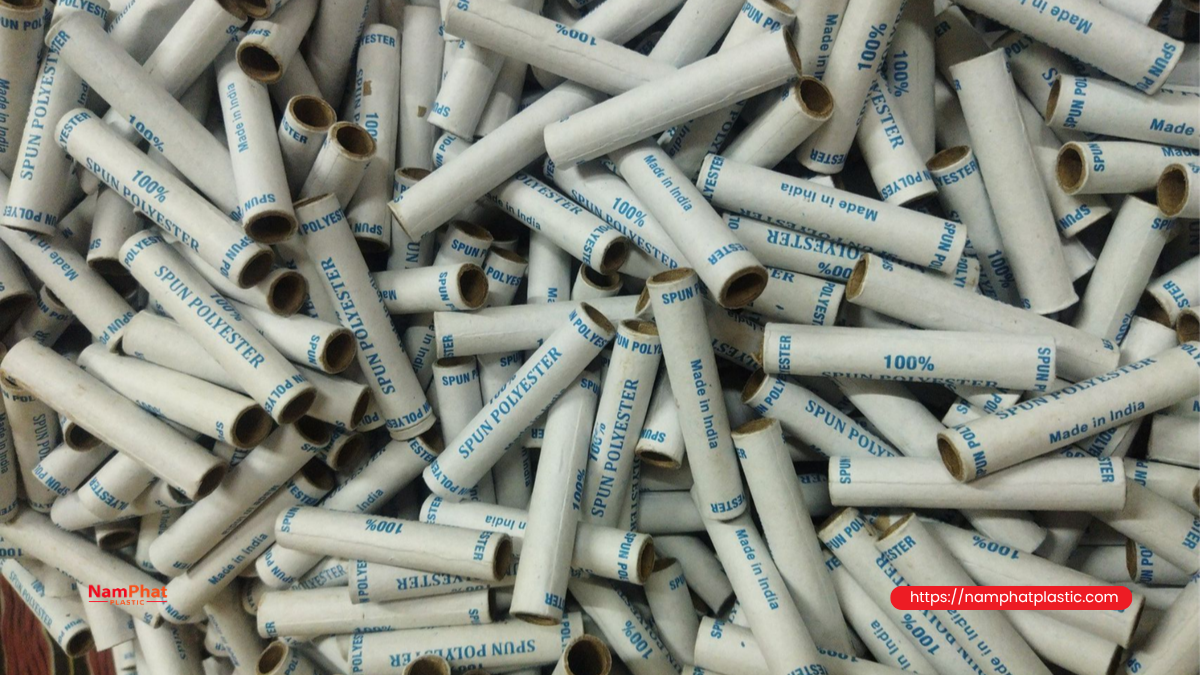
The core does not directly create seam strength, but it serves as the supporting structure for the entire mass of thread wound around it.
A suitable core needs to perform the following functions:
- Prevent the thread spool from becoming dented or collapsing.
- Maintain a stable inner diameter.
- Withstand the compression force generated during winding.
- Keep both ends of the spool relatively flat.
- Limit tilting or eccentricity of the spool.
- Fit the machine's mounting shaft, thread pin, or support.
- Avoid generating dust, debris, or burrs that interfere with the thread path.
- Maintain its shape during packaging, transportation, and storage.
If the core deforms, the geometry of the outer thread package may also change. As a result, the thread may unwind unevenly, creating loose loops, jerking, or thread snagging near the end of the spool.
2. Two thread unwinding methods must be distinguished
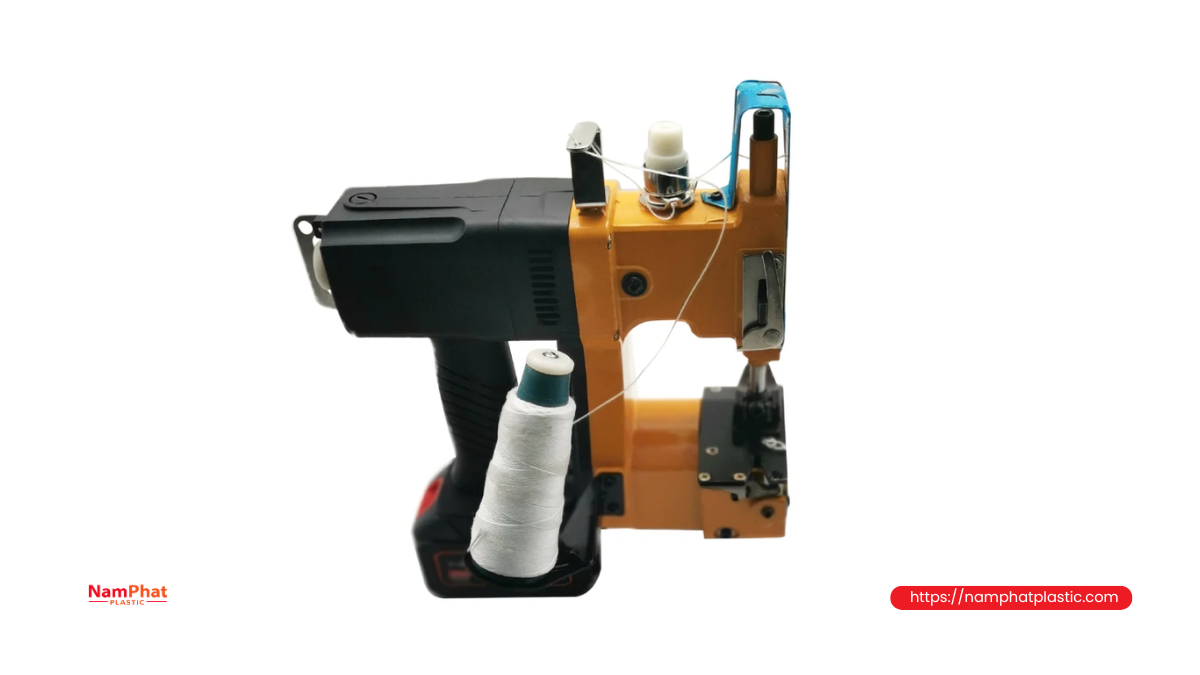
Before comparing paper and plastic cores, it is necessary to determine how the thread spool is used.
2.1. The thread spool remains stationary while the thread is pulled from the top
This is a common mechanism on industrial bag sewing machines. The thread spool is placed on a thread pin or support but does not rotate at the same speed as the thread is pulled. The thread is unwound from the top of the spool.
In this case, the weight and dynamic balance of the core are not the most important factors. More important factors include:
- Core rigidity.
- Spool roundness.
- Shape of the spool shoulders.
- Uniformity of the winding layers.
- Resistance to deformation during transportation.
- Stability of the spool base and top.
2.2. The thread spool rotates together with the mounting shaft
Some equipment or processes use a mechanism in which the entire thread spool rotates around the shaft. In this case, concentricity, core weight, and balance become more important.
A core that is eccentric, has uneven walls, or supports an off-center winding package can increase vibration, increase shaft load, and cause thread tension to fluctuate cyclically.
Therefore, it should not be concluded that plastic cores or paper cores are better without first determining the unwinding mechanism of the equipment.
3. Comparison table of paper cores and plastic cores
| Criterion | Paper core | Plastic core |
| Dimensional stability | Good if the paper is sufficiently rigid and stored in dry conditions | Generally more stable in humid environments |
| Moisture resistance | Limited; can absorb moisture and soften | Less affected by moisture |
| Compression resistance | Depends on paper basis weight, number of layers, and adhesive | Generally good if the core structure is properly designed |
| Dust generation | May generate paper dust at the core edges | Little dust, but plastic burrs may occur |
| Adhesion to the thread layer | Relatively good due to surface friction | Smoother surface may require roughening or grooves |
| Reusability | Lower | Higher |
| Weight | Usually lighter | May be heavier depending on the structure |
| Initial cost | Usually lower | Usually higher |
| Recyclability | Favorable if not heavily contaminated with adhesive or other materials | Depends on the plastic type and recovery system |
| Batch-to-batch uniformity | Depends on control of paper, adhesive, and core forming | Can be stable if the mold and raw materials are well controlled |
| Suitability for humid environments | Requires careful control | Generally more suitable |
| Suitability for large spools | Requires increased thickness and rigidity | Advantageous if the core is designed for the load |
3.1. Differences in dimensional stability
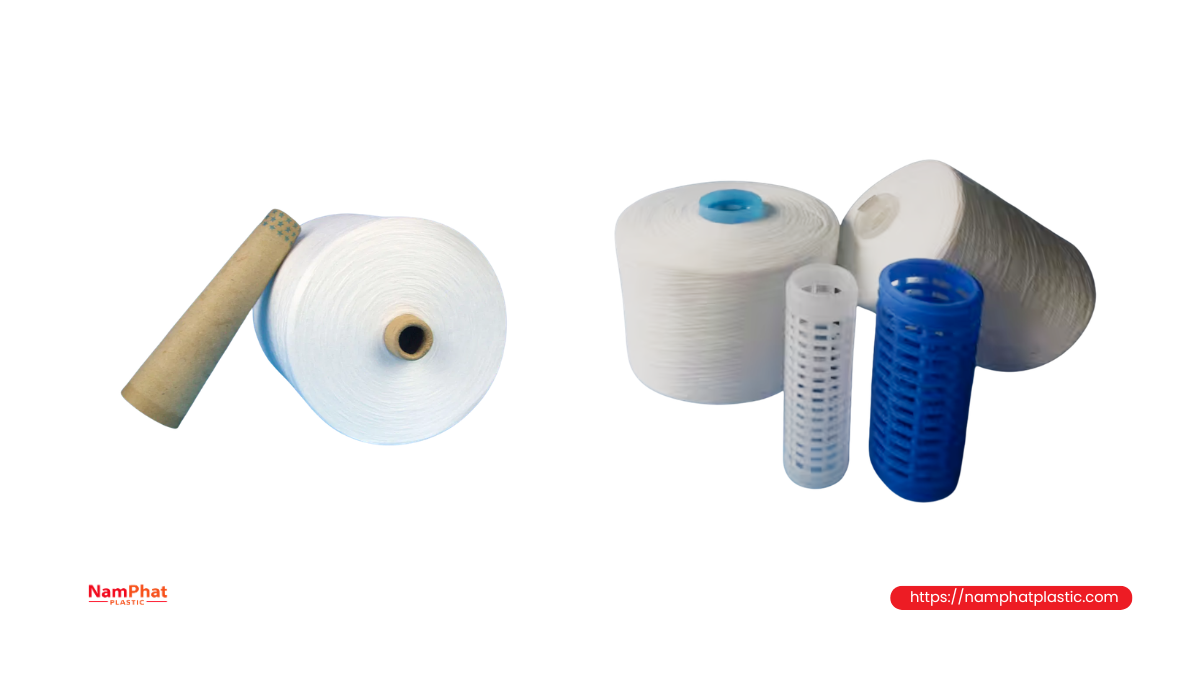
Dimensional stability is one of the most important factors for continuously running thread spools.
For paper cores
Paper cores are usually made from multiple layers of paper wound and bonded with adhesive. Core quality depends on:
- Type of paper used.
- Number of paper layers.
- Paper basis weight.
- Adhesive quality.
- Compression pressure.
- Drying time.
- Residual moisture.
- Flatness of both core ends.
If the paper core has not dried completely or has uneven rigidity, the inner diameter may change after the thread is wound. The spool can also become oval when subjected to compression during transportation.
For plastic cores
Plastic cores generally maintain their dimensions more consistently when humidity changes. When manufactured using a precise mold, cores from the same batch can have relatively high dimensional uniformity.
However, plastic cores can still experience:
- Warpage caused by uneven cooling.
- Shrinkage after molding.
- Deformation when stacked at high temperatures.
- Dimensional deviations caused by mold wear.
- Cracking at areas where the wall is too thin.
- Burrs along the mold parting line.
Therefore, plastic material does not automatically guarantee accuracy. Mold quality and the molding process remain decisive factors.
3.2. Moisture resistance
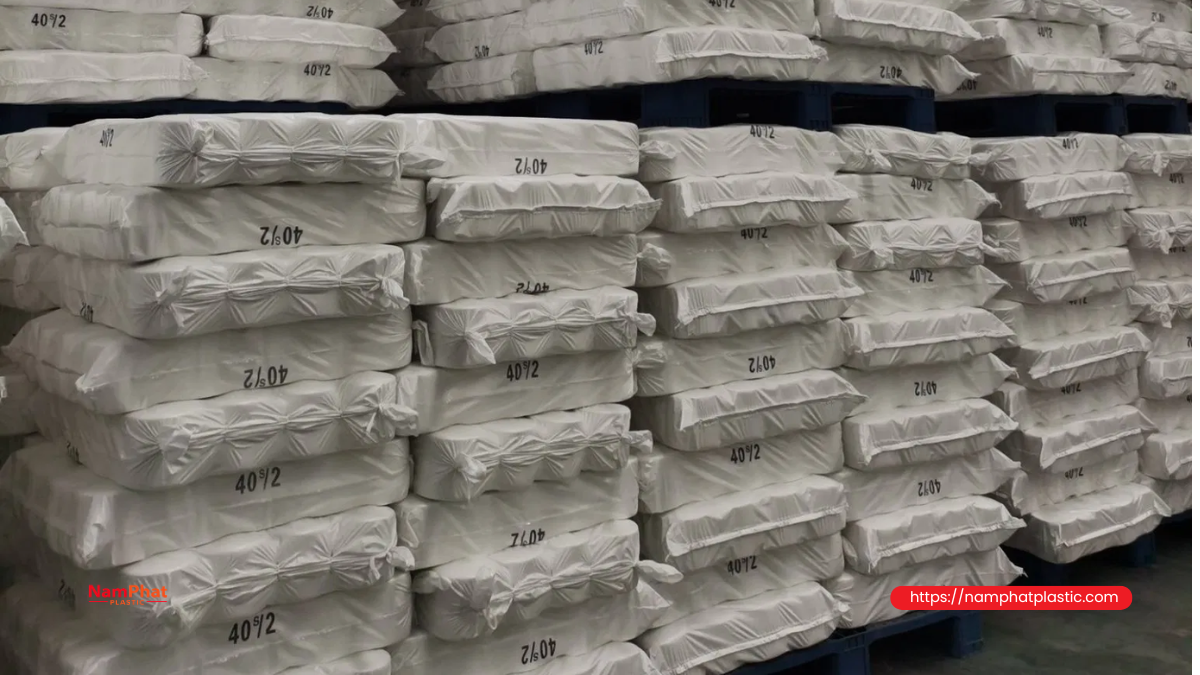
This is one of the clearest differences between the two types of cores.
Paper cores can absorb moisture from the surrounding environment. As humidity increases, bonding between paper layers may weaken, the core may become softer, and compression resistance may decrease.
Common signs include:
- The core feels soft when squeezed by hand.
- The inner diameter changes from round to oval.
- The core edge becomes rough.
- The thread spool tilts after storage.
- The core becomes tightly fitted to the thread pin or is difficult to mount securely.
- The outer thread package partially collapses at the spool base.
Plastic cores absorb very little moisture, making them more suitable for warehouses with high humidity or products transported through different climate zones.
However, humidity can still affect the yarn itself, lubricant, and static electricity. Switching to plastic cores cannot solve all problems if the thread spool storage conditions are inadequate.
3.3. Resistance to compression during thread winding
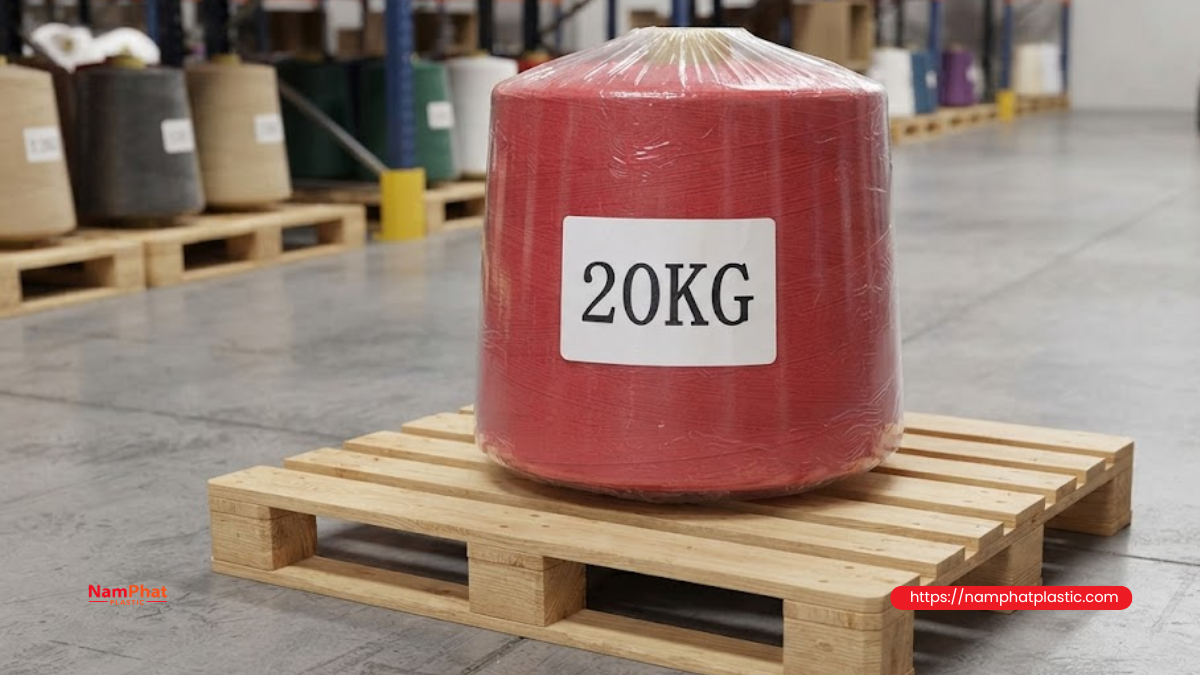
When thread is wound onto a core, the yarn layers create pressure toward the center of the spool. The larger the spool, the higher the winding tension, or the tighter the winding density, the greater the load applied to the core.
If the core is not rigid enough, the following may occur:
- The inner diameter of the core decreases.
- The core becomes oval.
- Both ends of the core flare or become dented.
- The thread spool becomes abnormally hard.
- The spool no longer fits the thread pin.
- The inner thread layer is compressed too tightly.
- The end of the spool becomes more difficult to unwind.
Plastic cores generally have good compression resistance if the wall thickness and structure are properly designed. However, a plastic core with walls that are too thin can still be crushed or deformed.
High-quality paper cores can also withstand considerable compression if enough layers are pressed together, suitable paper with sufficient rigidity is used, and moisture is controlled. Therefore, when selecting a core, it is not enough to ask whether it is paper or plastic; actual compression resistance must also be determined.
3.4. Effect on unwinding stability
During continuous machine operation, the most important requirement is that the thread should leave the spool with relatively consistent resistance.
The core affects this process indirectly. If the core maintains its shape, the outer thread package will undergo less deformation during transportation and storage.
In contrast, a deformed core can cause the thread spool to develop:
- Uneven large and small diameter areas.
- Misaligned spool shoulders.
- Thread layers shifting to one side.
- Unstable size of the unwound loops.
- Thread catching on the spool edge.
- Abnormal increases and decreases in inlet thread tension.
On high-speed bag sewing machines, this fluctuation can contribute to:
- Uneven stitches.
- Thread jerking.
- Increased friction at thread guides.
- Random thread breakage.
- Skipped stitches.
- Spool vibration or tilting on the thread pin.
- Machine stoppages to clear tangled thread.
Not every case of thread breakage is caused by the core. However, when failures occur only with certain spools and decrease after replacing the spool, the core, spool shape, and winding structure should also be inspected.
3.5. Paper dust and plastic burrs
Risks from paper cores
Low-quality paper cores can generate dust or paper fibers at the core ends. During handling, transportation, or spool installation, small particles may fall into the working area.
Paper dust can:
- Stick to lubricant on the thread.
- Accumulate around the thread pin.
- Stick to the thread tension device.
- Make the machine area become dirty more quickly.
- Make cleanliness control more difficult.
However, a paper core with clean-cut edges, strong bonding, and good surface treatment will generate very little dust.
Risks from plastic cores
Plastic cores do not generate paper dust, but sharp burrs may appear along the mold parting line or cut edges.
Plastic burrs can:
- Scratch the thread when it contacts the core edge.
- Break some filaments.
- Create localized hairiness.
- Catch thread loops when the spool is nearly empty.
- Create handling hazards for workers.
Therefore, when inspecting plastic cores, the entire edge should be checked by hand to make sure there are no sharp edges.
3.6. Adhesion between the core and the inner thread layer
Paper core surfaces generally have relatively high friction. The first thread layer can therefore grip the core more easily during spool formation.
Plastic cores have smoother surfaces. If the design is unsuitable, the inner thread layer may slip on the core surface, especially when:
- Winding tension is low.
- The spool has a large diameter.
- The yarn contains a high amount of lubricant.
- The core has no grooves or textured surface.
- The spool vibrates during transportation.
To reduce slippage, plastic cores can be designed with:
- Thread-retaining grooves.
- Lightly textured surfaces.
- Holes or slots for anchoring the thread end.
- A suitable tapered structure.
- A higher-friction area at the base of the core.
If the core is too smooth, the entire thread package may rotate slightly around the core or shift, reducing spool stability.
3.7. Effect of temperature
During bag sewing machine operation, the core usually does not directly contact high-temperature areas such as the needle or stitch-forming mechanism. However, warehouse temperature, container temperature, and production-area temperature can still affect the core.
Paper cores can be indirectly affected by changes in humidity associated with temperature changes.
Plastic cores can:
- Become softer as ambient temperature increases.
- Warp if compressed under load for long periods.
- Shrink or deform if the material is not dimensionally stable.
- Age when stored for long periods under direct sunlight.
Therefore, plastic-core thread spools should also not be stacked directly beneath hot metal roofs, placed near heat sources, or exposed directly to outdoor sunlight.
3.8. Weight and inertia when the spool rotates
If the thread spool remains stationary and the thread is pulled from the top, the weight difference between paper and plastic cores generally has little effect on sewing speed.
If the spool must rotate with the shaft, a heavier core can increase inertia. When the machine accelerates, decelerates, or repeatedly starts and stops, the system needs more force to change the spool's rotational speed.
For rotating spool mechanisms, the following should be evaluated:
- Total spool weight.
- Core concentricity.
- Winding-package balance.
- Straightness of the mounting shaft.
- Ability to secure the core on the shaft.
- Vibration at operating speed.
It should not be assumed that plastic cores are always heavier. Some plastic cores with thin walls or hollow structures may have low weight. Actual samples should be weighed rather than evaluated by feel.
3.9. Reusability
Plastic cores generally have a clear advantage in terms of reusability. After the thread spool has been used up, the core can be collected, cleaned, and returned to the process if:
- The core is not cracked.
- It has not deformed.
- Its dimensions remain within tolerance.
- It is not contaminated with oil or difficult-to-remove contaminants.
- The recovery system is effectively organized.
Paper cores are generally more suitable for single-use applications. Recovering paper cores may not be economical if they have absorbed moisture, become dented, or have damaged edges.
However, the benefit of reusable plastic cores is achieved only when the company has an effective collection system. If the cores are not returned, the higher initial investment can become an additional cost.
3.10. Cost should not be calculated based only on the purchase price of the core
Paper cores usually have a lower purchase price, but actual costs should be evaluated throughout the entire usage process.
The following costs should be considered:
- Core purchase price.
- Rate of cores rejected before winding.
- Rate of spools damaged during transportation.
- Machine downtime caused by defective spools.
- Time required to change spools.
- Amount of unusable residual thread.
- Collection and cleaning costs.
- Number of reuse cycles.
- Core disposal costs after use.
- Customer complaints related to spool appearance.
A more expensive core may have a lower total cost of use if it reduces deformation and machine downtime.
Conversely, using premium plastic cores for small spools, short-distance shipments, and dry environments may not provide proportional benefits.
4. Signs that the core is affecting machine performance
The company should inspect the core if one or more of the following signs appear:
The spool does not stand upright
A spool that tilts on a flat surface may be caused by non-square core ends, core deformation, or uneven winding.
The inner diameter becomes oval
An oval core may cause the spool to fit poorly on the thread pin or mounting shaft. In rotating-spool mechanisms, this can increase vibration.
The spool base collapses
This may indicate that the core does not have sufficient compression resistance or that the spool has been subjected to excessive stacking loads.
Thread unwinds well at the beginning but becomes difficult near the end
When the spool is nearly empty, the thread is closer to the core. If the core has deformed, the core edge has burrs, or the first thread layer has been wound too tightly, unwinding performance may decrease significantly.
Thread catches on the core edge
A rough core edge, frayed paper, or sharp plastic edge can catch thread loops.
The thread spool rotates or slips around the core
This is often related to insufficient adhesion between the first thread layer and the core surface.
Thread problems occur by batch
If the same machine, thread type, and settings are used but only certain batches cause problems, the core dimensions and spool shape should be compared between batches.
5. When are paper cores suitable?
Paper cores can be an economical and effective choice when:
- The thread spool has a moderate weight.
- The factory and warehouse are kept dry.
- Storage time is not too long.
- The products are not exposed to harsh transportation conditions.
- The thread is unwound while the spool remains stationary.
- Core recovery is not required.
- The supplier has good control over core rigidity and moisture.
- The main objective is to optimize packaging costs.
Under these conditions, standard-quality paper cores can still perform well on continuously operating industrial bag sewing machines.
6. When are plastic cores suitable?
Plastic cores should be considered when:
- The factory has high humidity.
- The thread spools are heavy.
- Products must be stored for long periods.
- Products are transported by container.
- Customers require consistent spool appearance.
- The core mounting mechanism has relatively tight tolerances.
- The spool rotates together with the shaft at high speed.
- The company has a core recovery system.
- Paper-core deformation is causing machine downtime or customer complaints.
- Thread spools are used in environments requiring high cleanliness.
However, before switching entirely to plastic cores, testing should be carried out on several machines and monitored for at least one production shift.
7. Technical criteria to check when purchasing cores
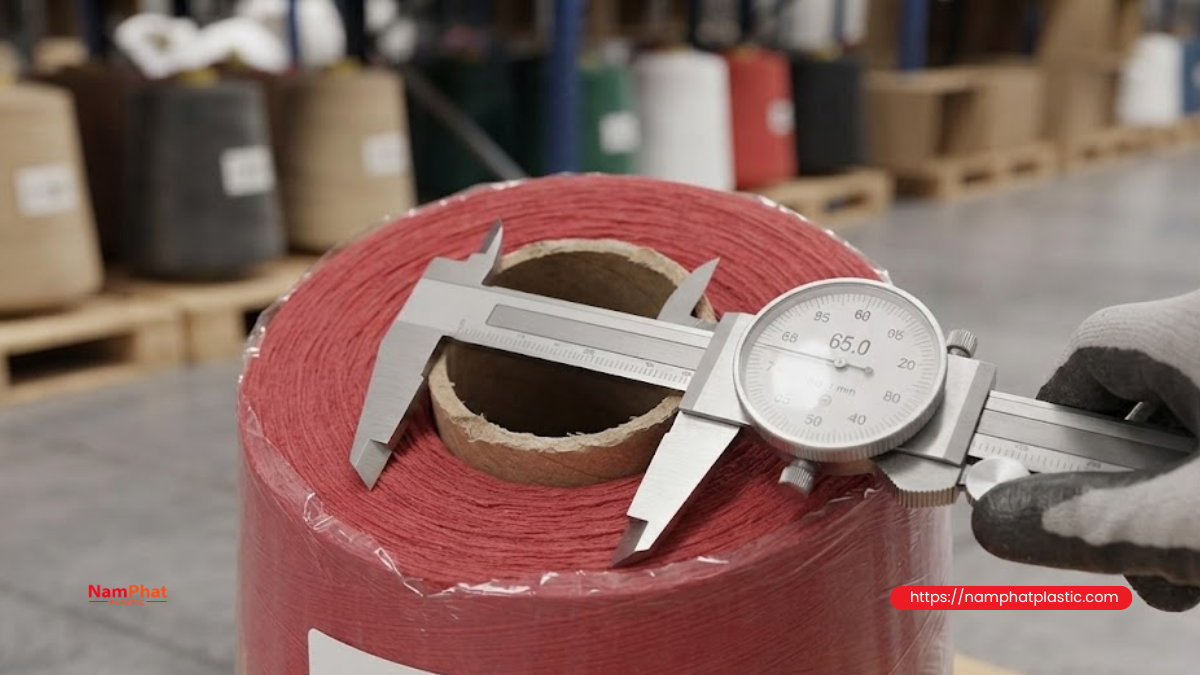
Whether paper or plastic cores are used, the quality-control department should specify at least the following criteria:
Inner diameter
The inner diameter must match the thread pin or mounting shaft. A diameter that is too small makes installation difficult, while one that is too large allows the spool to wobble.
Outer diameter
The outer diameter affects the amount of thread that can be wound and the structure of the first thread layer.
Core length
The length should be consistent to ensure spool shape and packaging compatibility.
Roundness
It can be checked by measuring the diameter at several positions while rotating the core. A large difference indicates that the core is oval.
Squareness of the cross-section
Both ends of the core should be cut relatively square to the center axis. An angled cut makes the spool difficult to stand upright.
Core wall thickness
Walls that are too thin deform easily. Excessively thick walls increase cost and reduce the available winding volume.
Compression resistance
The core should be tested after winding the intended design weight, not only when the core is empty.
Core edge quality
The core edges should be clean, free from fraying, cracks, and burrs.
Stability after storage
Core or spool dimensions should be measured again after a storage period that simulates actual conditions.
Core weight
Core weight should be consistent, especially for rotating-spool systems or products sold based on total weight.
8. Testing procedure for a new core before application
When switching from paper to plastic cores or changing core suppliers, the new core should not be implemented across the entire production volume immediately.
The following procedure can be applied:
Step 1: Inspect empty cores
Measure inner diameter, outer diameter, length, roundness, wall thickness, and weight.
Step 2: Conduct trial winding at several weights
Both small spools and spools at the maximum expected weight should be tested.
Step 3: Monitor after winding
Check whether the core shrinks, becomes oval, cracks, or causes the spool to tilt.
Step 4: Simulate transportation
Stack the spools according to the actual packaging method, store them for an appropriate period, and then check their shape again.
Step 5: Run the machine for at least one shift
Record thread breakage, thread tangling, spool changes, tension adjustments, and machine downtime.
Step 6: Inspect the end of the spool
Do not evaluate only when the spool is full. Many core-related problems appear when the thread is nearly exhausted.
Step 7: Compare total costs
Compare core price, defect rate, machine downtime, and the amount of unused residual thread.
9. Can plastic cores help machines run faster?
Plastic cores do not directly increase sewing machine speed. Machine speed mainly depends on equipment configuration, needle, thread, thread guides, tension, bag material, and maintenance conditions.
Plastic cores can only help improve machine stability when paper cores previously suffered frequent moisture-related problems, deformation, or dimensional inconsistencies.
If the cause of thread breakage is an overheated needle, scratched thread guide, unsuitable twist, or defective winding, switching to plastic cores will not solve the problem.
10. Should all thread spools be switched to plastic cores?
Not necessarily.
An appropriate decision should be based on three factors:
- The actual rate of problems caused by the core.
- Storage and transportation conditions.
- Total cost throughout the core's service life.
A company can use different types of cores for different applications:
- Paper cores for standard spools, nearby orders, and dry environments.
- Reinforced paper cores for larger spools.
- Plastic cores for customers operating machines continuously, humid warehouses, or applications requiring reusable cores.
- Plastic cores for spools transported over long distances or stored for long periods.
This classification can help optimize costs while maintaining the required stability.
11. Common misconceptions
Plastic cores are always better than paper cores
Not necessarily. Plastic cores have better moisture resistance but can still warp, crack, become too smooth, or develop burrs.
Paper cores are unsuitable for continuous machine operation
This is not accurate. Many thread spools using paper cores can operate stably if the core is sufficiently rigid, the spool is properly wound, and it is stored in dry conditions.
The thicker the core, the better
An excessively thick core increases cost and weight while reducing the available thread-winding volume. Thickness should match the actual load.
It is enough to inspect the empty core dimensions
A core may meet dimensional requirements when empty but deform after being subjected to load. Therefore, the core must also be inspected after winding the intended weight.
All thread breakage is related to thread quality
Thread breakage can also be related to the core, spool shape, thread path, needle, heat, tension, and spool installation.
Frequently Asked Questions
1. Can a damp paper core still be used?
If the core has become soft, oval, delaminated, or has lost its compression resistance, it should not continue to be used for large spools. Re-drying does not always restore its original rigidity and shape.
2. Can plastic cores cause thread slippage?
This can happen if the core surface is too smooth or the first thread layer is not properly anchored. It can be addressed with thread-retaining grooves, a textured surface, or adjustments to the winding process.
3. Is a thread spool with a plastic core heavier?
This cannot be determined based on material alone. Weight depends on the core dimensions, wall thickness, and design. Actual samples should be weighed.
4. Why does the thread get caught when the spool is nearly empty?
Possible causes include a deformed core, burrs on the core edge, the first thread layer being wound too tightly, or thread loops becoming trapped between the inner layer and the core surface.
5. Do paper cores generate a lot of dust?
Low-quality paper cores or poorly finished edges can generate dust. Well-pressed, dry paper cores with properly finished edges can significantly reduce this problem.
6. How many spools should be tested before changing the core type?
Testing should be carried out on multiple spools, multiple machines, and monitored until the spools are nearly empty. A few spools operating well for a short period are not enough to draw a conclusion.
Conclusion
The main differences between paper and plastic cores during continuous machine operation are their ability to maintain spool shape, resist moisture, withstand compression, maintain cleanliness, and provide dimensional stability.
Paper cores have advantages in cost, weight, and surface friction. When manufactured to the required standard and stored properly, they can still meet the needs of many industrial bag sewing thread applications.
Plastic cores have advantages in humid environments, long-distance transportation, heavy spools, and systems requiring core reuse. However, plastic cores must be controlled for roundness, rigidity, surface texture, and burrs.
For continuously operating machines, the most important criterion is not the core material itself, but its ability to maintain spool geometry and allow the thread to unwind with stable resistance from the beginning to the end of the spool. Companies should evaluate cores using actual machine-operation data rather than choosing solely based on perception or initial purchase price.
>>> See more:
- 0 Comment


