


 Phan Van Hoang
- 21/02/2020
- 7137
Bag sewing thread is one of the essential materials in the industrial packaging industry. It helps create strong seams, minimizes leakage, and protects products throughout transportation and storage. From rice bags, animal feed bags, and fertilizer bags to chemical bags and export agricultural packaging, each type of bag requires a suitable sewing thread to ensure durability and optimal performance.
So, what is bag sewing thread, what types are available, what are their characteristics, and how can you choose the right thread for each application? The following article will help you better understand the definition, classification, characteristics, and practical applications of bag sewing thread in today's packaging industry.
Table of Contents [Hide]
1. What Is Bag Sewing Thread? Market Demand
1.1. Definition of Bag Sewing Thread
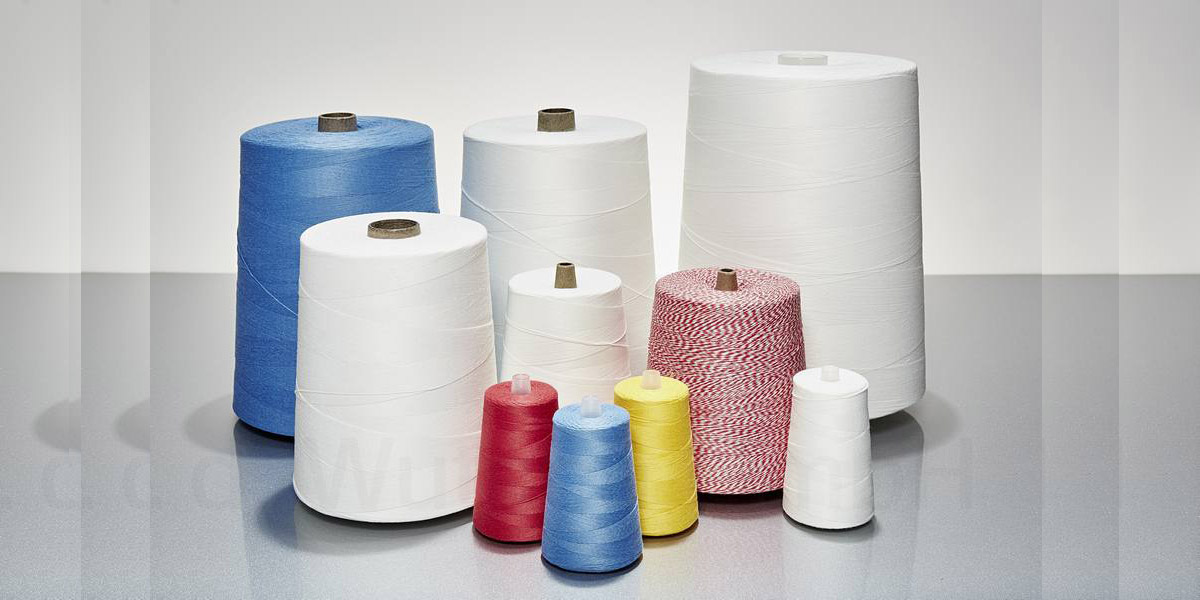
Bag sewing thread is an important component of the industrial packaging industry. It helps create strong and secure seams, protecting products during transportation and storage. However, not everyone clearly understands what bag sewing thread is, its key characteristics, or the different types available. Choosing the right sewing thread not only improves seam quality but also enhances production efficiency and reduces operating costs.
In today's packaging industry, bag sewing thread is used to securely sew the openings of woven PP bags, rice bags, animal feed bags, fertilizer bags, chemical bags, and many other types of industrial packaging. Mỗi loại bao bì sẽ phù hợp với một loại chỉ may riêng, tùy thuộc vào tải trọng, vật liệu bao và yêu cầu sử dụng.
To ensure high-quality seams, the sewing thread should have a uniform diameter, high tensile strength, and stable performance on industrial bag sewing machines. These qualities create neat seams, reduce thread breakage and skipped stitches, improve bag sealing performance, and provide better protection for products during storage and transportation.
1.2. Demand for Bag Sewing Thread
Along with the rapid growth of the manufacturing and industrial packaging sectors, the demand for bag sewing thread continues to increase.Businesses today not only focus on packaging quality but also pay close attention to seam durability to ensure products remain safe during transportation, storage, and distribution.
Today, bag sewing thread is widely used in the production of rice bags, fertilizer bags, animal feed bags, cement bags, chemical bags, plastic resin bags, and export agricultural packaging. Each industry has its own requirements regarding thread strength, tensile performance, and material characteristics to match the product weight and storage conditions.
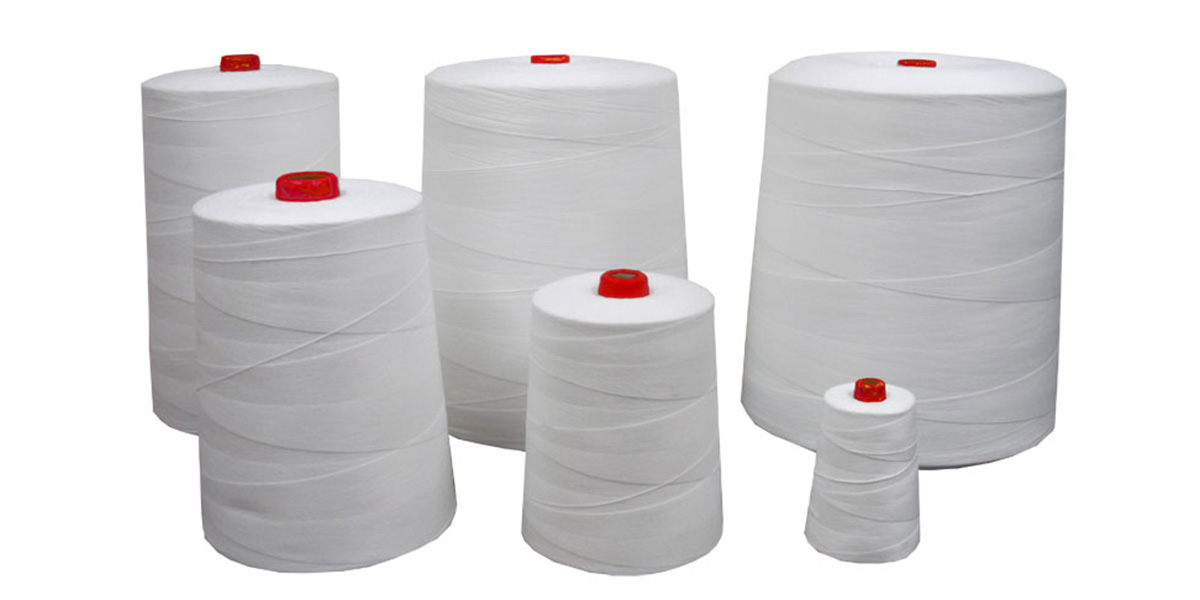
Using high-quality bag sewing thread not only ensures tightly sealed bag openings, reducing tearing and material leakage, but also keeps bag sewing lines operating smoothly, minimizes thread breakage, and improves production efficiency. This is why many manufacturers prefer specialized bag sewing threads instead of conventional sewing threads.
>> See more about our products: Sewing Thread Bag
2. Types of Bag Sewing Threads
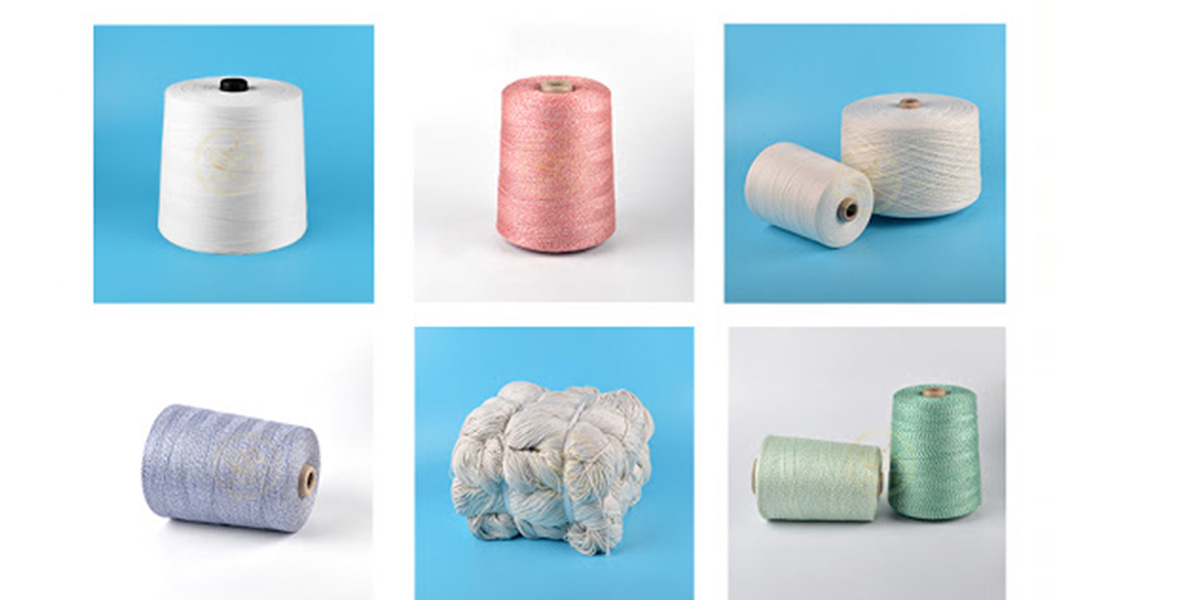
In practice, it is difficult to clearly distinguish the different types of bag sewing threads because they can be classified based on their properties or thread structure. However, today, bag sewing threads are generally divided into two main groups:
2.1. Classification by Thread Structure
Core Spun Thread
This type of thread consists of a high-strength core wrapped with an outer fiber layer. Its unique structure provides excellent tensile strength, stable performance on high-speed sewing machines, and smooth, consistent seams. Core spun thread is commonly used in applications requiring high strength and continuous production.
Filament Thread
Filament thread is made from continuous filaments, featuring a smooth surface and high tensile strength. Today, this thread is mainly divided into two categories: Monofilament (single filament) and Multifilament (multiple fine filaments twisted or combined together). In the packaging industry, PP Multifilament Thread is the most widely used because of its high strength, low fuzz generation, and excellent compatibility with most industrial bag sewing machines.
2.2. Classification by Raw Material
PP (Polypropylene) Multifilament Sewing Thread
This type of thread is made from Polypropylene (PP) multifilament fibers. It is lightweight, has high tensile strength, and good moisture resistance. PP Multifilament Thread is widely used for sewing woven PP bags, rice bags, animal feed bags, fertilizer bags, and many other types of industrial packaging because of its reasonable cost and high performance.
Polyester sewing thread has good strength, low elongation, and can withstand harsh environmental conditions. This type of thread is less affected by moisture, has good abrasion resistance, and is commonly used for packaging that requires high strength or operates under relatively high temperatures.
Nylon Sewing Thread
Nylon sewing thread is made from Polyamide (PA) fibers and is known for its good abrasion resistance and elasticity. This type of thread has high strength, is not significantly affected by water or mold, and is commonly used in applications that require high-strength seams.
Cotton Sewing Thread
Cotton sewing thread is made from natural cotton fibers, has good heat resistance, and is easy to sew. However, because its strength and moisture resistance are not as high as those of synthetic fibers, cotton sewing thread is now less commonly used in the industrial packaging industry and is mainly applied to certain products or hand-sewing purposes.
3. Important Characteristics of Bag Sewing Thread
To create strong seams and ensure effective packaging, bag sewing thread must meet various technical requirements. A high-quality sewing thread not only helps the sewing machine operate stably but also helps reduce thread breakage, skipped stitches, and bag opening failure during use. The following are the important characteristics of bag sewing thread.
3.1. Twist Resistance
During sewing, the thread passes through several parts such as the sewing needle, thread hook, and thread guide before forming a complete seam. Therefore, bag sewing thread should have good twist resistance to reduce thread tangling, twisting, or jamming during operation on high-speed sewing machines.
This characteristic helps create continuous seams, reduces skipped stitches and thread breakage, and contributes to improving the efficiency of the packaging line.
3.2. High Strength
Strength is one of the most important criteria when selecting bag sewing thread. During sewing and transportation, the seam is subjected to tensile force, friction, and the load of the products inside the bag. If the thread has low strength, the seam can easily break or come apart, affecting the quality of the packaging.
Therefore, bag sewing thread should have high tensile strength, good load-bearing capacity, and maintain stable performance throughout its use, especially for bags containing 25 kg to 50 kg or more.
3.3. Elasticity
In addition to strength, bag sewing thread should also have appropriate elasticity to adapt to the tension generated during the sewing process. A thread with proper elasticity helps reduce seam wrinkling, skipped stitches, and thread breakage when the sewing machine operates at high speed.
Stable elasticity also helps the seam fit tightly along the bag opening, improves load-bearing performance, and ensures a neat appearance after the product is finished.
3.4. Friction Properties
Bag sewing thread should have an appropriate coefficient of friction to ensure a stable stitch-forming process. If the thread surface is too smooth, the seam may slip or become loose. Conversely, excessive friction increases resistance, making thread breakage more likely and reducing the service life of the sewing needle.
Balanced friction properties help tighten the stitches, reduce thread slippage, and improve seam quality.
3.5. Thermal Stability
During industrial sewing, the sewing needle and thread are continuously subjected to friction, which generates heat. If the thread has poor heat resistance, it may melt, shrink, or lose strength, directly affecting seam quality.
Therefore, bag sewing thread should have good thermal stability to maintain its mechanical strength, ensure strong seams, and meet the requirements of high-speed industrial sewing lines.
4. Notes on Choosing Bag Sewing Thread
Selecting the right type of bag-sewing thread not only ensures strong seams but also contributes to increased production efficiency, reduced sewing machine maintenance costs, and a lower defect rate. Below are some key criteria to consider when choosing bag-sewing thread.
Choose According to the Type of Packaging
Each type of packaging has different requirements for load-bearing capacity and operating conditions. For woven PP bags, rice bags, animal feed bags, or fertilizer bags, high-tensile-strength threads such as PP Multifilament Thread or Polyester Sewing Thread should be prioritized to ensure strong seams and reduce the risk of seam opening during transportation.
Compatible with the Bag Sewing Machine
Not every type of sewing thread is compatible with all industrial bag sewing machines. When selecting a thread, its size, twist, and technical specifications should be considered to ensure compatibility with the sewing machine in use. Using the correct sewing thread helps the machine operate smoothly, reduces thread breakage and skipped stitches, and extends the service life of the sewing needle.
Meet Strength Requirements
For bags carrying heavy loads or frequently transported over long distances, threads with high strength, good abrasion resistance, and excellent thermal stability should be selected. This helps keep the seams strong and durable while reducing tearing or seam opening during stacking and handling.
Choose a Reputable Supplier
In addition to product quality, businesses should prioritize suppliers that offer bag sewing thread with clear origins, standardized manufacturing processes, and stable supply capacity. A reputable supplier helps ensure consistent quality across production batches, provides technical support, and meets long-term production requirements.
From the information above, it can be seen that bag sewing thread plays an important role in ensuring seam quality and product safety during packaging, transportation, and storage. Selecting the right sewing thread not only improves production efficiency but also helps optimize costs and reduce operational issues on the production line.
If you are looking for PP bag sewing thread, PP Multifilament Thread, or other high-quality industrial bag sewing threads, Nam Phát Investment Import Export Co., Ltd. is ready to accompany your business. With experience in manufacturing and supplying packaging materials, Nam Phát is committed to providing products with consistent quality, meeting a wide range of packaging needs while offering dedicated technical support and competitive pricing. Contact us today for detailed consultation.
See more:
- 0 Comment


