


 Phan Van Hoang
- 22/12/2021
- 3173
When mentioning straw baling twine, this may be a relatively unfamiliar concept to some customers who are learning about it for the first time. In reality, farmers and people working with straw transportation are certainly familiar with this type of twine. It is also known by various names such as straw baling twine, straw tying twine, and straw binding twine. In the following article, we will learn more about this product.
Table of Contents [Hide]
1. What is straw baling twine?
Straw baling twine is a type of twine manufactured to make bundling and tying straw more convenient. This makes it easier to transport straw from fields to different locations and store it more efficiently. The market also offers a variety of these twines, and they may be known by different names depending on the region.
Today, as the demand for straw for domestic use and export continues to increase, the demand for straw tying and baling twine is also growing. Straw can be used as livestock feed, for mushroom cultivation, as a growing medium, or as a raw material for producing construction materials and fuel.

2. Learn about the common types of straw baling twine on the market
There are currently many types of straw tying and baling twine available on the market, each with different characteristics and costs. Some of the most common types include:
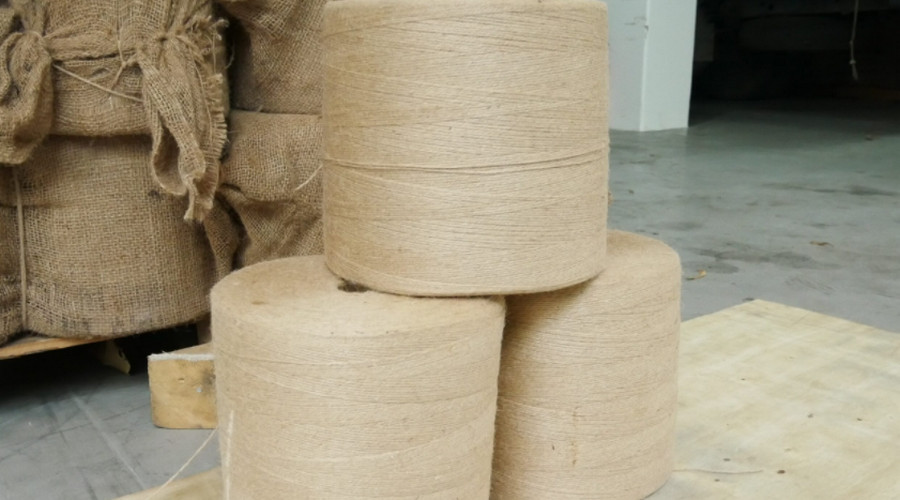
2.1 Straw baling twine made from jute fiber
This type of twine offers good flexibility and an attractive natural appearance. It is sometimes referred to as the “golden fiber of the future” and is increasingly used in many applications.
Jute twine has good biodegradability and is highly regarded for this characteristic. In addition, jute is a completely natural plant fiber that is environmentally friendly and does not release toxic smoke or harmful residues during disposal.
2.2. Nylon straw baling twine
Nylon is a general term for a group of synthetic polymers belonging to the Polyamide (PA) family. This type of twine is highly regarded for its strength, toughness, and elasticity compared with many natural or early-generation synthetic fibers.
Therefore, nylon is widely used in commercial manufacturing and is selected by many customers for various applications.
2.3. Twisted straw baling twine
This agricultural twine is made by twisting individual strands together. Some products may also have a thin mesh-like structure inside, providing additional strength.
This type of twine is also known as crop-support twine, greenhouse twine, or cucumber and tomato support twine. It is commonly used in vegetable-growing models in greenhouses and net houses.

3. Advantages and disadvantages of each type of straw baling twine
To better understand each type of straw tying twine, let us take a quick look at their advantages and disadvantages. This makes it easier to choose the right product according to your needs and budget.
3.1. Jute straw baling twine
Advantages: This type of twine is biodegradable and environmentally friendly. The natural fiber has a characteristic golden color, a smooth texture, and good natural properties. Jute is one of the most important plant fibers and is widely cultivated after cotton. It has relatively good strength and low elongation, making it suitable for many applications. Its price is also relatively affordable.
Disadvantages: If stored in an environment with high humidity, this type of twine can become weaker and break more easily.
3.2. Nylon straw baling twine
Advantages: Nylon straw baling twine is soft, smooth, and water-resistant. It can withstand various weather conditions and resist natural factors such as insects and mold.
Disadvantages: This type of twine is difficult to recycle and is less environmentally friendly. Its poor biodegradability can contribute to environmental impacts on soil, livestock, and plants.
3.3. Twisted straw baling twine
Advantages: PE straw baling twine offers good load-bearing capacity and high durability. It is also soft, smooth, and water-resistant, while providing good resistance to weather conditions, insects, and mold.
Disadvantages: PE twine is not readily biodegradable and is less environmentally friendly than natural fibers. Improper disposal can negatively affect soil, plants, and animals. The selling price may also be higher than some other types of straw twine.
Above, we have explored straw baling twine and analyzed some of the most commonly used types on the market. We hope this information is useful. If you need straw tying twine or other related products, please contact Namphatplastic.com for quick consultation and support.
You may also be interested in:
- 0 Comment


