


 Phan Van Hoang
- 03/07/2026
- 409
How are PP multifilament and monofilament yarns different? This is a question of interest to many businesses and manufacturers when selecting materials for specific applications. Although both types are made from polypropylene (PP), each has a different structure, characteristics, and range of applications. In this article, let’s explore the key differences between PP multifilament and PP monofilament to choose the type of yarn that best suits your needs.
Table of Contents [Hide]
1. What is PP multifilament yarn?
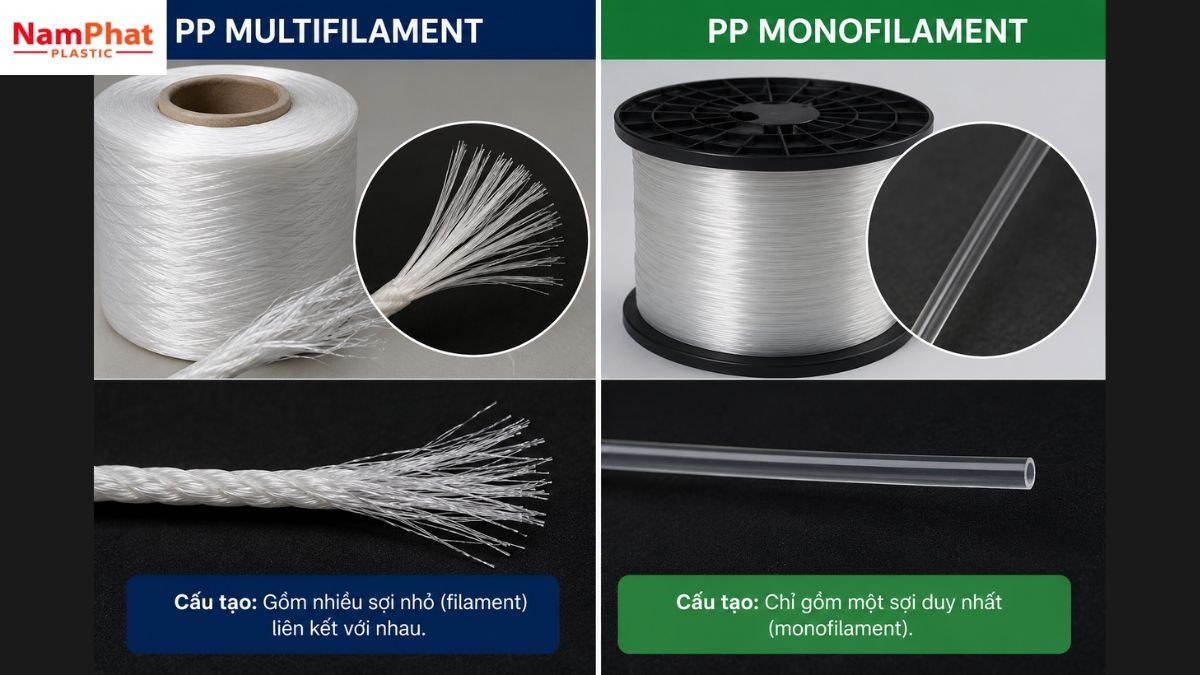
PP multifilament yarn (Polypropylene Multifilament Yarn) is a type of yarn made from multiple very fine single filaments that are combined into a yarn bundle. This yarn is manufactured from polypropylene (PP) resin through melting, spinning, and molecular orientation processes, which help improve tensile strength and yarn stability.
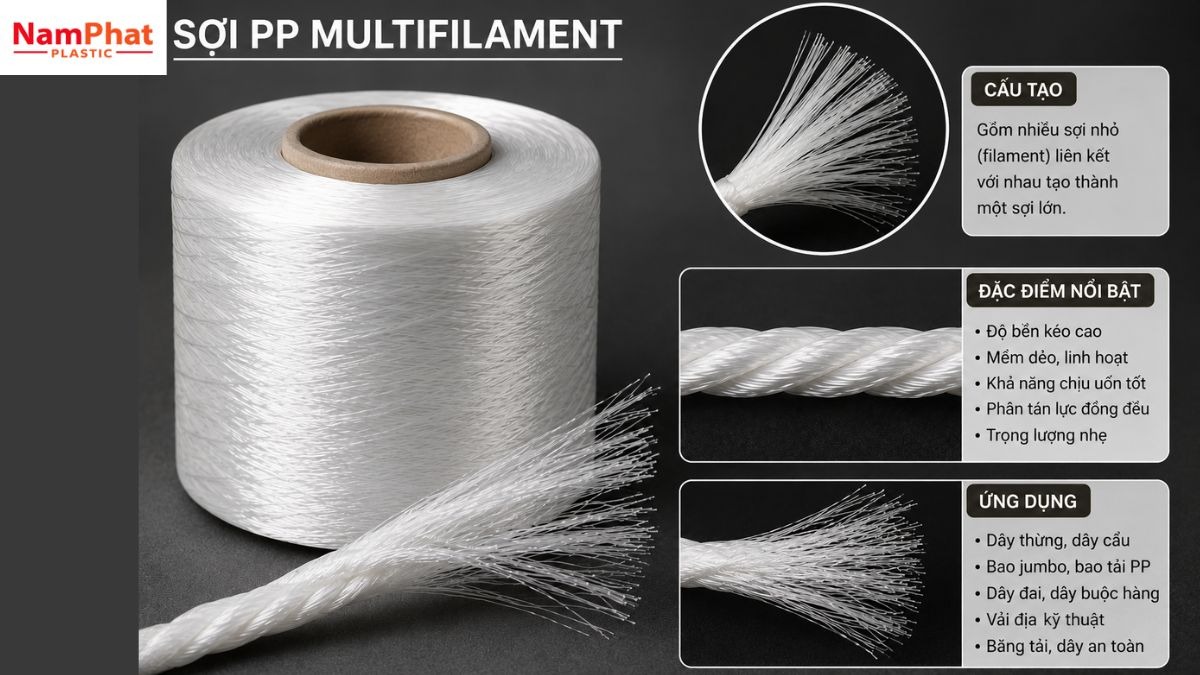
Image of PP multifilament yarn
2. What is PP monofilament yarn?
PP monofilament yarn is a type of yarn made from a single filament, with a larger diameter than each individual filament in multifilament yarn. It is produced from polypropylene (PP) resin through melting and spinning, creating a continuous structure with high stiffness and excellent shape retention.
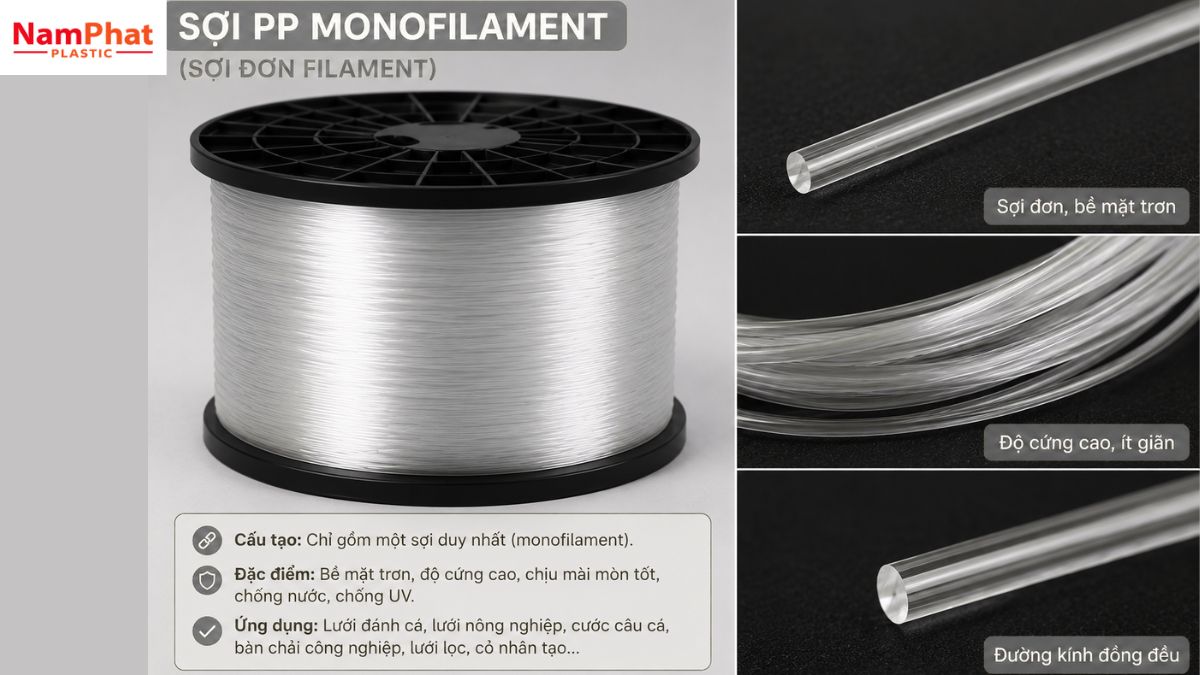
Image of PP monofilament yarn
3. Mechanical properties of PP multifilament and monofilament yarns
In addition to differences in structure, PP multifilament and PP monofilament also have different mechanical properties that directly affect product performance and service life. Factors such as tensile strength, flexibility, abrasion resistance, fatigue resistance, and elasticity determine which type of yarn is suitable for a particular application.
Tensile strength
Tensile strength refers to the ability of a yarn to withstand an applied force before breaking. It is one of the most important indicators when evaluating the quality of industrial yarn.
Because multifilament yarn consists of multiple small filaments working together, the load can be distributed across the entire yarn bundle. This helps improve load-bearing capacity and reduce the risk of localized breakage.
PP monofilament also has high tensile strength, but its load-bearing performance depends more heavily on factors such as filament diameter, molecular orientation, and manufacturing process.
Flexibility
Because it consists of multiple fine filaments, PP multifilament has high flexibility, is easy to bend, and is less likely to break under repeated stress.
This characteristic makes it suitable for products such as webbing, ropes, technical fabrics, and other applications that require frequent folding, winding, or exposure to dynamic loads.
In contrast, PP monofilament has a stiffer structure, better shape retention, and lower flexibility, making it more suitable for applications requiring dimensional stability.
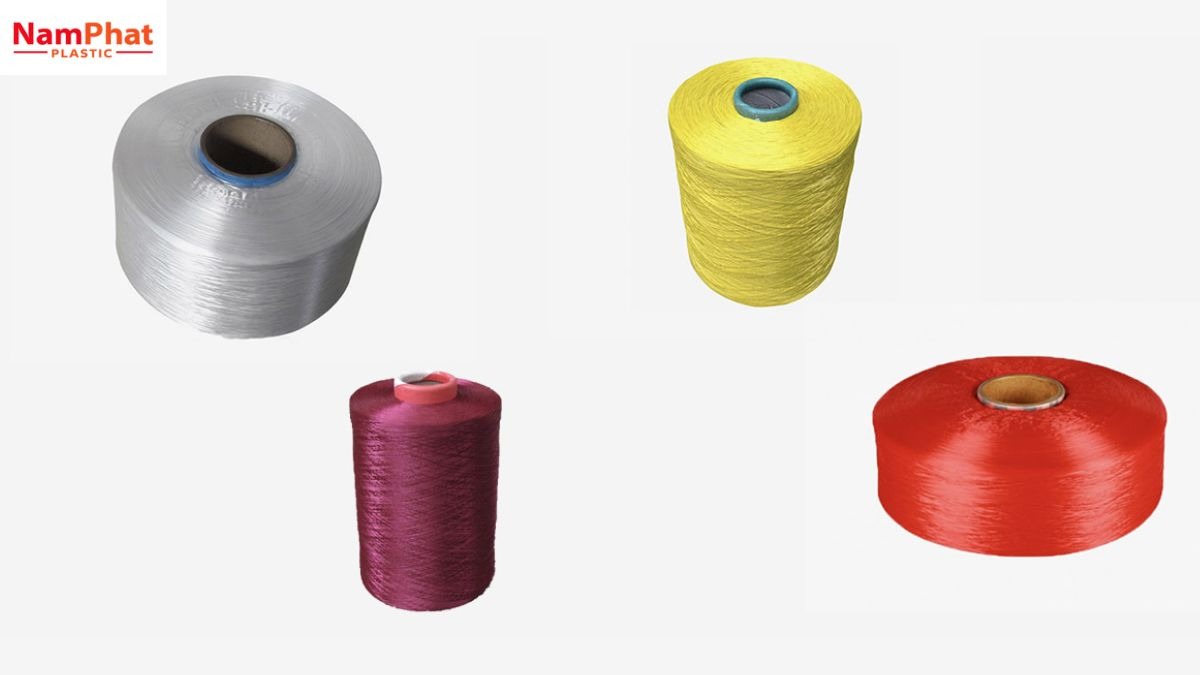
PP multifilament offers good flexibility
Abrasion resistance
In high-friction environments, PP monofilament often has an advantage because its continuous surface is less prone to filament separation or fraying. This helps the yarn maintain its shape and service life during continuous use.
PP multifilament also provides good abrasion resistance, but its individual filaments may become fuzzy or slightly separate when repeatedly rubbed against rough surfaces.
Fatigue resistance
Fatigue resistance reflects the ability of a yarn to withstand repeated bending, tension, or deformation over an extended period.
Because the load is distributed among multiple filaments, PP multifilament generally provides good fatigue resistance and is less likely to be damaged when operating under continuously changing loads.
PP monofilament is more suitable for applications involving less deformation but requiring stiffness and dimensional stability throughout use.
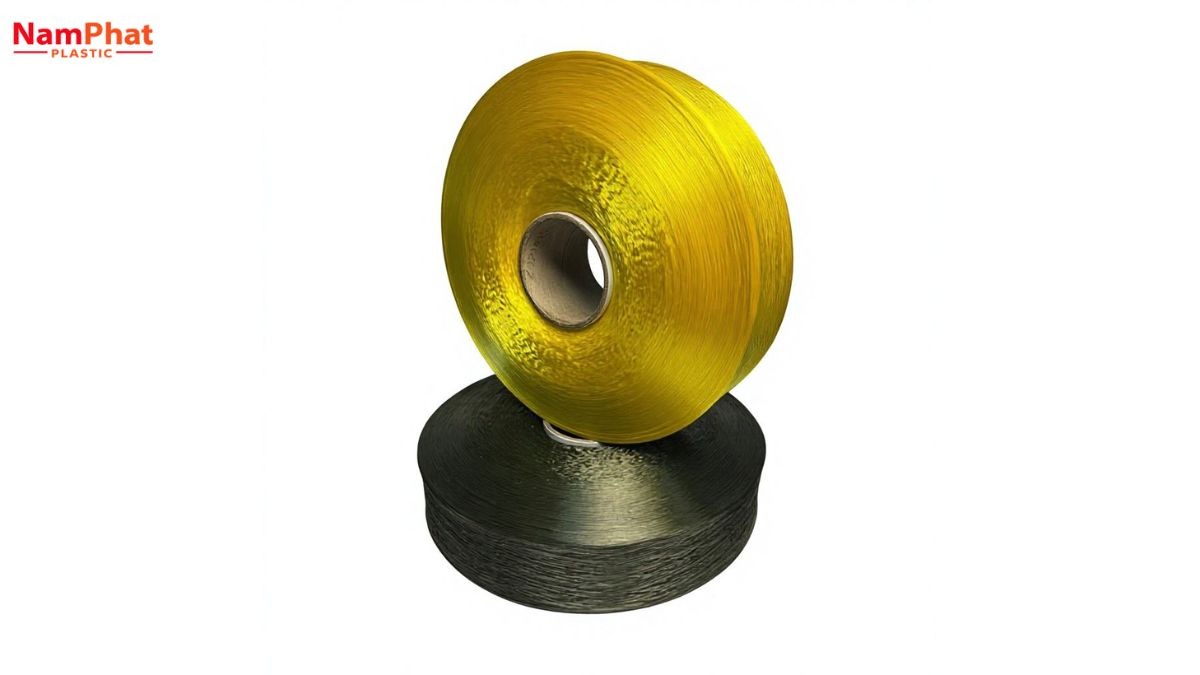 Fatigue resistance is an important mechanical property of both yarn types
Elongation and recovery
When subjected to a load, PP multifilament generally offers greater elongation and recovery due to its multi-filament structure. This allows the yarn to absorb forces effectively and reduce the risk of breakage when loads change suddenly.
In contrast, PP monofilament has lower elongation but provides better dimensional and shape stability, making it suitable for products that require precise dimensions and minimal deformation during use.
4. Comparison between PP multifilament and monofilament yarns
Although both are manufactured from polypropylene (PP), PP multifilament and PP monofilament differ significantly in structure, mechanical properties, and applications. Understanding these differences helps businesses select the right yarn according to technical requirements while optimizing production efficiency and costs.
| Criteria | PP Multifilament Yarn | PP Monofilament Yarn |
| Structure | Consists of multiple small filaments combined into a yarn bundle | Consists of a single filament |
| Flexibility | High, easy to bend and flexible | Lower, stiffer and better shape retention |
| Tensile strength | Very good due to load distribution among multiple filaments | Good, but depends on filament diameter |
| Abrasion resistance | Good | Very good, suitable for high-friction environments |
| Repeated bending resistance | High | Lower than multifilament |
| Fuzzing | May develop fuzz after prolonged use | Very little or almost no fuzz |
| Surface | Soft, smooth, and easy to weave | Smooth, stiff, and stable |
| Weaving capability | Suitable for soft woven products, webbing, and technical fabrics | Commonly used for nets and mesh, less suitable for soft fabrics |
| Common applications | Webbing, ropes, Jumbo bags, geotextiles, technical fabrics | Agricultural nets, fishing nets, artificial grass, brushes, fishing lines |
| Cost | Usually higher due to the more complex manufacturing process | Usually lower for the same amount of raw material |
Multifilament and monofilament have several important differences
5. Advantages and disadvantages of PP multifilament and monofilament yarns
Each type of PP yarn is developed to meet different technical requirements and working environments. Therefore, neither type can be considered universally better. The appropriate choice depends on the specific application.
| Criteria | PP Multifilament Yarn | PP Monofilament Yarn |
| Advantages | - High flexibility and softness.- Good tensile strength and resistance to repeated bending.- Lightweight, easy to process and weave into various products.- Suitable for applications requiring load distribution and resistance to dynamic loads. | - Good stiffness and shape retention.- Effective abrasion and fuzz resistance.- Smooth surface, low dirt accumulation, and easy to clean.- Suitable for products requiring high dimensional stability and long service life. |
| Disadvantages | - Lower abrasion resistance than monofilament.- May become fuzzy or frayed after prolonged heavy friction.- More complex manufacturing process, so the cost is usually higher.- Not suitable for applications requiring a rigid shape. | - Lower flexibility and bending capability than multifilament.- Lower fatigue resistance under continuous bending conditions.- Less suitable for soft woven products or applications requiring high flexibility.- May break more easily under concentrated loads if the filament diameter is not appropriate. |
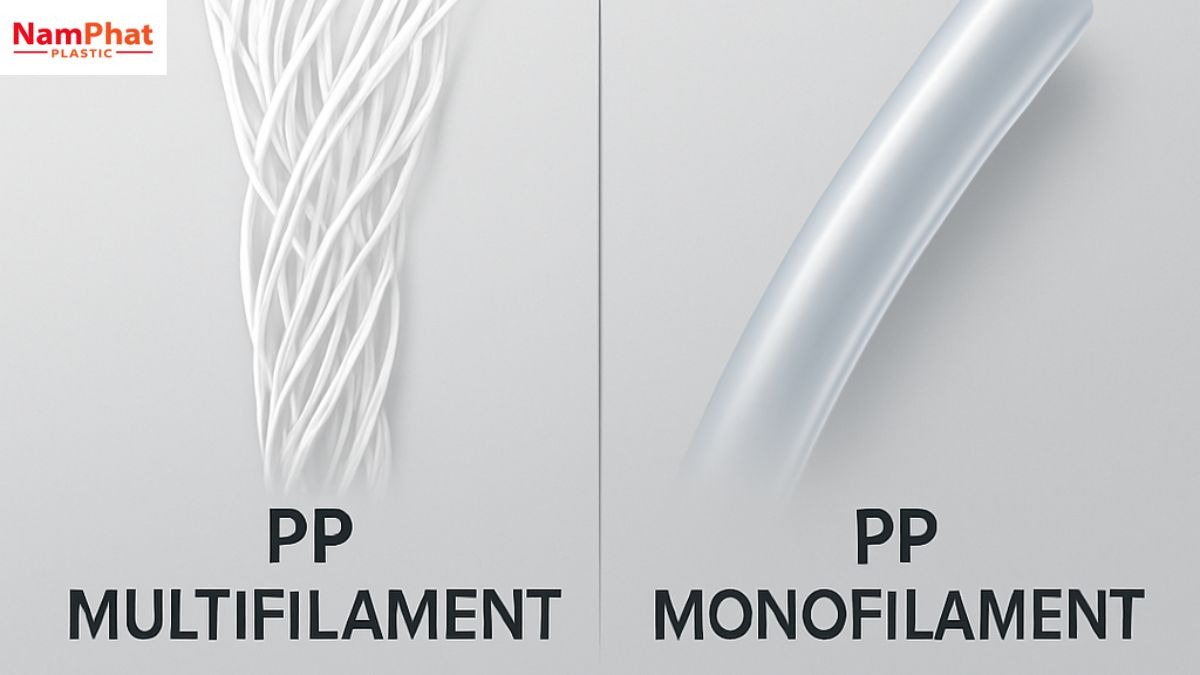
Each type has its own advantages and disadvantages
6. Applications of PP multifilament and monofilament yarns
Thanks to their different mechanical properties, PP multifilament and PP monofilament yarns are widely used in many industries. Each type has its own advantages and is suitable for different requirements regarding strength, flexibility, and environmental resistance.
Applications of PP multifilament yarn
With its flexibility, good tensile strength, and high resistance to repeated bending, PP multifilament is used in many technical and industrial textile products.
It is commonly used to manufacture webbing, ropes, lifting ropes, mooring ropes, Jumbo bags, PP woven bags, and technical fabrics.
In addition, PP multifilament is also used in geotextiles, safety ropes, conveyor belts, and many other products requiring high tensile strength and effective load distribution.
Applications of PP monofilament yarn
PP monofilament has advantages in stiffness, abrasion resistance, and shape retention, so it is commonly used in products requiring high dimensional stability.
Common applications include fishing nets, agricultural nets, shade nets, insect screens, and artificial grass.
In addition, this type of yarn is also used to manufacture industrial brushes, fishing lines, fishing leaders, filter meshes, and technical products operating in environments involving friction or frequent mechanical impact.
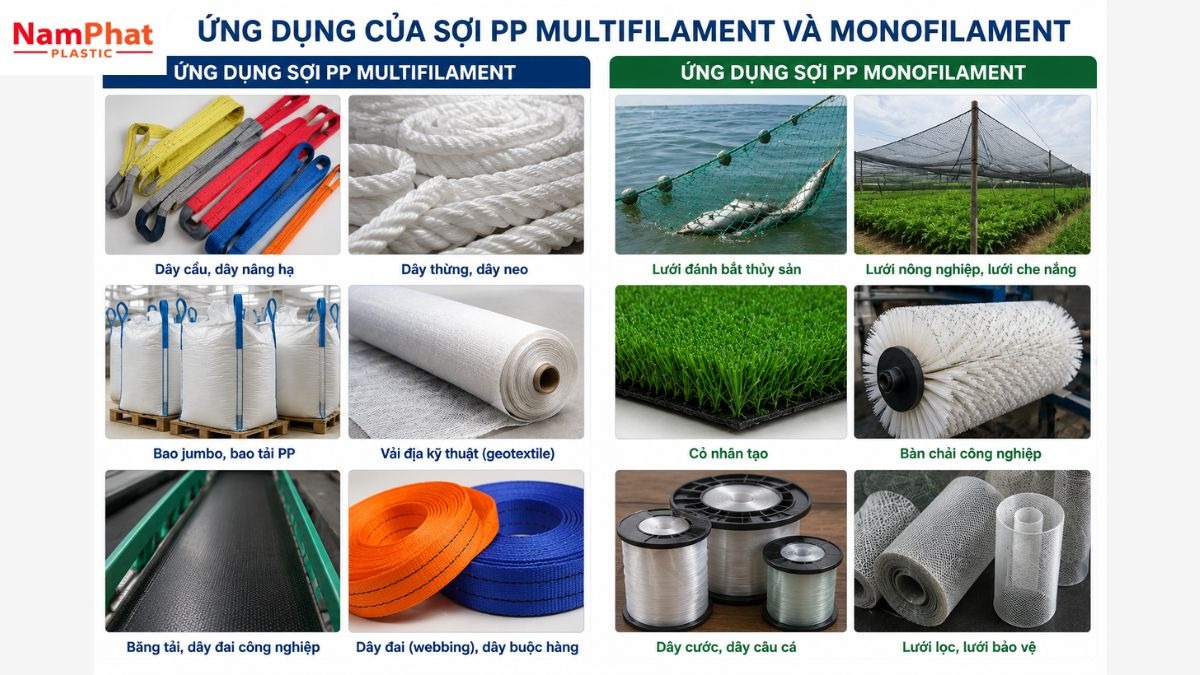
Multifilament and monofilament have a wide range of applications in manufacturing
Frequently asked questions
When researching and selecting PP multifilament or PP monofilament yarn, users often have questions about the characteristics and applications of each type. Below are answers to some common questions to help you make a more informed decision.
Is PP multifilament water-resistant?
Yes. PP multifilament is manufactured from polypropylene resin, so it has very good water and moisture resistance.
The material absorbs very little water, helping maintain its weight and mechanical strength even when used in humid environments or outdoors.
Is monofilament UV-resistant?
PP monofilament can provide UV resistance when UV stabilizers are added during production.
When properly stabilized, the yarn can be used outdoors for extended periods while reducing aging, brittleness, breakage, and color fading caused by sunlight.
Which type is stronger?
There is no type that is stronger in every situation because performance depends on the conditions of use.
PP multifilament has advantages in tensile strength and repeated bending resistance, while PP monofilament stands out for abrasion resistance and shape retention.
The choice should therefore be based on the technical requirements of each application.
Which type is suitable for lifting ropes?
For lifting ropes, PP multifilament is generally more suitable because of its load-bearing capacity, load distribution, and flexibility.
Its multi-filament structure allows the yarn to perform stably under heavy loads while reducing the risk of breakage when subjected to force over an extended period.
Can they be recycled?
Yes. Both PP multifilament and PP monofilament are made from polypropylene, a recyclable plastic.
After proper collection and processing, the material can be reused to manufacture new plastic products or PP yarns, helping reduce waste and protect the environment.
The information above helps answer the question of how PP multifilament and monofilament yarns differ. Each type has its own advantages and is suitable for different technical requirements.
Hopefully, the information provided gives you a comprehensive understanding of PP yarns and helps you select the right type to optimize product quality, performance, and production costs.
- 0 Comment


