


 Phan Van Hoang
- 16/07/2026
- 450
The quality control process does not end when rice leaves the milling line. In reality, from bagging and warehousing to transportation and retail display, rice remains vulnerable to moisture, insects, dust, foreign odors, and mechanical damage.
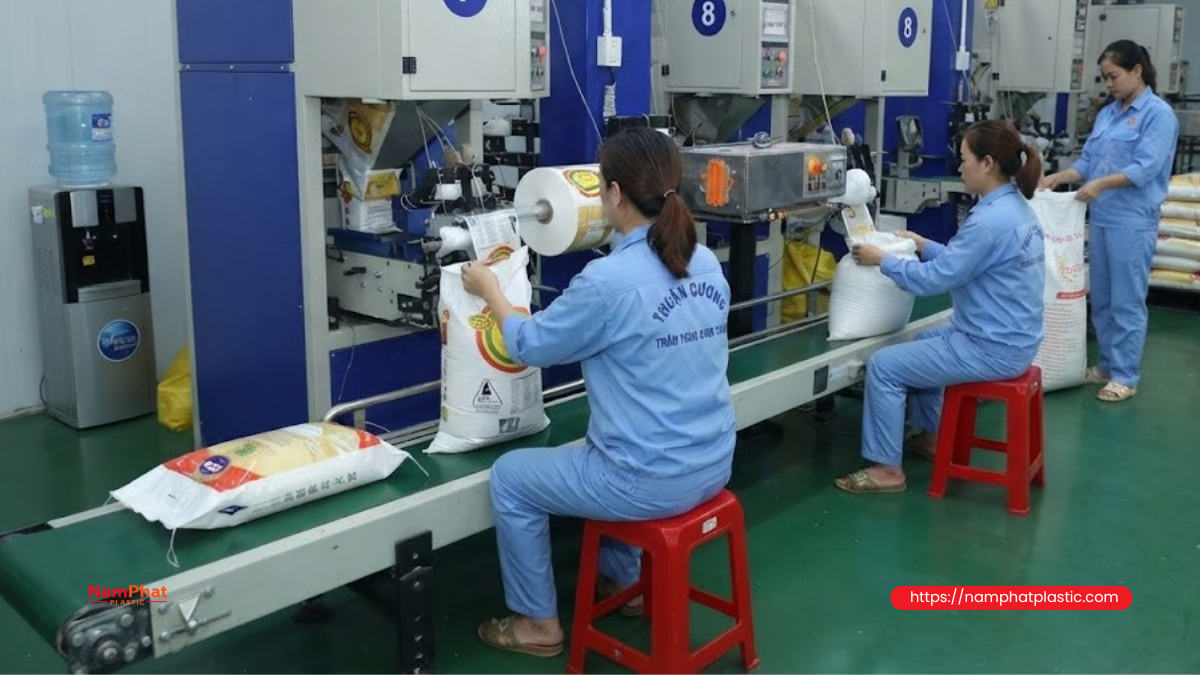
An unsuitable packaging solution can compromise the quality of an entire shipment, even if significant investments have been made in raw materials, production equipment, and processing technology.
For this reason, packaging solutions for rice manufacturers should be regarded as an integral part of the production system rather than merely the final step of putting rice into bags. An effective packaging solution should simultaneously protect the product, improve operational efficiency, strengthen brand identity, and control packaging costs per unit.
Table of Contents [Hide]
1. Why should rice manufacturers invest in proper packaging
Rice is relatively sensitive to environmental conditions. When exposed to humid air, it may absorb moisture, lose its free-flowing characteristics, or develop quality issues during storage.
If bags are punctured, seam failures occur, or packages tear during transportation, manufacturers lose not only product but also incur additional costs related to product replacement, claims, and brand reputation.
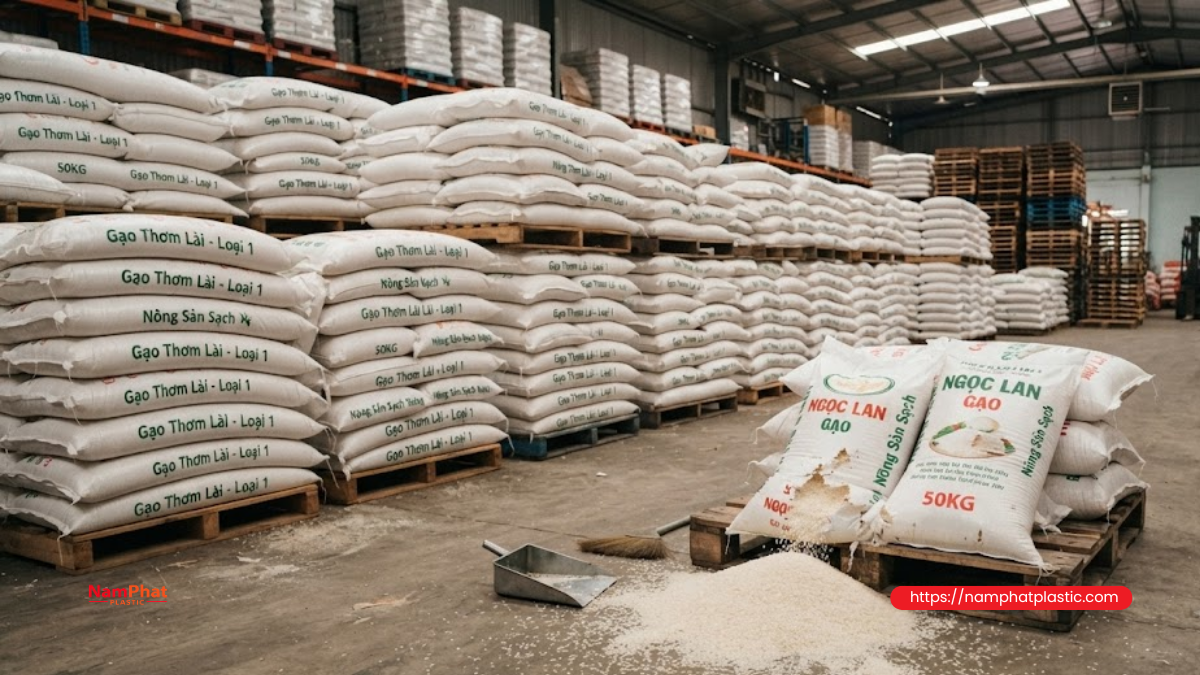
A well-designed packaging system helps manufacturers:
- Prevent dust, moisture, and contaminants from entering.
- Reduce bag breakage and product loss during transportation.
- Maintain consistent package weights.
- Present a professional appearance at retail.
- Support traceability and batch management.
- Increase packaging speed while reducing manual labor.
- Meet the specific requirements of different markets and distribution channels.
Most importantly, there is no single packaging solution suitable for every type of rice. Wholesale rice, retail rice, premium rice, and export-grade rice each require different packaging structures.
2. Core requirements for rice packaging
2.1. Protecting rice quality
Packaging should provide sufficient protection against external environmental factors. Moisture resistance, dust protection, sealing performance, and mechanical strength should be selected according to storage duration, transportation conditions, and the climate of the destination market.
For products with rapid turnover, manufacturers may prioritize simpler and more economical packaging structures. Premium rice or products shipped over long distances require higher protection levels.
2.2. Withstanding storage and transportation loads
Rice bags typically undergo multiple stages of handling, stacking, sliding, palletizing, and transportation. If the material is weak, the dimensions are inconsistent, or the seams are poorly constructed, bags may burst during lifting, pallet stacking, or transit.
Manufacturers should therefore control key factors such as fabric weight, weaving density, tensile strength, seam strength, bag dimensions, and the bag-closing method.
2.3. Compatibility with packaging equipment
Even high-quality packaging can reduce production efficiency if it is incompatible with packaging machinery.
Bags that are difficult to open, inconsistent in size, excessively slippery, or too rigid may interrupt automatic bag feeding systems.
Packaging should always be selected according to existing or planned packaging equipment. This factor is often overlooked but directly affects packaging speed and defect rates.
2.4. Strengthening brand identity
Packaging is the first physical point of contact between the product and the consumer. For retail rice, package design can strongly influence perceptions of cleanliness, origin, quality, and brand reliability.
Product name, rice variety, growing region, net weight, storage instructions, traceability code, and manufacturer information should all be presented clearly and accurately. An attractive design is only effective when consumers can quickly find and understand the information they need.
3. Common types of packaging for rice manufacturers
3.1. Woven PP rice bags
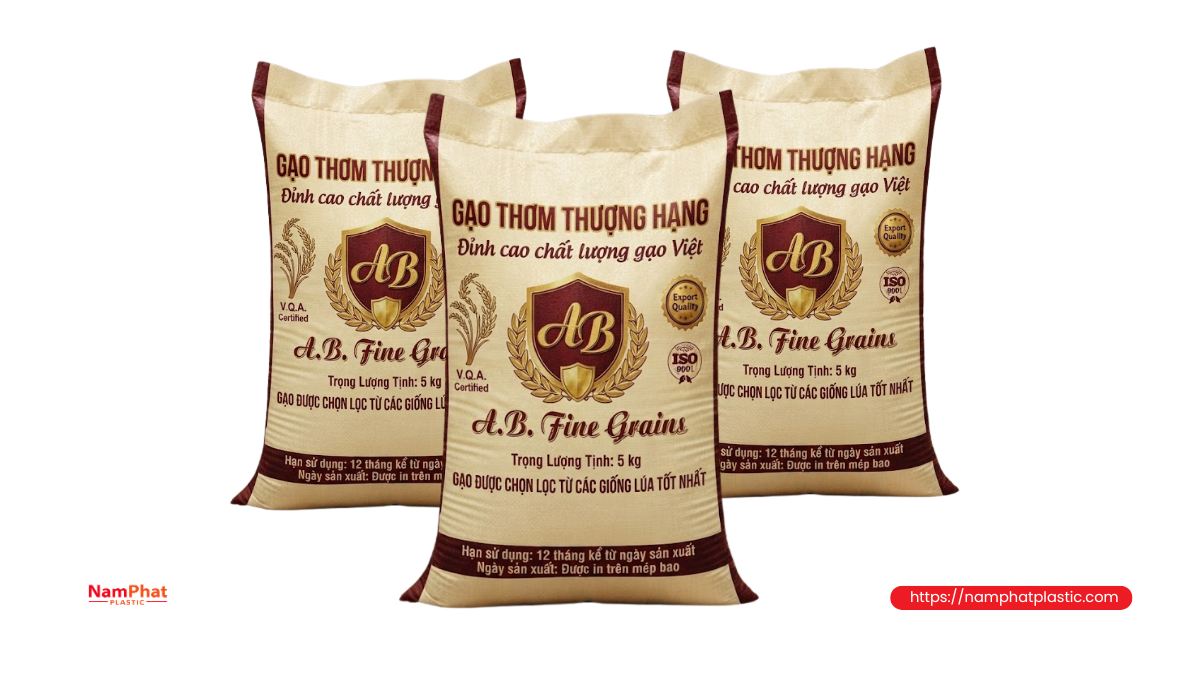
Woven polypropylene (PP) bags are one of the most widely used packaging solutions for medium- and large-sized rice packages. Their woven construction provides good mechanical strength, allows stable stacking, and is suitable for a wide range of transportation methods.
This type of packaging is commonly used for wholesale rice, products supplied to distributors, restaurants, commercial kitchens, and industrial customers. Manufacturers can print directly on the bag surface or laminate it with an additional film layer to improve product presentation.
The main advantages of woven PP bags include reasonable cost, excellent durability, and flexibility in size customization. However, if higher moisture resistance or improved sealing performance is required, the bag structure should be specifically designed to meet those requirements.
3.2. BOPP laminated woven PP bags
BOPP laminated bags are an ideal solution for manufacturers that want to combine the durability of woven PP bags with premium branding and product presentation. The printed BOPP film allows high-resolution graphics, making it possible to display rice grains, rice fields, production regions, and brand messages with vibrant colors and excellent image quality.
These bags are commonly used for branded rice, premium rice, specialty rice, and other retail products that need to stand out on store shelves.
Besides their visual appeal, the laminated film also helps reduce dust penetration and improves product protection. Manufacturers should select the appropriate material structure, film thickness, and lamination process according to the desired storage period and distribution conditions.
3.3. Woven PP bags with PE liners
A polyethylene (PE) liner is placed inside a woven PP bag to improve moisture protection and prevent the rice from coming into direct contact with the outer woven material.
This packaging solution is suitable for products that require longer storage periods, transportation through humid environments, or enhanced protection while maintaining the strength of woven PP packaging.
Depending on production requirements, the PE liner can either be sealed independently or sealed together with the outer bag. Manufacturers should ensure compatibility between the liner, the filling process, and the bag-closing equipment to minimize unnecessary manual operations.
3.4. Vacuum rice bags
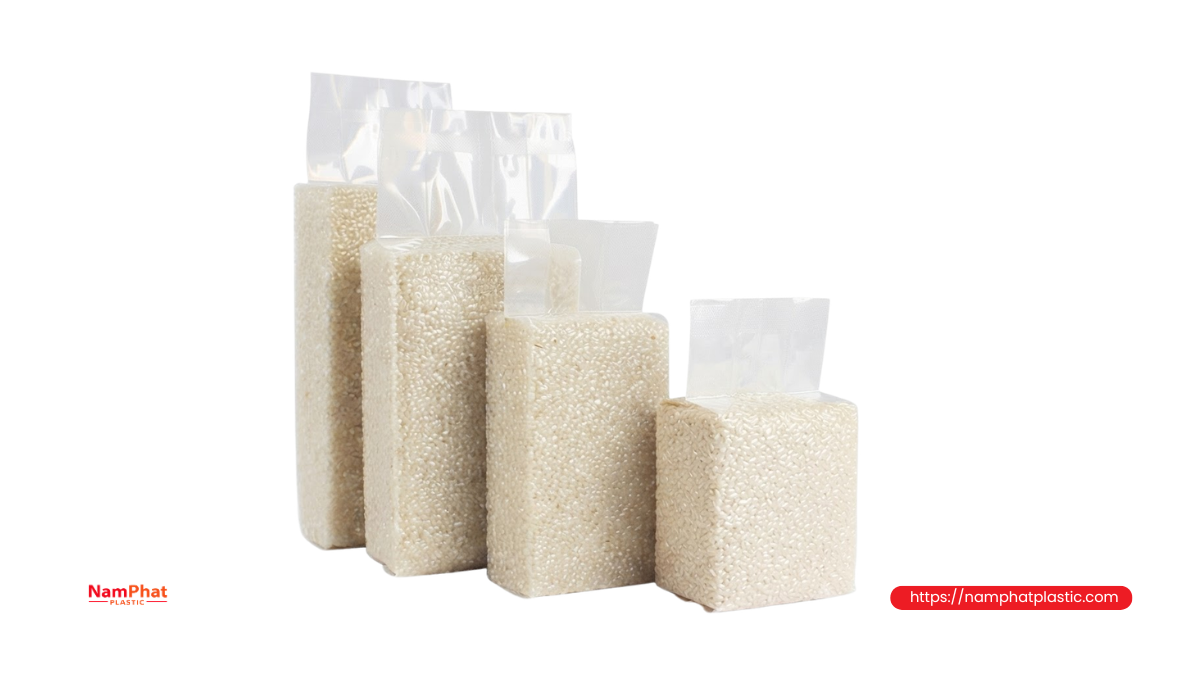
Vacuum packaging is commonly used for premium rice, specialty rice, and products packed in smaller retail sizes. Removing air from the package makes the bag more compact while helping reduce certain factors that may affect product quality during storage.
Vacuum packaging provides a premium appearance, improves shelf presentation, and is well suited for modern retail channels. However, manufacturers must invest in vacuum packaging machines, heat-sealing equipment, and packaging materials capable of maintaining an airtight seal.
Seal quality is particularly important. Even a very small leak can cause the package to lose its vacuum during storage.
3.5. Plastic and laminated pouches for retail rice
Retail rice packages of 1 kg, 2 kg, 5 kg, or 10 kg are commonly packed in plastic pouches or multilayer laminated bags. These packages may include carrying handles, resealable zipper closures, or stand-up pouch designs to improve consumer convenience.
Laminated pouches are well suited for supermarkets, convenience stores, e-commerce, and gift packaging. Manufacturers can choose glossy, matte, or transparent window finishes that allow consumers to view the product before purchasing.
3.6. Jumbo bags for bulk rice transportation
Jumbo bags, also known as Flexible Intermediate Bulk Containers (FIBCs), are suitable for transporting bulk rice to factories, distribution warehouses, and industrial customers.
The bag design may include lifting loops, filling spouts, discharge spouts, and optional PE liners. When using jumbo bags, manufacturers should carefully evaluate load capacity, safety factor, lifting methods, and warehouse storage conditions.
This solution is not appropriate for every production line. Jumbo bags deliver the greatest benefits only when the filling system, forklifts, warehouse facilities, and logistics operations are fully integrated.
4. Comparison of rice packaging solutions
| Packaging type | Suitable application | Key advantages | Important considerations |
| Woven PP bags | Wholesale, distributors, industrial customers | Durable, cost-effective, easy to transport | Moisture resistance depends on the bag structure |
| BOPP laminated bags | Branded and retail rice | Premium appearance, strong brand visibility, excellent durability | Printing and lamination quality should be carefully controlled |
| Woven PP bags with PE liners | Long-term storage and long-distance transportation | Improved moisture protection | Must be compatible with the bag-closing process |
| Vacuum bags | Premium and specialty rice | Compact, attractive, premium presentation | Requires high-quality materials and reliable sealing |
| Laminated pouches | Retail, supermarkets, and e-commerce | Flexible design with various convenience features | Generally more expensive than standard packaging |
| Jumbo bags (FIBC) | Bulk transportation | Reduces the number of individual packages and simplifies handling | Requires specialized warehouse facilities and handling equipment |
5. Integrated rice packaging line solutions
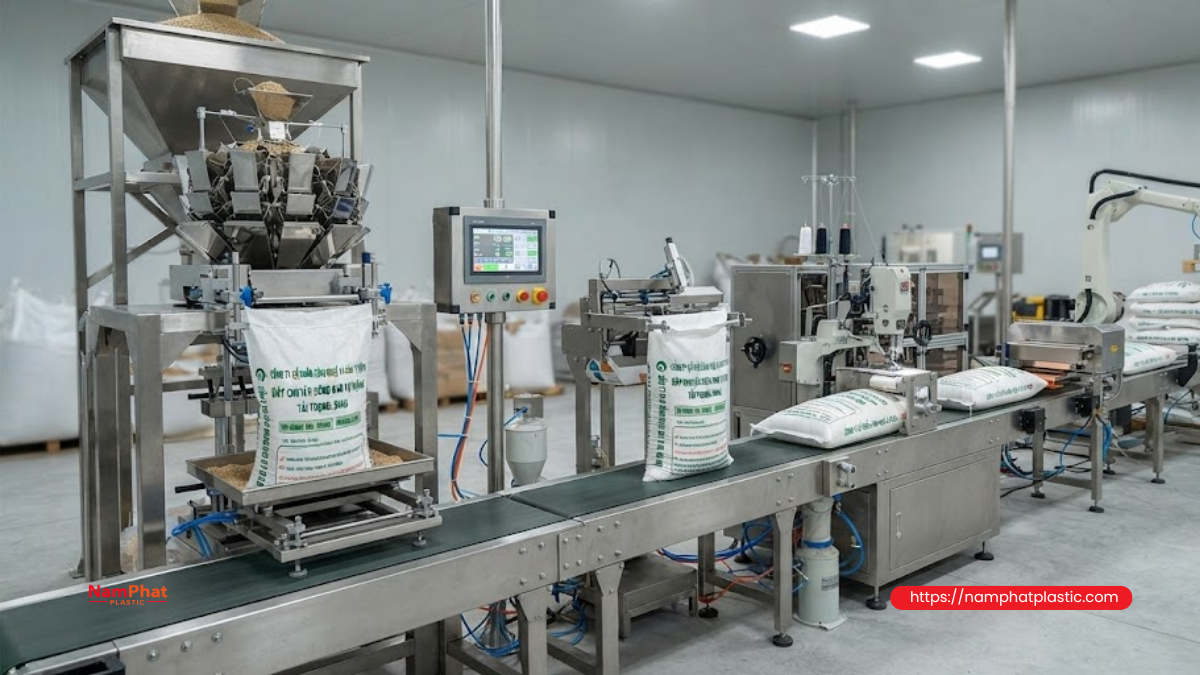
Packaging is only one part of the overall process. To improve productivity and reduce errors, manufacturers should evaluate the entire workflow—from product inspection before weighing to palletizing the finished bags.
Product inspection and cleaning before packaging
Before rice enters the packaging process, it should be inspected to remove impurities, dust, and unwanted foreign materials. Depending on production standards, manufacturers may incorporate sieving equipment, dust collection systems, or metal detectors into the production line.
Effective quality control at this stage helps reduce customer complaints and protects the product's reputation after it reaches the market.
Automatic weighing
An automatic weighing system ensures accurate package weights while maintaining a consistent packaging speed. The weighing equipment should be selected based on package size, target production capacity, and the flow characteristics of the rice.
Underweight packages may result in customer complaints and regulatory issues, while consistently overweight packages increase product giveaway and hidden operating costs. Therefore, weighing accuracy has a direct impact on production efficiency and overall profitability.
Bag feeding and rice filling
In semi-automatic packaging lines, operators manually position empty bags at the filling station. In fully automated systems, machines automatically pick up the bags, open the bag mouths, and position them for filling.
Automation reduces labor requirements in dusty environments, but it also requires bags with consistent dimensions and reliable quality. Variations between bag batches can increase machine stoppages and feeding errors.
Bag closing
The bag-closing method depends on the packaging type. Woven PP bags are typically closed by sewing, while plastic or laminated bags are sealed using heat. Vacuum bags require both air evacuation and heat sealing.
The closure should be both secure and visually appealing. For retail products, uneven seams, wrinkles, or poorly aligned seals may reduce consumers' perception of product quality even when the rice itself meets all quality standards.
Weight inspection and defect detection
Checkweighers installed after the packaging process help identify packages that fall outside the specified weight tolerance. Some packaging lines also integrate metal detection systems, print inspection devices, or vision cameras for package inspection.
The objective is not to add as many inspection devices as possible, but to identify and control the most significant risks at each stage of the packaging process.
Coding and product traceability
Rice packaging should display production batch numbers, packaging dates, expiration dates, and traceability codes according to company requirements and the regulations of the target market.
The printed information should be clear, durable, and resistant to abrasion during transportation. Packaging data should also be synchronized with the warehouse management system to facilitate product traceability whenever necessary.
Palletizing, stretch wrapping, and warehousing
After packaging, rice bags may be palletized manually or by robotic palletizers. The completed pallets are then wrapped with stretch film to improve stability during transportation.
Bags should be stacked in a way that distributes weight evenly to avoid placing excessive pressure on the lower layers. Storage facilities should remain clean, dry, well ventilated, and equipped with appropriate pest control measures.
6. Choosing packaging solutions for different sales channels
Wholesale rice and distribution channels
For wholesale markets, manufacturers generally prioritize durability, stackability, and packaging cost. Woven PP bags or woven PP bags with PE liners are often suitable choices.
The printed information should be clear and easy to identify, although highly sophisticated graphics are not always necessary. More importantly, the bags should feature strong seams, suitable carrying handles (if required), and dimensions that facilitate handling and transportation.
Rice sold through supermarkets and modern retail stores
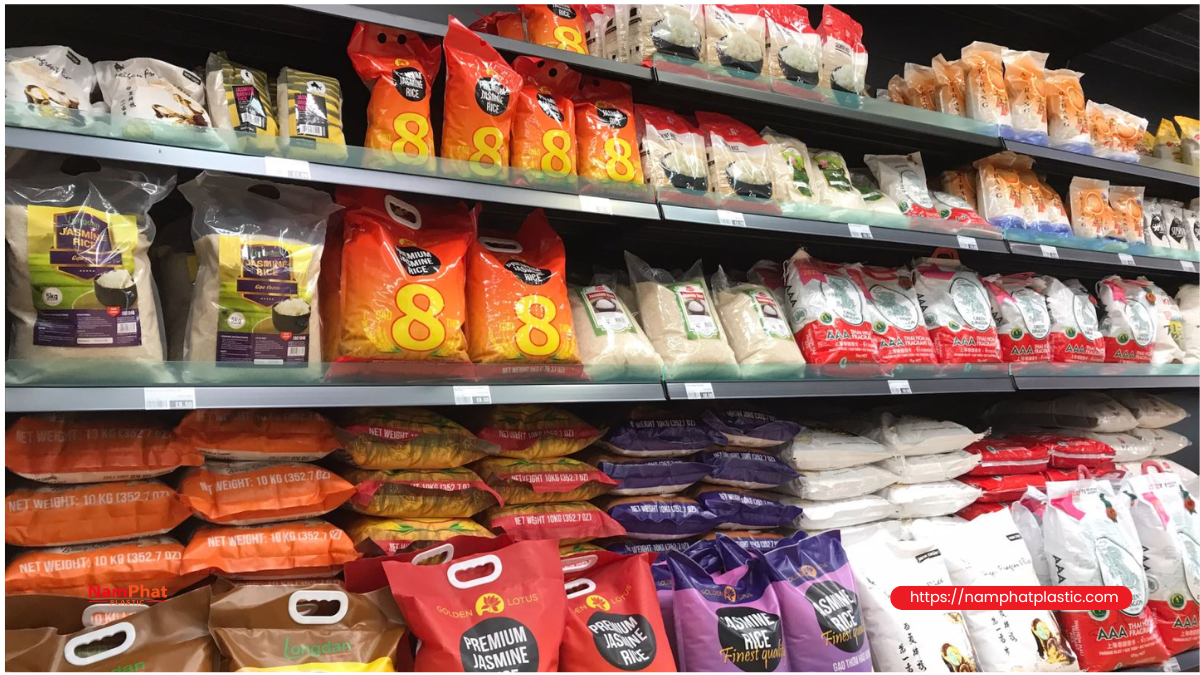
Retail packaging must attract consumers within a very short time. Purchasing decisions are often influenced by package color, product images, origin, and the key information displayed on the front of the package.
BOPP laminated bags, laminated pouches, and vacuum packaging are generally more suitable for this market segment. Packaging design should align with the brand's positioning while remaining flexible enough to accommodate different package sizes.
Rice sold through e-commerce
Products sold online typically pass through multiple stages of sorting, packing, and delivery. Packaging must therefore be durable enough to prevent leakage or damage caused by impact and compression during shipping.
Manufacturers should also consider secondary packaging, such as corrugated cartons, cushioning materials, and protective wrapping. Package dimensions should be optimized to minimize unused space inside shipping cartons, helping reduce transportation costs.
Export rice
Packaging for export rice must withstand long transportation times, container shipping conditions, and the labeling requirements of destination countries.
In addition to material quality, manufacturers should carefully control language, product codes, manufacturer information, and traceability features.
Packaging prototypes should always be tested under real transportation conditions before mass production begins. A package that performs well in domestic distribution may not provide adequate protection during ocean freight or extended storage periods.
7. Criteria for selecting the right packaging solution
Manufacturers should not choose packaging based solely on purchase price. A bag with a lower unit cost may frequently tear, interrupt production, or cause product loss, ultimately resulting in higher overall operating costs.
When evaluating packaging options, manufacturers should consider the following factors.
Product characteristics
Different types of rice—including white rice, fragrant rice, brown rice, organic rice, and specialty rice—may require different storage conditions. The higher the product's market positioning, the greater the demand for sealing performance, appearance, and consumer convenience.
Expected storage period
Products stored for only a few weeks require different packaging than products intended for long-term storage or international transportation. Longer storage periods increase the importance of moisture protection, airtight sealing, and seam durability.
Transportation conditions
Rice transported by domestic trucks, ocean freight containers, or e-commerce delivery services is exposed to different handling conditions. Packaging should therefore be designed according to the actual logistics process rather than only the environment inside the production facility.
Level of automation
High-speed packaging lines require bags with consistent dimensions, stable bag openings, and reliable bag-feeding performance. Manufacturers should coordinate with packaging suppliers during equipment selection to ensure compatibility between packaging materials and machinery.
Brand positioning
Standard rice products generally require packaging that is durable, practical, and cost-effective. Premium rice products often justify greater investment in packaging structure, visual design, surface finishing, and consumer convenience features.
Using the same packaging concept across all market segments is rarely the most effective strategy. Segmenting packaging according to product positioning enables manufacturers to control costs while maintaining an appropriate brand image.
8. Process for developing packaging solutions for rice manufacturers
Step 1. Classify the product portfolio
Manufacturers should begin by categorizing their rice products according to rice type, package size, production volume, target market, and sales channel. This helps avoid using multiple packaging designs that are nearly identical but offer little added value.
Step 2. Identify the main risks
Each manufacturer faces different packaging challenges. Common issues include bag tearing, moisture absorption, inaccurate package weights, low packaging speed, and inconsistent brand presentation.
The packaging solution should first address the most critical problems before additional features or enhancements are considered.
Step 3. Design the packaging structure
The packaging structure should be determined based on the material, dimensions, printing method, liner requirements, bag opening design, and sealing method. Every element should be compatible with both the product and the packaging equipment.
Step 4. Produce prototypes and conduct trial runs
Prototype bags should be tested on the actual production line. Manufacturers should evaluate bag feeding performance, filling efficiency, sealing quality, package appearance after filling, and stacking stability.
Step 5. Test packaging performance
Performance testing may include drop tests, compression tests, seam strength testing, sealing integrity tests, or transportation simulations. The testing program should be designed according to the risks associated with each product.
Step 6. Standardize acceptance criteria
Manufacturers should establish clear acceptance standards covering bag dimensions, package weight, color consistency, print quality, mechanical strength, and acceptable defect rates. The more specific the criteria, the easier it is to maintain consistent quality across production batches.
Step 7. Monitor performance after implementation
Once the packaging solution has been implemented, manufacturers should continuously monitor key performance indicators such as bag failure rates, product giveaway, machine downtime, customer complaints, and packaging costs per ton of rice.
Actual production data provides a more reliable measure of packaging performance than appearance alone.
9. How to optimize rice packaging costs
Optimizing packaging costs does not simply mean selecting the cheapest bag. Manufacturers should evaluate the total cost incurred throughout the entire packaging, storage, transportation, and distribution process.
Possible improvement strategies include:
- Standardize bag dimensions to reduce the number of packaging specifications.
- Optimize material usage while maintaining the required strength.
- Reduce product giveaway by using stable and accurate weighing systems.
- Improve bag dimensional accuracy to minimize bag-feeding errors.
- Simplify printed designs by eliminating elements that add little value.
- Select package sizes that maximize pallet and container utilization.
- Manage packaging inventory efficiently to avoid obsolete stock when packaging designs change.
Even a small improvement in bag dimensions or production consistency can generate significant savings when multiplied across hundreds of thousands of bags each year.
10. Trends in sustainable rice packaging
Growing pressure to reduce packaging waste is encouraging manufacturers to rethink their packaging materials and designs. However, reducing material usage is only beneficial if the packaging continues to provide adequate product protection. A bag that is too thin and tears easily may increase overall environmental impact by causing product loss.
A more practical approach to sustainable packaging includes:
- Optimizing material weight based on actual load requirements.
- Avoiding unnecessary multilayer packaging structures.
- Choosing packaging materials that are easier to collect and recycle whenever appropriate.
- Reducing unnecessary bag and shipping carton dimensions.
- Using simple printing designs while maintaining strong brand recognition.
- Improving package durability to reduce product damage throughout the supply chain.
Sustainable packaging should achieve a balance between product protection, economic efficiency, and responsible end-of-life management.
11. Common mistakes in rice packaging
Focusing only on bag price
A lower purchase price does not necessarily mean lower overall cost. Poor-quality bags may reduce production efficiency, increase bag failure rates, and cause product losses during transportation.
Attractive designs that are difficult to manufacture
Some packaging designs look impressive but are difficult to open, sew, seal, or maintain their shape after filling. Every new design should be tested on the production line before mass production.
Using one type of packaging for every market
Packaging that performs well in wholesale distribution may not be suitable for supermarkets or export markets. Manufacturers should adapt packaging according to consumer behavior, transportation methods, and storage requirements.
Ignoring secondary packaging
Even if the primary package meets quality standards, products can still be damaged during carton packing or transportation. Pallets, corrugated cartons, stretch film, and loading methods should all be considered integral parts of the packaging system.
Lack of clear quality inspection standards
Without defined standards for dimensions, mechanical strength, print quality, and acceptable defect rates, packaging quality can vary significantly between production batches. This reduces production stability and increases disputes with packaging suppliers.
12. Conclusion
An effective packaging solution for rice manufacturers does not begin with selecting the most attractive or the least expensive bag. Instead, it should be based on the characteristics of the rice product, storage conditions, transportation requirements, sales channels, and the capabilities of the production line.
When packaging materials, equipment, and quality control processes are designed as an integrated system, manufacturers can reduce product loss, improve productivity, minimize customer complaints, and build a stronger brand image.
Investing in the right packaging solution not only protects every grain of rice but also safeguards the value created throughout the entire journey—from the rice field to the consumer.
Frequently asked questions about rice packaging solutions
1. Which packaging is most suitable for rice?
There is no single packaging solution suitable for every product. Woven PP bags are commonly used for wholesale rice, BOPP laminated bags are ideal for branded retail products, vacuum bags are suitable for premium rice, and jumbo bags are designed for bulk transportation.
2. Are woven PP bags completely moisture-proof?
Not entirely. The level of moisture protection depends on the bag structure. Standard woven PP bags provide a certain degree of ventilation. When greater moisture protection is required, manufacturers may consider laminated structures or PE liners.
3. Should vacuum bags be used for all types of rice?
Not necessarily. Vacuum packaging is best suited for premium products or rice that requires extended shelf life. However, both packaging materials and equipment involve higher costs, so manufacturers should evaluate the investment based on product value and market requirements.
4. What are the benefits of an automatic rice packaging line?
An automatic packaging line increases productivity, maintains consistent package weights, reduces manual labor, and delivers a more uniform finished product. The return on investment depends on production volume, packaging variety, and the consistency of incoming packaging materials.
5. How can bag tearing during transportation be reduced?
Manufacturers should evaluate the bag material, weaving density, dimensions, seam strength, package weight, pallet stacking method, and handling procedures together. Simply increasing bag thickness does not necessarily solve the problem if other contributing factors remain unaddressed.
6. How should packaging be tested before placing a large production order?
Prototype bags should be tested on the actual production line, filled to the intended weight, and evaluated under storage, stacking, handling, and transportation conditions that closely resemble real-world operations. The test results should then be documented as acceptance standards for future production batches.
>>> Discover more of our products:
- 0 Comment


