


 Phan Van Hoang
- 21/10/2026
- 8
A zipper bag production line should be selected around the bag structure, not machine speed alone. A PE bag with zipper profiles extruded integrally with the film differs significantly from a laminated pouch with separately attached zipper tape. One route must stabilize the film body and closure profile together; the other must control material compatibility, tension and sealing zones. An incorrect product specification can leave a business with plenty of machinery but without the operation that determines quality.
This article approaches the line through investment and production-control decisions: buy rollstock or extrude it, purchase zipper tape or manufacture it separately, produce flat or stand-up pouches, and test individual seals or the complete package. The configurations below are engineering principles for preparing requirements and trials, not equipment specifications or statements of Nam Phát’s capabilities.
1. Three configurations commonly grouped under “zipper bag production line”
A press-to-close zipper consists of two interlocking profiles. With integral extrusion, the film body and zipper profiles are formed within the same specialized die system. With zipper attachment, the closure is extruded into a separate roll and then sealed to the film’s sealant layer. A slider bag adds a slider and end-retention features; it cannot be treated as an option achieved simply by changing zipper rolls on any machine. Hudson-Sharp distinguishes inline and slider closure options within its pouch-machine platform.
| Configuration | Inputs and principal equipment | What trials must demonstrate |
|---|---|---|
| Integral PE zipper film | Resin pellets; extruder, film die with zipper profiles, cooling, haul-off and winding, sealing and cutting machine. | Consistent interlocking alongside film-thickness control; no compression-induced profile distortion in the roll. |
| Film with separately attached zipper | Film roll and zipper roll; unwinding, edge guiding, zipper feeding, zipper sealing, pouch forming and cutting. | Zipper-flange adhesion, flatness around the closure and integrity where the zipper meets the side seal. |
| In-house film and zipper production | Separate extrusion lines, printing or lamination where required, slitting and a suitable pouch-making machine. | Balanced capacity between operations, lot traceability and intermediate-product quality before the next stage. |
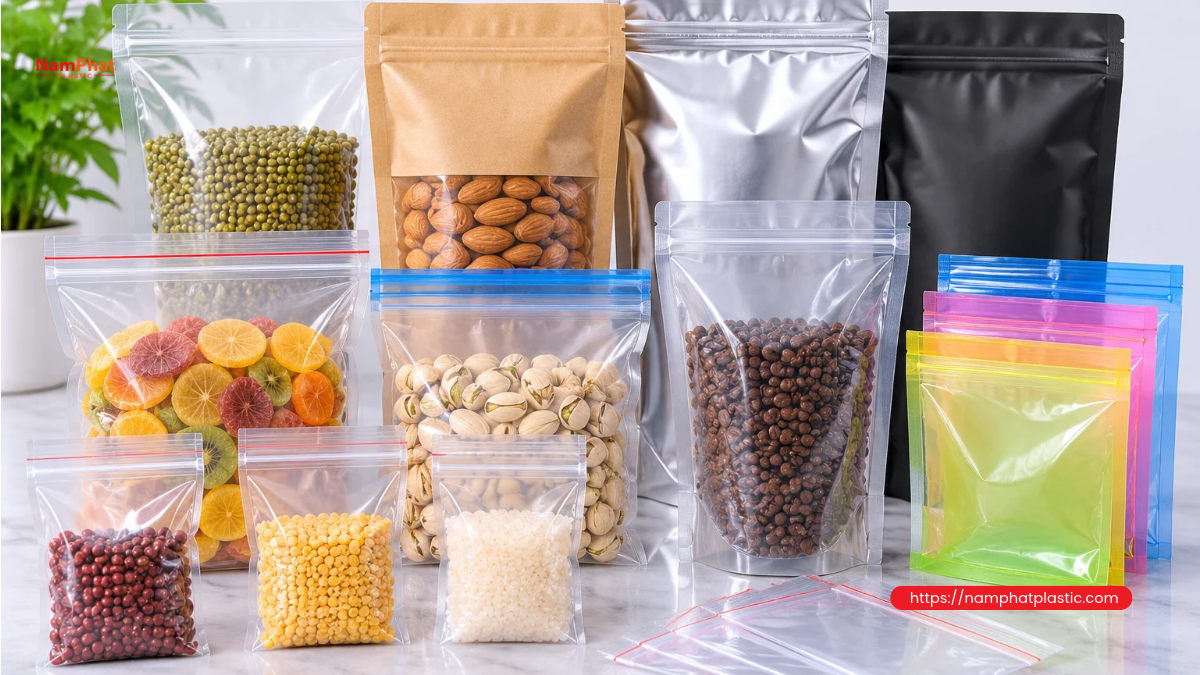
Integral extrusion is an established architecture, but an ordinary PE blown-film machine is not necessarily capable of it. Bingcheng describes a die that forms the film body and zipper tracks simultaneously. Ask suppliers to identify exactly which components are integrally extruded, which are attached later and which samples demonstrate the quoted configuration.
2. Finalize the bag specification before the machine specification
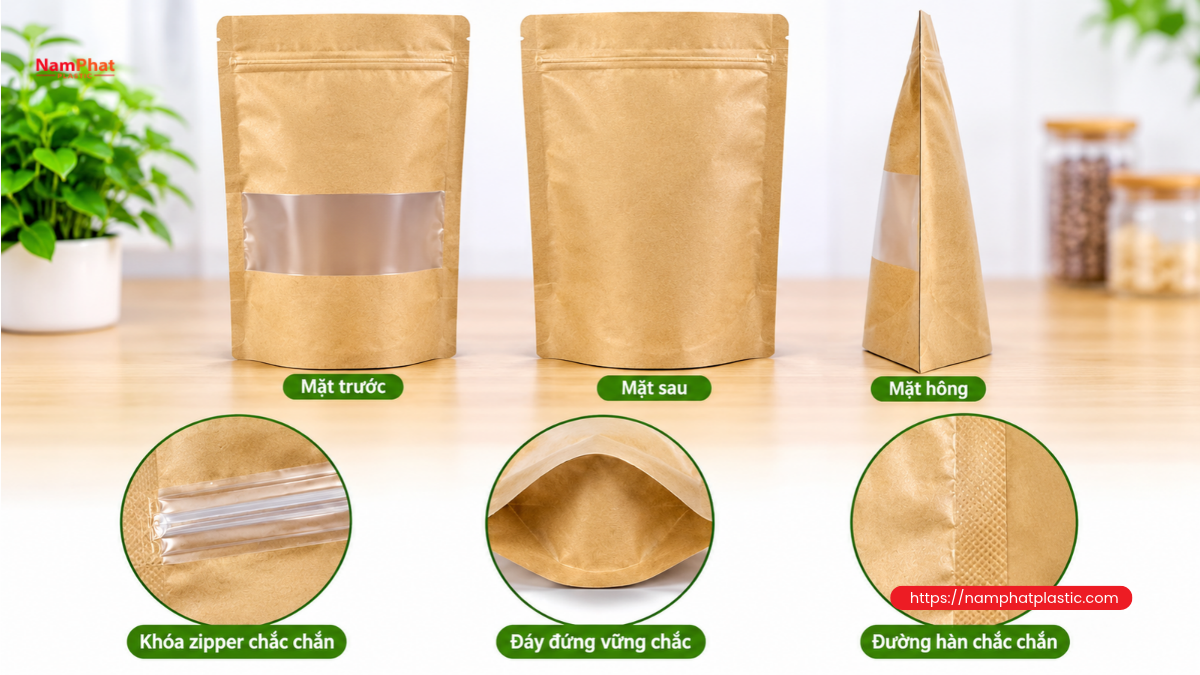
The requirement should include an actual sample, a dimensioned drawing, zipper position, gripping lip, seal width, print orientation and winding direction. State whether thickness refers to one layer or the combined bag walls. For a stand-up pouch, specify the bottom-gusset dimensions, how the opened bottom is measured and the space reserved for filling. Bags that look similar when empty may differ considerably in usable volume and compatibility with filling equipment.
Flat bags generally require fewer forming operations. Stand-up pouches add bottom forming or insertion, gusset alignment and sealing across overlapping layers. Do not assume every three-side-seal machine can be upgraded to make stand-up pouches: check space for modules, controls, machine travel, sealing tools and the draw system. The 750-SUP platform is an example designed for both stand-up and three-side-seal pouches; that capability still depends on the specific configuration.
3. How does an integral PE zipper line work?
Forming the film and closure profiles
Incoming material is controlled by resin grade, lot, contamination status and the supplier’s handling instructions. The feeding unit supplies the screw; heat and mechanical motion generate the melt. Filtration, die and pressure-monitoring equipment must suit the machine design. One temperature recipe or drying regime should not be applied to every PE grade, colorant and additive.
The zipper region is thicker and more geometrically complex than the film body, so it responds differently to drawing and cooling. Changes in throughput, cooling conditions or haul-off speed can simultaneously alter film thickness, profile shape and opening force. Consequently, weighing the roll or measuring thickness away from the closure is insufficient for acceptance.
Haul-off, interlocking, winding, sealing and cutting
After the shape has stabilized, the line guides the film through haul-off and alignment equipment, interlocks the profiles as designed and winds the film or transfers it to bag conversion. Nip pressure and tension control help limit skew, wrinkles and profile deformation. A roll with accumulated thickness at the zipper must be assessed through an actual unwinding trial, not external appearance alone.
The sealing and cutting machine processes the bag edges and zipper ends according to the product construction. The junction between the zipper and side seal deserves particular attention: it must accommodate the thick profile without damaging the adjacent thin film. A passing sample from the middle of a bag does not prove that both zipper ends pass. Sample the intersections separately and include material produced after stops and restarts.
4. Attaching zipper to purchased film or laminated rollstock
Separate zipper-tape production is an independent operation
A zipper-tape line typically comprises resin feeding, extrusion through a profile die, appropriate sizing and cooling, stable haul-off, interlock inspection and winding. The locking profile and sealing flange have different functions: the profile determines the opening and closing feel, while the flange bonds to the package. When purchasing zipper, request a product code and sealant-layer information rather than just a PE or PP designation. Grofit lists flange and string profiles, illustrating why closure geometry must suit the feeding and sealing system.
The converting sequence
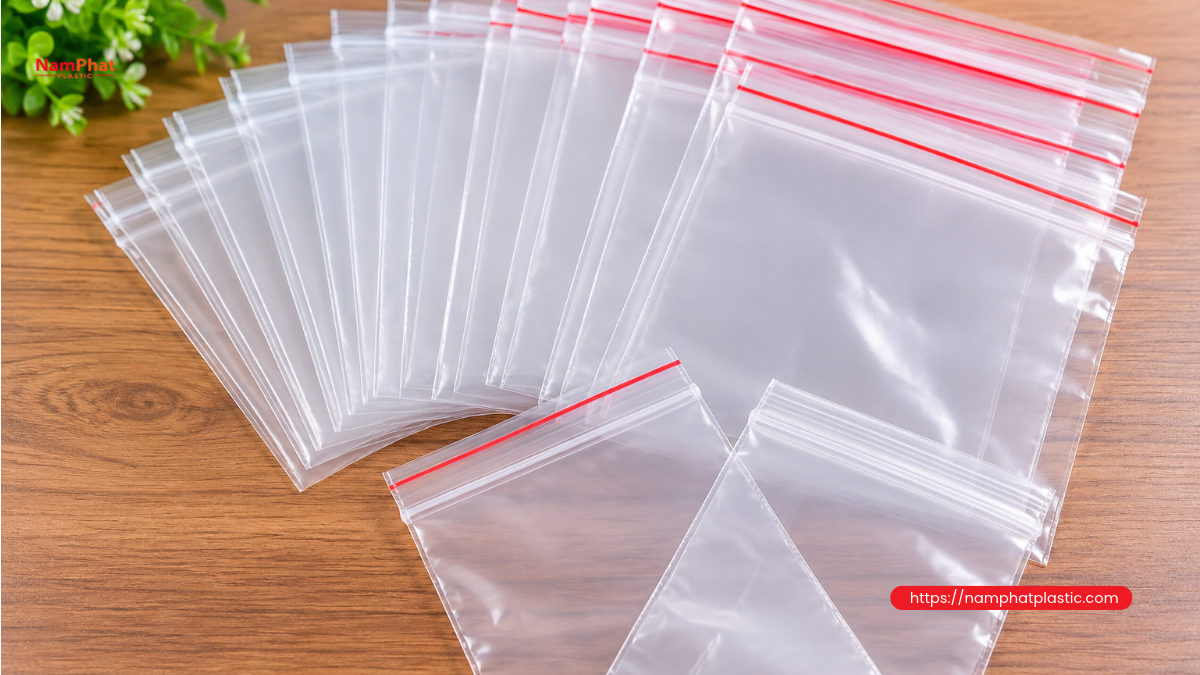
A typical sequence includes film unwinding, edge guiding, tension control, folding or combining webs, zipper feeding, flange sealing, cooling, zipper-end treatment, body and bottom sealing, optional punching, cutting and bag collection. The precise order depends on the machine design and zipper orientation. A printer, laminator and post-lamination storage area are not automatically included in the scope of a pouch-making machine.
Purchasing printed or laminated film reduces the investment scope but does not eliminate incoming inspection. Agree on layer structure, sealant face, winding quality, print-mark position and use conditions. Adhesive-laminated material should be converted only after the supplier confirms release conditions for the adhesive system and lot records. Do not apply one universal waiting period to every construction.
5. Zipper sealing must preserve both adhesion and reclosability
Strong attachment to the bag wall is insufficient if the profile is distorted or cannot close properly. The sealing window must balance surface temperature, contact time, pressure, sealing-bar geometry and cooling. The flange must be compatible with the film’s sealant layer; a heat-resistant outer layer does not establish that the contacting layers can seal. ELPLAST offers zipper types weldable to different materials, but the actual material pair still needs testing.
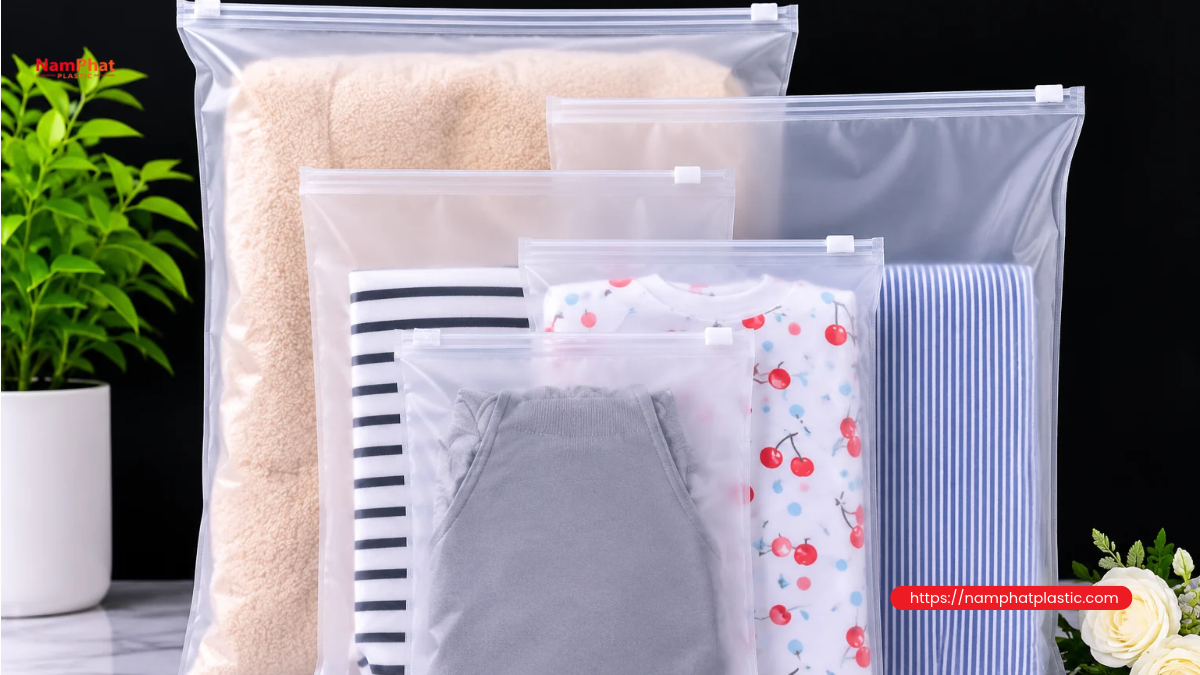
The zipper-flange seal, crushed zipper ends and bottom seal do not necessarily share one operating window. Higher speed changes contact time; increasing temperature to compensate can wrinkle the film or deform the closure. Totani explains forced cooling in its zipper-sealing unit to limit shrinkage and overheating. This is why quality should be evaluated after thermal stabilization and during sustained running.
6. Tension, edge guiding and print registration
Stable tension does not mean maximum tension. Film and zipper tape have different stretching behavior; over-tensioned zipper can make a bag curl after cutting even if the web looks flat on the machine. The unwind, film feed, zipper feed and outfeed zones must work together. Dancer rollers or load sensors should be selected for the machine architecture, rather than treated as additions that automatically correct every defect.
Edge guiding controls the web’s lateral position, whereas print registration controls cutting or sealing relative to the print repeat. Neither function replaces the other. Check mark quality, contrast, slip at draw rollers and repeat variation during roll changes. Totani describes a dancer converting continuous web motion into intermittent feed and print-position detection before cutting. Trials should include acceleration, deceleration and roll splicing.
7. QC planning: separate seal strength, zipper performance and leak integrity
One tensile result does not represent the complete bag. Test records should identify sampling location, pull direction, specimen width, conditioning, equipment and failure mode. When results change, establish whether the film tore, the flange peeled away, the laminate delaminated or the profile disengaged. Compare only data obtained using the same method and conditions.
| Item | Assessment to agree | Limitation to remember |
|---|---|---|
| Body and zipper-flange seals | Separation-force testing with suitable specimens and fixtures; record both force and failure mode. | High seal strength does not by itself demonstrate freedom from leaks. |
| Zipper opening force | Measure in the user-opening direction and, where necessary, the load direction from inside the bag. | The directions can differ; flange peel testing is not a substitute. |
| Opening and closing cycles | Agree cycle count, closing technique, contents load and test conditions for the application. | Recheck opening force, damage and leakage afterward; do not invent a universal cycle count. |
| Whole-bag leakage | Select a method suitable for the structure, sealing areas and zipper closure state. | A gross-leak test does not prove absolute airtightness or shelf life. |
| Geometry and use | Measure dimensions, closure position and print alignment; test filling, mouth opening and standing performance when required. | A passing empty bag does not guarantee filling-machine or transport performance. |
ASTM F88/F88M addresses seal-strength measurement in flexible barrier materials; ASTM F2096 addresses gross-leak detection using internal pressure and bubble observation. A laboratory should determine applicability and implement the complete method; this article does not replace the standards or declare product conformity.
For food products, using PE, adding a zipper or passing a leak test does not automatically establish food-contact suitability. Documentation is needed for the materials and complete package in the intended market, food application and use conditions. Freezing, heating, powder resistance and liquid containment require separate confirmation, not inference from a dry-goods bag sample.
8. Troubleshooting by symptom
| Symptom | Cause groups to investigate | Verification before machine adjustment |
|---|---|---|
| Closure is difficult to engage or springs open | Incorrect profile geometry, contamination in the tracks, stretching or heat distortion. | Compare incoming zipper with samples after sealing; separate tape defects from converting defects. |
| Zipper flange detaches | Incompatible sealant layers, dirty surfaces, inadequate contact or an unsuitable sealing window. | Confirm sealant face and failure mode; inspect contact distribution before increasing temperature. |
| Leakage at zipper ends | Thickness transition, inadequate end crushing or damage to the thinner film. | Locate the leak path; compare seal impressions, flatness and tooling condition. |
| Bag curl or wrinkles around the closure | Tension mismatch, thermal shrinkage or unstable cooling. | Compare samples before sealing, after sealing and after cutting; inspect the independent zipper feed. |
| Cut position misses the printed design | Poor mark readability, draw slippage, print-repeat variation or unsynchronized controls. | Check the actual roll’s marks and repeat; distinguish registration errors from edge-guiding errors. |
When troubleshooting, isolate suspect lots, retain samples before and after changes, record machine conditions and adjust one group of variables at a time. Do not change temperature, pressure and speed together and conclude that the cause has been identified. Inspections requiring access to knives, draw rollers or sealing bars must follow an approved safe procedure.
9. Utilities and acceptance: evaluate good bags, not nominal speed
Ask the supplier to specify electrical demand, peak load, grounding, compressed air, cooling water, heat rejection, ventilation and maintenance space for the actual configuration. Solvent-based printing or lamination needs a separate assessment of fire risk, solvent vapors and suitable treatment systems. Do not treat the main motor rating as total electrical demand, or one module’s water flow as the requirement of the complete line.
Nip guarding, interlocks, emergency stops and energy isolation should be checked before trials. OSHA’s plastics-machinery safety guidance emphasizes protection against nip points, moving parts and heat. It is a safety reference, not a substitute for local requirements and a plant-specific risk assessment. Do not bypass interlocks to maintain output.
Acceptance at the supplier’s site and at the production plant should use the intended film, zipper, dimensions and bag format. Agree running duration, sampling plan, reject criteria, roll changes and product changeovers. Nominal speed matters only with stated conditions. Totani notes that actual capacity depends on materials and running conditions. Evaluate good-bag output over the agreed production time, consumables, downtime and energy per accepted output.
10. Buy intermediate materials or invest from resin onward?
Buying film and zipper can suit businesses focusing on pouch conversion, testing a market or handling many product constructions. In-house extrusion offers greater control but requires process expertise, testing, maintenance, inventory management and scrap handling. Extruding film does not mean possessing zipper technology; extruding zipper does not replace printing, laminating and pouch making.
Compare investments using the same scope: main machine, modules, dies, auxiliaries, freight, installation, training, spares and acceptance samples. Calculate cost per good bag using actual scrap, changeover time and supply conditions instead of dividing machine price by advertised capacity. For a packaging inquiry to Nam Phát, prepare a sample or drawing, intended material, application, order quantity and testing requirements so the actual supply scope can be discussed. This article does not establish that Nam Phát sells machinery or supplies every configuration described.
11. Frequently asked questions
Can an ordinary PE blown-film machine make integral zipper bags?
Not by default. It needs a suitable die and appropriate forming, cooling, guiding and interlocking equipment. Assess any existing machine’s conversion capability through engineering review and production samples, not simply because both processes use PE.
Can the same zipper be used with PE film and laminated film?
Some suitably designed products can, but the flange must be matched to the actual sealant layer. Calling a film “laminated” does not define its sealability. Test adhesion, distortion and opening and closing performance after conversion.
Are zipper bags automatically watertight or airtight?
No. Integrity depends on the profile, zipper ends, seals, materials and how the user closes the bag. Liquid containment, special storage and shelf-life requirements need separate validation on the complete package.
Is in-house zipper production necessary when investing in a pouch machine?
Not necessarily. Purchasing tape with confirmed compatibility can reduce the initial operating scope. The decision to extrude it should reflect product mix, stable demand, technical capability and actual total cost.
What is the most important specification in a line quotation?
The ability to make the agreed bag sample under agreed conditions matters most. The quotation should define inputs, configuration, output quality, acceptance procedure and auxiliary scope; a standalone bags-per-minute figure is insufficient.
- 0 Comment


