


 Phan Van Hoang
- 21/10/2026
- 8
An XPS foam board production line continuously extrudes polystyrene foam through a sequence of feeding, plasticizing, blowing-agent metering, melt cooling, shaping and board finishing. The challenge is not simply making plastic expand: the line must maintain cell structure, thickness and end-use properties throughout production.
When evaluating technology or an insulation board supplier, machine output and density alone are insufficient. Three sets of information must connect: raw materials and equipment configuration; process stability; and test results for appropriately conditioned finished products. This article follows that approach without providing gas recipes or operating settings that could replace the equipment manufacturer's documentation.
1. What is XPS, and how does it differ from EPS and EPE?
XPS stands for extruded polystyrene: polystyrene foam produced by extrusion. The base resin is melted, combined with a blowing system and passed through a die. As pressure conditions change at the outlet, gas cells form and grow, and the material is shaped into a board. A closed-cell structure is important, but it does not mean all XPS boards have identical strength, water absorption or thermal performance.
EPS also belongs to the polystyrene family, but conventional board processing uses expandable beads: steam pre-expansion, stabilization, block or shape molding, and cutting. This is not the same process as XPS board extrusion. Knauf Industries directly describes bead molding.
| Criterion | XPS | EPS | Flexible EPE rolls/sheets |
|---|---|---|---|
| Base polymer | Polystyrene (PS) | Expandable polystyrene beads | Polyethylene, commonly LDPE |
| Typical forming route | Continuous foam extrusion and board shaping | Pre-expansion, bead conditioning, molding, block cutting | Foam extrusion, winding or sheet conversion |
| Important characteristic | Rigid board; cells may be oriented | Structure of fused beads | Flexible; suitable for many cushioning and surface-protection needs |
| Do not assume | Density determines the entire load-bearing grade | Every EPS grade is inferior to every XPS grade | The same thickness can directly replace load-bearing XPS |
Here, EPE refers to flexible PE foam commonly used in packaging, not every polyethylene bead-foam technology. Sealed Air's surface-protection foam documentation illustrates LDPE rolls and sheets. Material selection must follow the actual function rather than the generic label “foam.”
2. Process overview: assess the whole line, not just the extruder
The general sequence is: receiving and feeding → PS plasticizing → metering and dispersion of additives and blowing agents → homogenization and melt cooling → die and expansion → shaping and haul-off → cutting, edge or surface processing → stabilization and inspection → packaging. Classified edge trim may enter a separate recovery route.
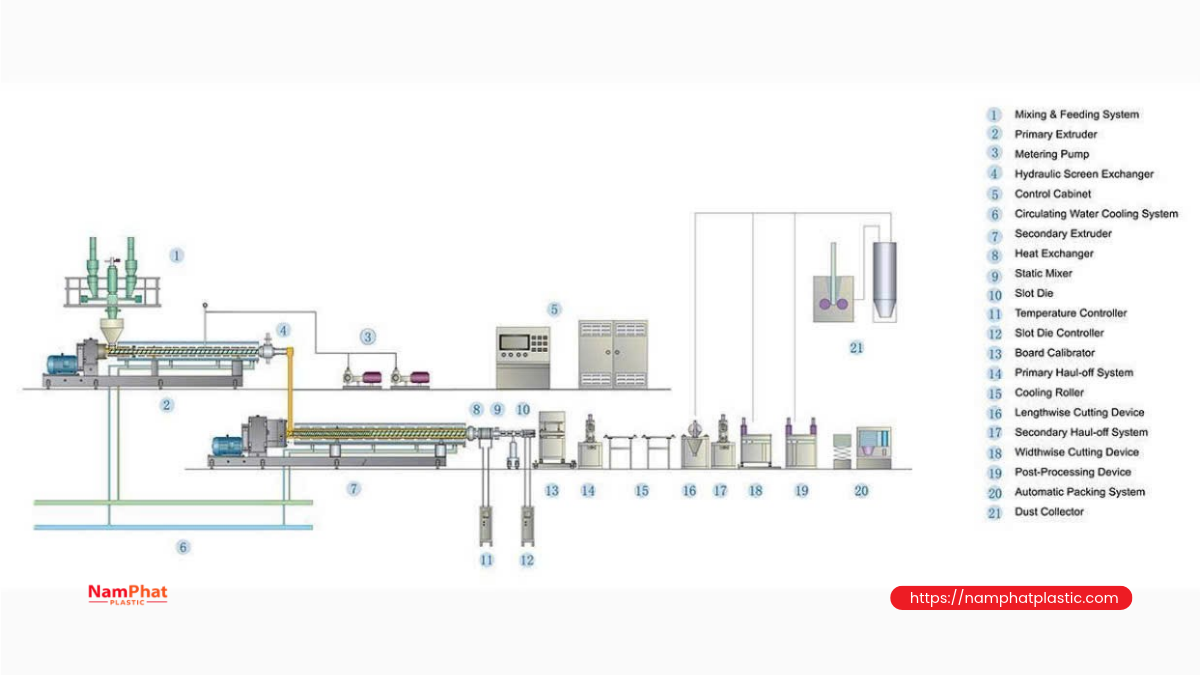
The stages constrain one another. If the extruder delivers more material than the cooling equipment can handle, foam stability may decline. Increasing haul-off speed to match output can change thickness or stretching. If stabilization and packaging areas are undersized, saleable output remains limited even when the motor has spare capacity.
| Functional section | Main role | Data to control |
|---|---|---|
| Feeding and blending | Supply the correct materials and quantities | Batch identity, metering scales, feed consistency |
| Extrusion and mixing | Plasticize and distribute components within the resin | Machine-load trends, melt condition, alarms |
| Blowing-agent system | Controlled supply integrated with safety interlocks | Compatibility, calibration, interlock status |
| Cooling and die | Prepare conditions for foam structure formation | Thermal uniformity and stable flow distribution |
| Shaping, haul-off and cutting | Control geometry and product dimensions | Thickness across the width, flatness, cutting error |
| Stabilization and testing | Confirm quality before dispatch | Sample age, storage conditions, tests, traceability |
3. Single-extruder or tandem system: select by function
There is no rule requiring every XPS line to have the same screw arrangement. Some configurations use one extruder with suitable mixing and heat-exchange equipment; tandem systems use successive stages to divide plasticizing, mixing and cooling duties. “Tandem” describes equipment connected in series, not “two screws” inside one barrel.
In some systems a twin-screw extruder handles mixing and plasticizing, followed by a single-screw machine or heat exchanger to condition the melt. The actual configuration depends on design, materials and product range. KraussMaffei presents ZE/KE and Schaumtandex systems for XPS boards; these illustrate available technology rather than a mandatory arrangement for every plant.
When comparing options, request representative trials for thin boards, thick boards and the most demanding planned grade. An impressive output at one operating point does not demonstrate the entire operating range. Acceptance documentation should clearly identify trial materials, acceptable-product yield, stable running duration and the auxiliary equipment included within the line boundary.
4. Raw materials and blowing agents determine the processing window
PS resin, additives and recovered material
The base resin must meet requirements for viscosity, melt strength and processing stability. Materials all labeled PS are not automatically interchangeable. Technical data sheets, supply history and trials on the actual configuration matter more than comparing prices per kilogram alone.
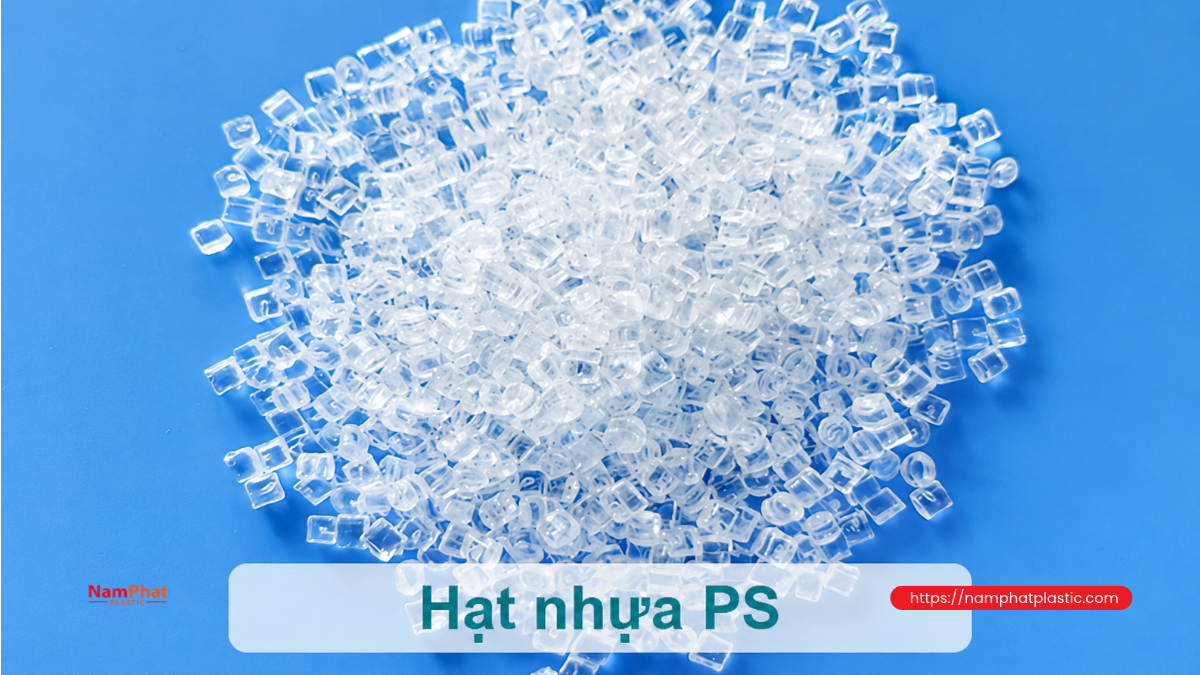
Nucleating agents support cell formation; colorants and functional additives may affect dispersion, surfaces and mechanical response. Flame retardants must be selected for the material system, applicable regulations and required product testing. Board color, an additive name or a commercial promise cannot establish a reaction-to-fire classification.
For reused resin, distinguish clean same-product edge trim from externally sourced waste of unknown history. Contaminants, viscosity variation, residual additives and repeated heating may change processing behavior. Acceptance rules must accompany validated limits; no single reintroduction percentage is appropriate for every XPS grade.
A blowing agent is not a plug-and-play substitution
Blowing systems have evolved with environmental requirements, performance needs and markets. CO₂, systems containing HFOs or other components may appear in commercial designs, but suitability depends on the complete combination and regulations where production and sales occur. A change may require different metering equipment, seals, fire/explosion protection, board properties and supporting documentation.
EPA separately categorizes XPS boardstock/billet applications and updates substitute listings. This US resource helps track developments; it is not authorization for use in Vietnam. Check current regulations and additional restrictions rather than treating an old blowing-agent table as purchasing guidance.
This article does not provide gas blend ratios, injection pressures or temperature settings. Those belong in validated process documentation, chemical-specific safety data sheets and the safety procedures for the particular equipment.
5. From molten polymer to stable foam cells
Metering, mixing and cooling
Stable metering reduces changes in composition over time. However, the correct total quantity does not guarantee uniform distribution. Additives need appropriate dispersion, and blowing agents must enter the melt through purpose-designed equipment. Feed or melt-state fluctuations can later appear as bands of defects on the board after a process delay.
Cooling the melt before the die is not simply a matter of reducing temperature as far as possible. The objective is a suitable, uniform rheological state that allows gas cells to grow and remain stable. Differences between the flow core and wall regions may cause uneven expansion. Sulzer describes cross-sectional mixing in polymer-melt heat exchange, a useful principle for evaluating cooling equipment.
Expansion at the die and cell morphology
At the die outlet, nucleation, cell growth and cell-wall stabilization occur alongside changes in the material's shape. If cell walls cannot retain their structure, interconnected cells, large voids or localized collapse may develop. Uneven flow distribution can create differences between the edges and center of a board.
Cross-section images reveal cell size and uniformity, but an attractive image cannot replace measurement. Sample across the width, through the thickness and over time. Cells stretched in the processing direction may produce anisotropy, so sampling orientation must be recorded when comparing properties.
6. Shaping, haul-off and downstream finishing
Shaping or calibration equipment controls geometry while the foam continues stabilizing. Haul-off must match material flow; haul-off speed should not be treated as the sole remedy for every deviation. Contact points also require inspection to distinguish equipment marks from defects already present at the die.
Boards are then cut to length, trimmed to width and machined at the edges as specified. Straight, rebated and other joint profiles serve different installation requirements. Surface processing, such as texturing or grooving, must be defined within the product specification; removing the surface skin may change test conditions and interaction with adhesives, coatings or water.
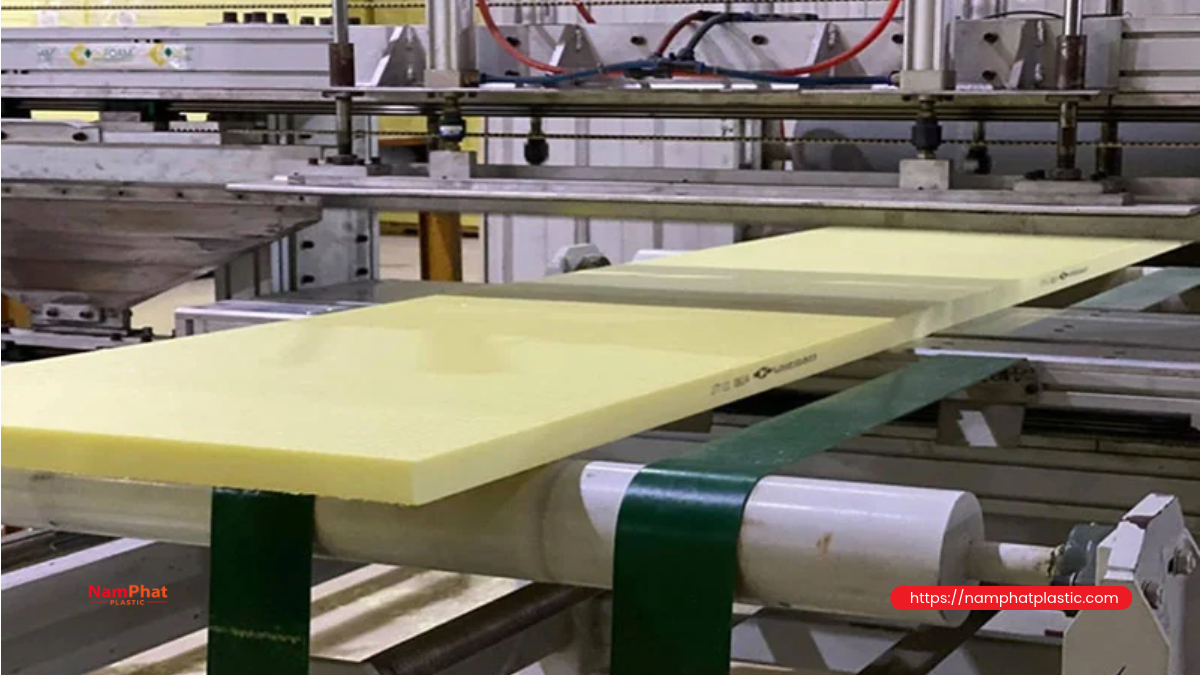
Stabilization time should not be a single default number for every formulation. Gas exchange and residual-stress changes can influence dimensions and thermal properties. The inspection plan should define when final sizing, bundling, sampling and dispatch are permitted. Air circulation, stacking and packaging compression must also be appropriate.
Traceability should connect the finished-product batch to raw materials, production shift, run segment, retained samples and test results. If a batch develops a problem, this information helps isolate the affected material rather than casting doubt over several days of production.
7. Quality control: density is only one indicator
Foam-board density means mass divided by apparent volume, not the density of solid PS resin. Two boards of equal density may still differ in cell structure, material distribution, surface condition and stabilization. Requirements must therefore relate to the application rather than buying and selling solely by a kg/m³ figure.
| Property | Record alongside the result | Mistake to avoid |
|---|---|---|
| Thermal conductivity λ, W/(m·K) | Mean test temperature, sample age/conditioning, thickness, heat-flow direction | Comparing newly produced and aged values |
| Compressive stress/strength, kPa | Method, deformation criterion, loading direction, sample surface condition | Using it directly as long-term design load |
| Compressive creep | Load, duration, test conditions, extrapolation and applicability limits | Replacing it with a short compression test |
| Water absorption and vapor transmission | Water exposure method, duration, units, thickness | Equating low absorption with complete waterproofing |
| Dimensional stability | Temperature/humidity conditions and assessment duration | Measuring dimensions only immediately after cutting |
| Reaction to fire | Classification system, tested assembly, surface and report scope | Calling flame-retarded board noncombustible |
Read thermal data correctly
In principle, the thermal resistance of a homogeneous layer is approximately R = d/λ, with d in meters. However, λ must represent the assessment conditions rather than any convenient figure from an advertisement. Joints, fixings and thermal bridges in the complete assembly also affect in-use performance.
Owens Corning specifies temperature and aging conditions when presenting thermal resistance. This demonstrates why comparisons need a common basis. One brand's data must not become the default specification for all XPS or for Nam Phát products.
Short-term compression is not long-term load capacity
Stress at a specified deformation describes response in a particular test. Floors, roofs and sub-base layers also involve sustained loading, allowable deformation, load distribution and working temperature. BASF's Styrodur technical data separates compression properties from long-term loading, illustrating the distinction needed in specifications.
Low water absorption and flame retardancy both have limits
Liquid-water absorption, vapor diffusion and condensation risk are different issues. Assess the complete roof or wall, joints, waterproofing and drying potential. XPS board does not automatically replace a waterproof membrane or vapor-control design.
Likewise, reaction-to-fire classification is not the fire-resistance rating of a building element. XPS remains a polymer material that must be used within an appropriately assessed assembly. Do not advertise it as “completely fireproof,” convert classifications between systems without justification, or apply results from protected boards to unprotected boards.
8. Standardize testing requirements and acceptance documentation
The official ASTM C578 page displayed C578-23 as active when checked. The specification addresses property groups and dimensions of polystyrene insulation boards; the name XPS does not establish compliance. References must identify edition, product type, scope and corresponding test evidence.
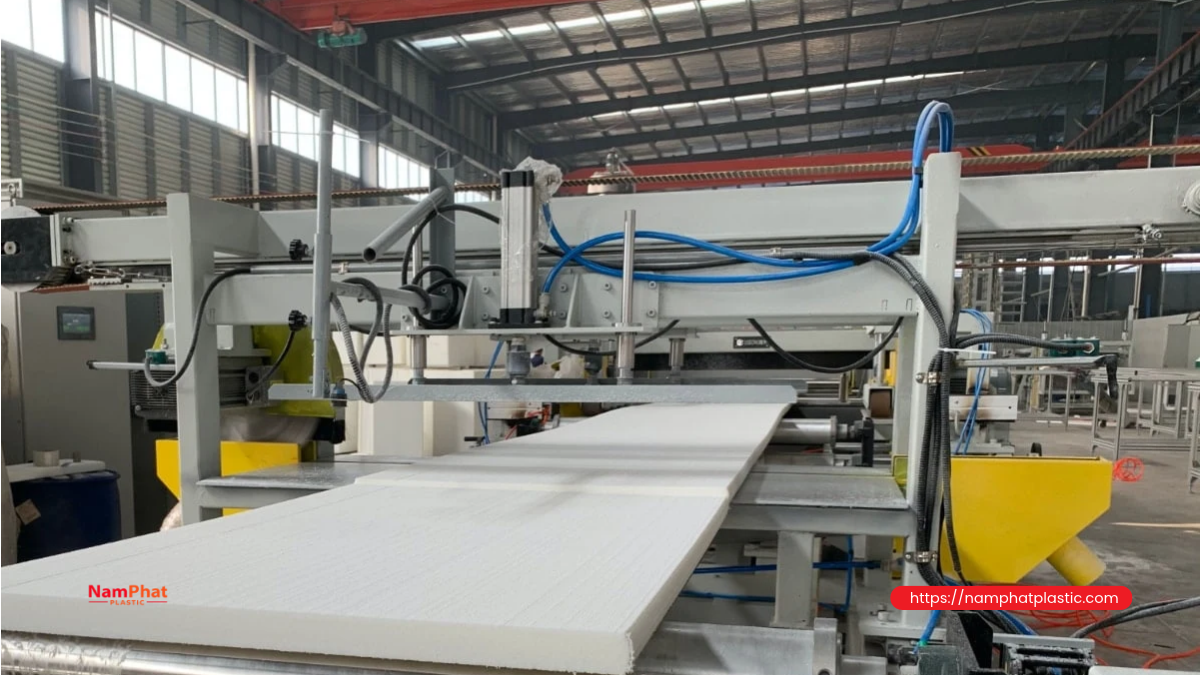
For orders using another standards system, agree on methods and editions in the technical requirements from the outset. Do not combine the “best” values from unlike tests into a single specification. The laboratory must receive dimensions, surface conditions and representative samples matching the delivered product.
- Incoming-material records: resin and additive identities, SDS and batch traceability.
- Process records: trend data, alarms and approved changes.
- Finished-product records: dimensions, density, required performance and test conditions.
- Delivery records: batch identity, packaging specification, storage guidance and intended-use limits.
9. Converting XPS output from kg/h to m³/h and m/min
The following example illustrates mass balance only; it is not a machine specification or commercial commitment. Assume the equivalent board mass flow before rejects is 480 kg/h, acceptable finished-product mass yield is 90%, and apparent finished-product density is 32 kg/m³. Finished board width is 1.2 m and thickness is 50 mm, or 0.05 m.
| Calculation step | Formula | Result |
|---|---|---|
| Acceptable-product mass | 480 × 0.90 | 432 kg/h |
| Acceptable-product volume | 432 ÷ 32 | 13.5 m³/h |
| Board cross-sectional area | 1.2 × 0.05 | 0.06 m² |
| Equivalent length | 13.5 ÷ 0.06 | 225 m/h |
| Equivalent acceptable-product speed | 225 ÷ 60 | 3.75 m/min |
The 3.75 m/min figure is a speed equivalent based on acceptable output, not necessarily the haul-off setpoint. If losses occur in edge trim or rejected sections, actual strip speed can differ. Nor should resin-pellet feed rate be treated directly as finished-product mass without defining the balance boundary and accounting for volatile material.
If 90% yield covers only stable running, monthly planning must also account for startup, changeovers, cleaning, maintenance and downtime. Conversely, if those losses are already included, do not deduct them twice. Every indicator needs a clear definition before entering a cost model.
10. Defect diagnosis: use symptoms to form hypotheses
One symptom may have several causes. The following table supports an investigation plan; it is not an instruction to adjust the machine. First verify measuring equipment, sampling positions and the time when the defect appeared. Process changes must remain within approved limits.
| Symptom | Factors to investigate | Priority verification |
|---|---|---|
| Thickness varies across width | Flow distribution, thermal condition, shaping, alignment | Map thickness across the board and check repeatability |
| Density fluctuates along the board | Feeding, metering, melt condition, haul-off speed | Compare time-indexed samples with trend data |
| Large cells or localized voids | Dispersion, contamination, foam stability | Compare multiple cross-sections and trace raw-material batches |
| Warping after storage | Uneven cooling, residual stress, stabilization and stacking | Compare geometry at different sample ages under matching conditions |
| Surface lines or scratches | Die, contact points, dust or finishing tools | Locate where marks arise along the line while maintaining safety |
| Compression or thermal results fail requirements | Cell structure, materials, sample age, test method | Controlled retesting and review of the complete property set |
Avoid changing multiple variables simultaneously, because this obscures the cause. Assess changes with allowance for transit delay through the whole line and sample stabilization time. Die removal, access to hot components and intervention in gas systems must be carried out by trained personnel under energy-isolation procedures.
11. Power, cooling, ventilation and factory safety
Infrastructure requirements include power for the whole line, cooling, compressed air where used, extraction of machining dust, ventilation and space for product stabilization. Calculating electricity per cubic meter from the extruder motor rating alone omits many auxiliary loads. A more useful metric is measured energy within a defined boundary per quantity of acceptable product.
Risk assessment must consider the blowing agent, potential leakage, gas accumulation, ignition sources and loss of power or cooling. Gas detectors must suit the chemical and be calibrated. Ventilation, safe-shutdown interlocks, equipment zoning and fire protection require specialist design. Nonflammable gases can still create oxygen-deficiency hazards.
HSE highlights the fire and toxic-smoke hazards of cellular plastics. Practical controls must address ignition sources, scrap, dust and working-area inventory. An improvised burn test beside the line cannot replace a test report.
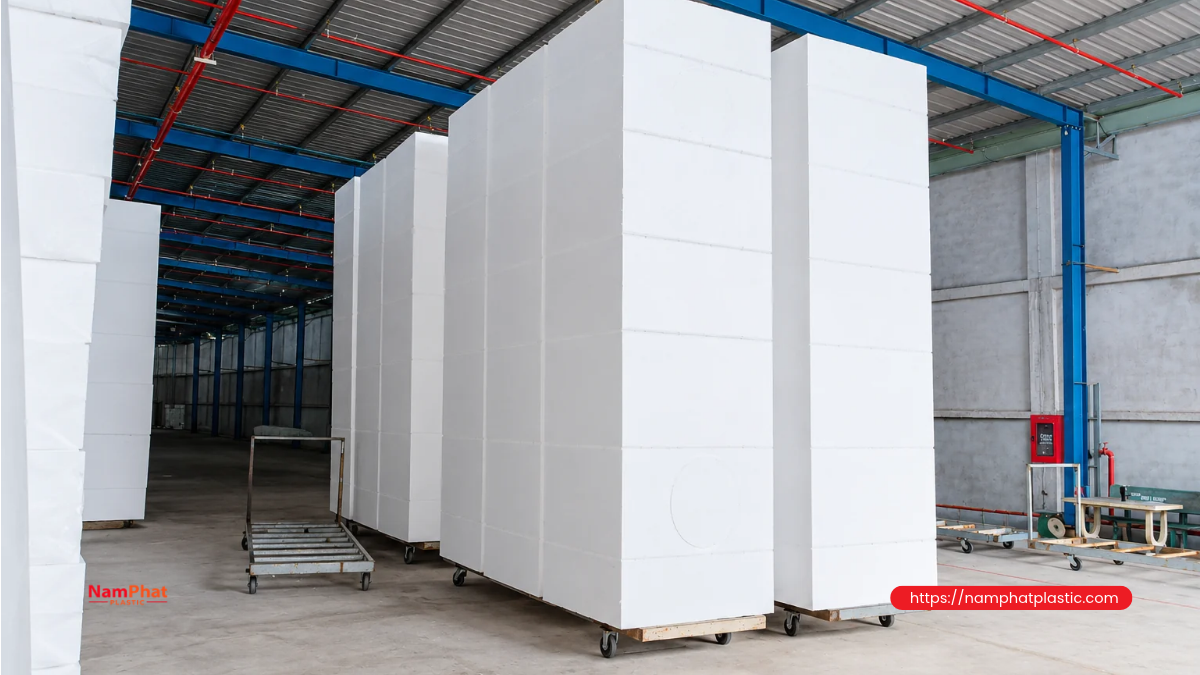
Raw-material stores, fresh-board stabilization areas, granulators and finished-product stores form parts of one safety system. Mechanical guarding at haul-off and cutting equipment, lockout/tagout procedures, escape routes and emergency training cannot be replaced by a few sensors or warning signs.
12. Scrap recovery and investment assessment
Clean edge trim may be sorted, densified, re-pelletized or routed back to suitable equipment, depending on the design. Material recyclability does not mean all waste qualifies for return to the original product. Control dust, contamination, retained gas, additive history and properties after reprocessing.
Economic assessment should use cost per m³ of acceptable product meeting the same performance class, not merely cost per kilogram of resin. A cheaper line with high scrap, high consumption or extensive stabilization-space needs may have higher total costs. No universal quotation is meaningful without dimensions, output, blowing system, auxiliaries and acceptance conditions.
A request for proposal should define target products, performance to demonstrate, width and thickness range, acceptable-product output, scrap-recovery approach, infrastructure constraints, training, spare parts and maintenance. These also distinguish contractual commitments from promotional figures.
13. Frequently asked questions about XPS board production lines
Can an EPS machine be converted to produce XPS boards?
This is not simply a change of resin followed by restarting. EPS bead-molding and XPS board-extrusion lines use different principles and equipment. Any opportunity to reuse infrastructure requires a separate assessment.
Does higher-density XPS always provide better insulation?
No. Thermal properties also depend on cell structure, cell gas, sample age and test conditions. Compare λ or thermal resistance on the same basis rather than ranking by density.
Can the datasheet compression value be used as a continuous service load?
It should not be used that way without assessment. Distinguish short-term compression from creep and long-term design loading. Application assemblies, design factors and appropriate data require competent evaluation.
Is flame-retarded board noncombustible?
No. Claims must match the tested classification and report scope. The fire resistance of a wall or roof system cannot be inferred from an XPS board alone.
What information is needed before asking about line configuration or cost?
Prepare dimensional ranges, performance grades, acceptable-product output, intended markets, infrastructure, safety requirements and equipment scope. Without these details, prices may represent entirely different packages.
Conclusion: evaluate acceptable-product quality
A suitable XPS line must turn materials into geometrically compliant boards with stable structure and the specified end-use performance. The focus is coordination between extrusion, cooling, shaping, stabilization and testing; nominal output is only part of the picture.
This article belongs to the plastics-industry knowledge library of Nam Phát Plastic; it is not a claim that Nam Phát manufactures XPS or supplies XPS production lines. For packaging and product-protection needs, explore Nam Phát's PE packaging range and provide dimensions, loads and transport conditions to discuss the appropriate product scope.
Technical sources are linked in the relevant sections. This explanatory and specification-planning content does not replace process engineering, safety design, standards documentation or the equipment manufacturer's operating instructions.
- 0 Comment


