


 Phan Van Hoang
- 21/10/2026
- 11
Shrink film and agricultural film production lines may both use PE blown-film technology, but they need to be designed and accepted against different objectives. Collation shrink film must deliver the required thermal response and pack-holding performance; greenhouse film must manage light, weather exposure and condensation; mulch film must suit the growing bed, laying operation and removal after the crop cycle.
The starting point should therefore be a finished-product specification, rather than layer count or advertised output. This article helps equipment buyers develop technical requirements and machine-trial plans. Its scope is PE shrink film and PE-based agricultural film; it does not replace greenhouse design documentation, PE bag production procedures or pallet stretch-film lines.
1. Three product groups, three configurations to assess separately
| Film group | Decisive function | Line priorities | Output verification |
|---|---|---|---|
| PE collation and packaging shrink film | MD/TD shrinkage, shrink force and seal strength | Orientation, thickness, cooling and winding control | Free shrink, shrink force and trials with actual packs and shrink tunnel |
| Greenhouse covering film | Light transmission, diffusion, weather resistance and anti-drip where required | Wide widths, functional-layer distribution, bubble stability and folding | Optics, mechanical performance after ageing and condensation-surface assessment |
| Mulch film | Bed coverage, application-specific light control, laying and removal strength | Stable thin gauge, two-sided colour where needed, slitting and optional perforation | Point thickness, light blocking, tear, laying and removal trials |

A machine platform may serve several specifications if the OEM confirms its operating envelope and sample trials demonstrate performance. However, changing from narrow shrink film to wide greenhouse film involves more than changing the formulation. The die, tower, cooling system, folding equipment and winder can all become limiting factors.
2. From feeding to film rolls: where should control be applied?
The basic sequence comprises metered feeding, melt extrusion, filtration, an annular die, bubble inflation and cooling, haul-off and nip, folding or slitting, and winding. Establish which equipment is included in the supply package, which belongs to plant utilities and which operations take place offline. Bed-hole perforation machinery or surface-treatment equipment is not automatically included in every quotation.
Feeding and extrusion: stabilise materials before increasing speed
LDPE, LLDPE and performance PE grades can serve different roles in processing, toughness, sealing and shrinkage. Selection must use the TDS for the actual grade and trial results, rather than assumptions based on the polymer name. In coextrusion, each stream requires control of feed rate, pressure and melt stability. Accurate low-throughput metering matters when a functional layer is thin.
Melt filtration helps manage contaminants but does not turn unsuitable resin into acceptable raw material. Gels, contamination and thermal history can affect appearance, strength or bubble stability. The plant should establish incoming-material acceptance criteria, lot traceability and rework controls; a single recycled-content proportion should not be assumed suitable for every layer.
Cooling: a determinant of both output and structure
The external air ring, internal bubble cooling if installed, plant environment and heat load all influence solidification capacity. Increasing extrusion output without sufficient cooling can destabilise the bubble or leave film hot at the nip and winder. Ask the OEM to state the air, water and ambient-temperature conditions underlying its output declaration.
In blown film, blow-up ratio BUR, machine-direction draw and cooling history affect orientation. An uneven frost line signals a need to check heat, melt-flow and air distribution, rather than changing several settings at once. LyondellBasell's film extrusion guide explains relationships between bubble geometry, cooling and film properties; the specific operating window must still follow the OEM and material guidance.
3. Coextrusion: assign the right function to the right layer
Coextrusion allows functions to be distributed between outer, core and inner layers. Shrink film requires a balance of shrink response, toughness, sealing and surface behaviour. In greenhouse film, the inward-facing layer may carry the anti-drip function, while optical and weather-protection requirements must be designed for the whole structure. Two-colour mulch film needs a defined sky-facing and soil-facing side.
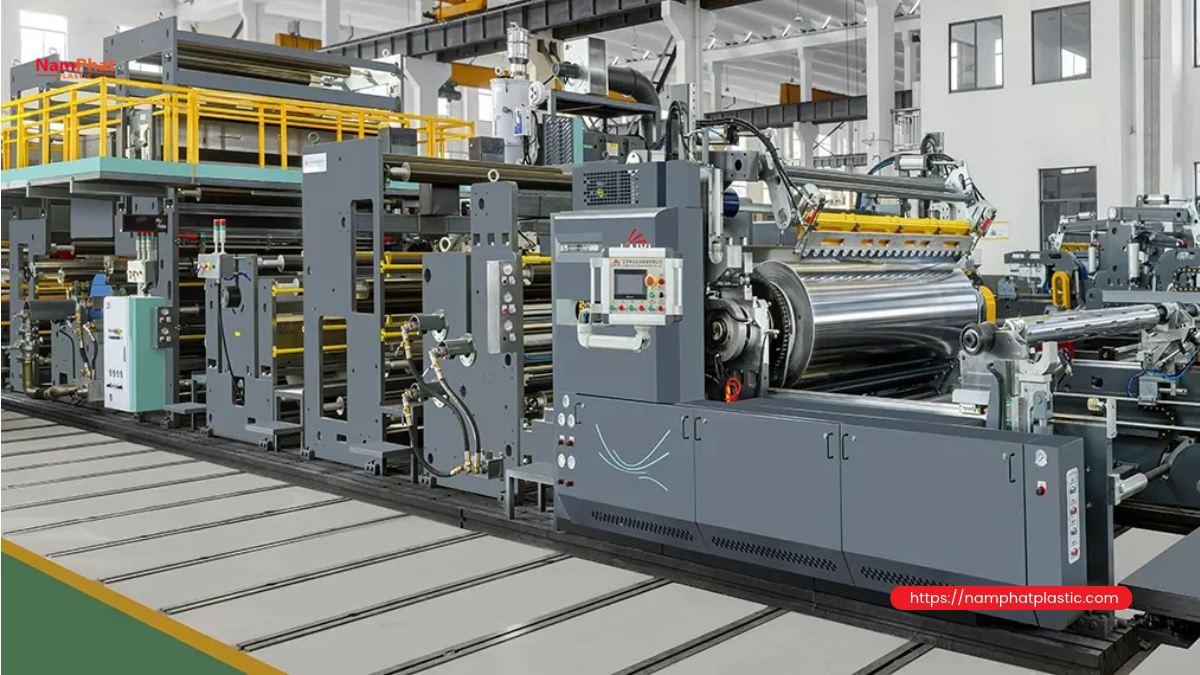
More layers do not automatically ensure better quality. Buyers should ask about independently controlled extrusion streams, layer-ratio stability, colour changes and cleaning time. For example, W&H describes a coextruded shrink-film solution, while Reifenhäuser presents a wide agricultural-film platform. These are OEM technology examples, not confirmed Nam Phát configurations or capabilities.
4. PE shrink film: assess both shrinkage and shrink force
MD is the machine direction; TD is the transverse direction. Shrink film may respond differently in these directions because of the orientation structure developed during film formation. High shrinkage alone does not guarantee a good-looking or secure pack: excessive shrink force may deform the product, while unsuitable holding force can leave the pack unstable.
Report MD and TD shrinkage separately, together with test conditions, thickness and specimen condition. Illustrative formula: shrinkage (%) = (L0 − L1) / L0 × 100. If an initially marked length of 100 mm measures 70 mm after the agreed test, shrinkage is 30%. This is a calculation example, not a product target or a shrink-tunnel temperature instruction.
ASTM D2732 concerns unrestrained linear shrinkage; ASTM D2838 concerns shrink tension and orientation release stress. The two quantities are not interchangeable. Laboratory testing must be followed by actual-pack trials to assess seals, vent holes where present, wrinkles, pack corners and stability after cooling. The tunnel temperature setting is not the same as the film's actual temperature.
5. Greenhouse film: separate optical, UV and anti-drip requirements
“Clear” is not a sufficient greenhouse-film specification. Define light transmission, desired diffusion, spectral regions to control and any heat-retention requirement. Haze is a useful optical indicator but does not fully represent light available to crops. Optical properties should be agreed according to the crop, climate and structure design.
UV stabilisation protects the polymer against deterioration; UV blocking specifies the film's spectral transmission. They are not equivalent concepts. Clariant's greenhouse-film additive information shows that light protection and spectral selection must relate to the application. Service life should not be promised solely from thickness or an additive name.
Anti-drip helps condensed water spread into a layer or drain along the surface rather than form falling droplets; it does not remove moisture from the greenhouse. Avient describes the surface-modification mechanism of anti-fog additives. Specify installation side, evaluation method and functional duration. An offline coating requires additional equipment, coating-adhesion control and suitable procedures; it should not be treated as a standard extruder feature.
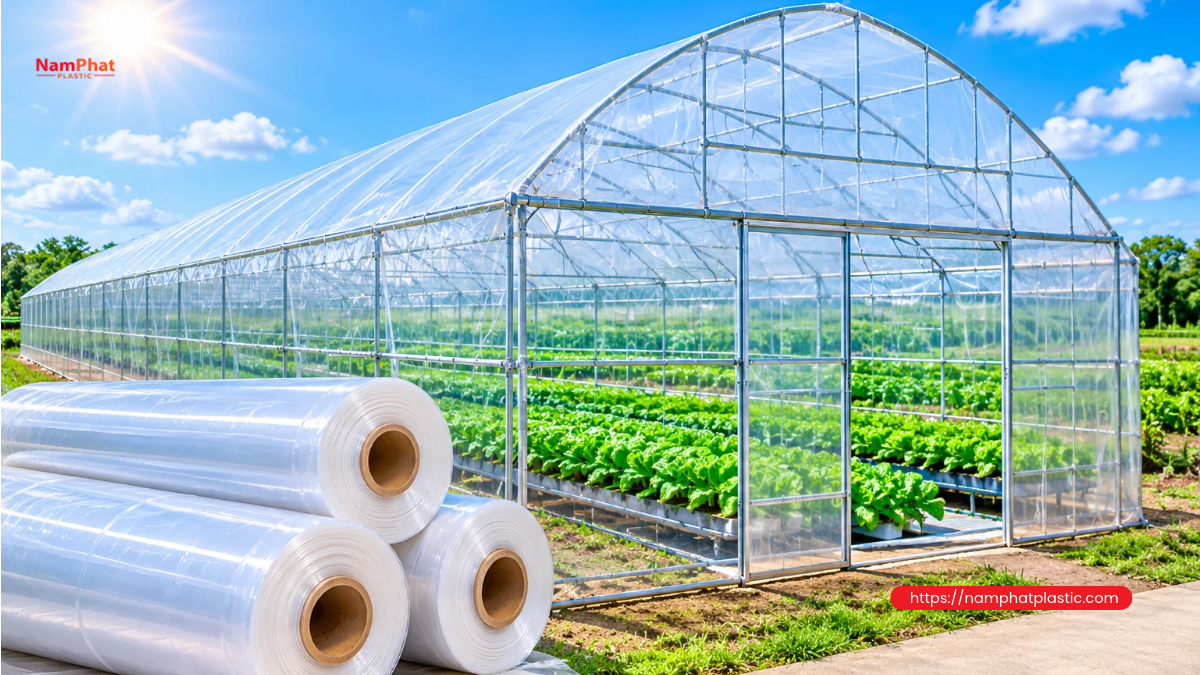
Sunlight, heat at frame-contact points and agrochemicals can all influence durability. BASF highlights weathering and certain chemicals' effects on film stabilisation. The requirement document should state location, exposure conditions and installation guidance. Accelerated ageing results do not automatically translate into years of field warranty.
6. Mulch film: colour, laying strength and recoverability
Select mulch film for the crop, season and cultivation operation. Black, silver/black, white/black and transparent films do not have identical optical or thermal effects. Visual colour inspection alone cannot confirm light blocking; agree a measurement method and practical objective. Width must include the buried anchoring portion, while perforations, if required, must match the planting layout.
Reducing thickness can reduce material use per area, but may increase tearing during laying or make collection harder if the structure is unsuitable. Tests should cover edges, areas around holes and post-use condition. Conventional PE film must not be described as soil biodegradable. ISO 23517 separately addresses soil-biodegradable mulch-film materials and related criteria; it is not an automatic certification for PE.
7. Width, thickness and output: state the measurement basis
Equipment specifications must distinguish bubble diameter, lay-flat tube width, opened-sheet width after slitting and folded-roll width. For an ideal circular tube without gussets, lay-flat width W = π × D / 2; after opening one edge, sheet width is approximately 2 × W before trimming. This is a geometric relationship, not proof that the tower or winder can handle every corresponding width.
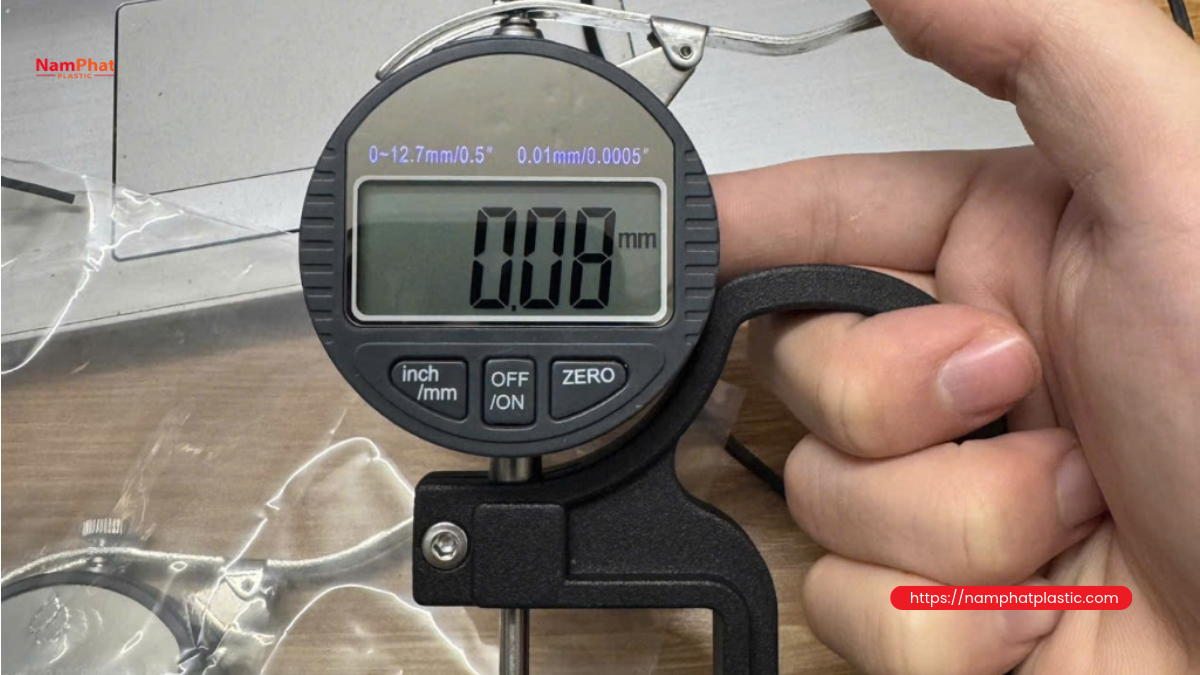
Specify thickness per single film wall, including point tolerances and sampling method. Do not confuse the combined thickness of a flattened tube's two walls with single-wall thickness. Commercial output should be based on conforming rolls after deducting startup, changeover and trim waste; kg/h does not represent the same film area when thickness and structure change.
8. QA plan: link each measurement to a decision
| Item | Reference basis | What to record | Decision supported |
|---|---|---|---|
| Thickness | ISO 4593 | Position map, single or multiple walls, extremes and mean | Detect weak regions and check tolerances |
| Tensile | ASTM D882 | MD/TD, specimen preparation, test conditions and speed | Compare strength and elongation under equivalent conditions |
| Impact | ASTM D1709 | Method, thickness and specimen conditioning | Assess the corresponding impact resistance |
| Optics | ASTM D1003 within its suitable scope | Haze, light transmission and application-specific supplementary methods | Avoid equating haze with agronomic performance |
| Greenhouse film | EN 13206:2025 | Classification, test conditions and selected requirements | Build a covering-film specification |
| Recoverable mulch film | EN 13655:2025 | Product scope, criteria and removal plan | Distinguish it from biodegradable film |
These standards are references for agreeing tests, not certification claims. The laboratory must use the agreed edition and complete procedure and check applicability. For highly diffusing film, do not assume that every haze measurement method is suitable.
Sampling should cover both web width and production time, including initial rolls, stable operation and post-changeover output. Each roll should be traceable to material lots, structure, production shift and inspection results. One attractive sample from the middle of a roll cannot represent the entire order.
9. Diagnose defects using evidence
| Symptom | Potential cause groups to check | Evidence before adjustment | Controlled response |
|---|---|---|---|
| Uneven shrink or wrinkled packs | Orientation, thickness, sealing and tunnel heat distribution | MD/TD shrinkage and pack samples under identical conditions | Separate film defects from packaging defects; change one factor at a time |
| Gauge bands, uneven rolls | Die flow, cooling and accumulated winding variation | Thickness map and band position over time | Check the source of variation before compensating with winding tension |
| Blocking, difficult opening | Film temperature, surface, winding pressure and storage | Temperature at winding, storage history and opening test | Review cooling and winding conditions against the procedure |
| Greenhouse film still drips | Installation side, surface function, ageing and drainage geometry | Correctly oriented sample and agreed condensation conditions | Check function together with installation design |
| Mulch tears during laying | Thin spots, contamination, slit edges, tension or bed surface | Tear location, local thickness and comparison laying trial | Compare roll quality with use conditions |
Do not address every defect by increasing thickness or adding more additives. Retain control samples, record changed variables and recheck other properties. Die cleaning, screen changes and interventions at blades or winding rolls must follow the plant's safety and energy-isolation procedures.
10. Utilities and total cost of ownership
Beyond the main machine, check usable building height, floor loading, roll-lifting routes, electricity, heat removal, compressed air and ventilation. Wide film requires adequate handling space, dust protection and safe roll transport. Installed motor power is not actual electricity consumption per kilogram of conforming product.
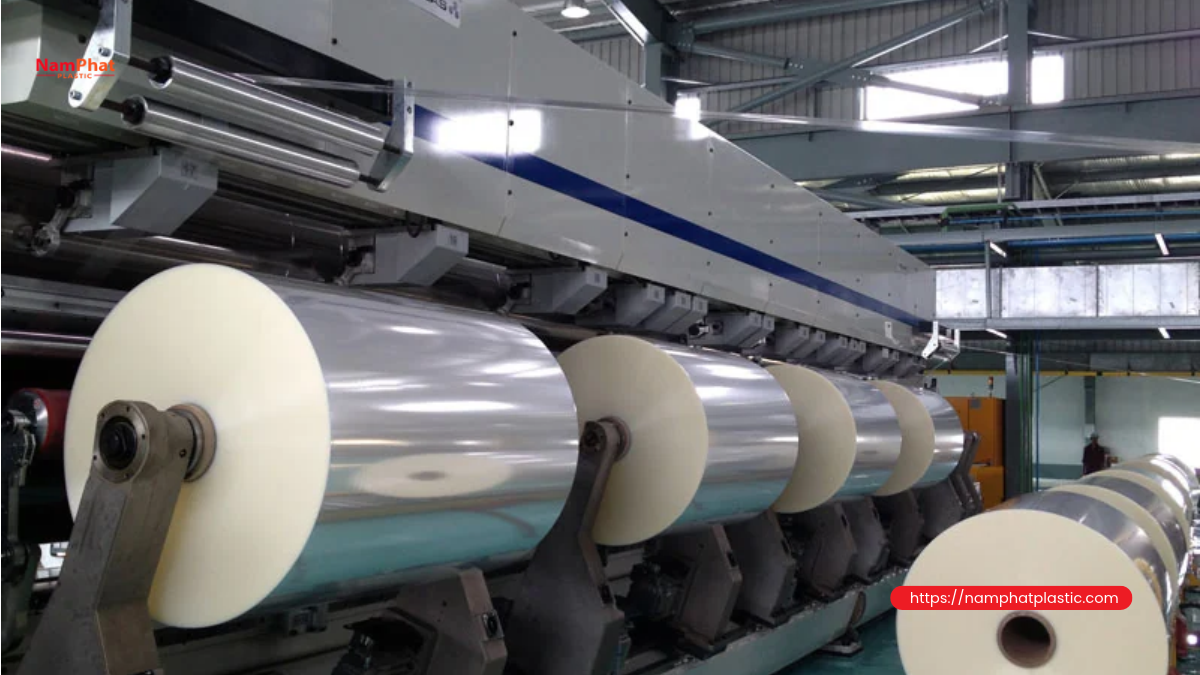
Investment comparisons should include ancillary equipment, QA tools, replacement consumables, staffing, changeover time and waste handling. If rework is used, also assess quality variability, filtration and traceability. A low-priced machine that meets specifications only on one easy-running product may not suit the planned portfolio.
11. What to include in quotation requests and acceptance
| Information group | Items to agree |
|---|---|
| Target products | Separate shrink, greenhouse and mulch films; identify priority grades and reference samples |
| Dimensions and format | Width for the correct film form, single-wall thickness, structure, roll, core and installation direction |
| Trial materials | Resin grades, additive documentation and confirmed rework limits |
| Performance | Conforming-roll output at defined dimensions and utility conditions, together with quality |
| Equipment scope | Included metering, filtration, cooling, thickness measurement, folding, slitting, winding and auxiliaries |
| Handover | FAT, SAT, documentation, training, safety, spares and responsibility for deviations |
FAT is factory acceptance testing at the machine builder; SAT is acceptance testing at the installation site. Select representative products covering the project's difficult limits, not only easy-running products. Records should state stable running time, measurement methods, waste quantity and finished-roll results. Criteria, durations and acceptance thresholds must be agreed before testing.
Machine acceptance and verification of film suitability in use are related but distinct steps. SAT cannot immediately demonstrate long outdoor service life; laboratory results do not replace pack trials, film laying or installation on a suitable structure. Plan application validation before increasing production volume.
12. Five frequently asked questions
Can one machine produce all three film groups?
There may be a shared operating range, but each configuration must be checked and every product group tested. Bubble width, draw ratio, cooling, folding and winding may limit conversion; do not accept an unconditional “universal” claim.
Are more film layers always better?
No. A good structure delivers the required function and stable production at an appropriate cost. Add layers only when the benefit is measurable and feed rate, layer ratio and changeovers can be controlled.
Does equal shrinkage mean equal packaging performance?
No. Shrink force, seals, thickness, friction and tunnel conditions also matter. Compare MD/TD shrinkage using the same test and verify with actual packs.
Can greenhouse-film service life be promised from thickness?
It should not be. Evidence is needed for structure, weather stabilisation, chemical exposure and installation and use conditions. Claims need a defined scope and supporting evidence; thickness alone is insufficient.
Can PE mulch film remain in the soil after harvest?
Conventional PE should not be treated as soil-biodegradable film. Suitable collection and treatment plans are needed; biodegradable products require separate assessment documentation for the intended application.
Discuss requirements with Nam Phát
Before selecting a solution, prepare a film sample, intended use, specifications, current defects and existing inspection methods. You can discuss packaging needs through Nam Phát Plastic; if you need finished bags rather than equipment investment, see custom PE bags. This article is technical guidance, not a machine quotation or confirmation that Nam Phát supplies, manufactures or installs the lines described.
- 0 Comment


