


 Phan Van Hoang
- 21/10/2026
- 1
A PU foam production line is more than a machine that mixes chemicals and pours a foam block. For flexible polyurethane foam used in mattresses, seating and cushioning components, quality depends on the entire chain: selecting the chemical system, metering, distributing the mixture, controlling foam rise, curing, cutting and testing. A high-flow machine does not necessarily deliver more acceptable products if the curing area or cutting department becomes the bottleneck.
This article focuses on flexible slabstock polyurethane foam, while distinguishing batch production, molded flexible foam, rigid PU and rebonded foam. It is a reference for preparing technical requirements and discussing equipment with suppliers, not a formulation or chemical operating manual.
1. Identify the foam type before selecting the production line
The term “PU foam” covers very different products. A factory producing mattress foam sheets does not have the same equipment configuration as one molding shaped seat cushions, and neither should assume that its machinery can make rigid PU insulation panels. Sharing a polymer family does not make raw materials, molds, forming methods or acceptance specifications interchangeable.
| Product group | Main production route | Investment considerations |
|---|---|---|
| Continuous flexible slabstock | Metering and pouring onto a conveyor; rising into a long block, followed by block cutting and curing | Stable demand, line footprint, grade changes and cutting yield |
| Batch flexible slabstock | Preparing individual batches and pouring into a suitable box or block-forming area | Individual block dimensions, batch cycle, labor and batch-to-batch variation |
| Molded flexible foam | Metering into a shaped mold, reacting and demolding in a defined cycle | Number of molds, component geometry, cycle time and cavity consistency |
| Rigid insulation PU | Dedicated chemical systems and equipment for rigid products | Thermal performance, dimensional stability, facings and intended application |
| Rebonded foam | Sorting foam scrap, adding a binder and forming blocks with suitable equipment | Scrap origin, cleanliness, binder and bond quality |
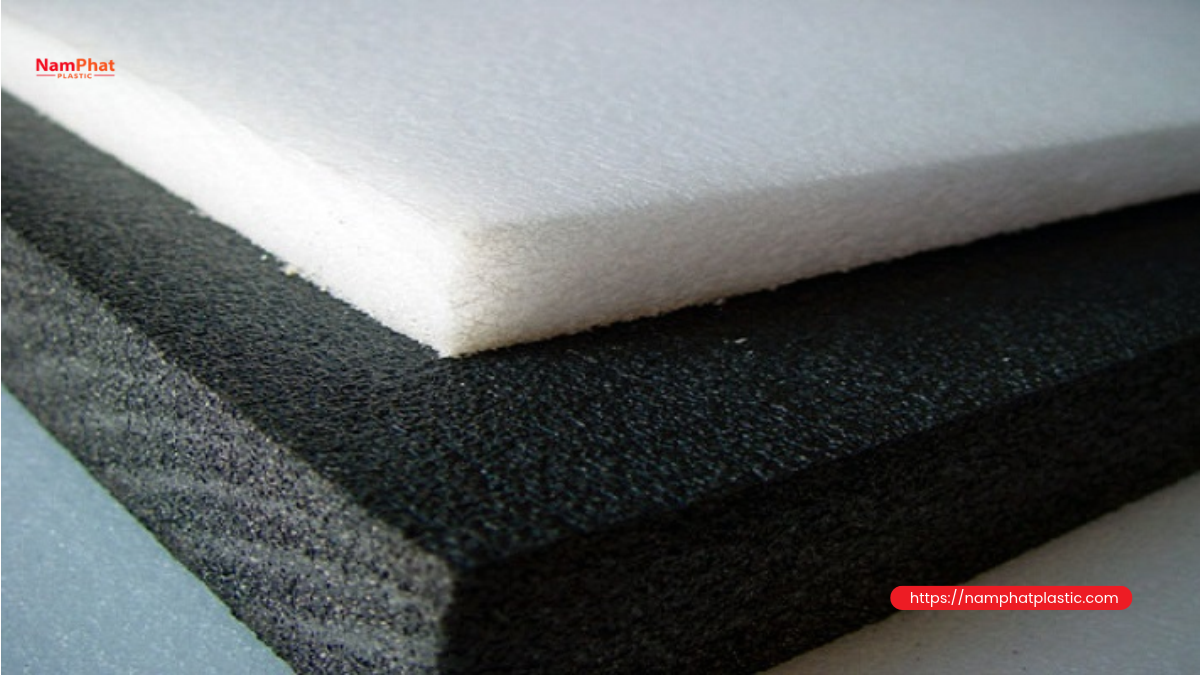
Hennecke's slabstock systems portfolio distinguishes continuous, discontinuous and laboratory machinery. This is a useful basis for asking scale-related questions; it does not imply that every technology suits every business.
2. How is PU foam formed?
Polyols, isocyanates and cellular structure
In conventional PU systems, polyols react with isocyanates to form a polymer network. Other system components help control reaction speed, stabilize cells and influence final properties. TDI or MDI may be used depending on the system; they cannot be substituted merely because they belong to the same chemical family. The raw-material supplier must confirm compatibility of the complete system and its application range.
In water-blown systems, the reaction involving water and isocyanate generates CO₂, which helps the mixture expand. This differs from the simplified description “plastic is melted and gas is injected” used for some thermoplastic foams. PU systems may use other or combined blowing approaches; not all PU foam uses one universal blowing agent. The historical EPA handbook on flexible polyurethane foaming explains the role of reaction-generated CO₂, but is not a recipe for direct use in a modern factory.
Cell morphology influences airflow and deformation. Cell size, interconnection, cell walls and uniformity across the section all matter. Internal structure cannot be judged from color or a hand-squeeze alone. Where air permeability is important, airflow should be tested using an agreed method rather than describing the material simply as “breathable foam.”
Density is not firmness
Density is mass per unit volume, usually expressed in kg/m³. Firmness requires an indentation force test, such as IFD, with defined specimen geometry and conditions. Two foams of the same density can have different firmness, and higher-density foam is not necessarily firmer. PFA's explanation of flexible foam properties emphasizes this distinction.
Consequently, “very firm 30 kg/m³ foam” is not a complete acceptance specification. Documentation should separate density, indentation force, thickness, tolerances and test method. Where fillers are present, agree on how density is interpreted and do not use that value alone as proof of durability. Resilience, compression set and resistance to repeated compression must be assessed separately for the intended use.
3. Configuration of a flexible PU foam production line
| Equipment section | Function | What to verify |
|---|---|---|
| Raw-material receiving and storage | Maintain identification, quality and suitable storage conditions | SDS, batch codes, shelf life and compatible tank and pipe materials |
| Feeding and metering | Deliver individual streams to the mixhead | Dedicated pumps, operating flow range, calibration and repeatability |
| Raw-material conditioning | Maintain conditions appropriate to the chemical system | Temperature measurement, recirculation where designed and deviation alarms |
| Mixhead and distribution | Mix, pour and distribute material into the block-forming zone | Mixing at low and high flow; approved cleaning procedures |
| Conveyor or block-forming box | Guide geometry and foam rise | Usable dimensions, liners, adjustment mechanisms and spill collection |
| Block cutting, handling and curing area | Separate blocks and hold them until further processing is appropriate | Capacity, traceability, thermal management and fire strategy |
| Horizontal, vertical or contour cutting | Produce sheets, blanks and shaped components | Tolerances, cut surface quality, losses and blade safety |
| Testing and packing | Confirm conformity before dispatch | Measuring equipment, retained samples, batch reports and product protection |
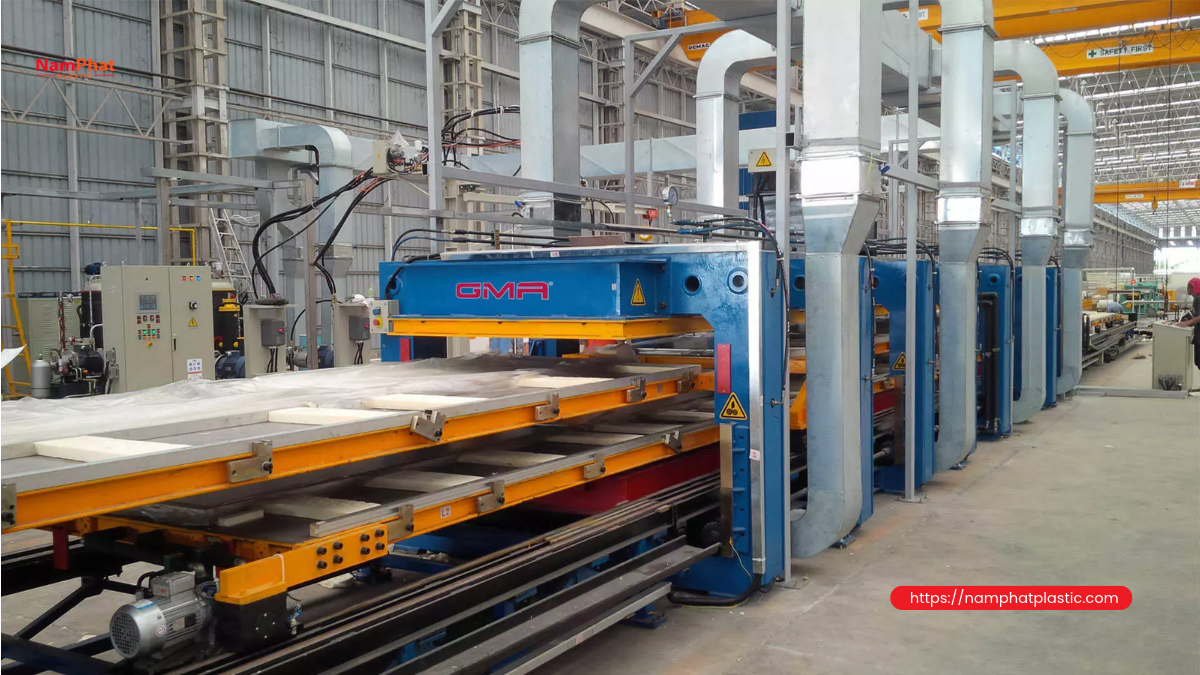
Metering performance should be demonstrated under actual operating conditions, not only through a catalogue accuracy figure. Raw-material viscosity and condition, tank level, filters, piping and pump condition can affect stability. Acceptance documentation should require repeated trials at the intended production rates and comparison of actual data with setpoints.
The control system should manage approved formulation versions, permissions for changes and records of important events. A value displayed on a screen does not itself prove that the correct amount was delivered. Verification requires a suitable calibration method, inspection schedule and stop criteria for deviations exceeding limits established by the technical team.
4. Production workflow: control each handover
Step 1: Receive, quarantine and confirm raw materials
Check each batch against its label, quality documentation and current SDS. Damaged packaging, unidentified material or suspected moisture contamination should be quarantined for evaluation. Storage must separate incompatible streams, control connections and provide an emergency plan for the actual chemicals. Transfer equipment should not be shared without assessing cross-contamination risks.
Step 2: Prepare the feed system and verify metering
Before production, trained personnel confirm the condition of pumps, sensors, valves and interlocks; material conditions must be within the supplier-approved range. Calibration requires records and suitable instruments. A mechanical fault should not be compensated for by independently changing chemical proportions, because that can conceal the cause and alter the product.
Step 3: Mix, pour and observe rise
The mixture reaches the forming zone through a suitable mixing and pouring arrangement. Continuous systems require coordination of mixture distribution, conveyor movement and rise-zone geometry. Batch systems place greater emphasis on cycle consistency and conditions between batches than on conveyor speed. Uneven surfaces, localized collapse or large voids should be recorded with the time and raw-material batch identification.
Step 4: Cut blocks and allow controlled curing
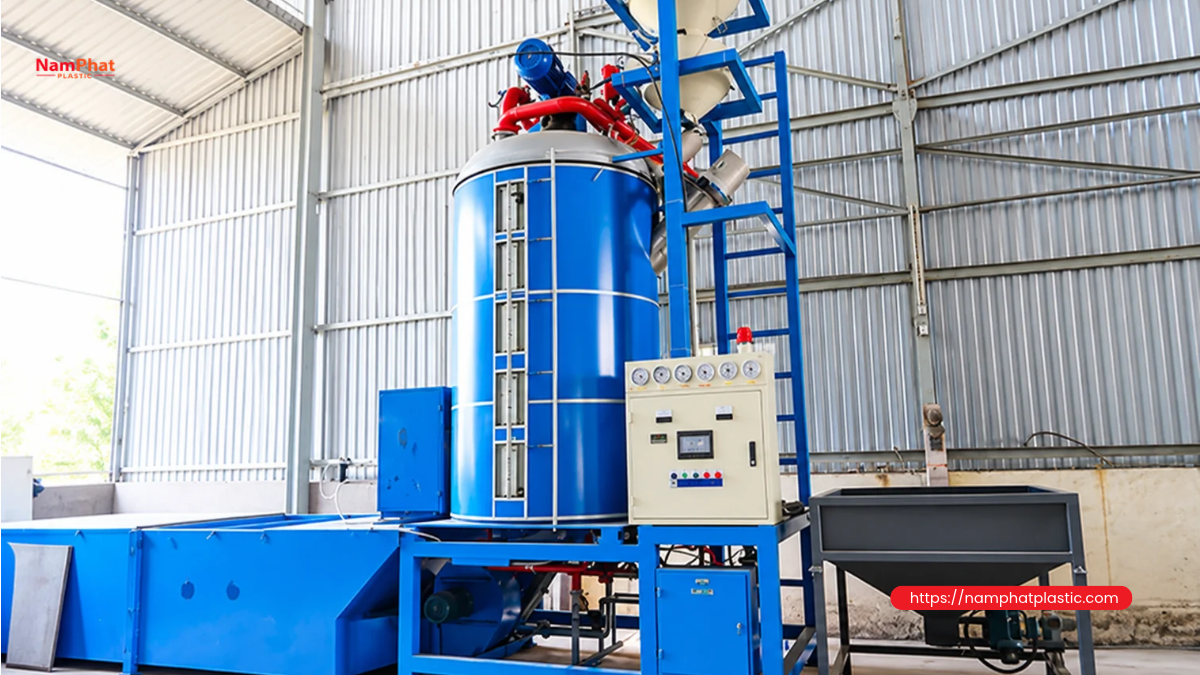
A newly formed block is not automatically ready for sheet cutting, compression packing or stacking. Reaction heat and internal conditions must be managed through a professionally established procedure. HSE highlights heat hazards in PU manufacturing and the fire risk of cellular plastics. There is no universal curing time for every chemical system, block size and factory environment.
The curing area needs sufficient capacity so that operators are not forced to move blocks prematurely to free up space. Block identification should remain traceable from pouring to storage, with pending, released or quarantined status. Release for cutting must follow validated criteria, not merely a surface that feels cool or the expiry of a preset interval.
Step 5: Cut, grade and dispatch
Once released, blocks are trimmed as necessary and divided according to a cutting plan. Blades, appropriate tension, support tables and positioning influence flatness, tearing and thickness. Nonconforming blanks must be separated rather than automatically mixed with acceptable stock or reusable scrap. Before packing, verify labels, dimensions, quantities, storage conditions and recovery performance if compression packing is used.
5. Continuous or batch production?
The decision should follow the order mix rather than the assumption that “continuous is always more advanced.” When demand consists of many small grades, changeover costs and off-specification start/end material may matter more than nameplate output. Conversely, sufficiently long runs of the same product can allow a well-balanced continuous system to reduce repetitive handling and stabilize production flow.
| Criterion | Continuous | Batch |
|---|---|---|
| Order mix | Worth evaluating for sufficiently large production runs | Worth considering for smaller lots and frequent changes |
| Quality variation | Monitor along the run and through grade changes | Monitor between batches and within individual blocks |
| Footprint | Requires appropriate forming-line, handling and curing layout | Requires block-forming areas and individual batch movement routes |
| Economic assessment | Include actual running time, startup losses and changeovers | Include the complete cycle, labor and trim losses |
| Acceptance trials | Stable running, grade changes and quality along the block | Repeatability across several representative batches |
Molded foam requires a separate analysis. The Hennecke equipment overview describes stationary systems, rotary tables and mold-transfer lines. Output then depends on mold count, cycle time, demolding operations and acceptable yield per component. Slabstock m³/hour should not be compared directly with seat cushions/hour.
6. Correct capacity calculations: kg/hour, m³/hour and saleable output
First establish whether kg/hour means total metered chemicals, cured foam mass or saleable goods. These are different quantities. Gas generation, any volatile losses, trimming and rejects change the material balance. Until trial data are available, assumptions should be separated from contractually guaranteed capacity.
Hypothetical example, not a Nam Phát machine specification: confirmed cured foam output is 600 kg/hour at an average density of 30 kg/m³. Block volume is therefore 600 ÷ 30 = 20 m³/hour. At an 85% volume yield after cutting and defect removal, saleable volume is 17 m³/hour. This calculation starts from foam mass, not directly from chemical input flow.
For 50 mm sheets, equivalent to 0.05 m, 17 m³ represents 340 m² of sheet per hour if all acceptable volume is converted to that thickness. A 2 m × 1 m × 0.05 m sheet has a volume of 0.1 m³, giving a theoretical 170 sheets/hour. Actual output also depends on block dimensions, the cutting plan, tolerances, cutting-machine capacity and packaging requirements.
Do not count losses twice: if the 85% figure already includes trimming, defects and cutting loss, do not deduct the same items again. For a more detailed analysis, separate stages on a consistent basis, such as post-curing acceptance yield followed by cutting recovery. The goal is to identify material loss, not produce an attractive overall percentage that cannot be verified.
7. Quality characteristics for foam acceptance
| Characteristic | Question to answer | Comparison caution |
|---|---|---|
| Density | Does mass per volume meet the requirement? | Sampling location, skin and fillers can affect interpretation |
| Indentation force and firmness | Does the foam provide the intended feel and support? | Agree on method, thickness and degree of deformation |
| Compression set | How does thickness recover after the specified exposure? | Do not compare results obtained under different conditions |
| Rebound and recovery | Does resilience suit the mattress or cushion type? | Slow-recovery foam should not be judged identically to all conventional foams |
| Airflow | Does the structure allow the required air passage? | State method, sample size and units |
| Tensile strength, elongation and tear | How well does the blank withstand conversion and use? | Keep sampling direction and position consistent |
| Dimensions, appearance and odor | Are sheets correctly specified and free of unacceptable defects? | Odor does not replace emissions testing or chemical assessment |
| Aging and repeated compression | How do properties change after test exposure? | Laboratory results do not automatically predict years of service |
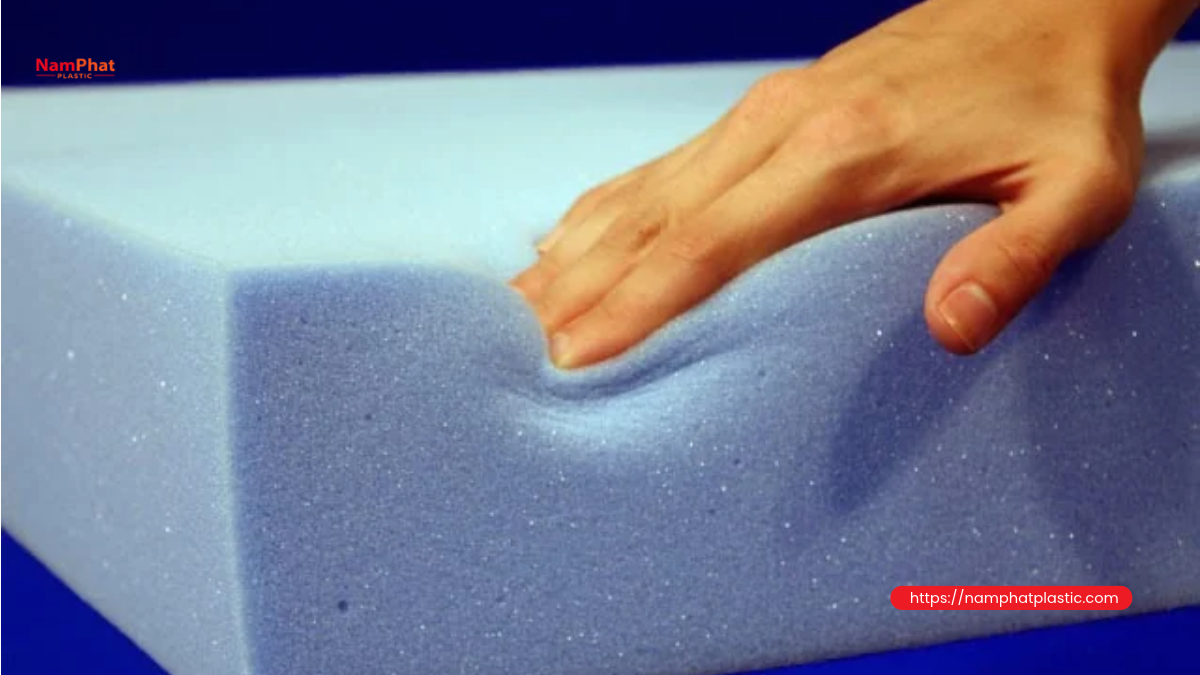
ASTM D3574 provides test methods for slab, bonded and molded flexible polyurethane foam. Citing the standard does not mean that a product is certified. Purchasing documents must identify the applicable method, edition, specimen conditions and acceptance limits; results reflect the corresponding test conditions.
Sampling plans should cover suitable central and edge positions, block height, run starts and ends or representative batches. Samples must stabilize and be conditioned according to the selected method. If the parties test at different times or thicknesses, disputes may arise from the procedure rather than material quality.
8. Common defects: diagnose with evidence
| Observation | Potential causes to investigate | Appropriate checks |
|---|---|---|
| Density or firmness variation | Metering, materials, processing conditions or sampling | Compare batch codes, calibration, production history and measurement methods |
| Collapse, cracks or large voids | Reaction imbalance, distribution, contamination or unstable block formation | Quarantine, record defect locations and consult the chemical-system supplier |
| Discoloration or abnormal heat | Reaction conditions and thermal management require assessment | Prioritize safety procedures; do not continue normal product handling |
| Incorrect sheet thickness or torn surfaces | Block condition, blades, guides or support | Review cutting conditions and measure at several positions |
| Unacceptable odor or emissions | Raw-material system, curing, contamination or packaging | Test for the intended application; do not mask odor to secure acceptance |
One symptom can have several causes. Effective investigation preserves samples, data and change history, then tests each hypothesis within approved limits. Independently increasing additives or changing proportions as a quick fix, without expert validation, can obscure the cause and increase risk.
9. Safety belongs in the design, not in an optional accessory list
OSHA warns of isocyanate health effects, including respiratory problems, occupational asthma and skin and eye irritation. NIOSH also identifies respiratory sensitization risks from isocyanates, including polyisocyanate forms. Assessment must consider both inhalation and skin contact, particularly during receiving, maintenance, cleaning and incident response. An ordinary face mask must not be treated as an adequate solution.
The factory needs professional exposure assessment, engineered source capture and ventilation, chemical-appropriate protective equipment, training and emergency arrangements. Where respiratory protection is needed, selection and the protection program must follow a professional assessment. Each material's SDS and supplier instructions are essential inputs; this article does not replace an on-site safety assessment.
PU foam also represents a substantial fire load. Reaction, curing, conversion and storage areas must be assessed together for detection, alarms, fire separation and suppression. Heat sources, hot work, accumulated scrap and escape routes belong in the design. PFA provides flexible-foam handling and storage guidance; implementation still requires engineering assessment and attention to local requirements.
“Flame-retardant” does not mean “fireproof.” Any flammability claim must identify the validated test, specimen and use conditions. Similarly, suitability for food contact, medical use or zero-emissions claims must not be inferred from a lack of odor. Such applications require separate evidence, not assumptions based on the PU name or foaming equipment.
10. Scrap, rebonded foam and investment efficiency
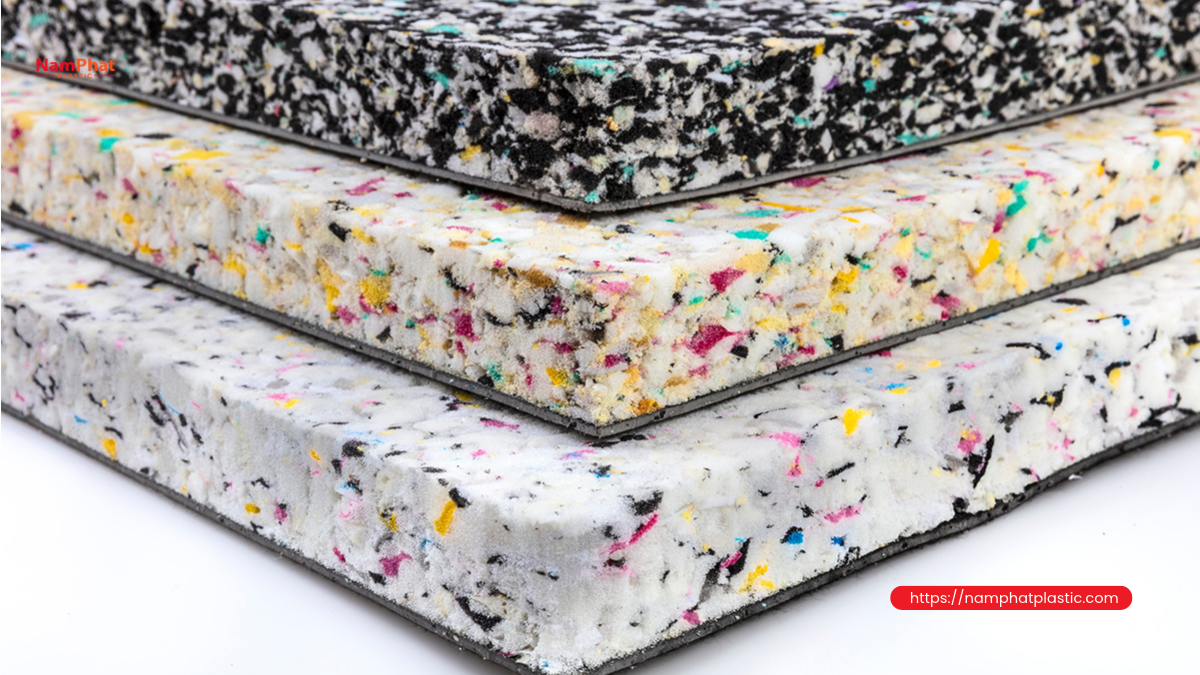
Clean cutting scrap may be an input to an appropriate rebonding process. However, rebond production is not simply shredding and pressing every type of scrap together. Origin, foreign matter, cleanliness, binder, bonding conditions and finished properties require control. If the binder contains reactive components, chemical hazards still require assessment; recycled material is not automatically harmless.
Do not return scrap of unknown history to products merely to reduce cost. Consider segregation by source, condition and approved use. Recycling does not replace first-pass yield control. Each option must also account for internal transport, labor, storage space and testing.
Total ownership cost includes raw material per acceptable unit, auxiliary energy, maintenance, labor, ventilation, fire protection, testing, curing space and inventory capital. A low machine purchase price does not offset excessive blocks waiting for cutting or large post-curing rejection losses. Ask suppliers to clearly state their scope of supply and the items the investor must provide.
11. What should a request for quotation include?
Provide a product matrix covering application, density, test-defined firmness, sheet dimensions, tolerances, lot mix and saleable output. Include a site layout, existing utilities and traceability requirements. This makes the quotation reflect the actual project rather than merely a list of foaming machines.
Acceptance should include representative products, repeated runs, grade-change checks and yield reports. Agree beforehand who supplies the raw materials, who measures samples, how conflicting results are resolved and what training is included. For properties strongly dependent on the chemical system, involve both the material supplier and machine builder.
Nam Phát Plastic shares this article as an educational resource on materials and manufacturing. It does not claim that Nam Phát sells PU production lines or manufactures PU foam. For commercial enquiries, confirm the actual product range and supply capability separately.
12. Frequently asked questions
Can a PU foam line also make EPE or XPS?
It should not be considered interchangeable. Flexible PU slabstock is formed through a reactive system, while EPE and XPS use different thermoplastic foam technologies, materials and equipment. Evaluate the actual product, not merely the shared word “foam.”
Is higher-density foam always firmer?
No. Density and indentation force are separate characteristics. Comparisons require the same method, dimensions and test conditions; squeezing foam by hand is not an adequate acceptance criterion.
Can blocks be cut and packed immediately after rising?
Do not assume so. Blocks must meet curing procedures and safety criteria established for the material system, dimensions and factory conditions. A stable surface does not prove that the core is ready.
Can kg/hour be converted directly into sheet count?
Only when the state of the foam mass, density, acceptable yield, sheet dimensions and cutting losses are known. Chemical input flow must not be equated with finished-product mass.
Can rebonded foam replace every virgin foam grade?
No. A structure made from bonded foam pieces and binder has different characteristics. Test it for the intended application, control scrap origin and do not infer quality or safety merely from the word “recycled.”
Conclusion: buy acceptable production capacity, not just machine flow
A sound investment connects product requirements with the chemical system, equipment, curing, cutting and testing. The three key questions are: which foam is needed, how much acceptable product can be made per hour, and what evidence confirms quality and safe operating conditions? Clear answers make PU foam production-line comparisons much more meaningful than machine price and advertised output alone.
- 0 Comment


