


 Phan Van Hoang
- 21/10/2026
- 3
A pallet cover production line typically includes blending, wide tubular blown-film extrusion, gusseting, winding, and sealing and cutting. However, buying equipment by maximum width or advertised speed can produce the wrong configuration: a bag is wide enough but will not open, seals fail at folds, or the converting machine waits for film while the extruder keeps running.
The better starting point is to agree on the bag type, dimensioned drawing, service conditions and acceptable-product output before selecting equipment. This article covers PE covers, gusseted bags, box-shaped bags and shrink hoods, with stretch hoods compared to prevent confusion. It is a technical selection guide, not a statement of Nam Phát's machine configuration or capacity.
1. Identify the product before designing the line
| Product | Application mechanism | Decisive requirements |
|---|---|---|
| Ordinary PE pallet cover | Placed over a load, usually closed at the top and open underneath | Fit, bag opening, puncture resistance and seal quality |
| Gusseted or box-shaped bag | Opens to accommodate the load; may also serve as a liner | Gusset convention, corner geometry, seal construction and usable length |
| Shrink hood | Placed over the load and heated to shrink around it | Shrinkage in both directions, shrink force, seals and compatibility with the shrink system |
| Stretch hood | Film tubing is mechanically stretched, then released to recover | Working stretch, elastic recovery, holding force and corner strength |
| Pallet stretch wrap | A film strip is wrapped repeatedly around the load | Stretch characteristics and wrapping pattern; not a preformed cover |
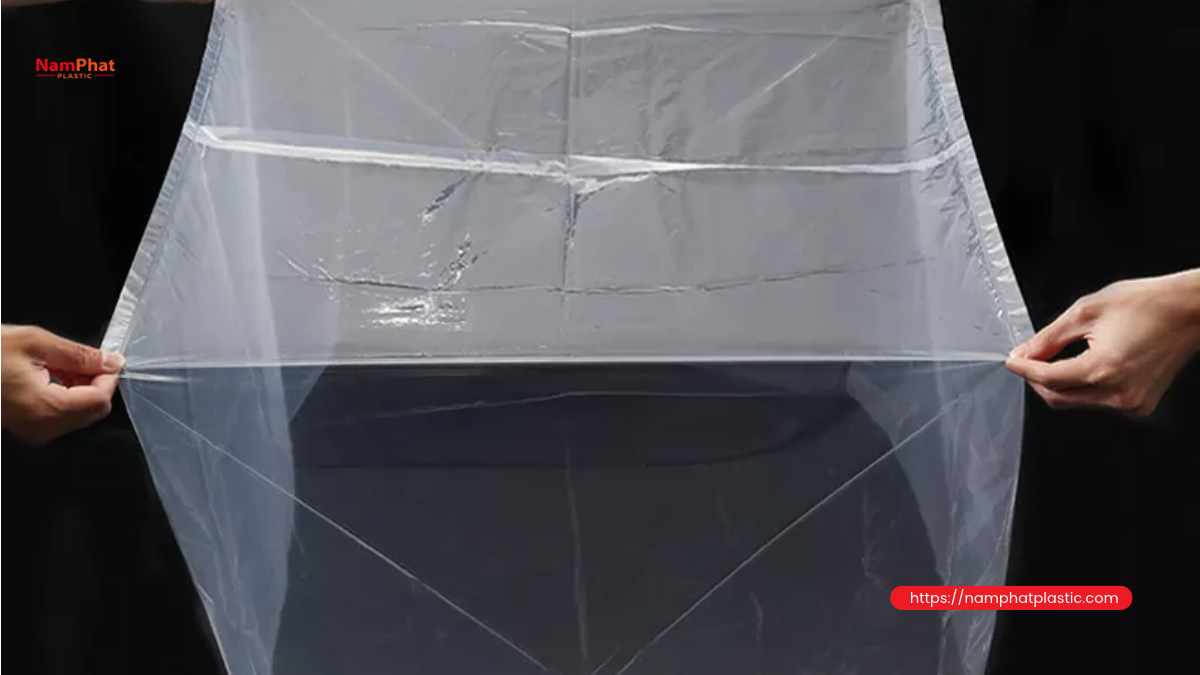
A loose cover primarily protects surfaces; it does not by itself demonstrate load containment. In LyondellBasell's description of stretch hoods, tubing is stretched and tension after release provides holding force. MSK shrink hood systems instead combine hood application with thermal shrinking. Increasing film thickness alone does not make these mechanisms interchangeable.
Bag manufacturing equipment belongs to the packaging producer's process; hooding and shrinking equipment belongs to the customer's pallet-packing operation. Some packaging machines accept a roll of tubing and cut and top-seal the hood themselves, so they do not require individual premade bags. Defining this interface early prevents investment in duplicate operations.
2. Agree on a drawing, not just “width × length”
Measure the maximum outside dimensions of the fully assembled load, including overhang, corner protectors and top sheets. Distinguish load height from height including the pallet, and specify where the cover should end. Manual slip-on covers need handling clearance; shrink hoods need allowances and anchoring suited to the shrink process; stretch hoods must be sized within the working stretch window of the film and machine combination.
In this article, W means the opened bag face width, D the opened depth and L the cut length. For an ideal tube with a rectangular cross-section, the perimeter is 2 × (W + D); the fully ungusseted layflat width is W + D. With two symmetrical side gussets, each fold is inserted by D/2. This is a geometric convention, not a universal supplier specification format.
One quotation may use “gusset” for the full depth while another means the fold depth on one side. Require drawings of the folded and opened states, together with an approved sample. State the gusseted roll width, fully opened layflat width and usable sealing width separately. Do not assume one fixed machine width can accommodate every standard pallet.
Cut length is not the same as covered height. Top formation, the seal, corner construction and the lower skirt consume length. Square-bottom or corner-sealed bags need their own developed drawing; do not automatically apply the formula for a simple transverse-sealed bag.
3. Process stages and quality handover points
| Stage | Equipment or function | Acceptance checks |
|---|---|---|
| Material preparation | Feeding, gravimetric blending and contamination control | Batch traceability, blend consistency, cleanliness and suitability for use |
| Blown-film extrusion | Extruder, melt filtration, annular die, cooling and haul-off | Tube width, thickness distribution, appearance and mechanical properties |
| Gusseting and winding | Gusset formers, web guiding, tension control and winder | Balanced folds, rolls without wrinkles or blocking, stable roll edges |
| Bag conversion | Unwinding, length feeding, sealing, cooling, cutting or perforating | Correct length, continuous seals, bags that open and correctly positioned perforations |
| Finishing | Folding, counting or bag winding, inspection and packing | Correct count, dispensing direction, batch labels and transport protection |
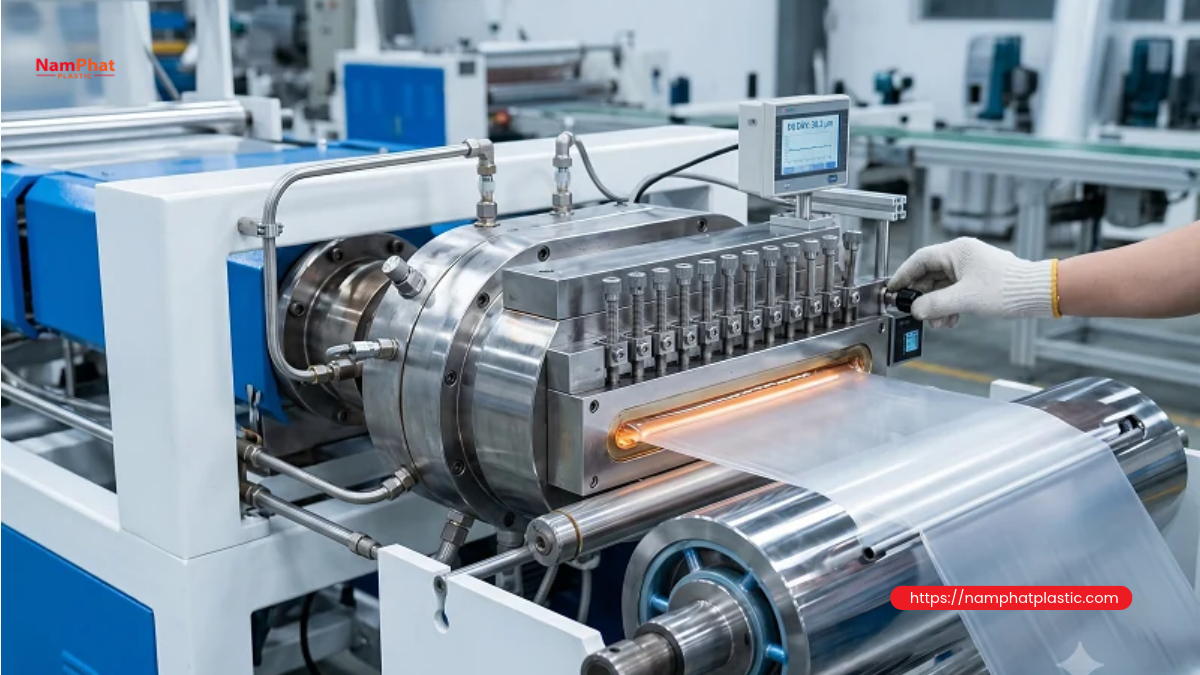
Wide formats place greater demands on bubble stability, thickness control and web handling. W&H's VAREX II documentation illustrates application-specific blown-film configurations and an optional side-gusseting system. This does not mean that every blown-film line can already manufacture every pallet-cover construction.
Locally thin film at a corner can tear even when average bag weight is acceptable. An attractive roll is not proof of good unwinding either: check opening force, blocking and roll performance after an agreed storage period. If printing is required, add surface treatment, ink control and print-mark registration; do not assume every order needs these operations.
4. Match the configuration to the product mix
Monolayer or multilayer coextrusion
Monolayer film can be suitable when functional requirements are relatively simple. Coextrusion allows functions to be assigned to different layers, such as a sealable surface and a mechanically supportive core. More layers do not automatically mean a better bag: assess thickness distribution, material compatibility, the stability of each extrusion stream and the ability to inspect the result.
LDPE, LLDPE and blend components must be selected for processability, toughness, sealability and end use. For shrink hoods, orientation and thermal-shrink behaviour must be designed into film production. Stretch hoods require a dedicated structure with suitable extension and recovery, not merely a “softer” PE.
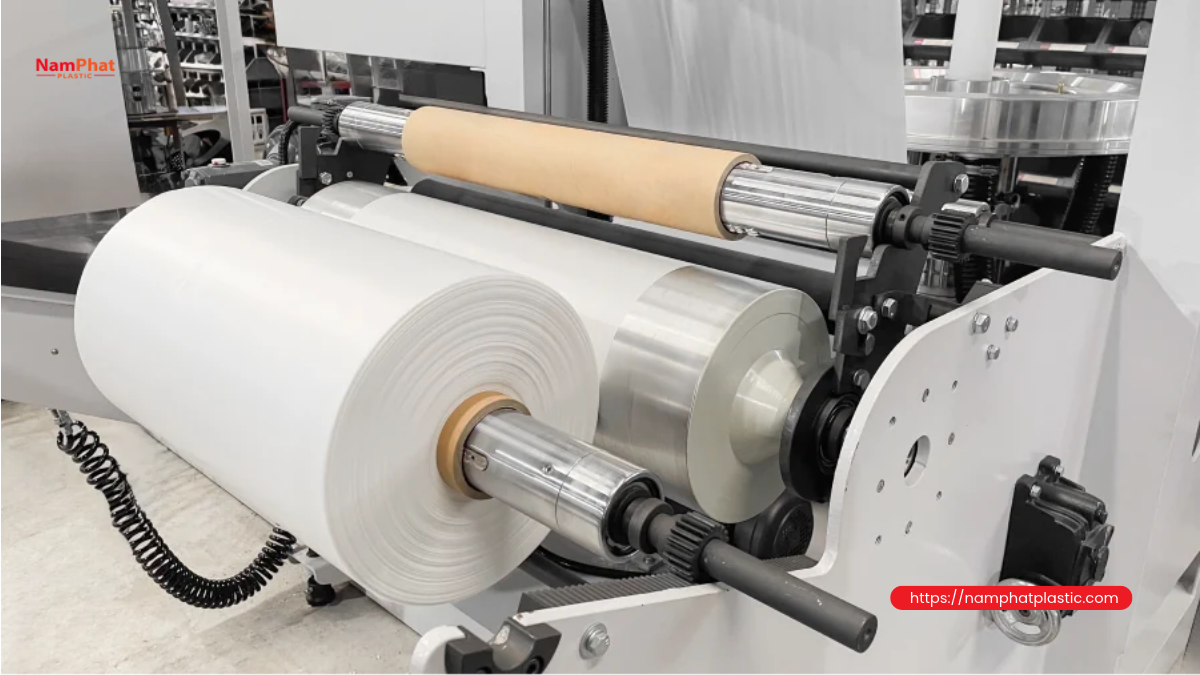
Individual bags, bags on rolls or tubing only
Individual bags require take-off, folding and stacking systems suited to large formats. Bags on rolls need control of perforation position, bag count, winding direction, diameter and core. Tubing supplied to an automatic hooder must also meet its requirements for opening, friction, unwinding consistency and roll geometry.
At gussets, the sealing bar encounters a different number of overlapping plies than at the middle of the bag face. Heat-transfer uniformity, pressure, contact time and cooling therefore need assessment with actual samples. Box-shaped or corner-sealed bags may require dedicated forming and sealing stations. PLAS ALLIANCE presents pallet-cover and liner configurations including large bottom-sealed bags; this illustrates one configuration, not the only suitable machine.
Separate extrusion and conversion can make product changes and shared roll inventories easier. An integrated line may reduce intermediate handling but must manage speed differences, film accumulation and stoppages. Choose according to the actual order mix, not just the length of the line.
5. Calculate throughput from bag weight and bottlenecks
The following example illustrates the calculation only. It is not a commercial specification, machine guarantee or operating recipe. Assume a gusseted tubular bag with W = 1.25 m, D = 1.05 m, L = 2.00 m, single-wall thickness t = 80 µm and assumed density ρ = 920 kg/m³. Ignoring trimmed material, theoretical weight is:
m = 2 × (W + D) × L × t × ρ = 0.67712 kg/bag.
Convert 80 µm to 0.000080 m. The formula already uses the complete tube perimeter, so do not multiply by two again because the film has two faces. Replace the assumed density with the actual blend's appropriate value; cross-check by weighing samples and using the developed area if the construction differs.
| Illustrative input | Calculation | Result |
|---|---|---|
| Extrusion supplies 180 kg/h of acceptable film | 180 ÷ 0.67712 | Equivalent to approximately 266 bags/h |
| Single-lane conversion at 6 bags/min; running time 85%; quality yield 97% | 6 × 60 × 0.85 × 0.97 | Approximately 297 acceptable bags/h |
| Complete line under these assumptions | min(180 ÷ 0.67712; 6 × 60 × 0.85) × 0.97 | Approximately 258 acceptable bags/h, not guaranteed output |
Here, 180 kg/h is already acceptable-film output, so extrusion scrap must not be deducted again. However, the converter’s 97% quality yield still applies to the film entering conversion. All figures must use the same time basis; this illustration excludes other transfer losses. For a 2.00 m bag, 6 bags/min corresponds to an average film feed of 12 m/min, while intermittent indexing has a different peak speed. Consequently, a machine's maximum web speed cannot be converted directly into acceptable bags per hour.
For shift planning, account separately for roll changes, size changes, cleaning, start-up, inspection and packing. Compare electricity as kWh/kg of acceptable product or kWh/acceptable bag. Installed power multiplied by the full shift is not necessarily actual energy consumption.
6. Recyclates and additives need measurable acceptance criteria
Recycled resin may be considered where the source and application allow it, but contamination, melt-flow variation, odour, colour and gels need control. A usage ratio cannot be chosen solely for its material-price reduction. After changing the source or proportion, revalidate puncture performance, seals and any shrink or recovery function.
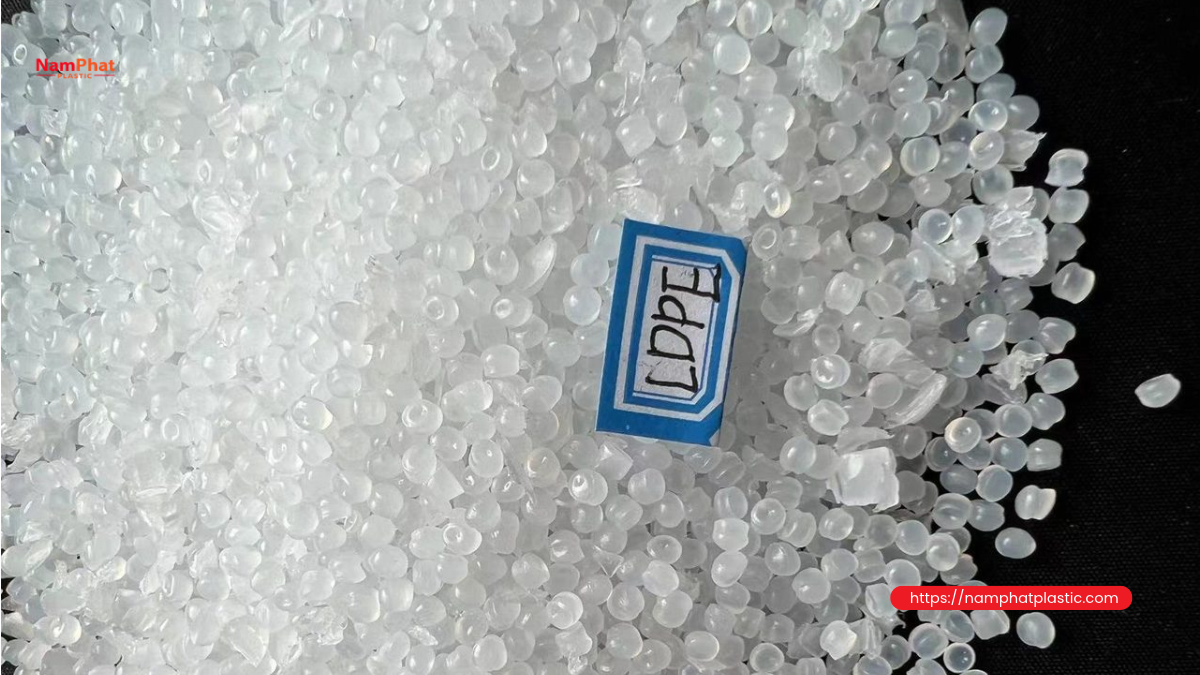
Slip, antiblock, colour, UV-stabilising and antistatic additives need measurable objectives. Excessive slip can make the cover hard to keep in position; excessive blocking makes it difficult to open. Black colour alone does not prove UV protection, and the name PE does not establish food-contact suitability. These requirements need separate material documentation and application-specific verification.
7. Inspect from film through to the real pallet
| Inspection group | Scope | Use of results |
|---|---|---|
| Dimensions and thickness | Width, gussets, length, thickness map and weight | Control local thin spots, not just averages |
| Film mechanics | MD/TD tensile properties, impact and relevant sharp-corner tests | Compare using consistent specimens and methods |
| Seals | Face centre, gusset transitions and corners; force and failure mode | Identify weak locations and between-batch consistency |
| End-use function | Opening, hooding, thermal shrinking or stretching, load holding and removal | Validate with the customer's actual pallets and equipment |
Reference methods include ASTM D882 for film tensile properties, ASTM D1709 for falling-dart impact, ASTM F88/F88M for seal strength and ASTM D2732 for unrestrained linear thermal shrinkage. Agree on editions and test conditions; citing a method is not certification that the product achieves a default quality level.
Free shrinkage does not substitute for restrained shrink force, and elongation at break is not a stretch hood's safe working extension. Transport testing must consider the load, stacking pattern, pallet, film anchoring and logistics route together. A closed top with an open bottom does not guarantee watertightness or condensation control under every condition.
8. Common defects and how to narrow down causes
| Symptom | Possible causes to examine | Verification approach |
|---|---|---|
| Tearing at corners during hooding | Insufficient allowance, sharp corners, thin film areas or gels | Measure the load and bag; mark tear locations; compare the thickness map |
| Seal failure at gussets | Misaligned folds, contamination, overlapping plies, unsuitable sealing or cooling | Sample each seal region and assess failure modes |
| Bag difficult to open | Blocking, static, winding pressure, material or storage conditions | Compare fresh and stored rolls using the customer's actual opening mechanism |
| Uneven shrinking or post-shrink tears | Heat distribution, bag geometry, directional shrinkage or load edges | Check both film and shrink system rather than simply adding heat |
| Roll telescoping or variable length | Tension, feed slip, edge guiding or encoder issues | Compare relaxed-film length and operating history |
Identify the affected batch and onset of the problem before changing several variables at once. Keep adjustments within limits validated by the material supplier and OEM; do not apply one temperature, pressure or speed to every film.
9. Utilities, safety and investment acceptance
The layout should specify tower height, floor loading, roll-lifting space, maintenance access, electricity, cooling water, compressed air and ventilation in line with OEM requirements. Separate forklift traffic from operator stations. Where thermal shrinking takes place, also assess the heat source, exhaust, fire risk and the load's heat sensitivity.
Guard nip points, knives and sealing bars; check interlocks and emergency stops under the site's safety programme. Isolate energy before maintenance or clearing jams using approved procedures. Do not defeat safeguards to accelerate trials; hot dies and melt systems should be handled only by trained personnel.
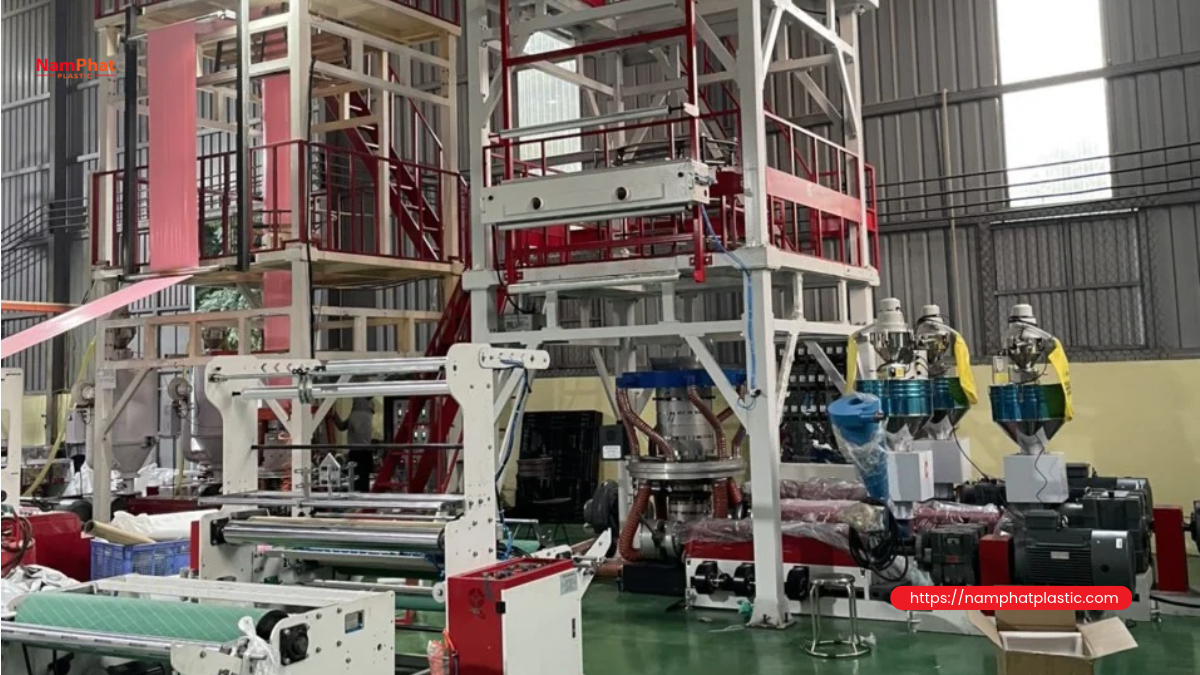
Factory and site acceptance tests, FAT and SAT, should use representative products: wide formats, long bags, thin films and challenging seal constructions. Record sustained acceptable-product output, scrap, changeover time, dimensional variation and roll or bag quality. Obtain written spare-parts, training, maintenance and warranty provisions; do not accept equipment solely on a no-load demonstration video.
10. Prepare the right information for a bag-specification discussion
Provide complete load dimensions, corner and top photographs, bag type, application method, storage requirements, consumption and delivery format. For automatic equipment, include roll drawings and interface information the machine manufacturer permits you to share. An existing sample and a description of its failures are often more useful than a general request for a “thick, very strong bag”.
Nam Phát's custom PE pallet cover page is a reference for discussing coverage requirements. Where load containment is needed, assess a suitable securing method as well. Shrink hood, stretch hood, specialised documentation and special-performance requirements must be confirmed separately before ordering.
Frequently asked questions
1. Can an ordinary PE bag machine make pallet covers?
Possibly, if it supports the actual width, length, gusset sealing, roll weight and bag take-off method. The label “PE bag machine” or motor rating is insufficient evidence; run the intended construction.
2. Is a gusseted bag necessarily a square-bottom bag?
No. Gussets create depth when opened, while bottom or top geometry depends on the seal design. A defined box shape requires confirmation of the drawing and corresponding forming stations.
3. Can an ordinary cover replace a shrink hood or stretch hood?
Not without functional testing. An ordinary cover does not inherently provide the thermal shrinkage, recovery force or strength needed for load containment in those systems.
4. Why do identical kg/h figures produce different bag counts?
Bag weight changes with perimeter, length, thickness and density. Acceptable bag output is also constrained by sealing, film feeding, folding, changeovers and scrap.
5. Is the thickest bag always the most protective?
No. Suitable construction, uniform thickness, strong seals and correct fit matter. Increasing thickness can raise cost and change sealing or shrink requirements without solving sharp corners or design faults.
- 0 Comment


